


























Views
Downloads



Complete Theme Analysis Worksheet | Grade 10 English II
Paste this activity's link or code into your existing LMS (Google Classroom, Canvas, Teams, Schoology, Moodle, etc.).
Students can open and work on the activity right away, with no student login required.
You'll still be able to track student progress and results from your teacher account.
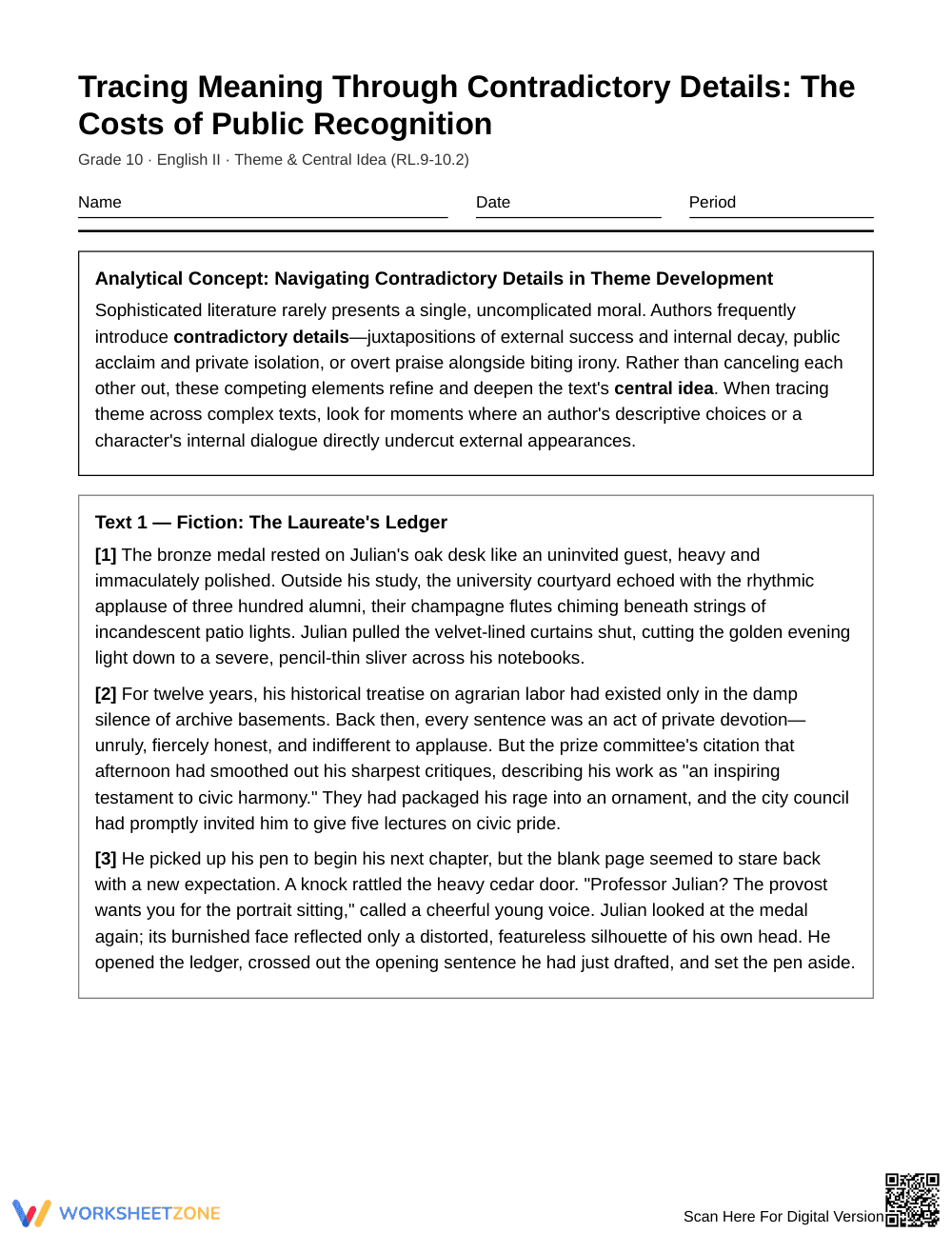
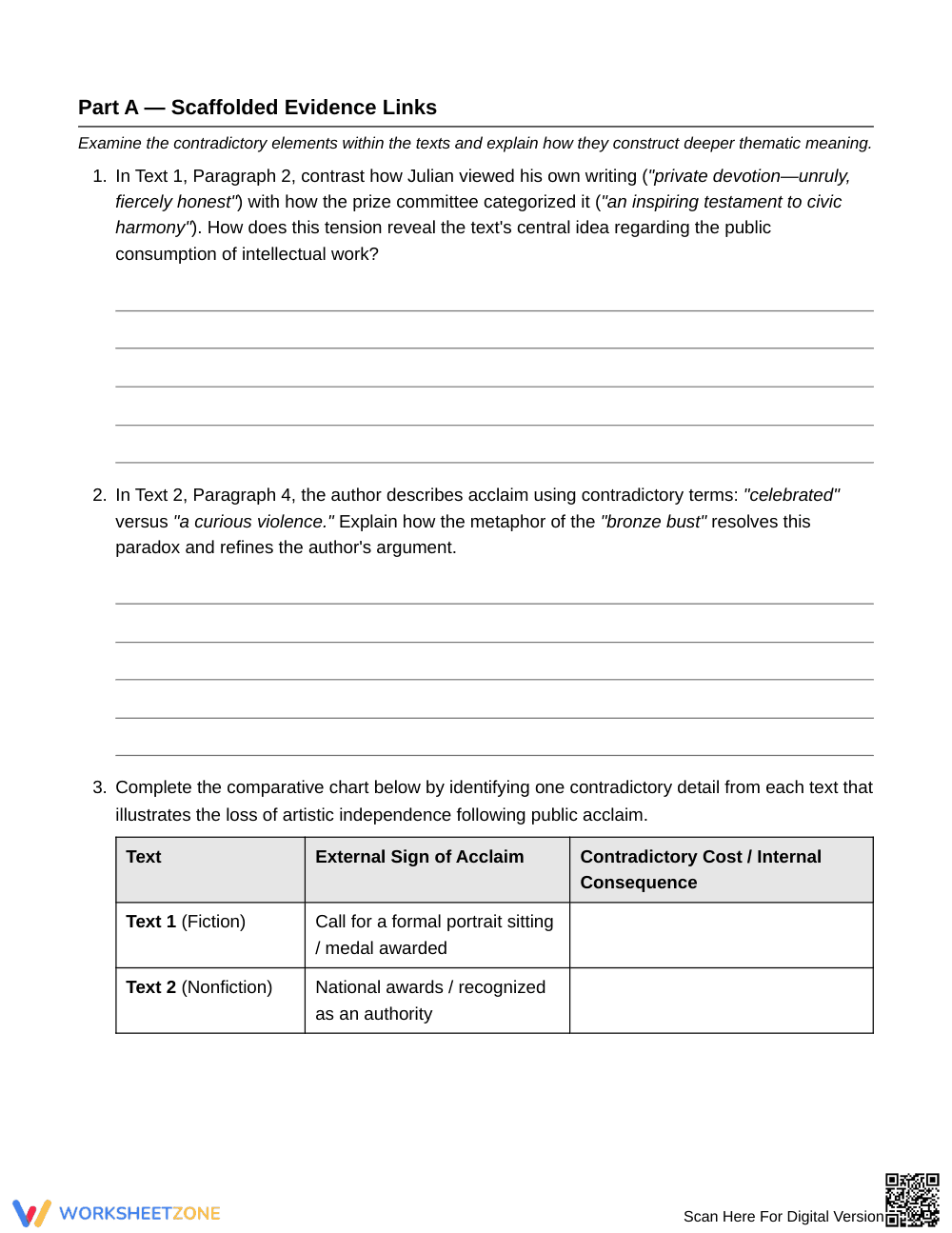
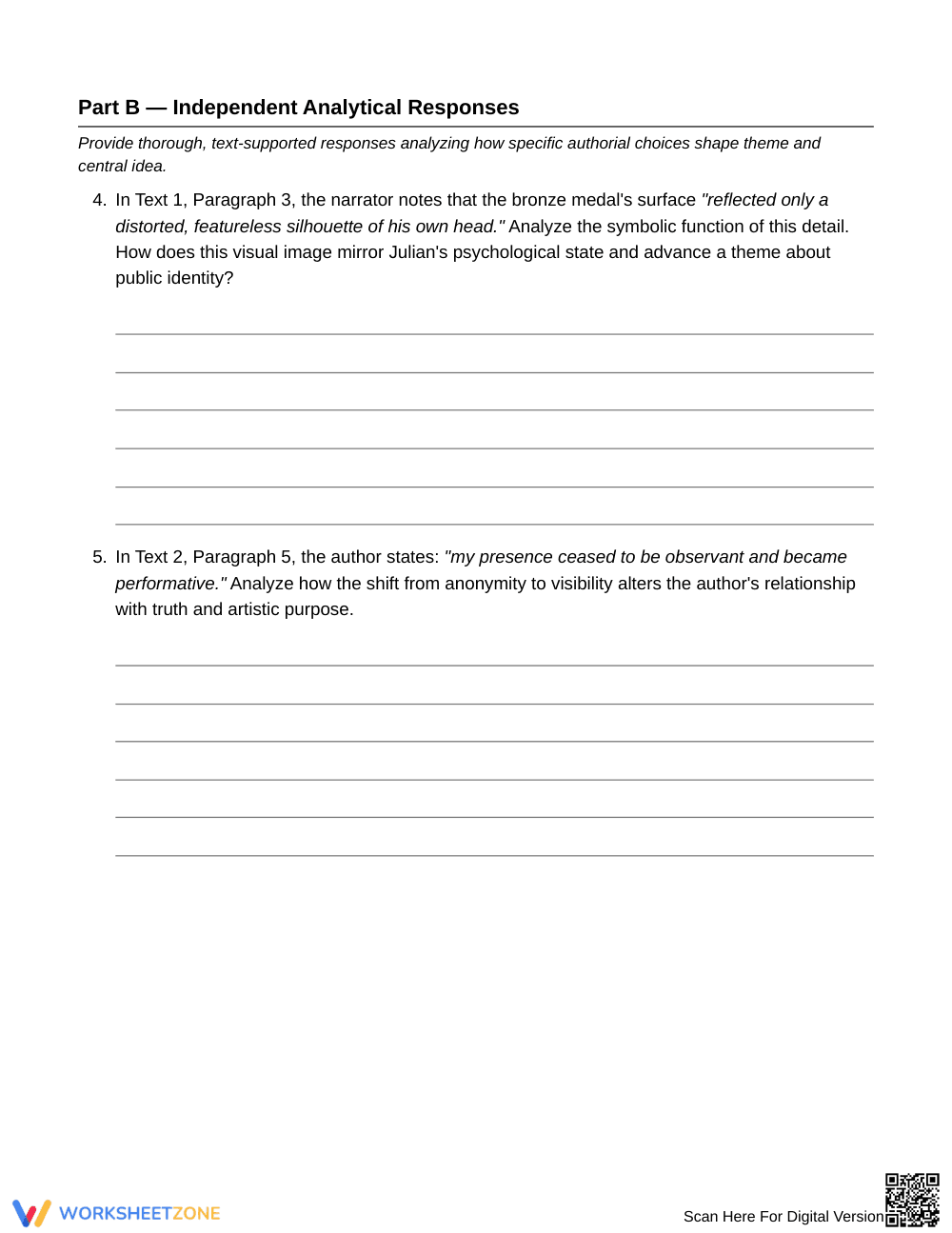
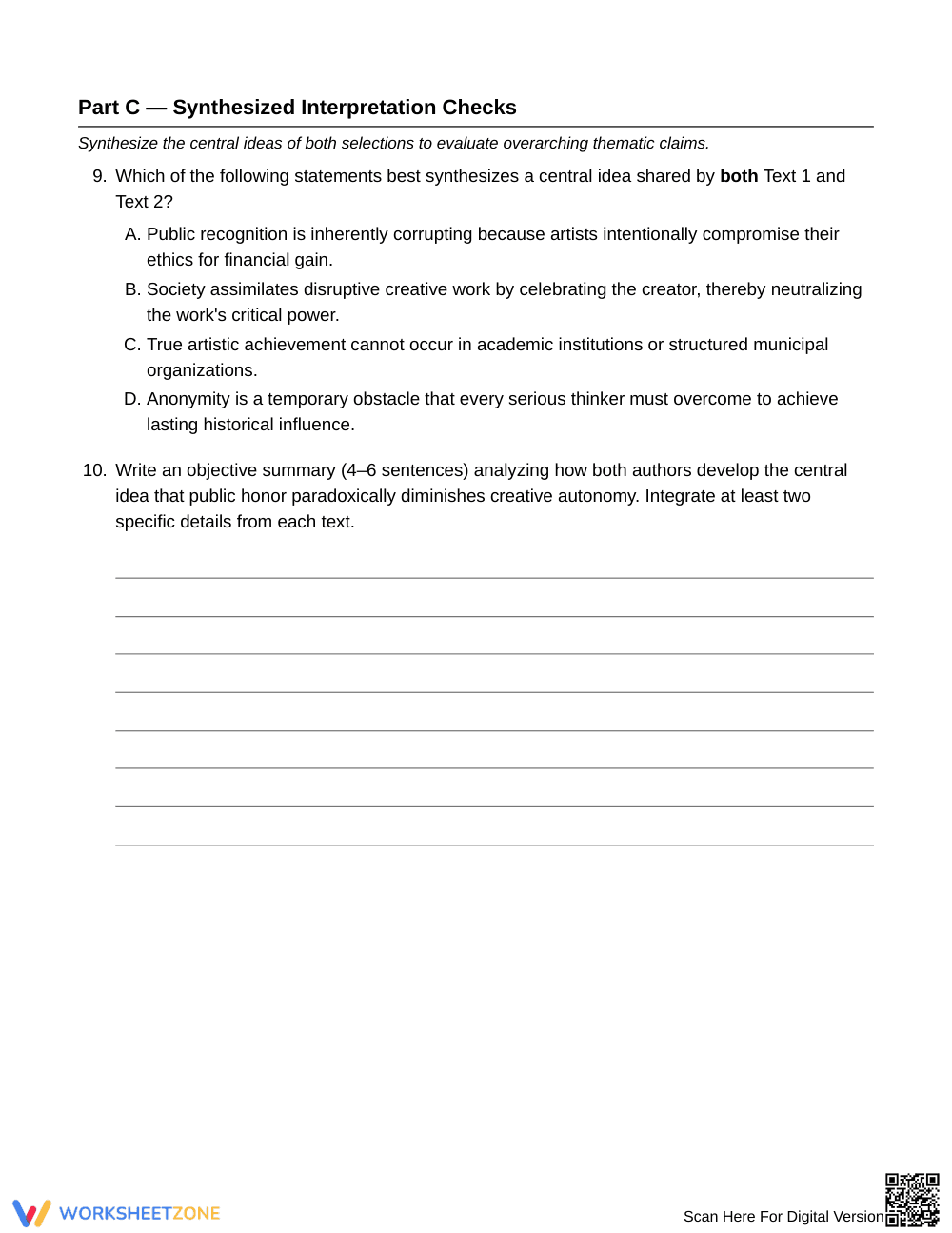
This Grade 10 English II worksheet guides students to trace complex themes by analyzing contradictory details across paired texts. Readers evaluate how tensions between public acclaim and internal doubt shape central ideas, progressing from scaffolded textual evidence gathering to independent analytical writing and synthesis.
At a Glance
- Grade: 10 · Subject: English II
- Standard:
RL.9-10.2— Analyze theme development through contradictory textual details- Skill Focus: Tracing theme through contradictory details
- Format: 6 pages · 10 problems · Answer key included · PDF
- Best For: Close reading and analytical writing
- Time: 45–60 minutes
The resource includes two paired passages—a fiction narrative and a nonfiction essay exploring public recognition. Across 6 pages, students answer 10 focused questions utilizing an analytical concept reference box, a modeled example, a comparative chart, and a full 3-page explanatory answer key.
Skill Progression
- Guided Practice (Scaffolded Model): Breaks down an excerpt with an explicit analytical concept box and worked interpretive insight.
- Supported Practice (Tasks 1–3): Part A presents 3 prompts pairing textual quotes with a structured evidence comparison chart.
- Independent Practice (Tasks 4–10): Parts B and C require 5 open-ended analytical responses, 1 synthesis question, and an objective summary.
This gradual release framework moves students from guided evidence identification to autonomous literary evaluation.
Standards Alignment
Aligned to primary standard `RL.9-10.2`: Determine a theme or central idea of a text and analyze its development over the course of the text, including how it is shaped and refined by specific details. It also supports `RL.9-10.1` through rigorous textual citation requirements. Both standard codes can be copied directly into lesson plans, IEP goals, or district curriculum mapping tools.
How to Use It
Use during a literary analysis unit following instruction on theme and irony. Have students review the modeled analysis in pairs before completing Part B individually as a 45–60 minute formative assessment. During work time, check that students analyze how contradictory details shift thematic meaning rather than merely summarizing events.
Who It's For
Tailored for Grade 10 English II classes, this worksheet supports developing readers through graphic organizers while challenging advanced students with rigorous synthesis prompts. Pair it with an anchor chart on authorial perspective or a comparative essay unit.
According to Fisher & Frey (2014), structured instructional scaffolding utilizing paired complex texts accelerates secondary students' ability to synthesize nuanced thematic arguments. Aligned with standard RL.9-10.2, this curriculum resource guides tenth-grade learners to determine central ideas and analyze how authors deliberately deploy contradictory details to refine complex meaning. Rather than treating literary themes as simplistic morals, high school readers must examine internal tensions, ironic juxtapositions, and opposing character motivations across fiction and informational prose. By combining explicit modeling, structured comparative tables, and independent constructed responses, the instructional progression builds foundational mastery in textual analysis. Students evaluate how external recognition conflicts with intellectual autonomy, supplying text-grounded citations to justify their analytical conclusions. The resulting instructional sequence ensures that tenth graders develop the evaluative literacy habits demanded by college and career readiness benchmarks, transitioning from concrete reading comprehension to sophisticated, evidence-based critical analysis across diverse genres.


