


























Views
Downloads




Complete Symbolism & Irony Worksheet | Grade 10 English II
Paste this activity's link or code into your existing LMS (Google Classroom, Canvas, Teams, Schoology, Moodle, etc.).
Students can open and work on the activity right away, with no student login required.
You'll still be able to track student progress and results from your teacher account.
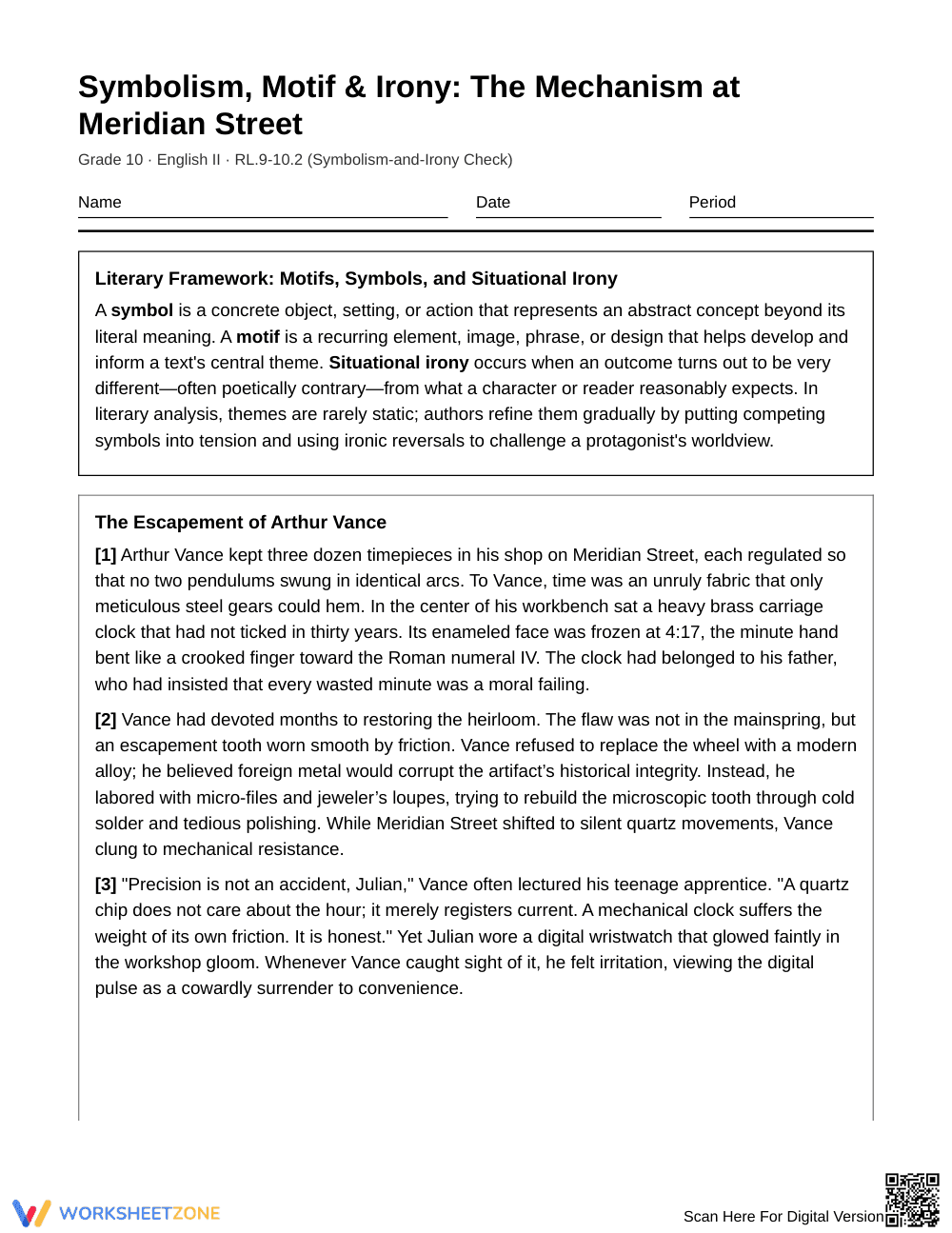
This Grade 10 English II worksheet strengthens literary analysis skills by guiding students to evaluate how authors manipulate motifs, symbols, and situational irony to develop central themes. Working with an original short story, students examine character motivation, trace symbolism, and construct text-based arguments.
At a Glance
- Grade: 10 · Subject: English II
- Standard:
RL.9-10.2— Determine a theme and analyze its development over a text- Skill Focus: Symbolism, Motif, and Situational Irony
- Format: 6 pages · 12 problems · Answer key included · PDF
- Best For: Close reading and skill checks
- Time: 40–55 minutes
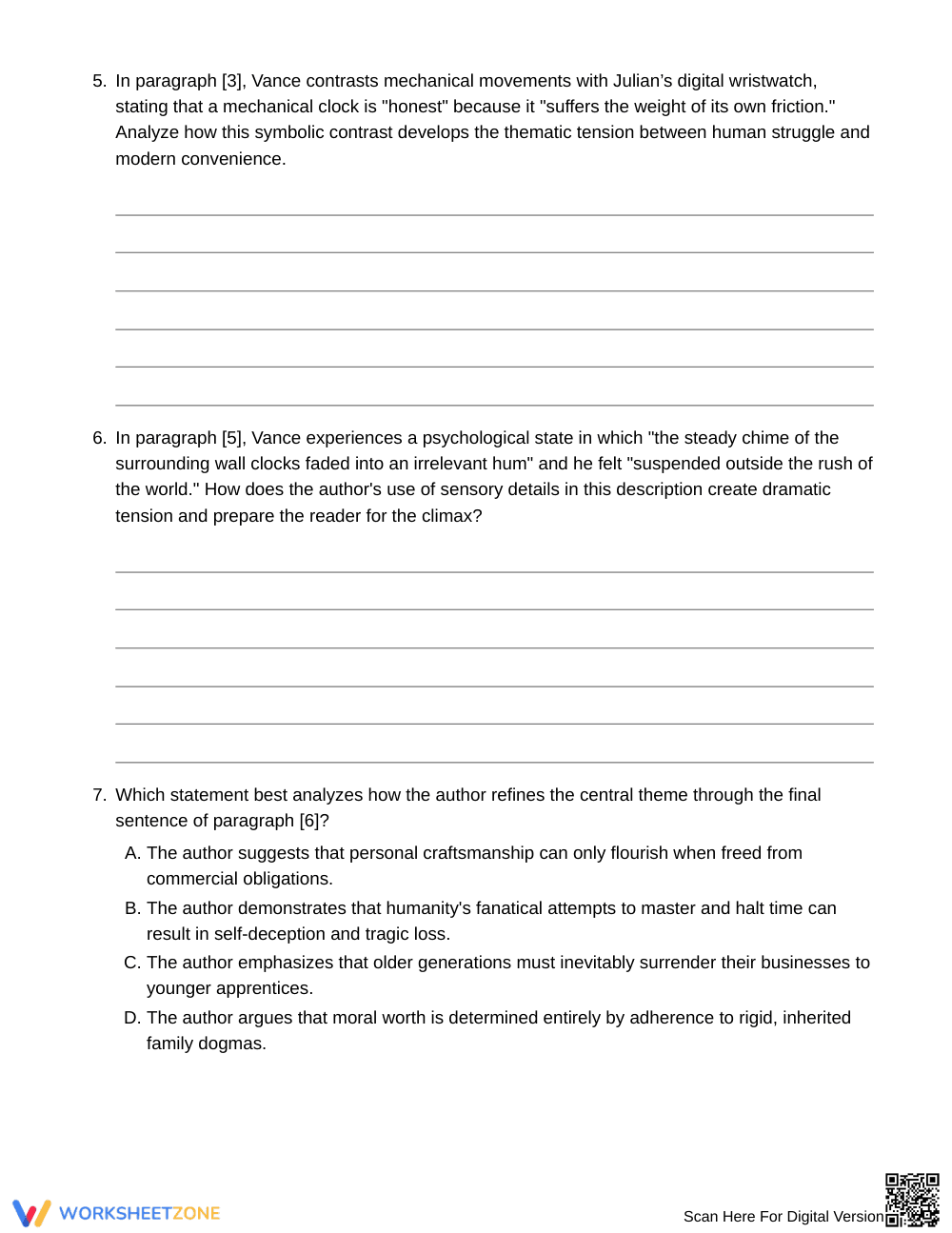
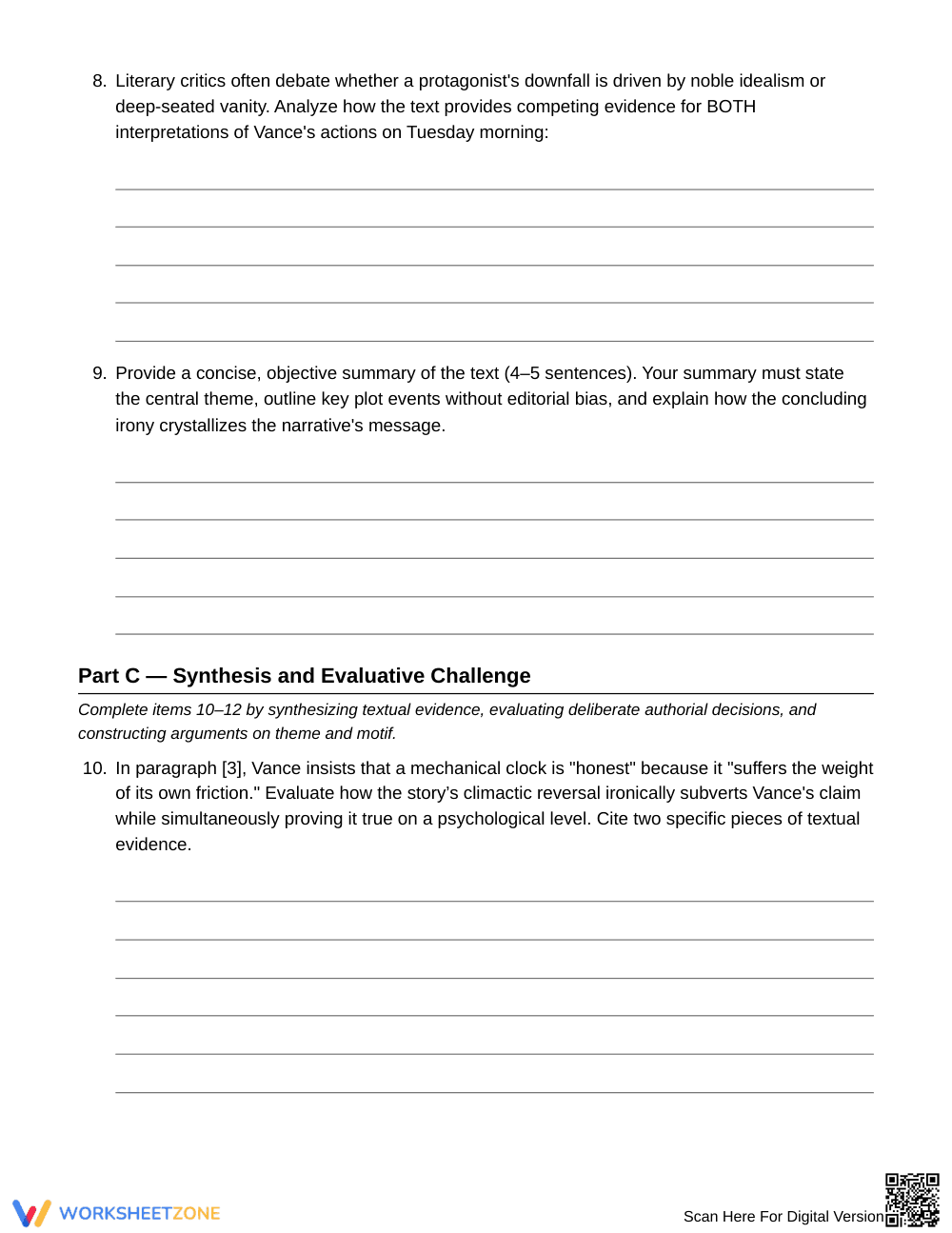
This 6-page printable resource features the literary narrative "The Escapement of Arthur Vance" alongside an introductory framework defining key literary devices. Across 12 structured tasks, students complete multiple-choice identification, text-dependent analysis of motifs and sensory details, an objective summary, and an evaluative argument. A 4-page answer key provides complete model responses and grading support.
Skill Progression
- Guided practice (Part A — Tasks 1–3): Identifies baseline symbols, defines situational irony, and explains recurring mechanical motifs in 2–3 sentences.
- Supported practice (Part B — Tasks 4–9): Analyzes craft choices, thematic tension, dual character motivations, and includes an objective summary prompt.
- Independent practice (Part C — Tasks 10–12): Synthesizes ironic subversions, evaluates authorial time motifs, and constructs an evidence-based argumentative paragraph.
This progression applies the gradual-release framework to guide students toward independent literary analysis.
Standards Alignment
Aligned directly to RL.9-10.2: Determine a theme or central idea of a text and analyze in detail its development over the course of the text. Tasks also reinforce RL.9-10.1 by requiring textual evidence for analytical claims. Both standard codes can be copied directly into lesson plans, IEP goals, or district curriculum mapping tools.
How to Use It
Use this worksheet as a post-lesson formative check or during targeted small-group intervention. Monitor how students connect mechanical friction to Vance's worldview in Part B before they tackle the extended argument. Completion time is 40–55 minutes.
Who It's For
Designed for Grade 10 English II students and honors classes needing rigorous analysis practice. Pair this printable with a direct-instruction lesson on irony or a thematic anchor chart.
Mastering standard RL.9-10.2 requires secondary students to move beyond literal comprehension to examine how symbols, motifs, and situational irony develop a narrative's central theme. Reading research by Fisher & Frey (2014) confirms that scaffolded instructional sequences significantly increase student competence when analyzing complex, text-dependent literary elements. By leading tenth-grade English II learners through a structured three-part progression—beginning with device identification, advancing to thematic analysis, and concluding with an evidence-based evaluative argumentative response—this 6-page worksheet builds critical analytical stamina. Students learn to evaluate competing interpretations of character motivation, compose objective summaries, and support analytical claims with concrete textual citations. When educators integrate systematic practice featuring clear instructional frameworks and thorough answer keys, high school readers demonstrate substantial growth in extracting nuanced textual meaning, defending claims, and mastering core standards across challenging secondary literature curricula.


