


























Views
Downloads



Complete Speech Analysis Worksheet | Grade 11 English III
Paste this activity's link or code into your existing LMS (Google Classroom, Canvas, Teams, Schoology, Moodle, etc.).
Students can open and work on the activity right away, with no student login required.
You'll still be able to track student progress and results from your teacher account.
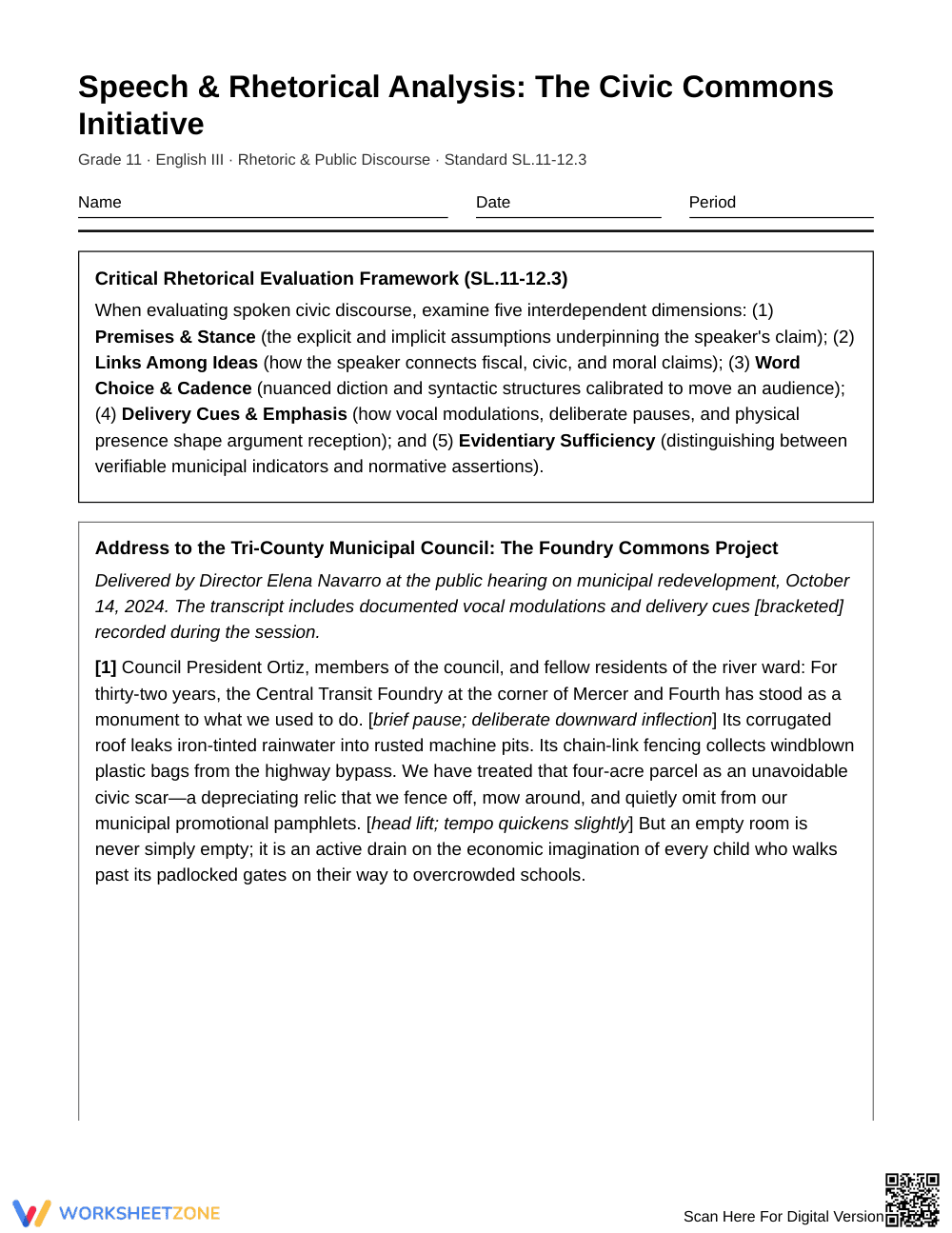
This Grade 11 rhetoric worksheet trains students to critically evaluate spoken civic discourse. High school learners analyze transcripts with embedded delivery cues, deconstruct underlying premises, evaluate evidence sufficiency, and critique rhetorical devices. The activity prepares students to evaluate point of view, reasoning chains, and persuasive stance in complex public speeches.
At a Glance
- Grade: 11 · Subject: English III
- Standard:
SL.11-12.3— Evaluate a speaker's point of view, reasoning, evidence, word choice, and delivery cues- Skill Focus: Speech and rhetorical analysis
- Format: 6 pages · 12 problems · Answer key included · PDF
- Best For: High school speech and rhetoric unit practice
- Time: 45–60 minutes
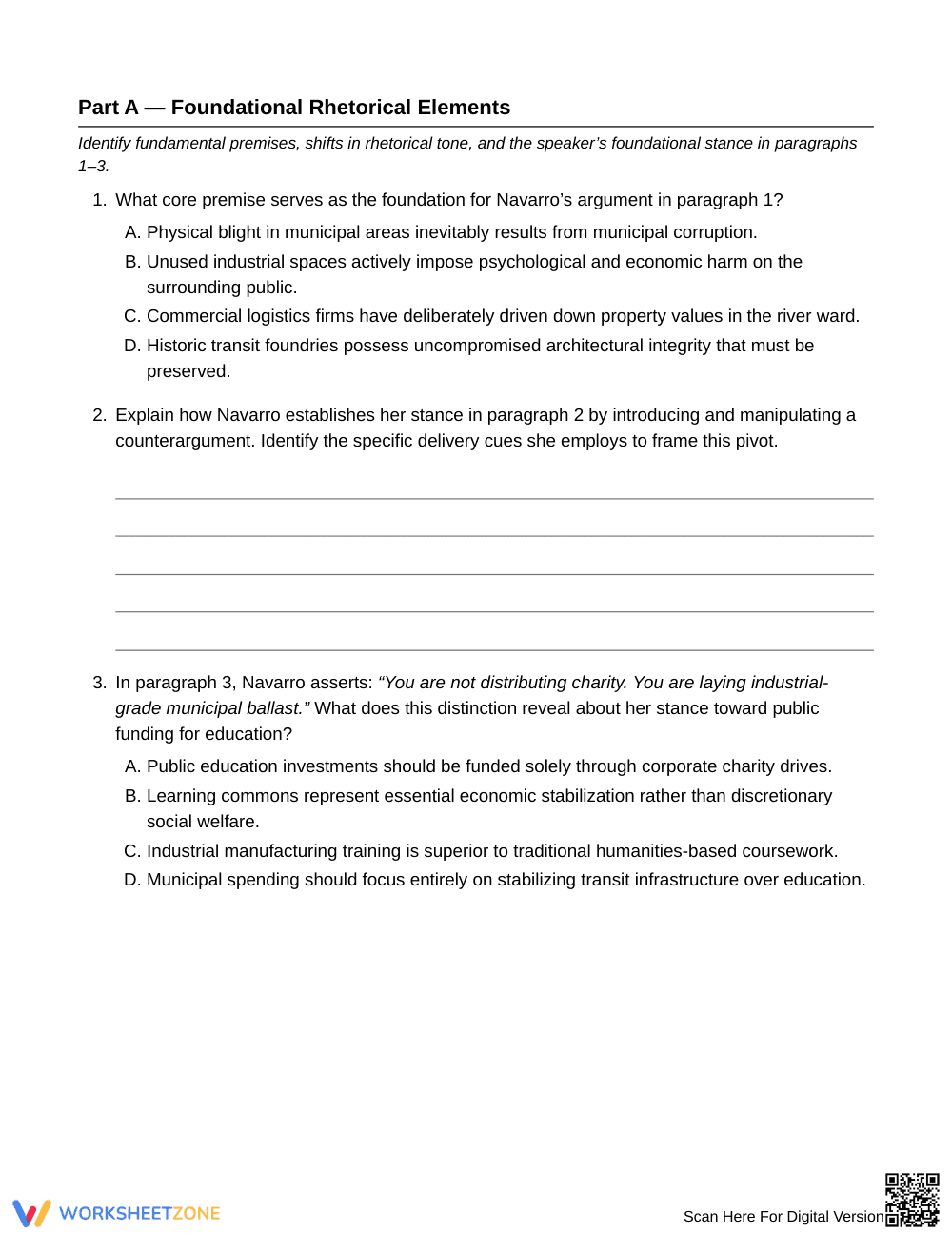
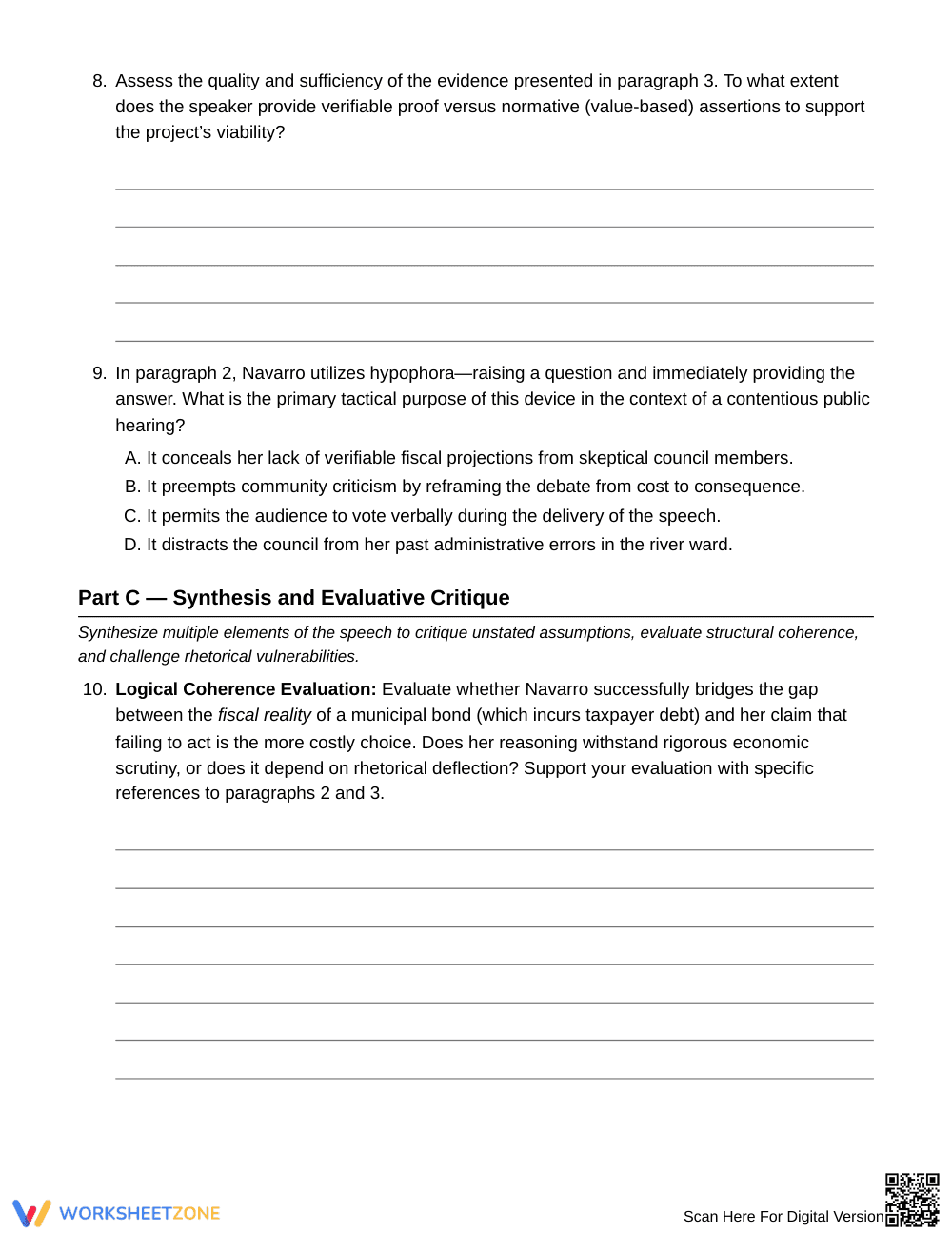
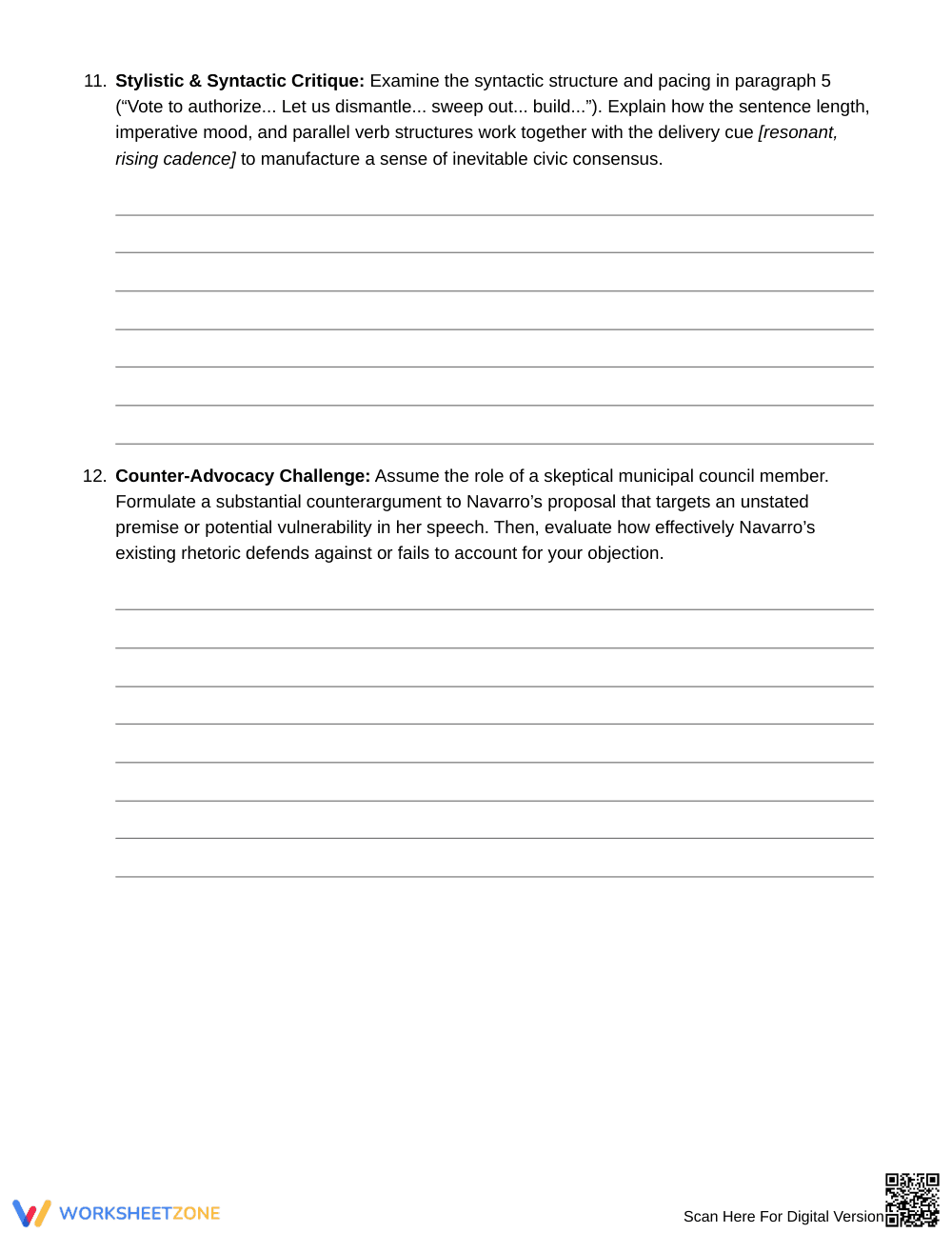
This 6-page instructional resource contains a complete transcript of a municipal public address featuring documented vocal modulations and physical delivery cues. Across 12 rigorous tasks, students complete selected-response checks, short-answer analytical explanations, and extended evaluative critiques. A detailed 4-page answer key provides complete model responses and grading rationales for teachers.
- Guided practice (Part A, 3 tasks): Students identify explicit premises, examine the speaker's core stance, and analyze initial counterargument reframing using foundational multiple-choice and short-answer prompts.
- Supported practice (Part B, 6 tasks): Learners evaluate reasoning links, dissect nuanced diction, assess evidentiary sufficiency, and interpret strategic delivery cues like deliberate pauses.
- Independent practice (Part C, 3 tasks): Students synthesize rhetorical dimensions to evaluate logical coherence, critique syntactic pacing, and compose an evidence-based counter-advocacy challenge.
This structure follows an intentional gradual-release framework, moving students from basic identification to sophisticated rhetorical deconstruction.
This resource directly aligns with Common Core standard `SL.11-12.3`: Evaluate a speaker's point of view, reasoning, and use of evidence and rhetoric, assessing the stance, premises, links among ideas, word choice, points of emphasis, and tone used. It also supports reading informational text standards for delineating arguments. Both standard codes can be copied directly into lesson plans, IEP goals, or district curriculum mapping tools.
Deploy this worksheet after direct instruction on rhetorical appeals, fallacies, and vocal delivery techniques. For whole-class instruction, read the speech transcript aloud while modeling how to annotate bracketed delivery notes. For formative assessment, examine student responses to the Part B evidence evaluation prompt to observe whether learners distinguish between verifiable empirical metrics and normative claims. Completion takes 45 to 60 minutes.
This resource serves eleventh-grade English Language Arts students, Advanced Placement Language learners, and speech or debate classes. Teachers can provide sentence stems to support developing writers or assign the Part C counter-advocacy challenge as an oral debate extension. Pair this worksheet with an audio recording of civic speeches or an anchor chart on rhetorical fallacies.
According to research in Fisher & Frey (2014), gradual release of responsibility models significantly enhance secondary students' capacity to deconstruct complex arguments and evaluate spoken texts. Standard SL.11-12.3 requires eleventh-grade learners to evaluate a speaker's stance, premises, links among ideas, word choice, points of emphasis, and tone. This 12-task instructional resource provides structured scaffolds that move students from recognizing foundational rhetorical choices to critiquing unstated premises and evidentiary gaps in authentic civic discourse. By integrating documented delivery cues alongside verbatim transcript analysis, the resource trains students to assess how nonverbal pacing and vocal inflections interact with logical reasoning chains to shape audience reception. The comprehensive four-page answer key equips educators with clear criteria for measuring student proficiency in rhetorical evaluation, supporting rigorous standard-aligned instruction and accountable talk in high school English classrooms.


