




























Views
Downloads


Complete Skeletal System Word Search | Grades 7–8 Science

Paste this activity's link or code into your existing LMS (Google Classroom, Canvas, Teams, Schoology, Moodle, etc.).
Students can open and work on the activity right away, with no student login required.
You'll still be able to track student progress and results from your teacher account.
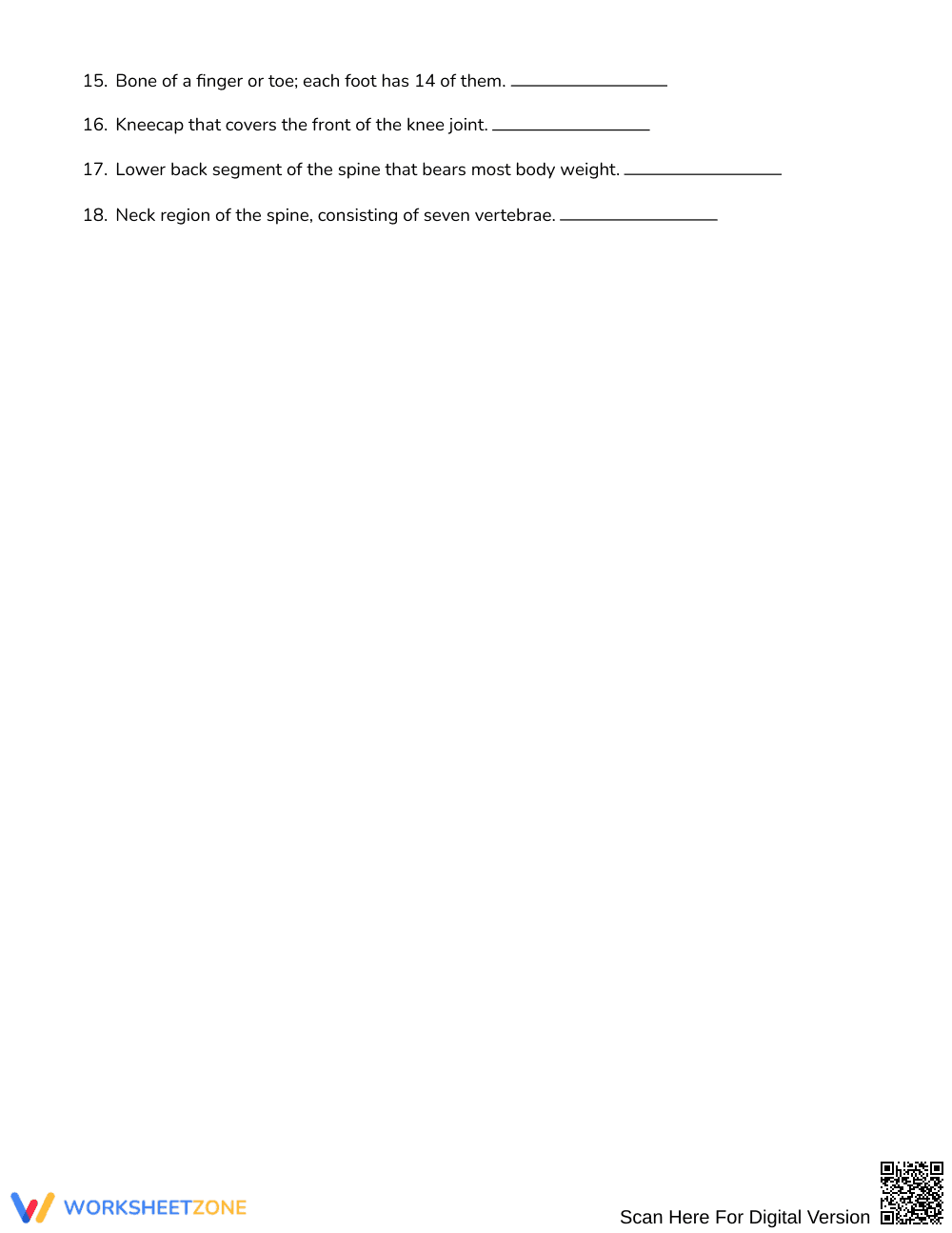
This skeletal system word search provides Grades 7–8 science students with an engaging cumulative review of essential human anatomy terminology. By connecting 18 bone names to their physiological functions, students strengthen anatomical literacy and reinforce key concepts spanning the axial and appendicular skeletons. The activity consolidates core life science vocabulary into an accessible, low-stress format.
At a Glance
- Grade: Grades 7–8 · Subject: Middle School Life Science
- Standard: Not standards-assessed — vocabulary enrichment across human body systems
- Skill Focus: Skeletal structures and functions review and anatomical recall
- Format: 3 printable pages · 18 words · Complete answer key included · PDF
- Best For: Cumulative unit review, early finishers, and sub plans
- Time: 20–30 minutes
What's Inside
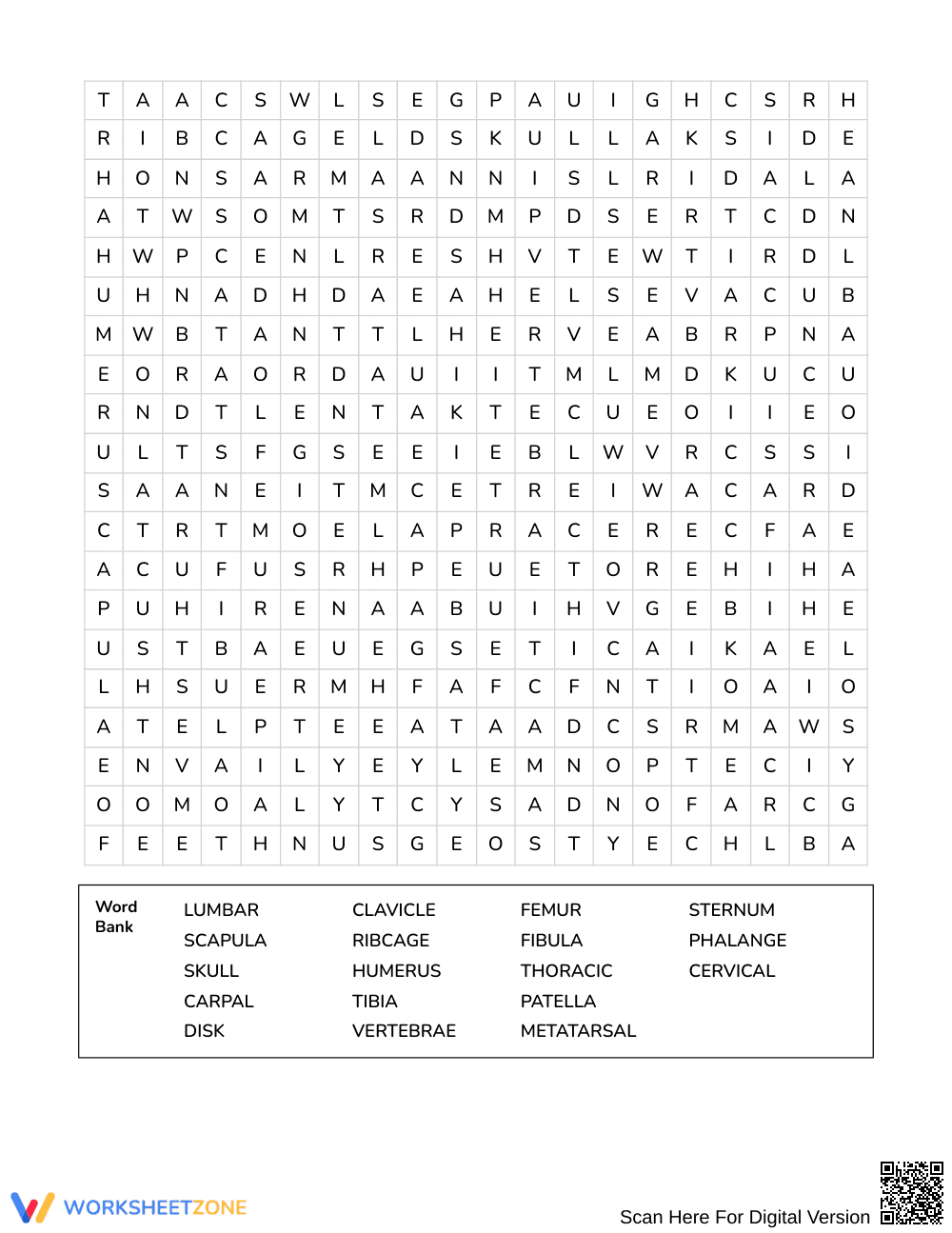
The resource spans 3 printable pages featuring an 18-word puzzle accompanied by complete anatomical clue definitions. Rather than simply scanning for letter sequences, learners interact with a shuffled word bank linked directly to physiological descriptions of bones such as the clavicle, patella, and vertebrae. A full 3-page answer key displays highlighted solutions corresponding to every hidden term.
Puzzle Mechanics
The puzzle is built upon a dense 20 x 20 grid that challenges students to locate terms oriented across all 8 compass directions: north, northeast, east, southeast, south, southwest, west, and northwest. Words can read forward, backward, or diagonally, requiring thorough visual tracking. The shuffled word bank provides 18 structural targets paired with functional clues, prompting students to identify each bone's role—such as protecting vital organs, anchoring limbs, or absorbing spinal impact—before locating it in the letter grid.
Standards Alignment
This resource serves as targeted vocabulary enrichment rather than formal standards-based assessment. While middle school life science programs emphasize human body systems, this activity focuses specifically on vocabulary acquisition, orthographic reinforcement, and memory retrieval of anatomical structures. It is not aligned to a specific state or national performance expectation.
How to Use It
Deploy this word search directly after direct instruction on skeletal anatomy as a concluding review activity, or assign it during independent station rotations to reinforce scientific spelling. For formative assessment, observe whether students read the function clues first or merely search for recognizable letter patterns, pausing to ask individuals to define a bone's purpose aloud. Students typically complete the puzzle within 20 to 30 minutes.
Who It's For
This activity is designed for Grades 7–8 students learning human biology, organ systems, or general life science. For differentiated support, encourage striving readers to highlight key structural clues before searching the grid, while advanced learners can cover the word bank to deduce bone names solely from definitions. Pair this puzzle with a skeletal labeling diagram for comprehensive anatomical study.
Vocabulary acquisition within middle school life science requires structured exposure to domain-specific terminology, particularly when studying complex organ systems. This 18-word puzzle supports skeletal structures and functions review by reinforcing orthographic awareness alongside biological concepts. As synthesized by Fisher & Frey (2014), intentional vocabulary learning environments that integrate contextual definitions enable students to internalize disciplinary terms far more effectively than isolated memorization drills. By challenging students to connect physiological descriptions with correct bone names across an 8-direction, 20 x 20 letter grid, this activity bridges rote recognition and meaningful conceptual recall. Middle school learners in Grades 7–8 benefit from low-stakes retrieval tasks that consolidate academic language, supporting long-term retention of anatomical systems. Consequently, vocabulary enrichment tools serve as valuable instructional components within comprehensive science curricula, laying the necessary linguistic foundation for advanced biological inquiry and physiological analysis.


