


























Views
Downloads

Complete Reorganizing Text Logic Worksheet | Grade 8 ELA
Paste this activity's link or code into your existing LMS (Google Classroom, Canvas, Teams, Schoology, Moodle, etc.).
Students can open and work on the activity right away, with no student login required.
You'll still be able to track student progress and results from your teacher account.
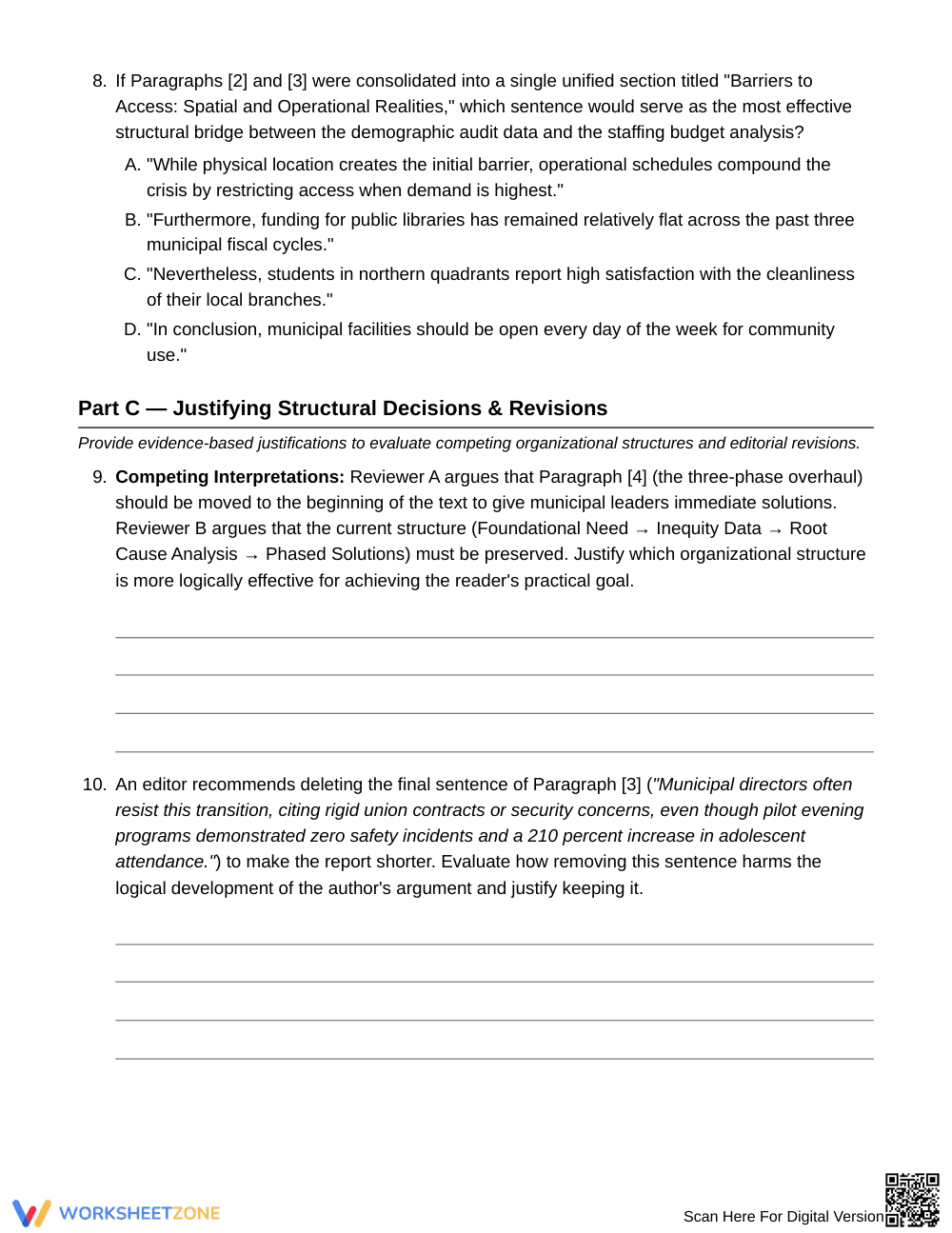
This Grade 8 ELA worksheet guides students to reorganize informational text sections while preserving logical flow and causal links. Working with a municipal policy report, learners analyze dependencies, evaluate sentence placements, and justify editorial revisions to master how structural choices shape an author's argument.
At a Glance
- Grade: 8 · Subject: ELA
- Standard:
RI.8.5— Analyze how a specific sentence or section refines key concepts- Skill Focus: Reorganize a Section Without Losing Logic
- Format: 5 pages · 10 problems · Answer key included · PDF
- Best For: Text structure mastery and revision
- Time: 40–50 minutes
What's Inside
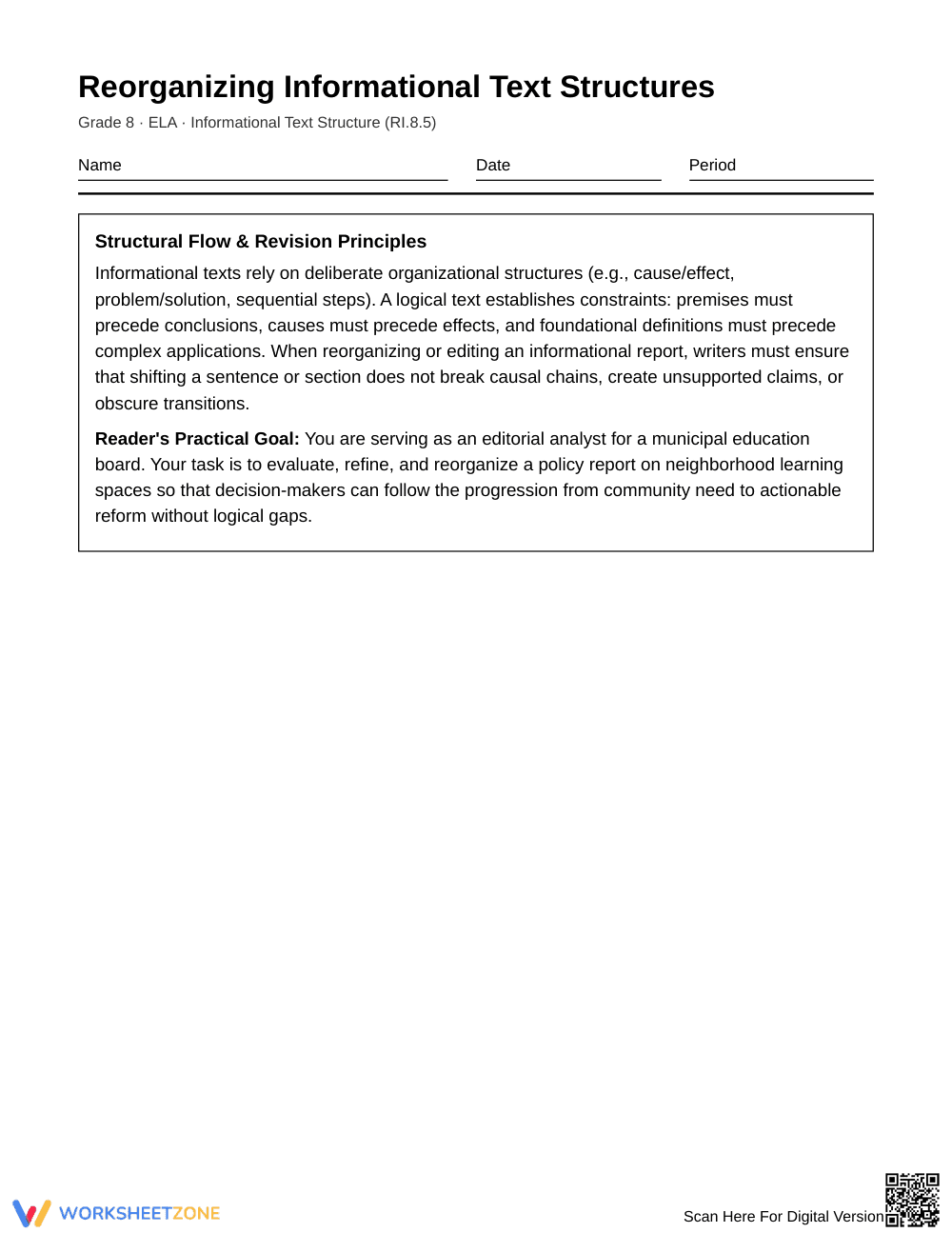
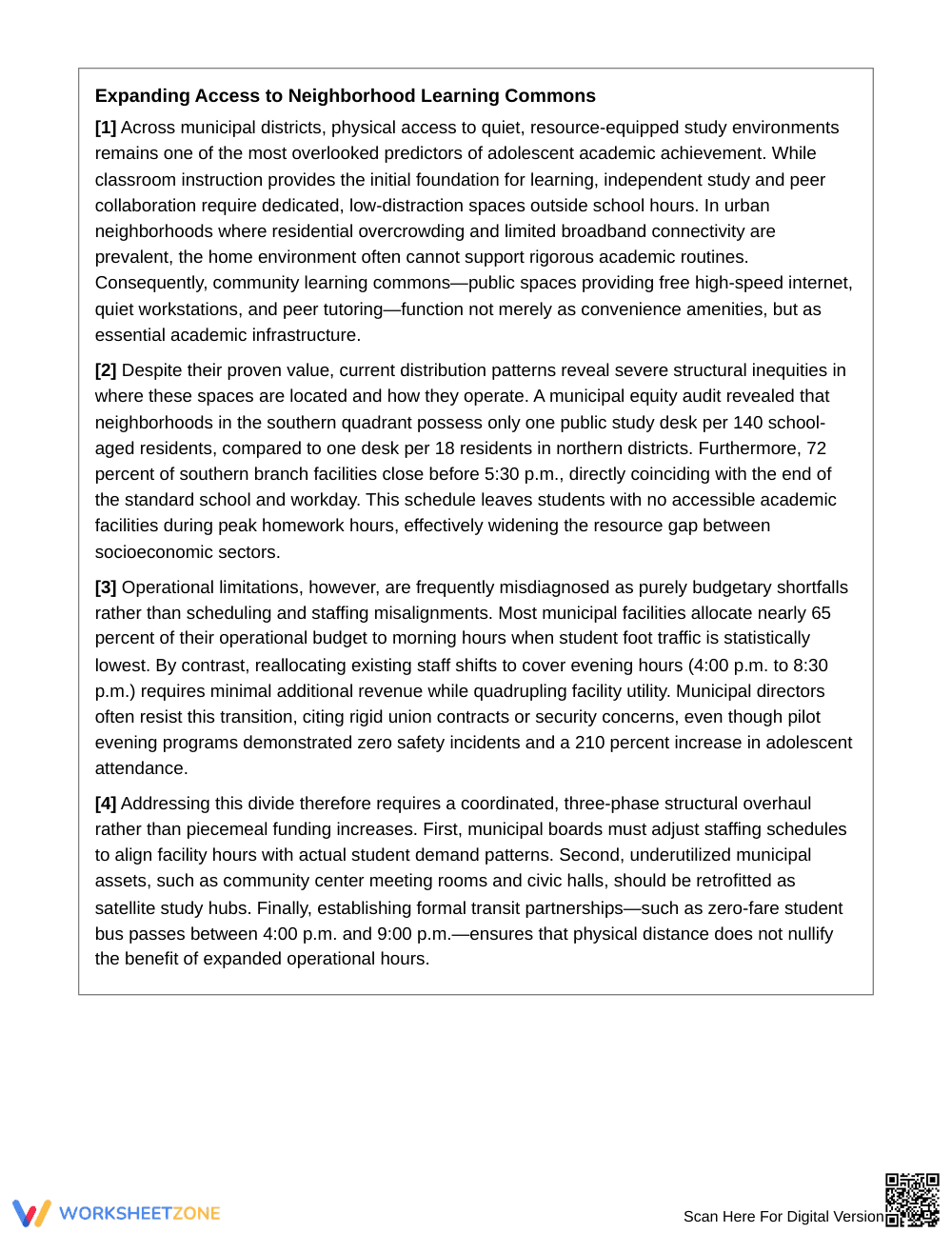
The 5-page worksheet centers on a policy report titled "Expanding Access to Neighborhood Learning Commons." It includes a foundational rule box outlining structural constraints, 10 analytical tasks (multiple-choice evaluations and written justifications), and a comprehensive 3-page answer key featuring complete model rationales for every question.
Skill Progression
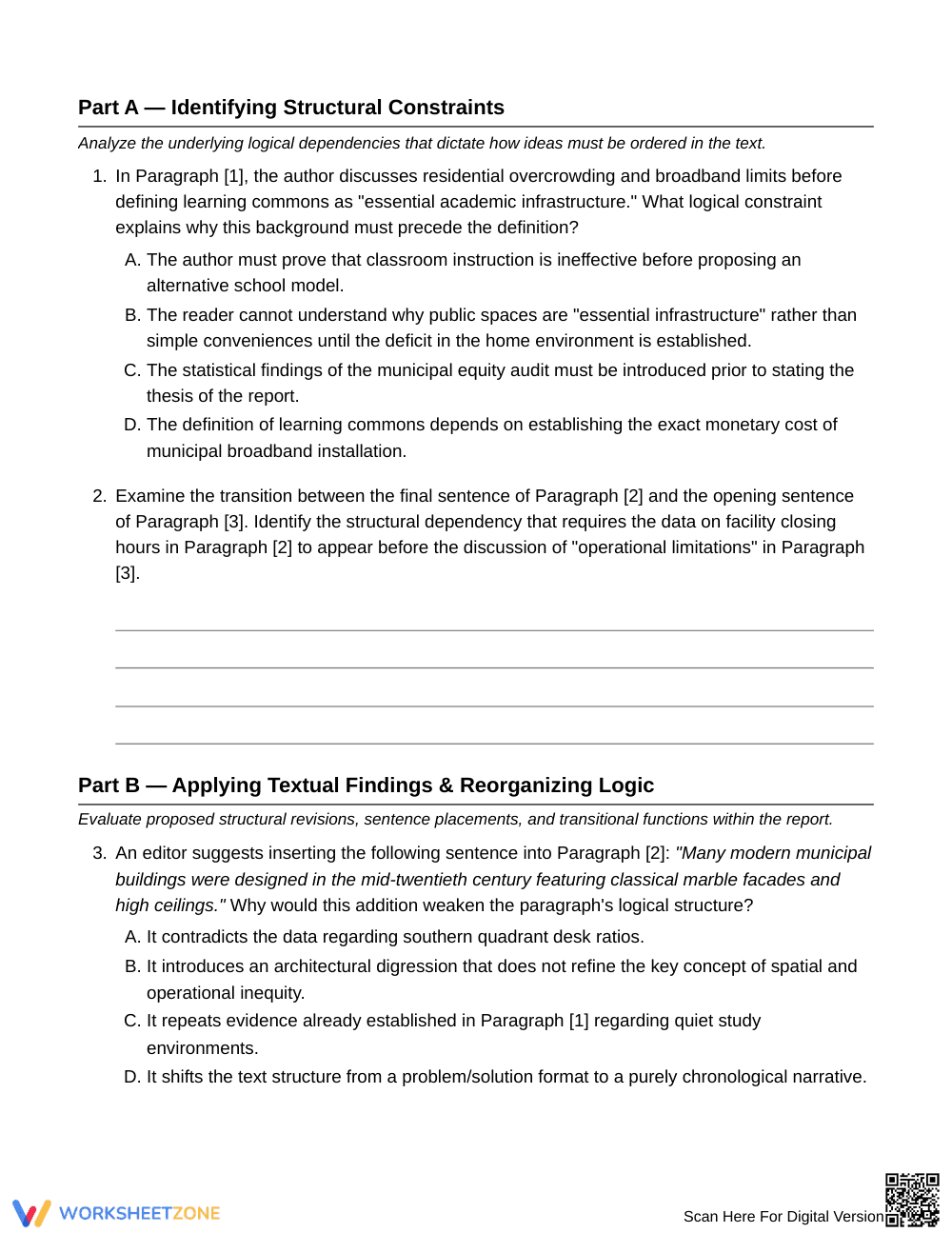
- Guided Practice (Tasks 1–2): Students examine underlying logical dependencies in early paragraphs, identifying foundational premises and prerequisite data.
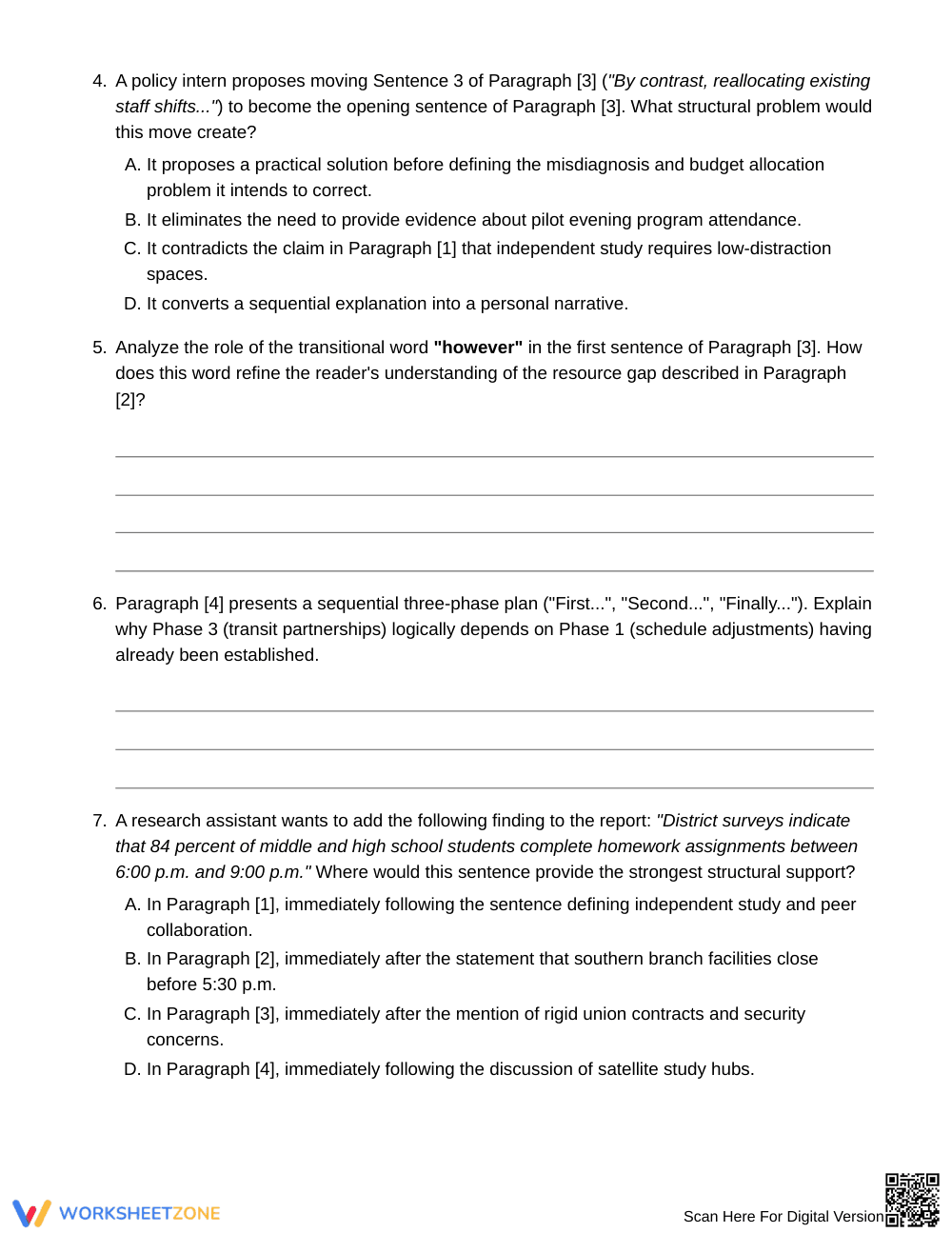
- Supported Practice (Tasks 3–8): Learners evaluate sentence insertions, test paragraph transitions, and sequence multi-phase solutions to fix structural issues.
- Independent Practice (Tasks 9–10): Students write extended justifications comparing competing macro-structures and defending paragraph integrity.
This sequence follows the gradual release of responsibility model, moving students from guided identification to independent editorial defense.
Standards Alignment
This worksheet aligns with primary standard RI.8.5: "Analyze in detail the structure of a specific paragraph in a text, including the role of particular sentences in developing and refining a key concept." It also supports W.8.2.C through transitional logic. Both standard codes can be copied directly into lesson plans, IEP goals, or district curriculum mapping tools.
How to Use It
Use this worksheet after direct instruction on text structures to transition students from comprehension to active revision. It also works well during writing workshops to reinforce paragraph coherence. Formatively check whether students can explain why premises must precede conclusions. The complete activity takes approximately 40 to 50 minutes.
Who It's For
This resource is designed for Grade 8 ELA classes, advanced Grade 7 readers, and intervention groups focusing on logical sequencing. For multilingual learners, highlight transitions in the passage before independent work. Pair this activity with an informational mentor text or an argumentative revision anchor chart.
Developing structural awareness in informational reading directly builds critical reasoning and writing fluency. According to Fisher & Frey (2014), explicit instruction in text structure and intentional sentence ordering substantially deepens adolescent comprehension of complex nonfiction. Under standard RI.8.5, middle school students must move beyond simple genre labeling to analyze how specific sentences, transitional phrases, and entire sections refine an author's overarching claims. When students evaluate proposed text rearrangements, identify disrupted causal chains, and justify organizational decisions, they practice the cognitive routines essential for academic literacy. This 5-page resource provides rigorous, authentic practice with logical dependencies across 10 tiered analytical tasks, equipping Grade 8 learners to inspect textual architecture methodically. By demanding written justifications alongside structural evaluations, the activity ensures students master the connection between paragraph organization, logical validity, and communicative clarity across standard-aligned curriculum units.


