


























Views
Downloads




Complete Quote Commentary Worksheet | Grade 10 English II
Paste this activity's link or code into your existing LMS (Google Classroom, Canvas, Teams, Schoology, Moodle, etc.).
Students can open and work on the activity right away, with no student login required.
You'll still be able to track student progress and results from your teacher account.
This Grade 10 English II worksheet equips students to develop analytical commentary from short quotations instead of relying on plot summary. Through an original literary excerpt and structured prompts, learners isolate diction, analyze subtext, and draft evidence-based paragraphs that examine complex themes of authority and institutional belonging.
At a Glance
- Grade: 10 · Subject: English II
- Standard: Textual Analysis — Cite strong textual evidence and develop analytical commentary to support inferences
- Skill Focus: Develop Commentary from a Short Quotation
- Format: 6 pages · 8 problems · Answer key included · PDF
- Best For: Analytical paragraph drafting and evidence integration
- Time: 45–60 minutes
What's Inside
This 6-page resource features 8 structured tasks built around an original short story excerpt, 'The Wardens of St. Jude.' It includes a strategy guide with flawed versus strong analytical models, text deconstruction prompts, a four-step paragraph drafting sequence, and revision exercises. A 4-page answer key provides complete exemplar paragraphs and diagnostic commentary for each problem.
Skill Progression
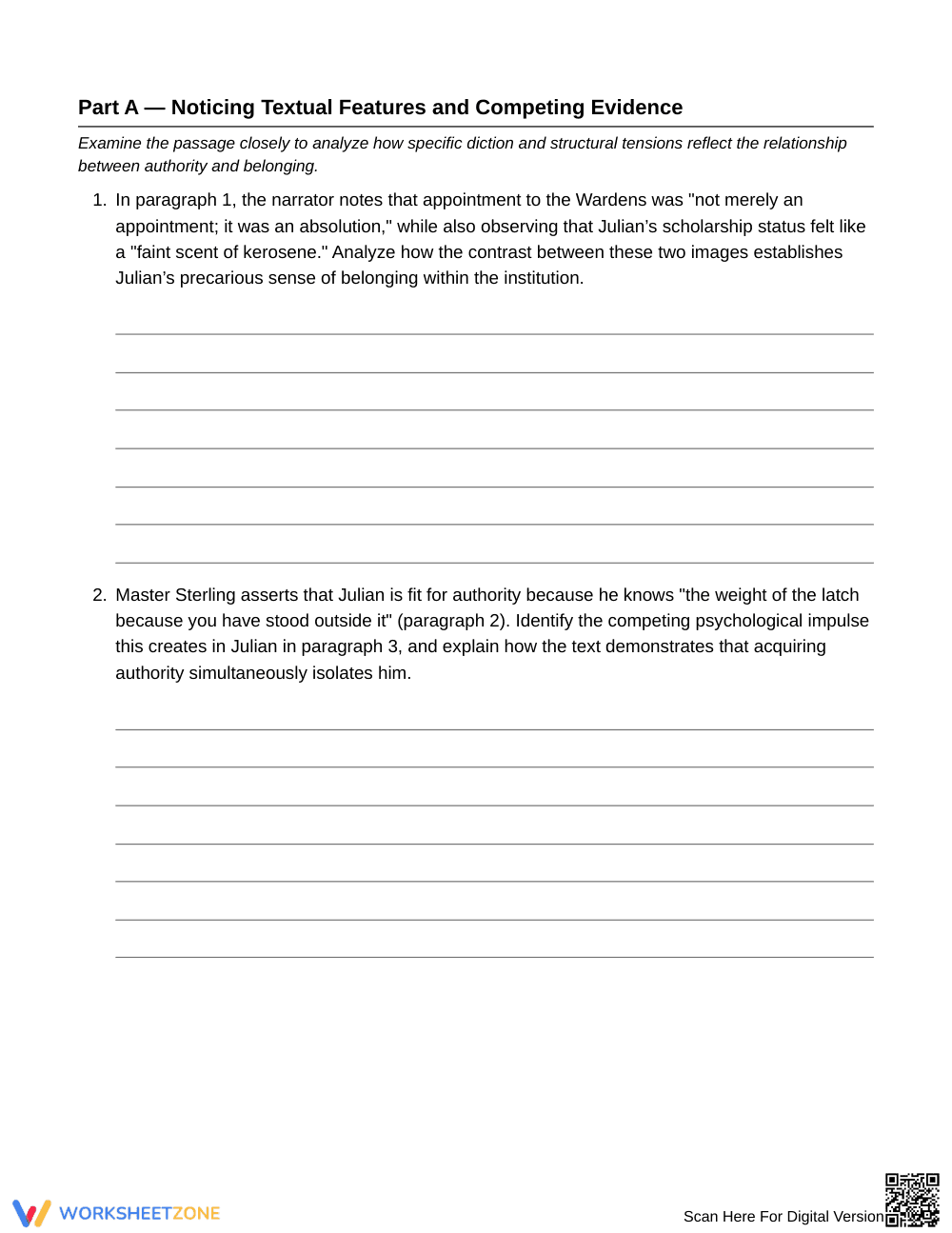
- Guided practice (Tasks 1–2): Students analyze textual tension and psychological conflict in two text-dependent questions using guided analytical prompts.
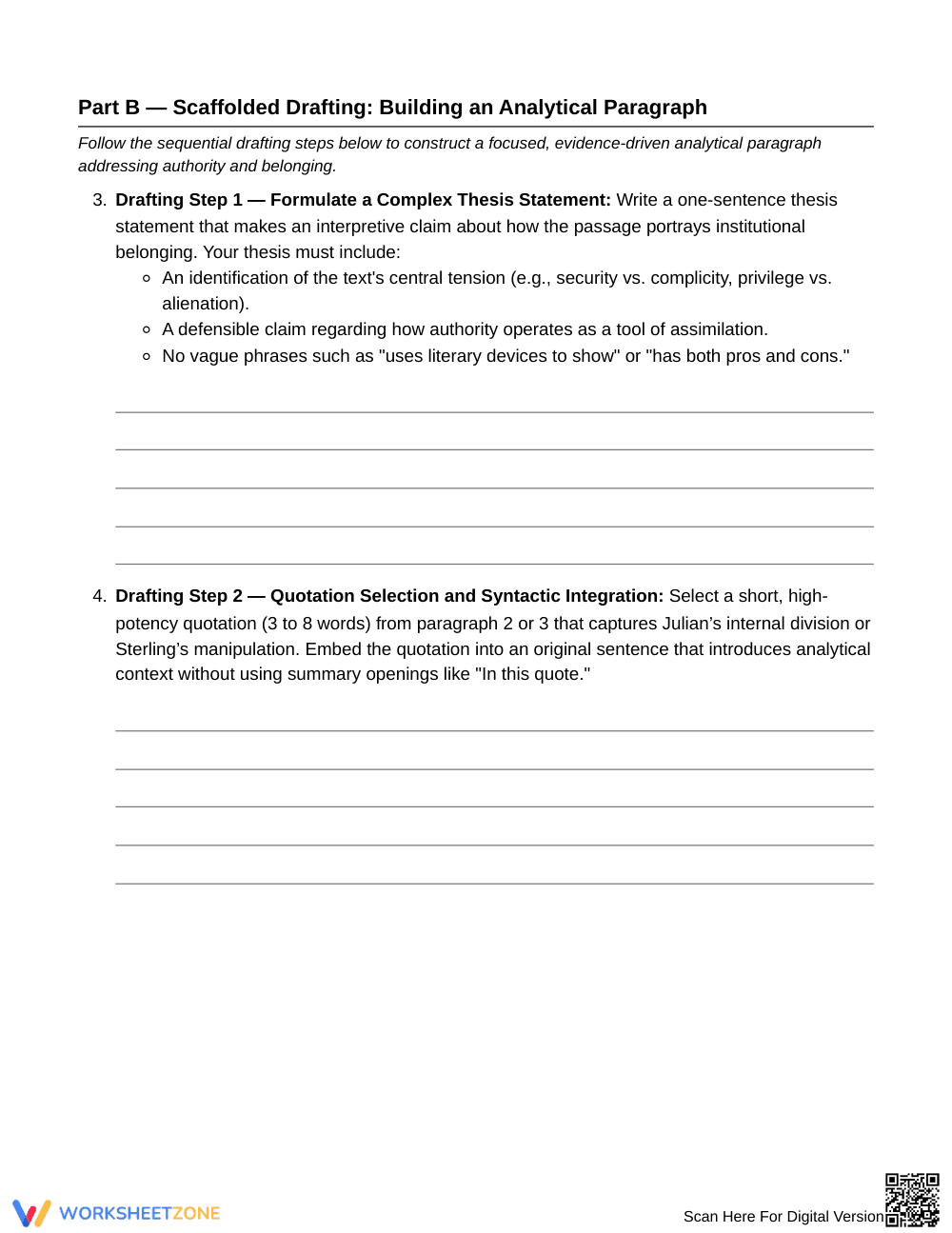
- Supported practice (Tasks 3–6): Learners construct a thesis, embed a 3-to-8-word quotation, write micro-commentary on diction, and synthesize a complete 180-to-230-word paragraph.
- Independent practice (Tasks 7–8): Students diagnose summary errors in a sample student response, rewrite weak commentary, and revise their own draft's syntax.
This progression applies the gradual-release framework, guiding writers toward self-directed analytical precision.
Standards Alignment
This worksheet aligns with Grade 10 English Language Arts standards requiring students to cite thorough textual evidence and develop analytical claims using precise reasoning. It additionally reinforces writing standards focused on integrating quotes and varying syntax. Both standard codes can be copied directly into lesson plans, IEP goals, or district curriculum mapping tools.
How to Use It
Assign this worksheet during the guided practice stage of an analytical writing unit or as targeted intervention for students relying on plot summary. Circulate during Drafting Step 3 to formatively assess whether students analyze diction connotations rather than summarizing events. The activities require 45 to 60 minutes across one or two class periods.
Who It's For
This practice is suited for Grade 10 English II students preparing for literary analysis essays and state writing assessments. Sentence models assist emerging writers, while diction analysis stretches advanced students. Pair this resource with a reference chart of analytical framing verbs to support quotation embedding.
Developing analytical commentary from a short quotation requires secondary students to shift decisively from descriptive plot summary to line-level textual analysis. In secondary literacy classrooms, this instructional sequence guides Grade 10 English II writers through isolating brief quotations, examining word connotations, and embedding evidence into original syntactical structures. According to Fisher & Frey (2014), explicit modeling coupled with scaffolded writing transitions enables novice writers to internalize disciplinary thinking routines, bridging the gap between passive reading comprehension and rigorous argument production. By deconstructing how figurative language and diction generate thematic subtext, students learn that literary evidence functions not merely as factual verification, but as an active interpretive catalyst. This 6-page worksheet operationalizes these cognitive writing moves through 8 structured tasks, providing educators with concrete formative assessment checkpoints that reinforce independent prose revision, critical thinking, and sophisticated textual analysis.


