




























Views
Downloads



Complete Qualified Judgment Worksheet | Grade 7 ELA

Paste this activity's link or code into your existing LMS (Google Classroom, Canvas, Teams, Schoology, Moodle, etc.).
Students can open and work on the activity right away, with no student login required.
You'll still be able to track student progress and results from your teacher account.
Mastering argument analysis requires middle school readers to evaluate textual evidence critically. This worksheet guides Grade 7 students through an informational proposal to identify relevant evidence, evaluate logical reasoning, and defend balanced, qualified judgments that weigh both benefits and practical limitations.
At a Glance
- Grade: 7 · Subject: ELA
- Standard:
RI.7.8— Trace and evaluate arguments, distinguishing sound reasoning from unsupported claims.- Skill Focus: Defend a Qualified Judgment
- Format: 5 pages · 8 problems · Answer key included · PDF
- Best For: Argument evaluation practice
- Time: 40–50 minutes
What's Inside
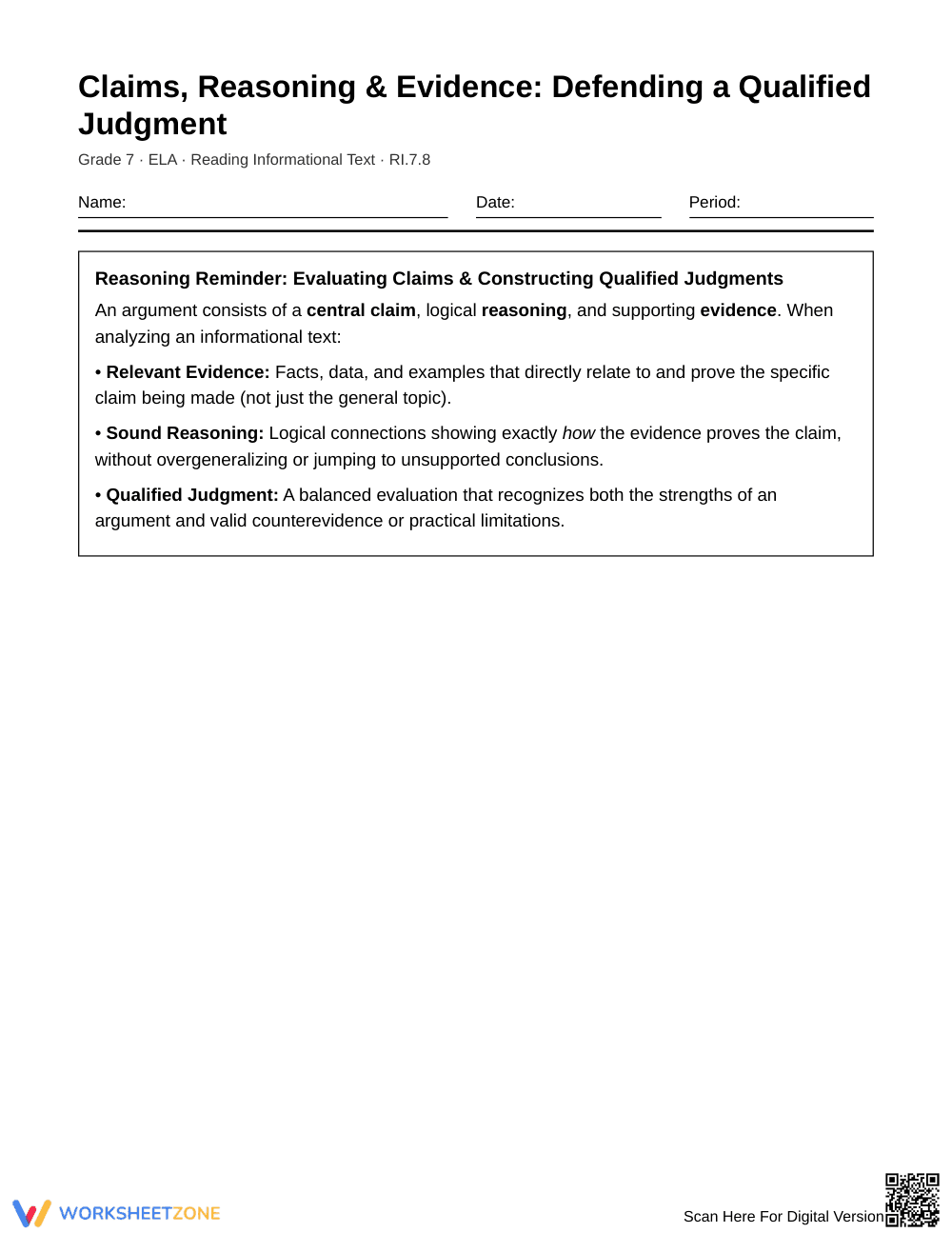
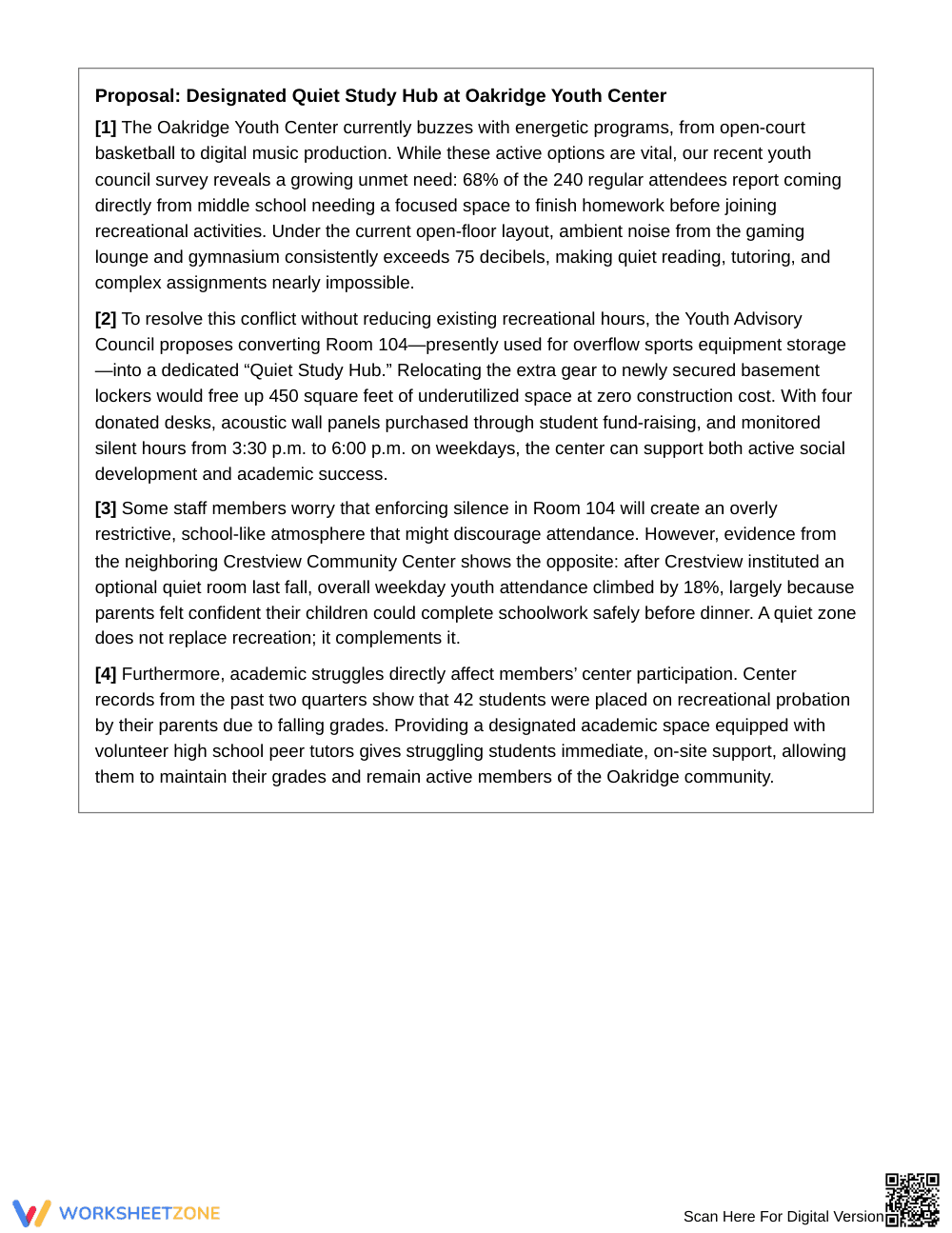
This 5-page printable contains an informational proposal text, a Reasoning Reminder reference box defining key evaluation terms, and 8 structured analytical prompts. Tasks include evidence identification, logical reasoning evaluation, and written synthesis. A complete 3-page teacher answer key provides sample responses, evaluation criteria, and text annotations.
Skill Progression
- Guided Practice (Part A, Tasks 1–2): Students identify direct textual evidence and cite concrete details establishing proposal feasibility.
- Supported Practice (Part B, Tasks 3–6): Learners assess comparative logic, trace multi-paragraph reasoning, and evaluate unstated assumptions.
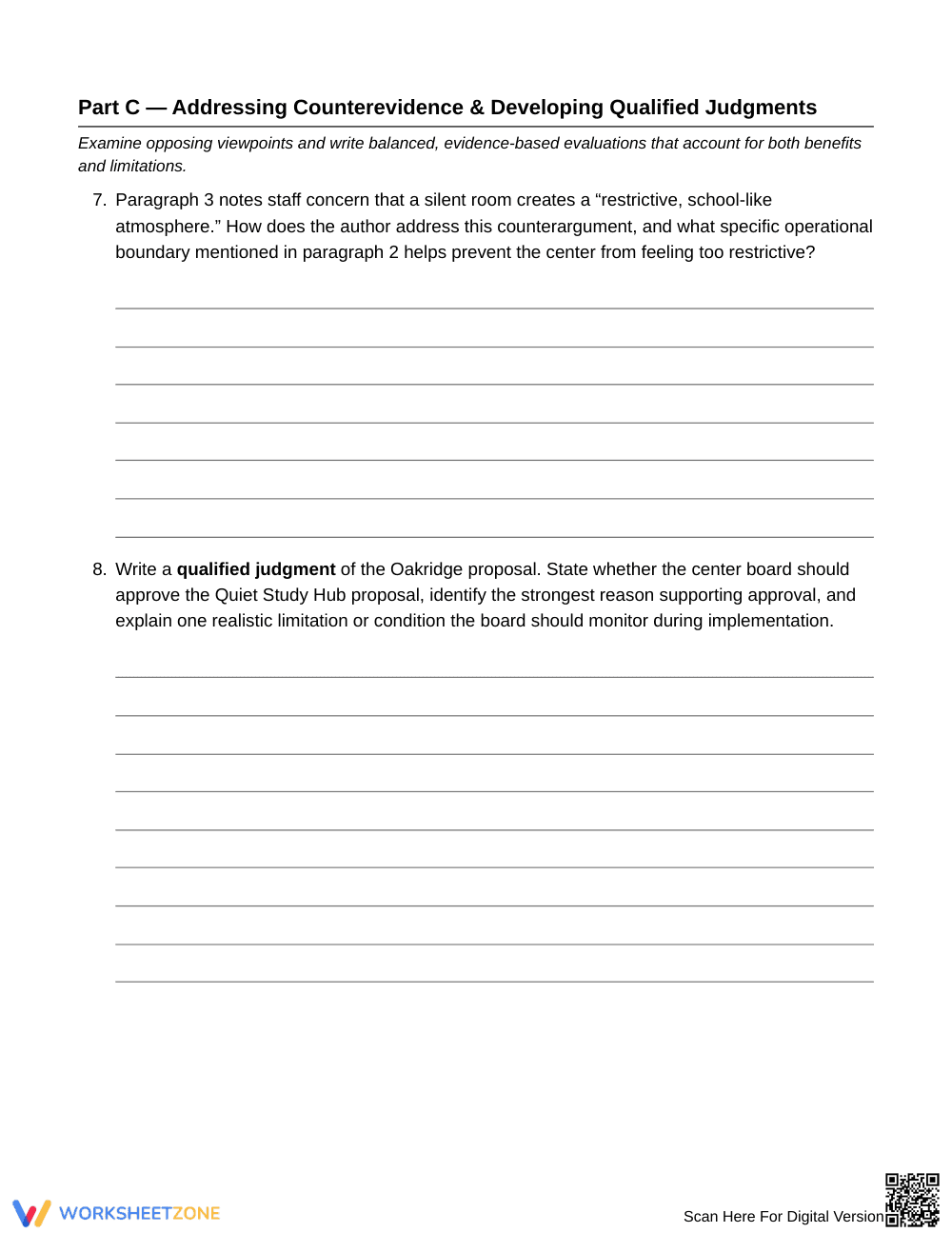
- Independent Practice (Part C, Tasks 7–8): Students analyze counterarguments and compose a balanced, evidence-based qualified judgment.
This sequence follows a gradual-release model from initial retrieval to evaluative synthesis.
Standards Alignment
This resource aligns with primary standard `RI.7.8`: Trace and evaluate the argument and specific claims in a text, assessing whether the reasoning is sound and evidence is sufficient. It also reinforces supporting standard `RI.7.1` through explicit evidence citation. Both standard codes can be copied directly into lesson plans, IEP goals, or district curriculum mapping tools.
How to Use It
Use this worksheet after direct instruction on evidence evaluation as a formative check, or split it across paired reading and independent exit work. Observe whether students notice limitations in comparative claims. Expect completion in 40 to 50 minutes.
Who It's For
Designed for Grade 7 ELA classes developing critical reading skills. Differentiate by highlighting text evidence for struggling readers or prompting advanced learners to propose implementation safeguards. Pair with an anchor chart on sound reasoning or a lesson on argument structures.
Developing the ability to evaluate informational claims under standard RI.7.8 equips middle school learners with essential critical thinking tools. According to Fisher & Frey (2014), structured instructional routines that prompt students to evaluate argument validity and defend qualified judgments significantly improve analytical reading comprehension and evidence-based writing performance. When students learn to weigh sound reasoning against unverified assumptions, they transition from passive text consumers to discerning analytical thinkers. This 8-task worksheet provides systematic scaffolding across five pages, guiding seventh-grade readers through evidence extraction, logical critique, and nuanced synthesis. By engaging directly with authentic counterarguments and operational constraints, students master the discipline of qualifying their academic judgments rather than relying on oversimplified conclusions. Incorporating these targeted evaluation exercises into regular classroom instruction fosters durable literacy skills and prepares middle school students for complex rhetorical analysis.


