


























Views
Downloads




Complete Persuasive Body Paragraph Worksheet | Grade 6 ELA
Paste this activity's link or code into your existing LMS (Google Classroom, Canvas, Teams, Schoology, Moodle, etc.).
Students can open and work on the activity right away, with no student login required.
You'll still be able to track student progress and results from your teacher account.
This Grade 6 ELA worksheet guides students through constructing persuasive body paragraphs using the CREE framework (Claim, Reason, Evidence, Elaboration). Middle school writers analyze a cafeteria policy report, practice integrating evidence, draft original commentary, and synthesize these elements into a complete argumentative paragraph.
At a Glance
- Grade: 6 · Subject: ELA
- Standard:
W.6.1.b— Support claims with clear reasons and relevant evidence using credible sources.- Skill Focus: Build a Persuasive Body Paragraph
- Format: 5 pages · 8 problems · Answer key included · PDF
- Best For: Argument writing units and paragraph practice
- Time: 35–45 minutes
What's Inside
This 5-page resource contains an 8-task progression based on a school cafeteria report. Students utilize a CREE reference guide with sentence frames, an annotated mentor paragraph, and an informational text with opposing viewpoints. The material includes a paragraph rubric checklist and a 3-page answer key with exemplar responses.
Skill Progression
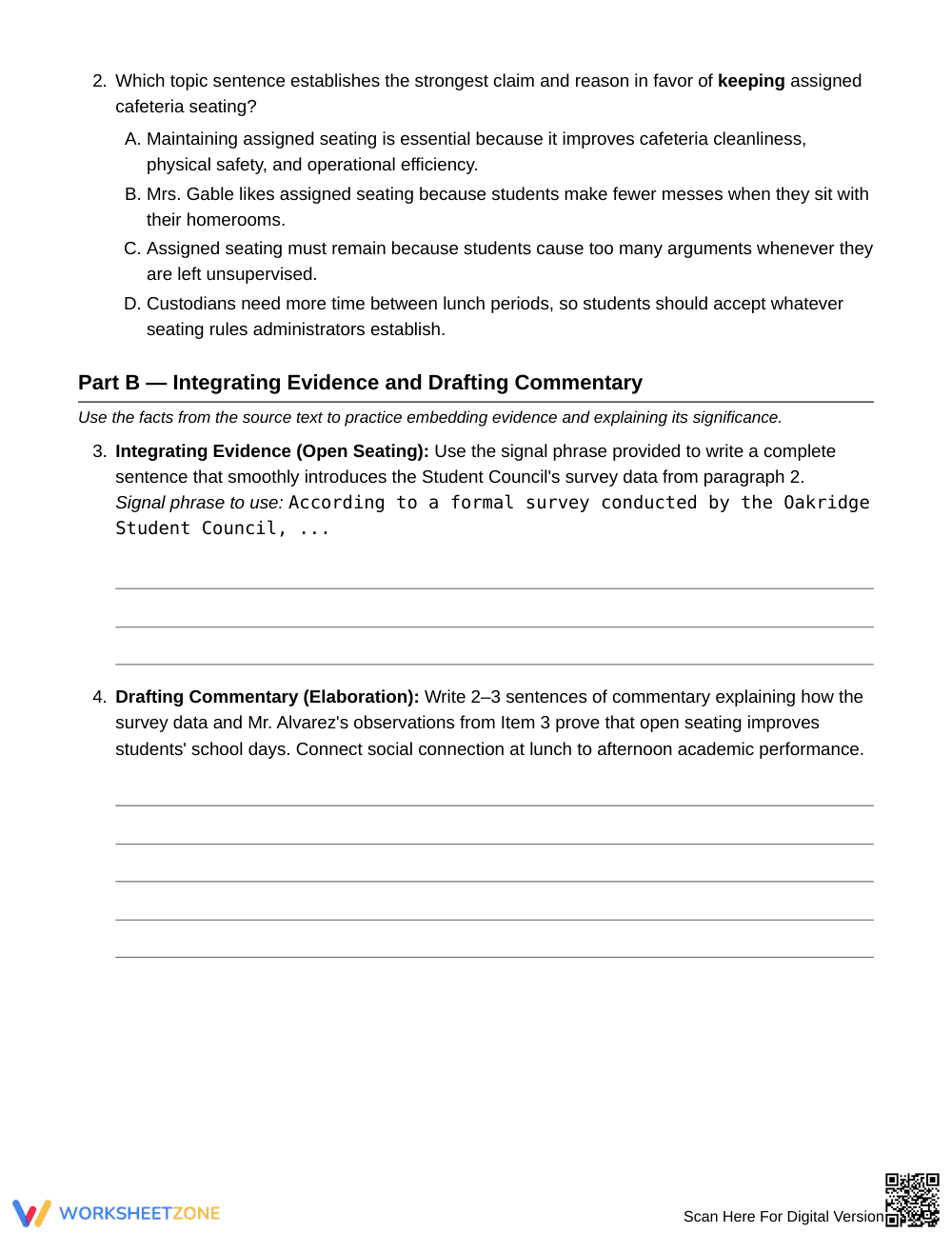
- Guided Practice (Part A, Items 1–2): Students evaluate multiple-choice topic sentences to identify statements establishing strong claims supported by defensible reasons.
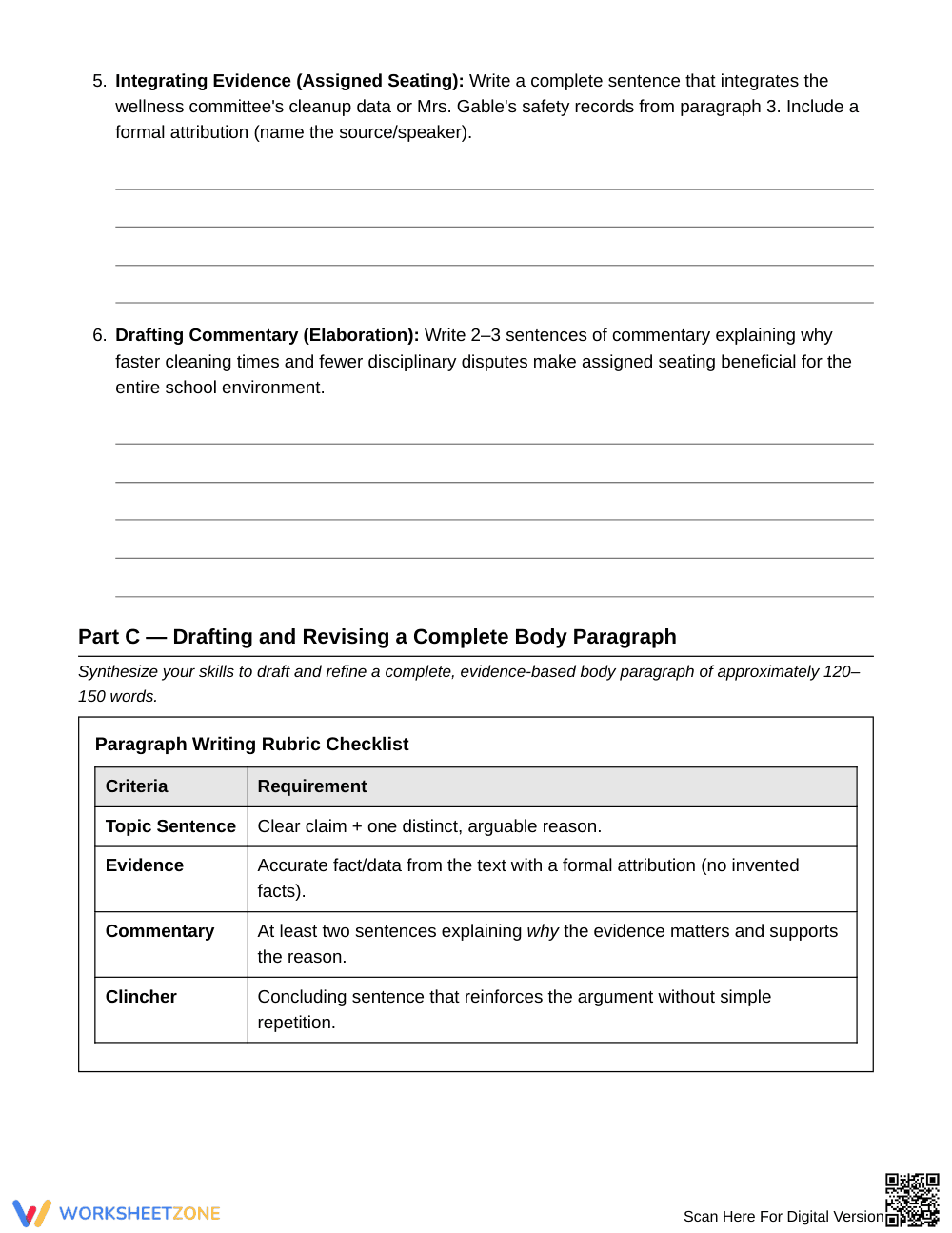
- Supported Practice (Part B, Items 3–6): Learners use signal phrases to embed source statistics and write two to three sentences of explanatory commentary.
- Independent Practice (Part C, Items 7–8): Writers draft a full body paragraph on cafeteria policy and complete targeted revisions using analytical language.
This gradual-release sequence guides students from concept identification to independent argumentative writing.
Standards Alignment
This worksheet aligns directly with W.6.1.b, requiring students to support claims with clear reasons and relevant evidence using credible sources. The source text also reinforces reading standard RI.6.1 by requiring students to cite textual evidence from informational text. Both standard codes can be copied directly into lesson plans, IEP goals, or district curriculum mapping tools.
How to Use It
Assign this resource during an argument writing unit following direct instruction on paragraph structure. Use Part A for paired discussion before students complete Parts B and C independently. Check whether students provide original elaboration rather than simply repeating facts. Sixth-grade students typically complete all 8 tasks within a 35 to 45-minute class period.
Who It's For
This practice set serves general education sixth-grade ELA classes, writing intervention groups, and English learners needing structured sentence frames. Pair this worksheet with an anchor chart on formal signal phrases or direct instruction on distinguishing evidence from commentary.
According to research on adolescent literacy by Fisher & Frey (2014), structured instructional scaffolds that explicitly separate evidence integration from analytical elaboration dramatically improve middle school writing performance. This 5-page Grade 6 argument writing worksheet supports standard W.6.1.b by teaching students how to support claims with clear reasons and relevant evidence using credible sources. Rather than asking novice writers to draft multi-paragraph essays without guidance, the 8 tasks guide learners through the four-part CREE framework (Claim, Reason, Evidence, Elaboration). Students analyze a balanced 3-paragraph text regarding school cafeteria seating, identify effective topic sentences, embed cited statistics with formal attributions, and write dedicated commentary that explains the logical connection between evidence and claims. The included mentor text, revision prompt, and comprehensive 3-page answer key ensure measurable progress toward argumentative writing standards across diverse classroom settings.


