


























Views
Downloads

Complete Membrane Transport Worksheet | Grade 10 Biology
Paste this activity's link or code into your existing LMS (Google Classroom, Canvas, Teams, Schoology, Moodle, etc.).
Students can open and work on the activity right away, with no student login required.
You'll still be able to track student progress and results from your teacher account.
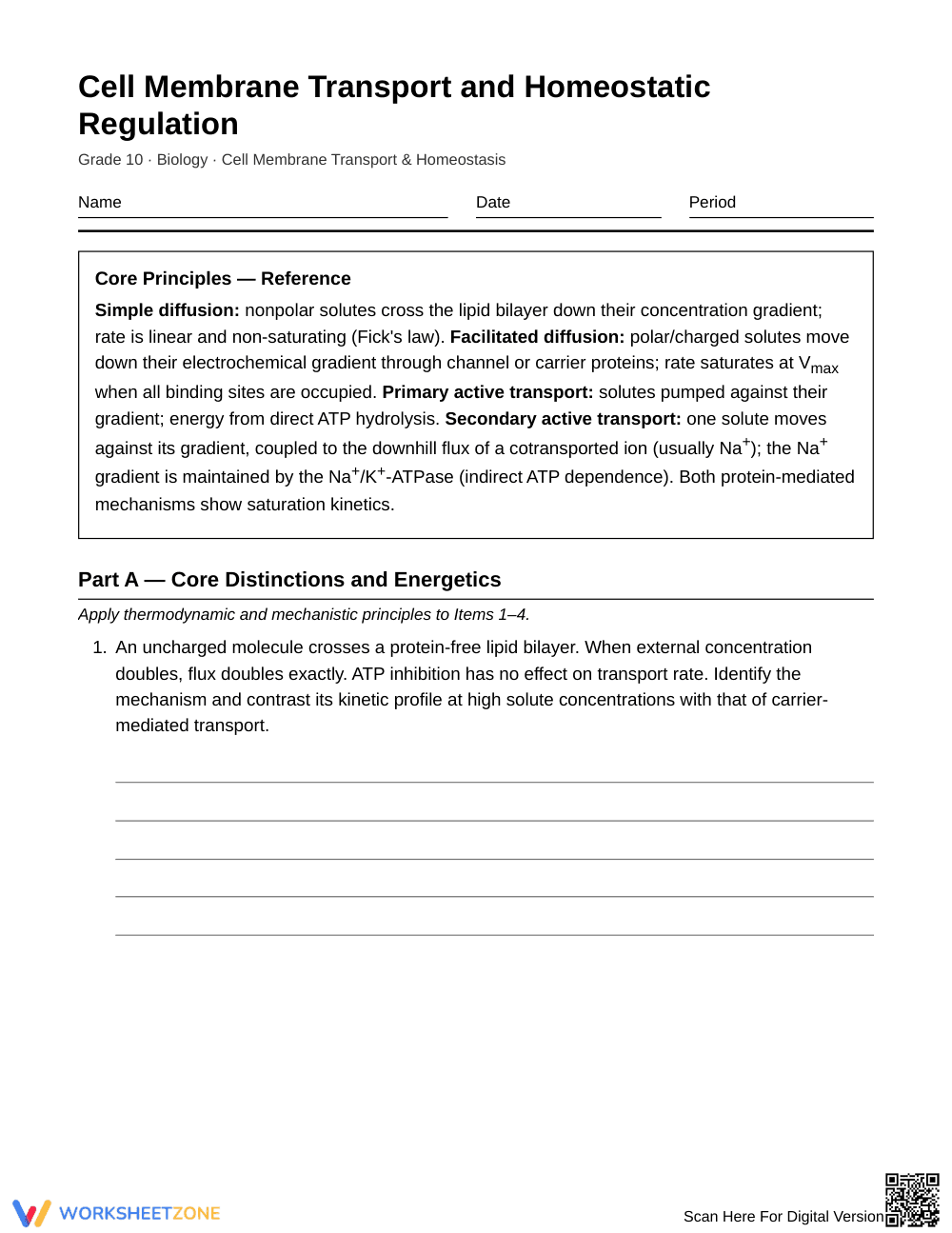
This comprehensive biology worksheet deepens high school students' mastery of passive diffusion, facilitated diffusion, and active transport mechanisms. Through 12 rigorous analytical tasks, learners evaluate concentration gradients, interpret kinetic binding saturation data, and predict cellular volume responses under homeostatic disruptions. Students build essential mechanistic reasoning skills across core physiological systems.
At a Glance
- Grade: 10 · Subject: Biology
- Standard:
Cell Transport & Homeostasis— Analyze solute transport mechanisms and predict cellular responses to gradient shifts- Skill Focus: Passive, Facilitated, and Active Transport
- Format: 5 pages · 12 problems · Answer key included · PDF
- Best For: Advanced biology practice and data analysis
- Time: 45–60 minutes
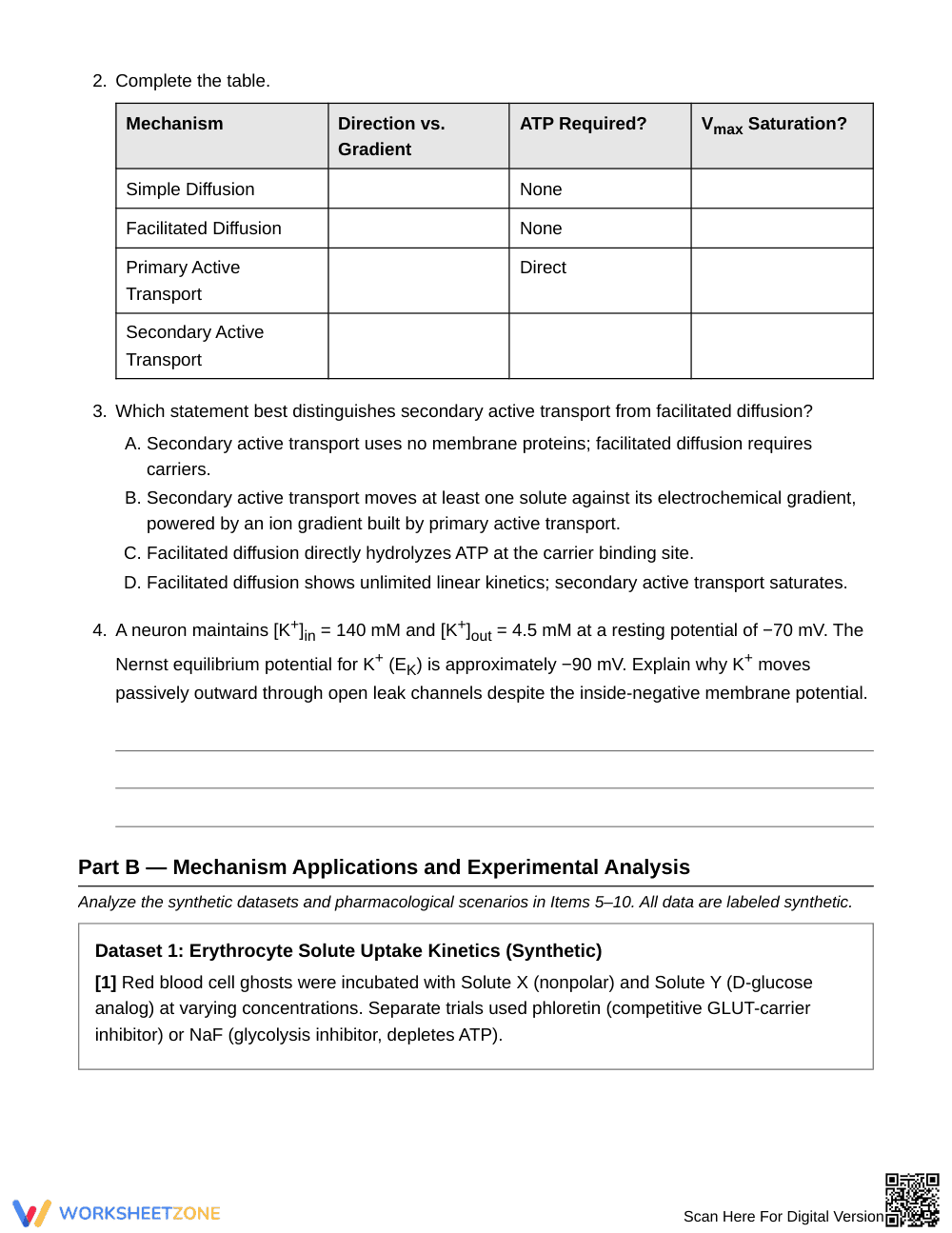
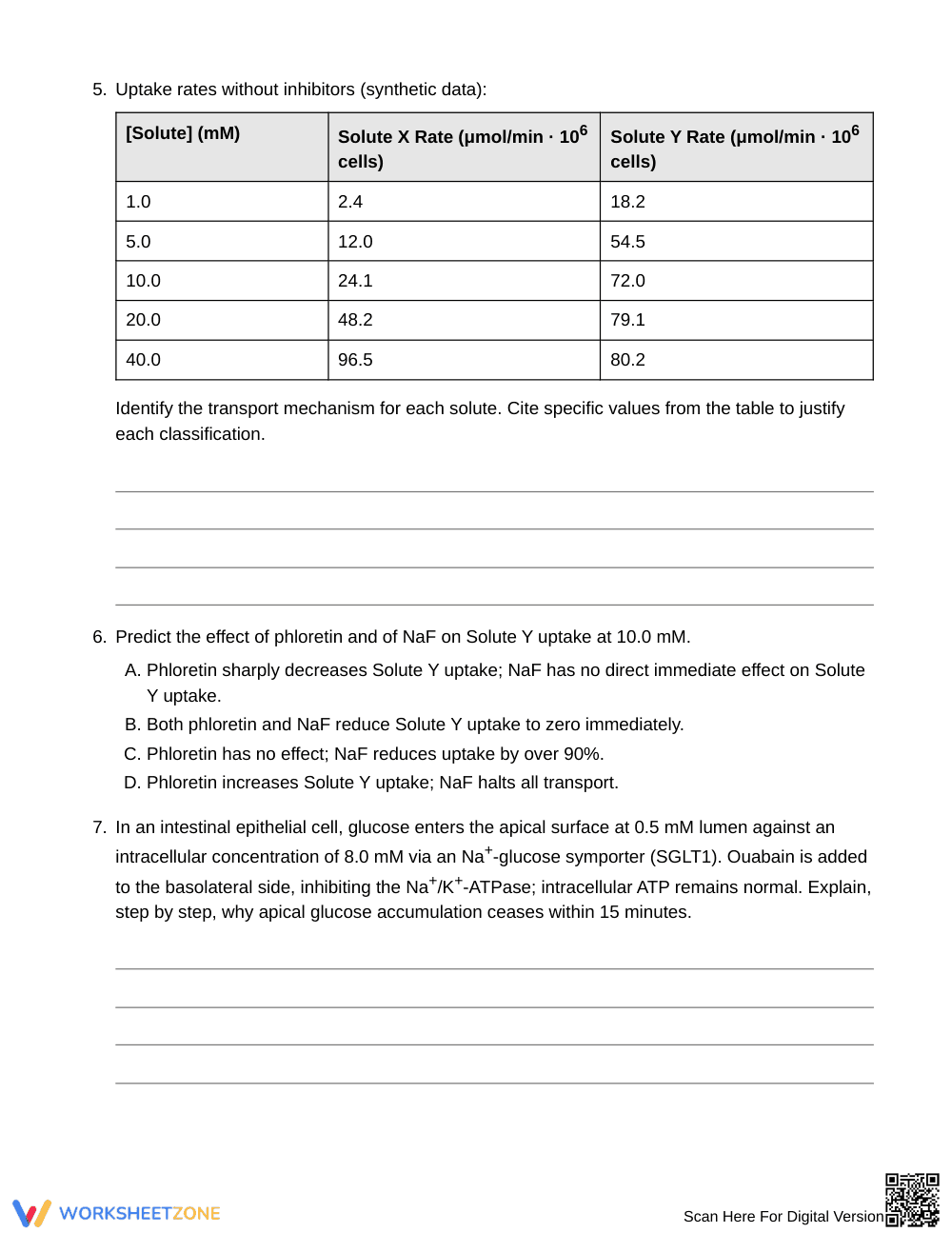
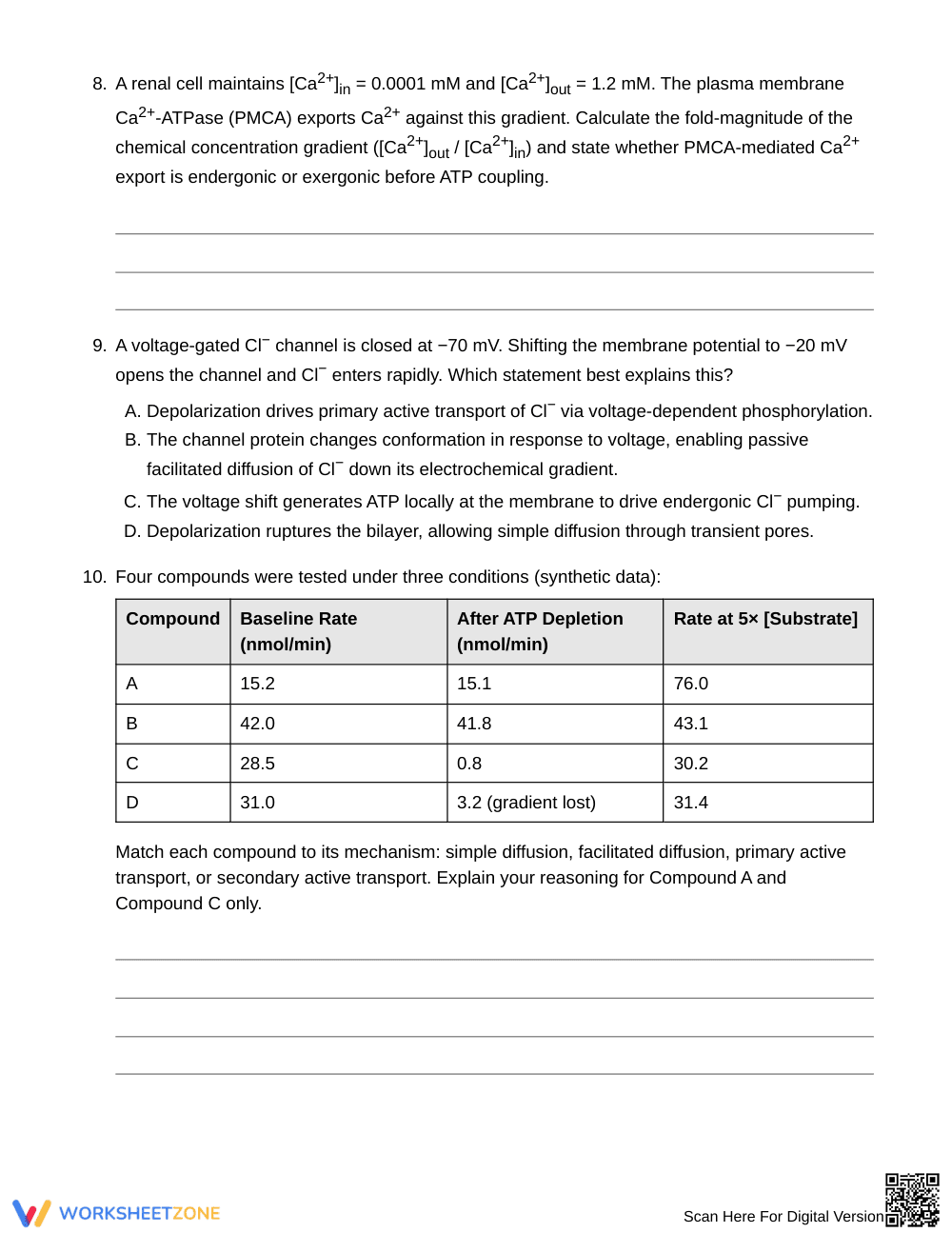
This 5-page resource contains 12 multi-part items organized into three progressive sections. Students interact with reference principle boxes, comparative classification tables, quantitative Nernst potential scenarios, and synthetic experimental datasets depicting erythrocyte solute uptake kinetics. A complete 4-page answer key provides step-by-step rationales, gradient fold calculations, and biochemical explanations for all pharmacological inhibitor conditions.
Skill Progression
- Guided practice (Items 1–4): Students review core thermodynamic principles to classify transport modes in structured comparison tables, contrasting simple diffusion linearity against carrier saturation.
- Supported practice (Items 5–10): Learners interpret synthetic kinetic curves, evaluate pharmacological inhibitors like ouabain and phloretin, and calculate solute gradient magnitudes across renal and epithelial membranes.
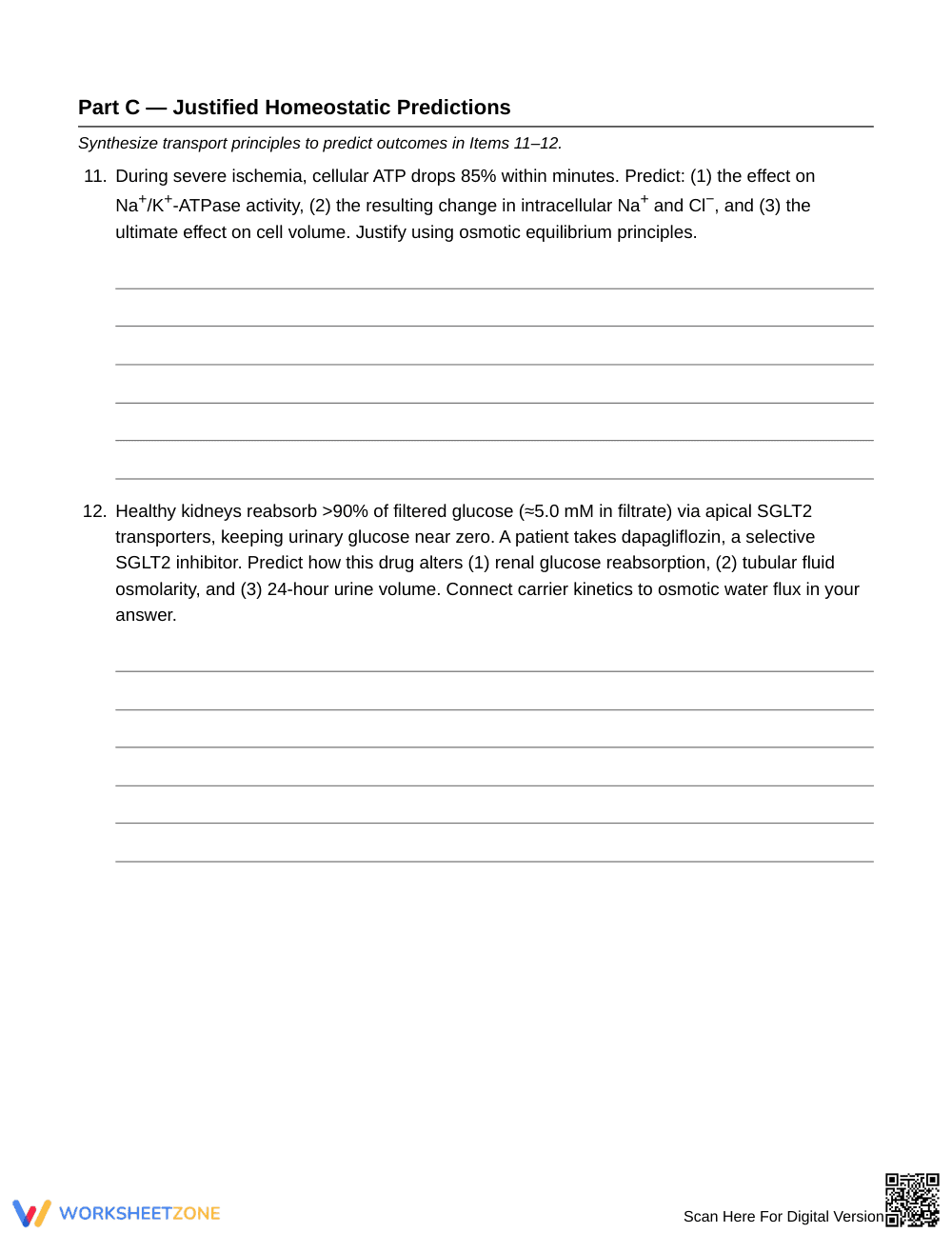
- Independent practice (Items 11–12): Students synthesize transport concepts without scaffolds to predict systemic outcomes during severe ATP-depleting ischemia and therapeutic SGLT2 transporter inhibition.
This structure follows an intentional gradual-release framework, moving learners from foundational thermodynamic definitions toward unassisted experimental evaluation and physiological synthesis.
Standards Alignment
This resource aligns with high school life science standards governing cellular structure, active and passive membrane permeability, and homeostatic regulation. Students demonstrate how feedback mechanisms and transport proteins maintain dynamic equilibrium across cell membranes. Both standard codes can be copied directly into lesson plans, IEP goals, or district curriculum mapping tools.
How to Use It
Deploy this worksheet after direct instruction on membrane structure and electrochemical gradients to reinforce quantitative data analysis. During independent completion, circulate to observe whether students recognize saturation kinetics at high substrate concentrations in Part B as diagnostic evidence of protein-mediated transport. Allow 45 to 60 minutes for student completion, or assign Part C as a targeted summative check.
Who It's For
This activity is designed for Grade 10 general and honors biology students developing biochemical reasoning. Provide the reference definitions box as an ongoing accommodation for emerging bilingual learners, while challenging advanced students to explain secondary active transport energetics. Pair this worksheet with a dialysis tubing laboratory or a membrane transport interactive simulation.
According to Fisher & Frey (2014), purposeful gradual-release instructional frameworks substantially strengthen adolescent problem-solving capabilities when engaging with complex cellular biology concepts. This Grade 10 biology resource provides 12 structured analytical tasks focused directly on passive diffusion, facilitated diffusion, and active transport mechanisms. Students analyze solute concentration gradients, interpret quantitative carrier saturation kinetics, and evaluate osmotic volume responses during homeostatic disruptions. By scaffolding learners from structured thermodynamic classification tables to complex pharmacological inhibitor datasets and unassisted clinical predictions, the resource establishes measurable pathways toward scientific proficiency. Educational findings confirm that embedding experimental data analysis alongside conceptual modeling deepens long-term retention and develops foundational scientific reasoning across secondary life science classrooms. Teachers can utilize these focused items to verify student mastery of cellular homeostasis and membrane transport dynamics within any standard-based high school curriculum.


