


























Views
Downloads


Complete Mechanical Energy Worksheet | Grade 12 Physics
Paste this activity's link or code into your existing LMS (Google Classroom, Canvas, Teams, Schoology, Moodle, etc.).
Students can open and work on the activity right away, with no student login required.
You'll still be able to track student progress and results from your teacher account.
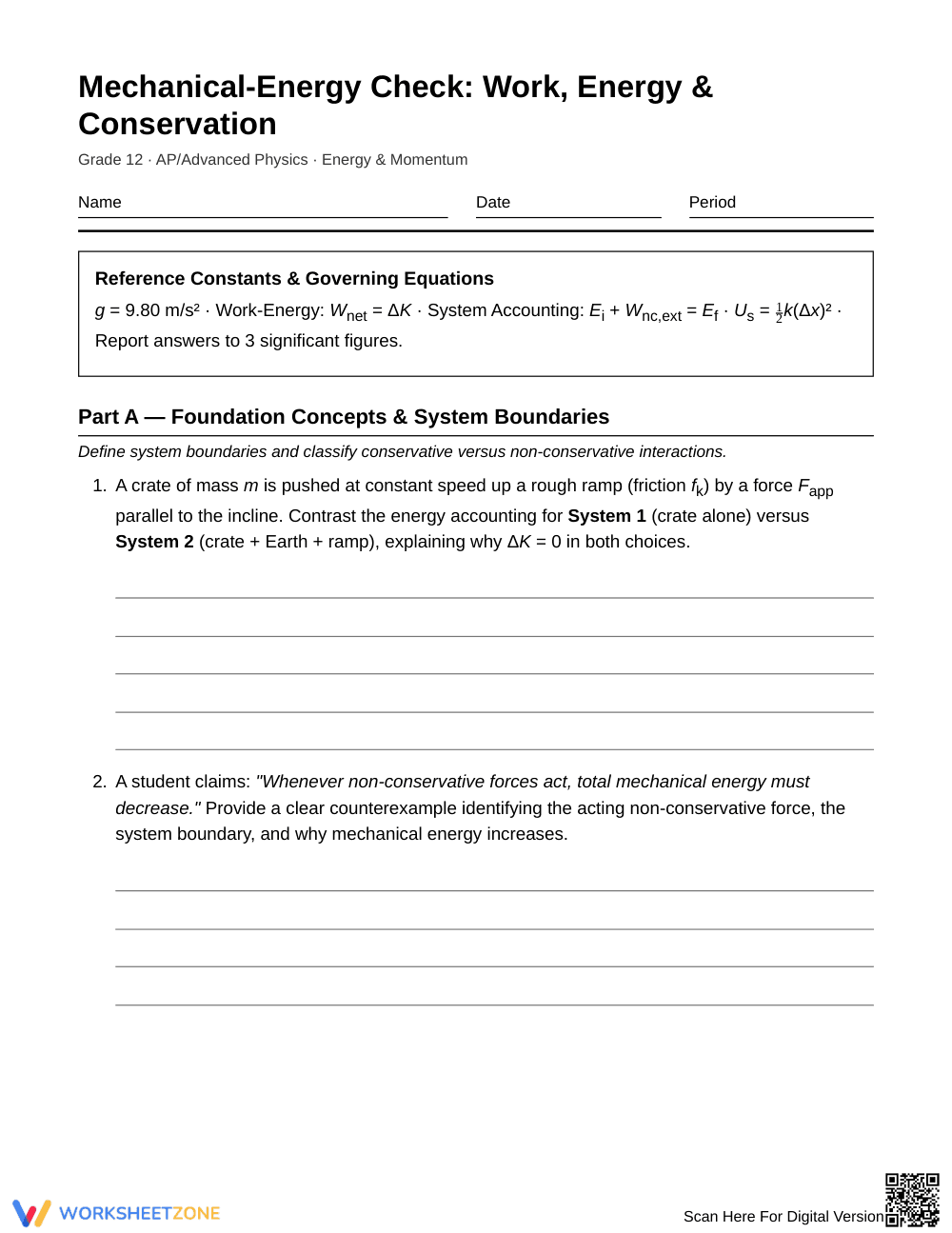
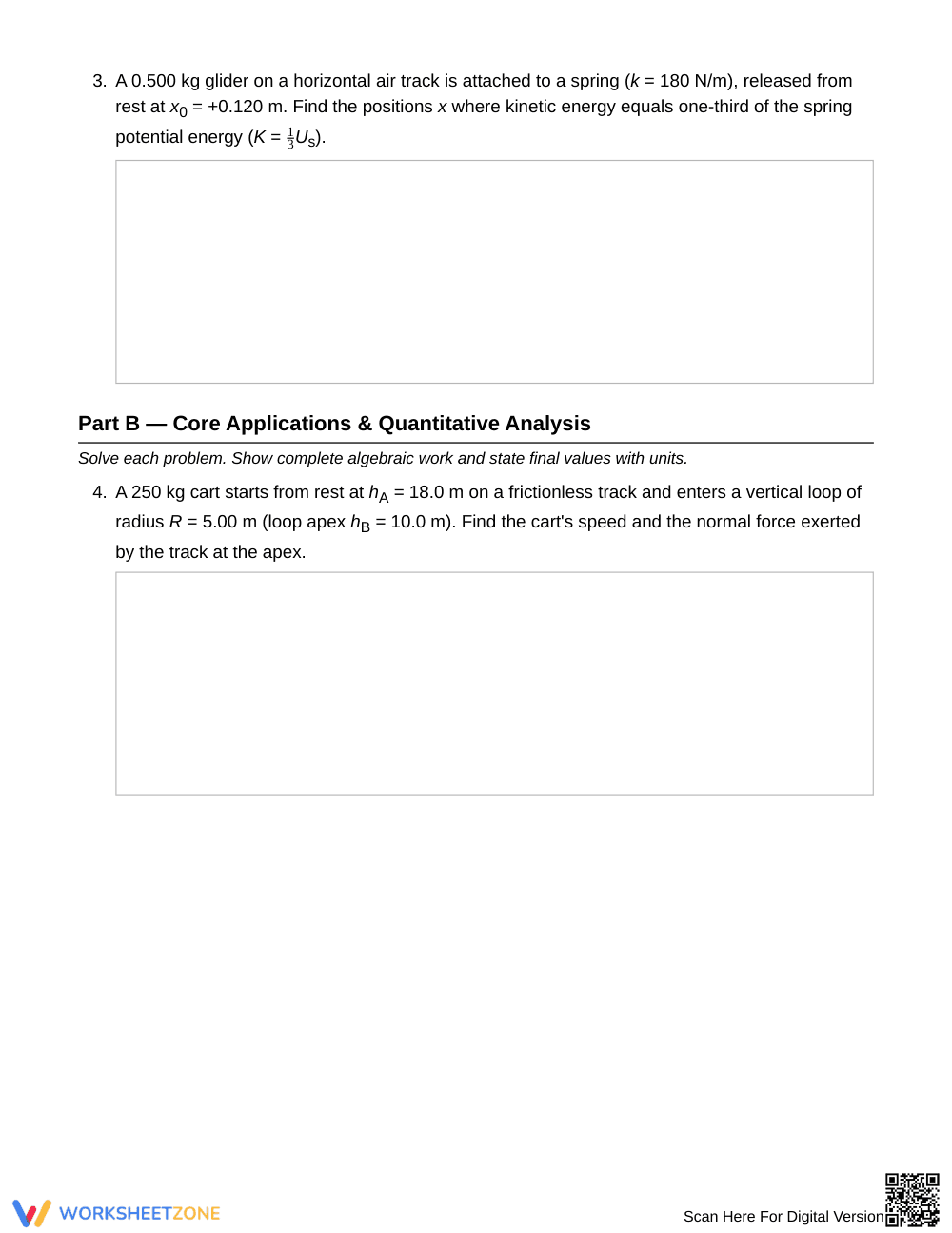
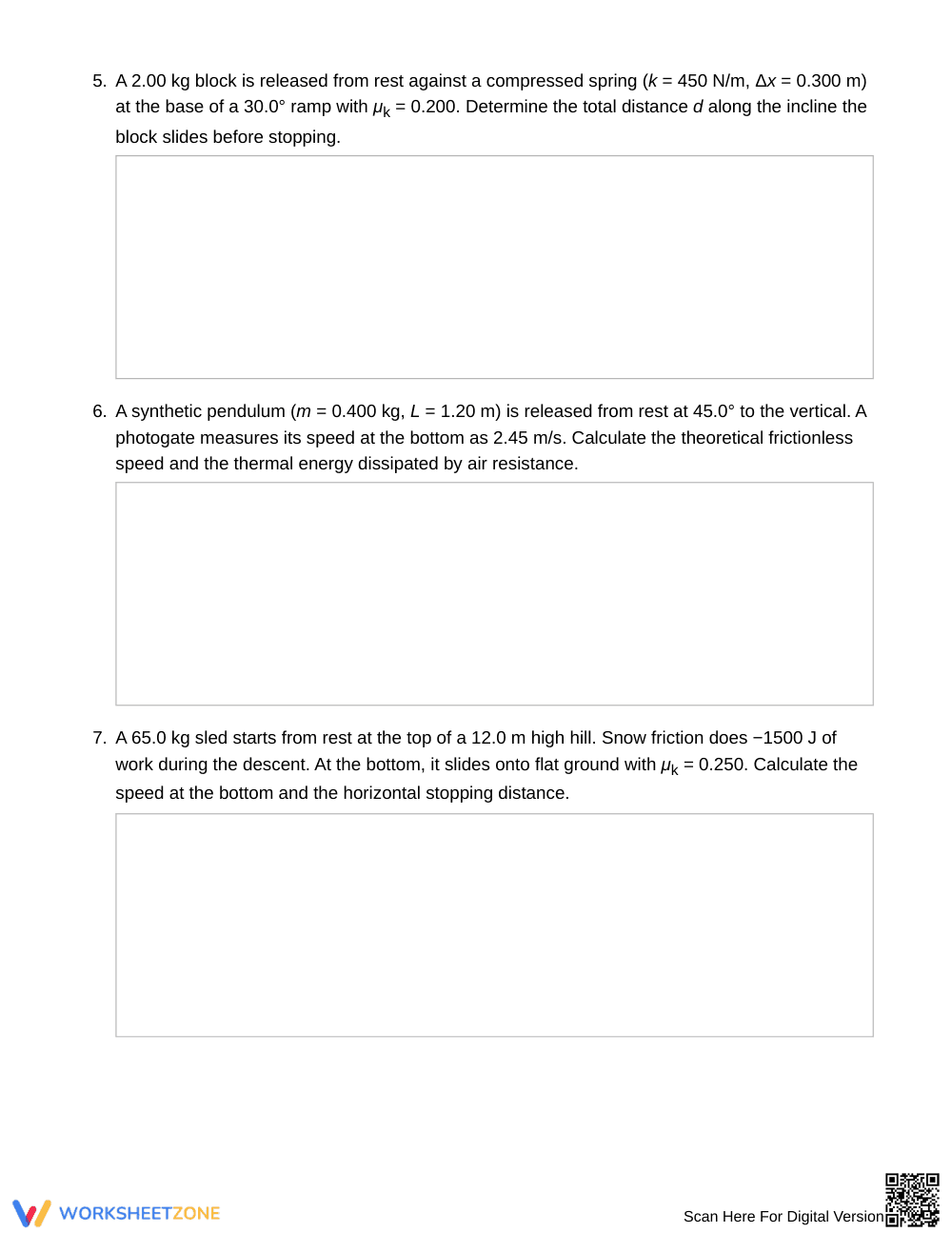
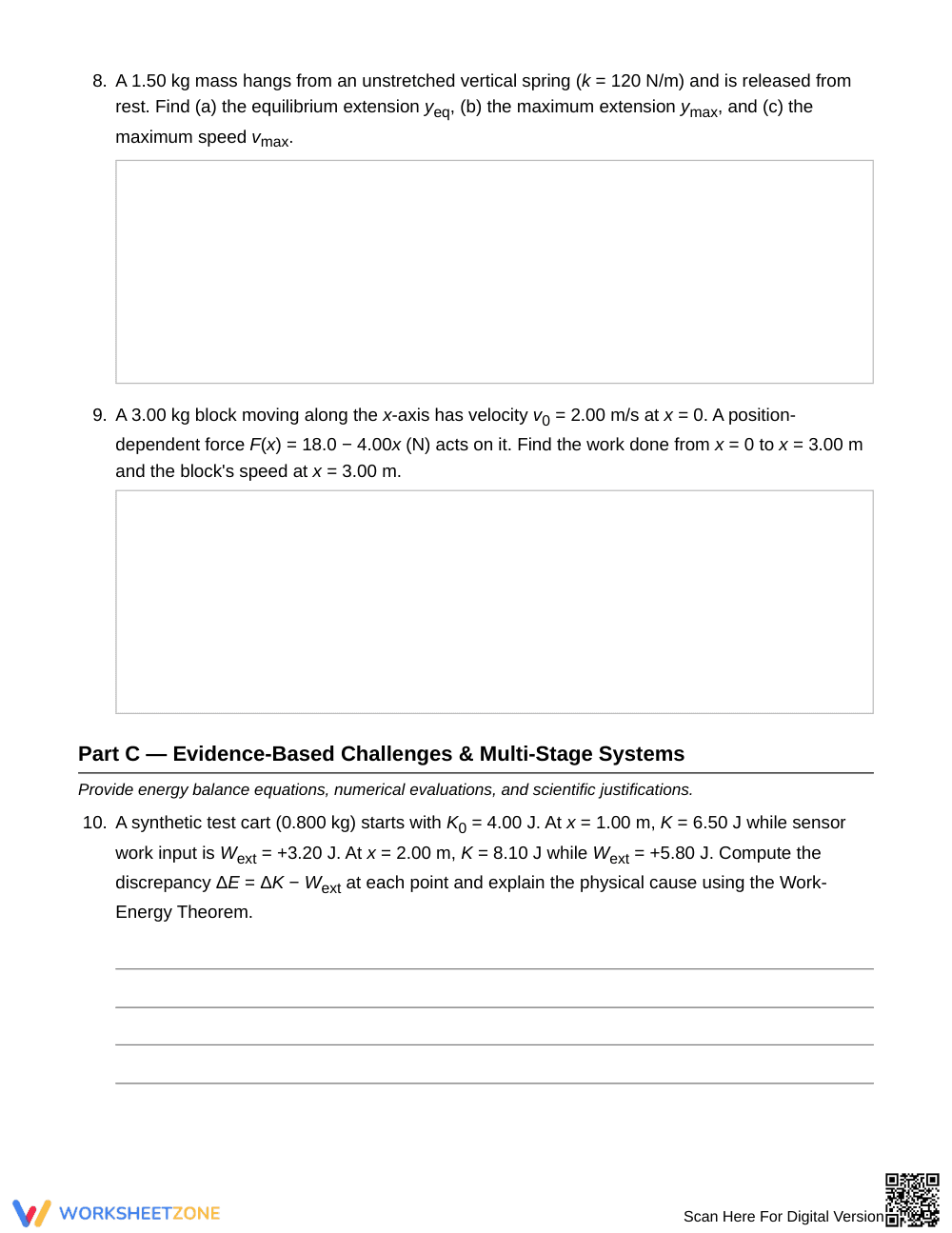
This Grade 12 physics worksheet trains students to analyze mechanical energy conservation, non-conservative work, and system boundaries across multi-stage physical scenarios. Students calculate kinetic and potential energy transformations, evaluate external work inputs, and solve complex rotational, incline, and spring systems to build mastery in advanced mechanics problem-solving.
At a Glance
- Grade: 12 · Subject: Physics
- Standard: Analyze work, energy transformations, and conservation of mechanical energy in closed and open systems
- Skill Focus: Mechanical-Energy Check
- Format: 5 pages · 12 problems · Answer key included · PDF
- Best For: AP Physics review and exam preparation
- Time: 45–60 minutes
What's Inside: A 5-page student practice set featuring 12 structured quantitative and conceptual problems divided into three scaffolded tiers. The worksheet incorporates a governing equations reference header, vertical loops, incline friction, calculus-based variable force integration, and multi-stage drag analysis, accompanied by a comprehensive 3-page worked answer key.
Skill Progression
- Guided practice (Tasks 1–3): Students define system boundaries, contrast conservative versus non-conservative interactions, and solve spring-equilibrium ratios with explicit governing formulas.
- Supported practice (Tasks 4–9): Students calculate dynamic values across vertical loops, angled ramps with friction, synthetic pendulums, hanging springs, and position-dependent variable forces.
- Independent practice (Tasks 10–12): Students analyze multi-stage evidence challenges including sensor work discrepancies, coupled two-body Atwood machines, and gravel runaway truck ramps.
This structural sequence models the gradual-release framework, moving learners from conceptual boundary classification to autonomous mathematical synthesis.
Standards Alignment
Students quantitatively analyze how external forces change a system's energy and apply the conservation of energy principle across complex multi-body configurations. Both standard codes can be copied directly into lesson plans, IEP goals, or district curriculum mapping tools.
How to Use It
Deploy this resource after direct instruction on the work-energy theorem and potential energy functions. It serves effectively as an in-class collaborative problem-solving set or an intensive unit assessment review. Formatively monitor whether students isolate internal versus external forces when defining system boundaries in Part A before they calculate numerical values in Part B. Expected completion time is 45 to 60 minutes.
Who It's For
Designed for Grade 12 AP Physics and advanced mechanics students who need rigorous analytical practice with energy accounting. Instructors can scaffold the lesson by providing free-body diagram organizers for Part B or extend learning by requiring calculus derivations for Part C. Pair this assignment directly with an energy-track laboratory experiment or an interactive roller coaster simulation.
According to Fisher & Frey (2014), structured cognitive progressions that transition from foundational principle modeling to independent evidence-based analysis yield superior student retention in advanced STEM disciplines. This Grade 12 mechanical energy worksheet embodies that instructional design by organizing 12 rigorous problems across three defined analytical stages. Students solidify conceptual comprehension of work-energy accounting and boundary definitions before executing multi-variable quantitative calculations involving springs, variable forces, and friction losses. Supported by a detailed 3-page solutions guide, the resource enables educators to target common misconceptions regarding non-conservative work and thermal dissipation. Integrating deliberate practice with quantitative modeling equips high school physics scholars to achieve reliable conceptual transfer and measurable problem-solving fluency across collegiate-level mechanics topics.


