


























Views
Downloads




Complete Inverted Patterns Worksheet | Grade 10 English II
Paste this activity's link or code into your existing LMS (Google Classroom, Canvas, Teams, Schoology, Moodle, etc.).
Students can open and work on the activity right away, with no student login required.
You'll still be able to track student progress and results from your teacher account.
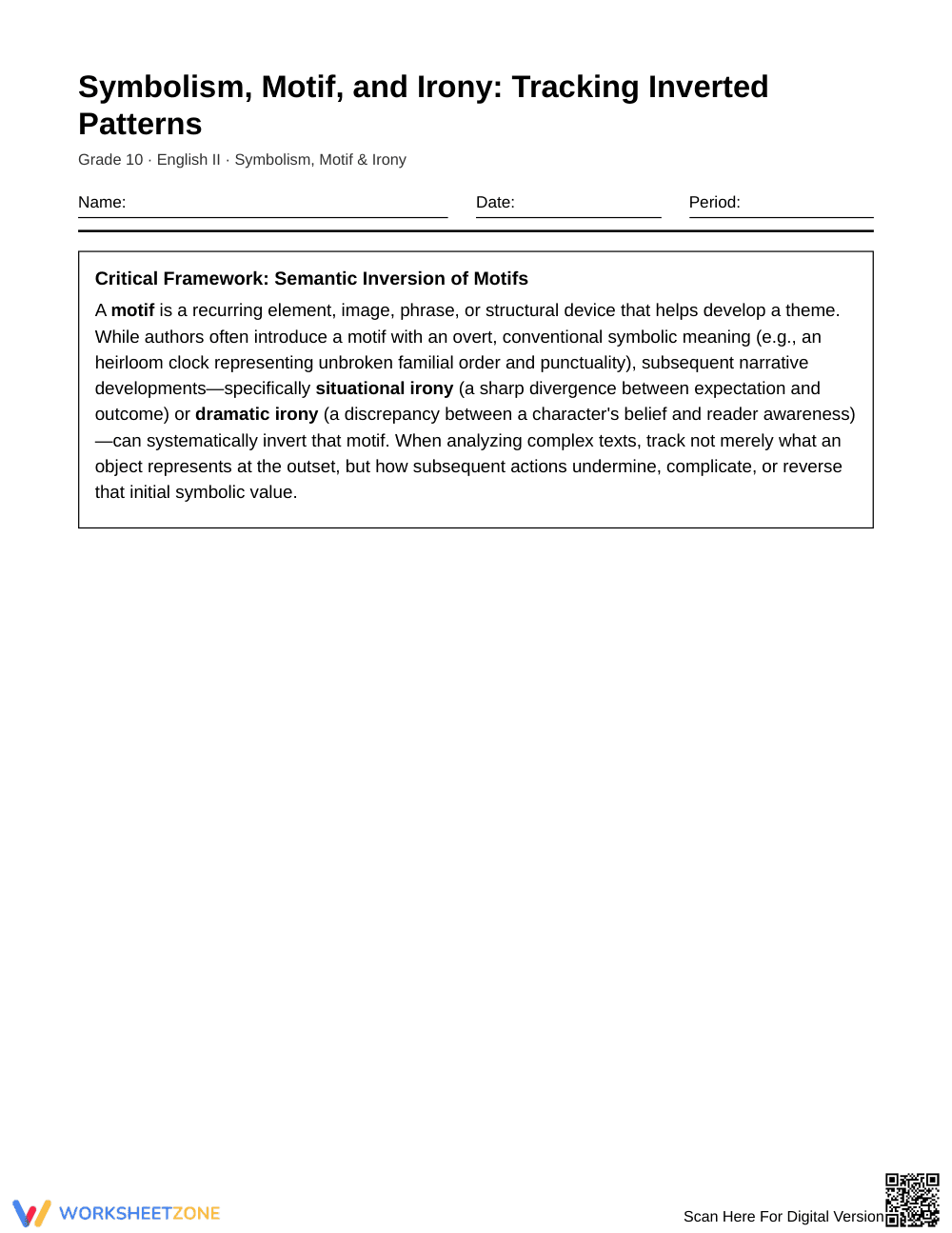
This Grade 10 English II worksheet trains high school students to analyze how recurring motifs reverse their original symbolic meaning. Students examine two interconnected paired passages featuring an antique clock, analyzing how situational and dramatic irony transform an instrument of domestic order into a symbol of detachment to develop an overarching literary theme.
At a Glance
- Grade: 10 · Subject: English II
- Standard:
RL.9-10.2— Determine a theme of a text and analyze in detail its development- Skill Focus: Explaining motif patterns that undermine initial meaning
- Format: 6 pages · 8 problems · 3-page answer key included · PDF
- Best For: Close reading, motif tracking, and theme analysis practice
- Time: 45–60 minutes
What's Inside
The resource begins with a conceptual framework defining motif inversion and irony. Across 6 pages, students read two paired excerpts tracking a generational timepiece before completing 8 analytical tasks. Tasks include constraint-setting questions, comparative evaluations of competing interpretations, qualified thematic arguments, and a 3-page explanatory answer key with sample responses.
Skill Progression
- Guided practice (Tasks 1–2): Students establish interpretive constraints, identifying explicit textual details from initial exposition that define the clock's original symbolic value.
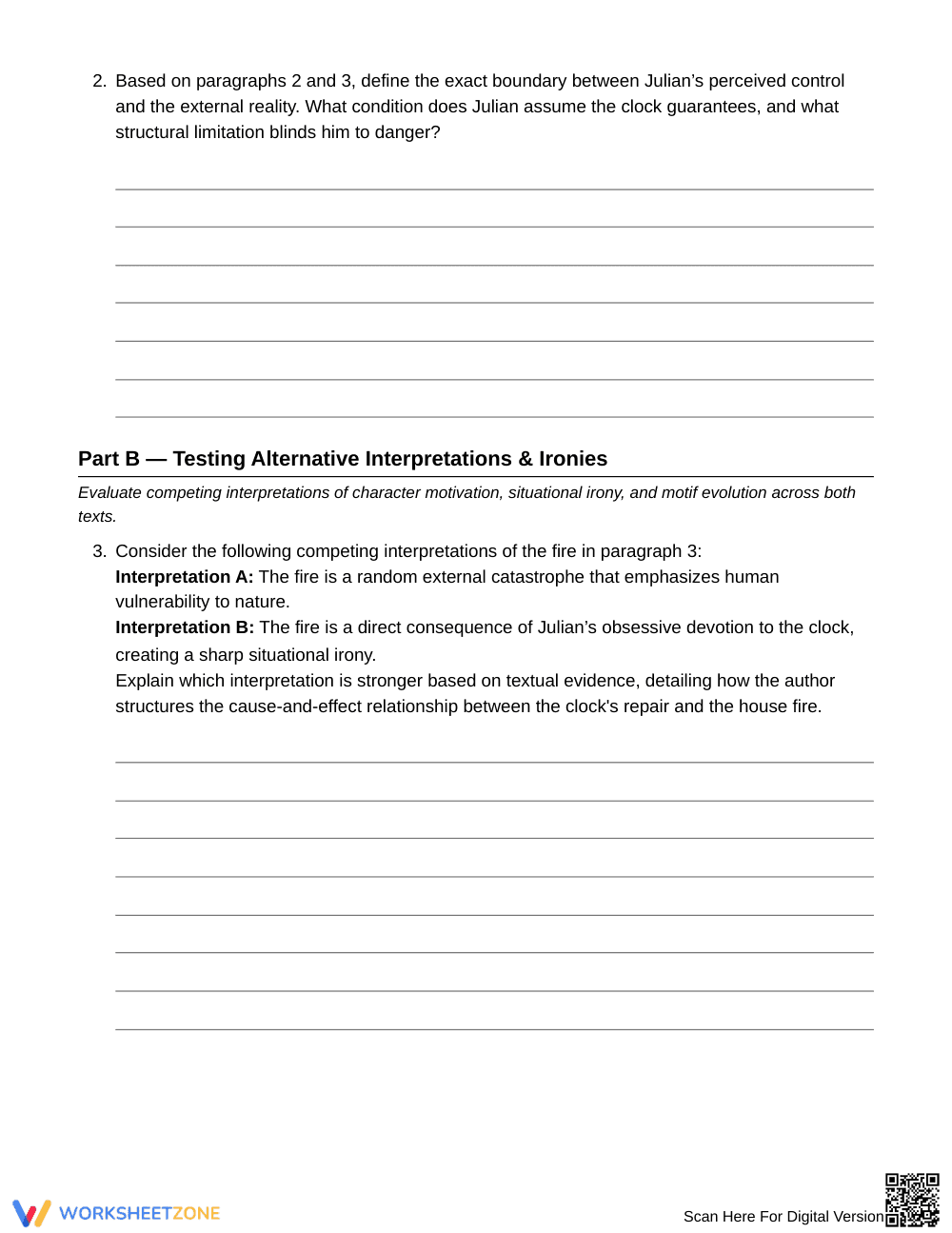
- Supported practice (Tasks 3–6): Students analyze competing critical perspectives and structural irony, contrasting physical descriptions and evaluating how situational irony dismantles the character's assumptions.
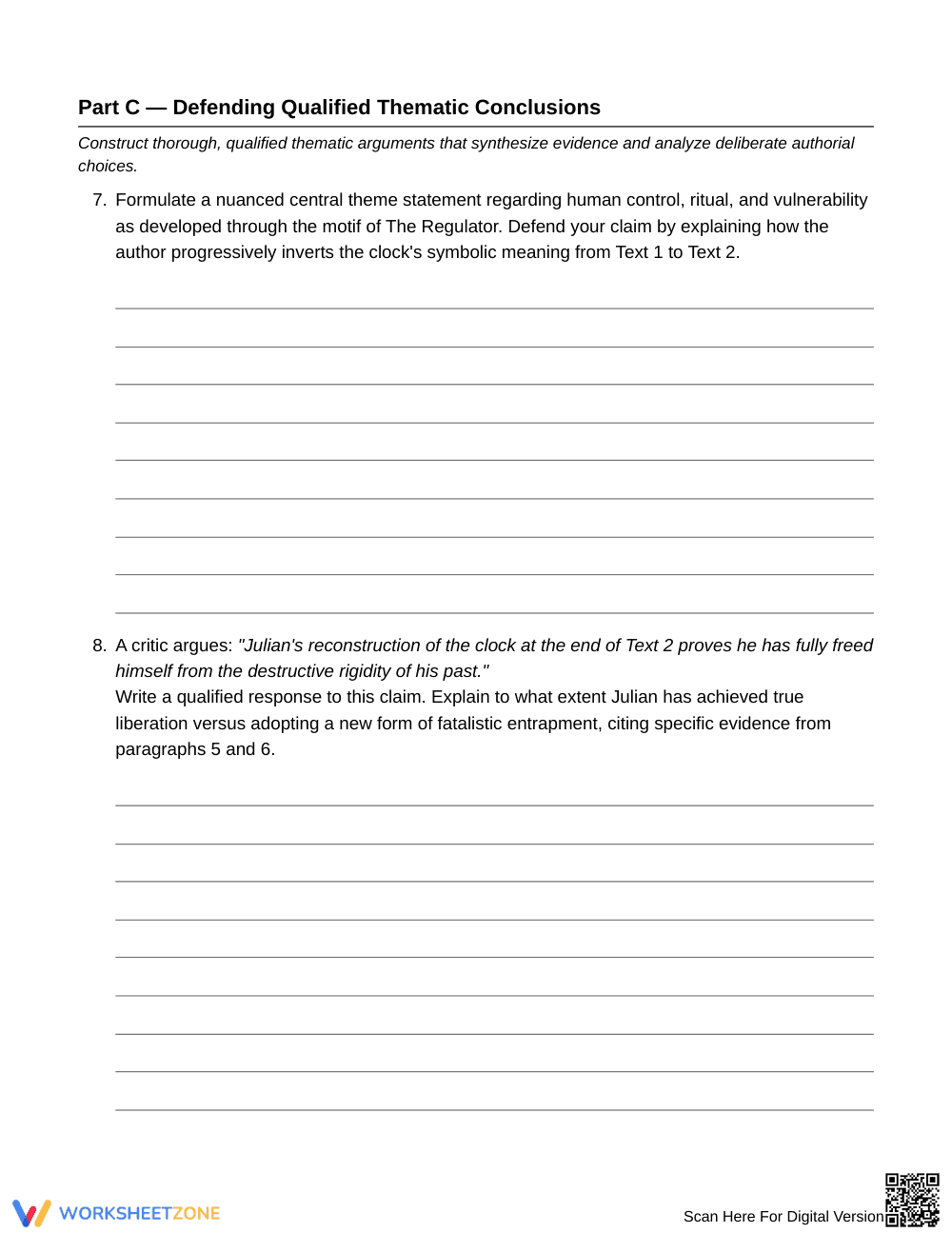
- Independent practice (Tasks 7–8): Students synthesize both texts to formulate qualified thematic arguments and critique a scholar's claim regarding emotional liberation versus entrapment.
This sequence follows a gradual-release model, advancing from direct evidence identification to independent literary synthesis.
Standards Alignment
This worksheet aligns directly to primary standard `RL.9-10.2`: "Determine a theme or central idea of a text and analyze in detail its development over the course of the text." It also supports `RL.9-10.1` by requiring thorough textual evidence for complex inferences. Both standard codes can be copied directly into lesson plans, IEP goals, or district curriculum mapping tools.
How to Use It
Use this resource after direct instruction on situational irony or during a thematic analysis unit. Formatively assess comprehension during Task 3 by checking whether students explain the causal link between clock repairs and the house fire rather than dismissing the fire as coincidence. Students typically complete the 8 tasks within 45 to 60 minutes.
Who It's For
This worksheet is tailored for Grade 10 English II students mastering higher-order literary interpretation. Scaffolding supports developing readers through explicit critical framing, while open-ended counterarguments challenge advanced learners. Pair this worksheet with an anchor chart on situational irony or a mini-lesson on motif tracking.
Mastering standard RL.9-10.2 requires high school readers to move beyond static symbol identification to trace how authors develop and invert complex thematic patterns across narrative arcs. This Grade 10 English II worksheet operationalizes this analytical shift through an 8-task progression that guides students in explaining motif patterns that undermine their initial meaning. Grounded in the instructional frameworks identified by Fisher & Frey (2014), the structured release of responsibility from guided motif identification to independent qualification of thematic counterclaims scaffolds analytical independence. By systematically evaluating paired narrative texts and interrogating situational irony, students learn how shifting authorial word choices and physical contrasts actively reverse early character perceptions. The accompanying 3-page explanatory answer key provides educators with concrete models for evaluating qualified thematic synthesis, ensuring secondary learners develop the critical text-based reasoning necessary for proficient literary analysis and college-ready textual interpretation across complex literary genres.


