


























Views
Downloads



Complete Frequency & Amplitude Worksheet | Grade 6 Science
Paste this activity's link or code into your existing LMS (Google Classroom, Canvas, Teams, Schoology, Moodle, etc.).
Students can open and work on the activity right away, with no student login required.
You'll still be able to track student progress and results from your teacher account.
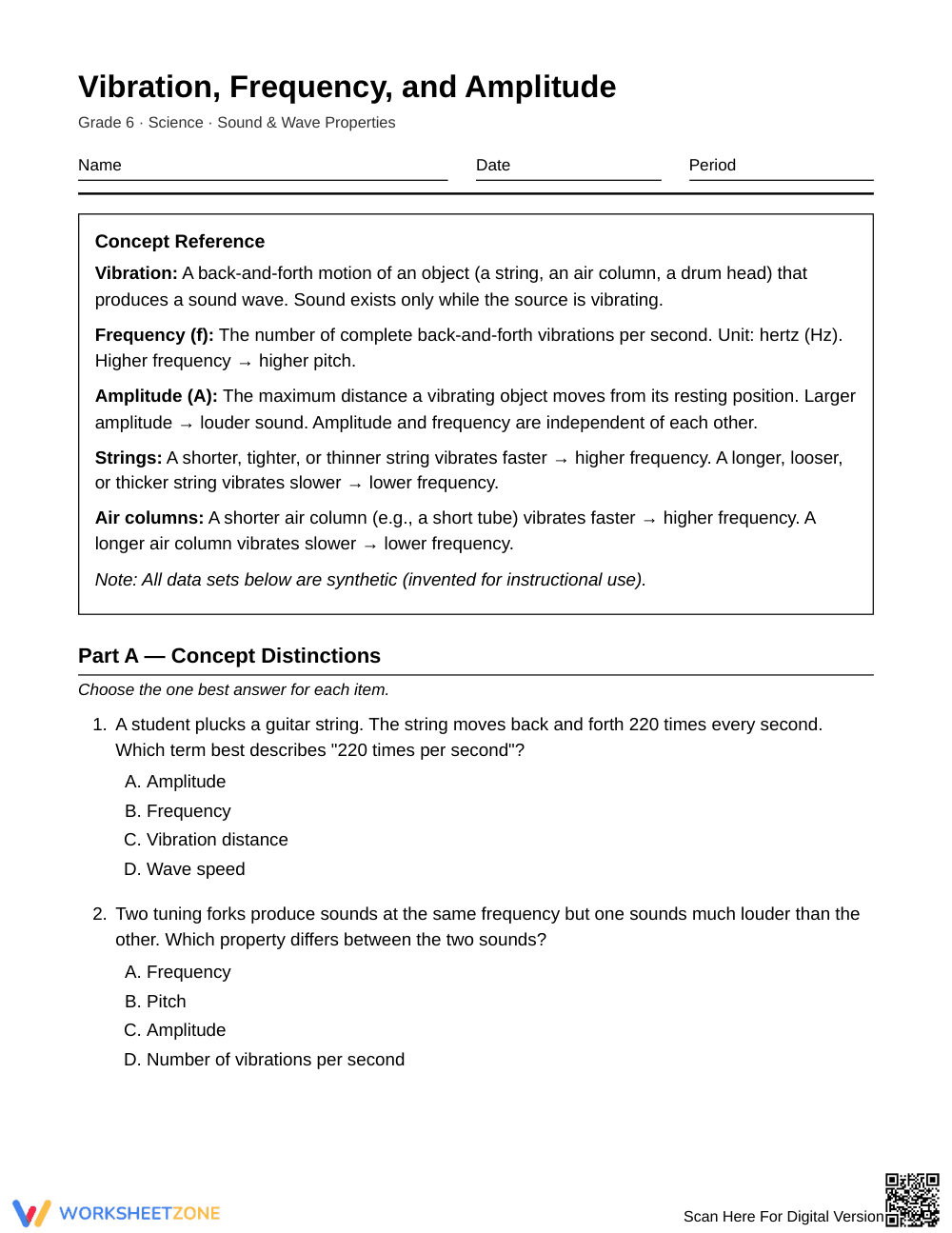
This science worksheet guides sixth-grade students through the core physics of sound, focusing on the mechanics of vibration, wave frequency, and amplitude. Students analyze data tables, differentiate between loudness and pitch, and evaluate how physical dimensions influence sound generation across strings and air columns.
At a Glance
- Grade: 6 · Subject: Science
- Standard: Relate sound characteristics like pitch and volume to wave properties
- Skill Focus: Vibration, Frequency, and Amplitude
- Format: 5 pages · 12 problems · Answer key included · PDF
- Best For: Guided wave mechanics practice and review
- Time: 35–45 minutes
What's Inside
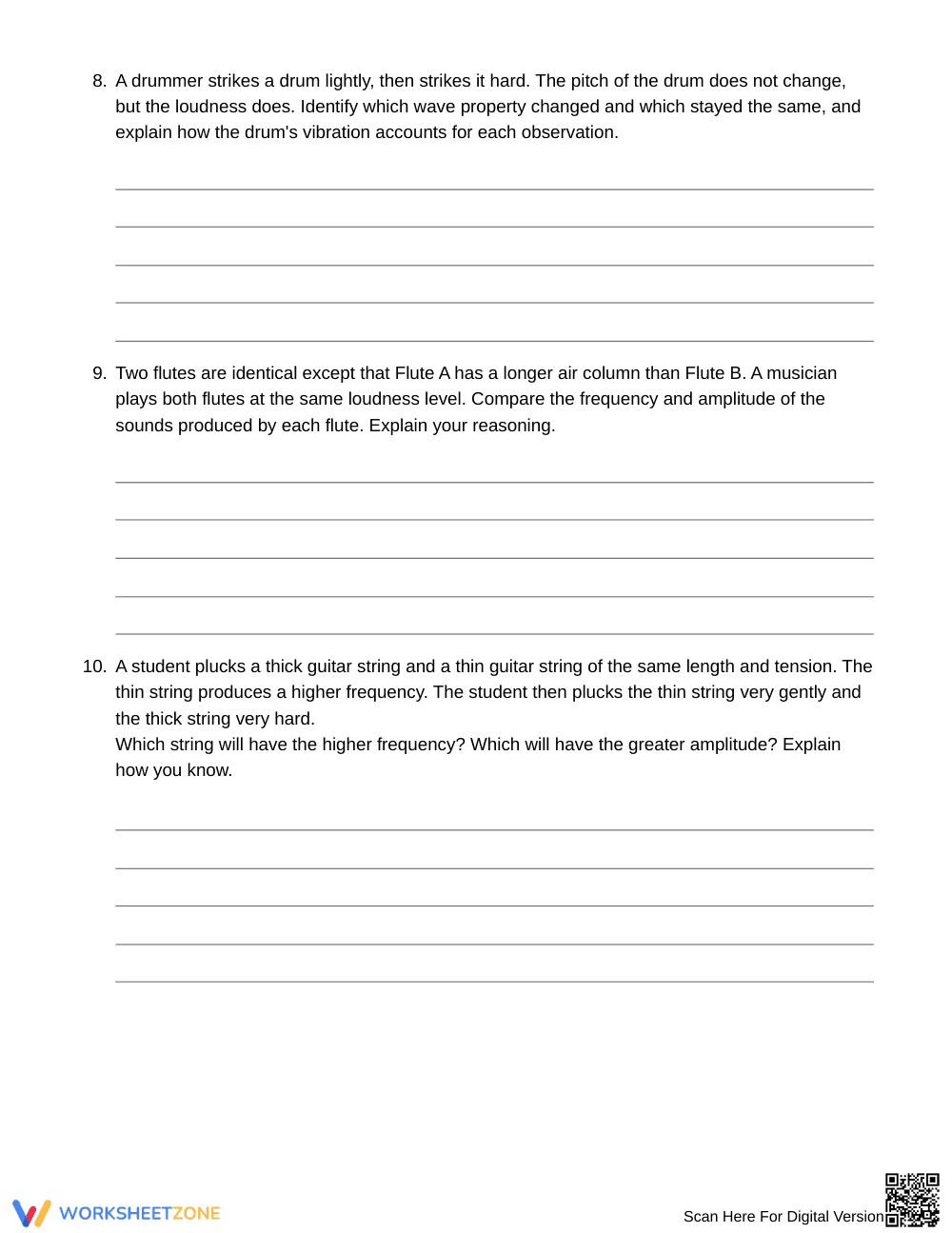
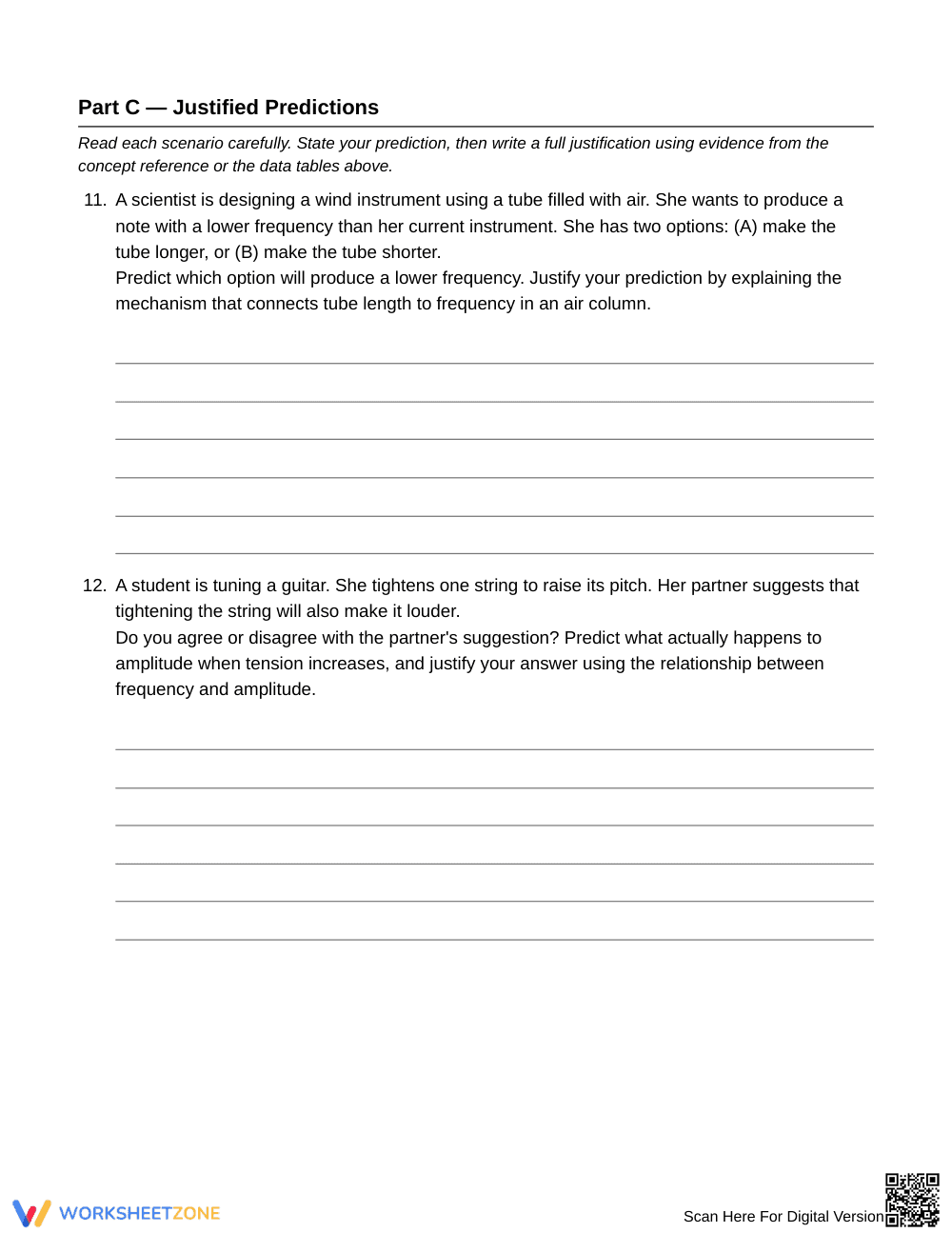
The resource includes a handy concept reference box summarizing essential rules, followed by 12 multi-part questions across five student-facing and key pages. Students encounter multiple-choice discrimination questions, synthetic data interpretation tables analyzing string tension and tube length, and written scenario explanations with a full four-page answer key.
Skill Progression
- Guided Practice (Part A, Problems 1–4): Multiple-choice items isolate core vocabulary definitions and establish the functional independence of frequency and amplitude.
- Supported Practice (Part B, Problems 5–10): Data analysis tables and structured open-response prompts require students to explain how tension, length, and strike force govern acoustic properties.
- Independent Practice (Part C, Problems 11–12): Multi-step scenario predictions demand that students synthesize rules to justify sound wave outcomes in new instrument designs.
This structured sequence follows the gradual release of responsibility model, shifting students from identification to evidence-based scientific argumentation.
Standards Alignment
This worksheet aligns with middle school physical science standards addressing wave properties and energy transfer. Students model how vibrating materials produce sound and predict how varying physical dimensions alter wave frequency and amplitude. Both standard concepts can be copied directly into lesson plans, IEP goals, or district curriculum mapping tools.
How to Use It
Deploy this activity during the direct instruction phase of a wave unit or as a mid-unit formative check. Have students work through Part A collaboratively before completing the data analysis in Part B independently. While circulating, listen for students confusing amplitude with frequency when discussing string tension. Typical completion time is 35 to 45 minutes.
Who It's For
This practice set is designed for sixth-grade general science classes, introductory physical science units, and targeted intervention groups needing concrete visual tables to understand sound waves. Pair this worksheet with an acoustic tuning fork demonstration or an interactive wave simulator.
Middle school science instruction requires structured scaffolds to help learners separate qualitative sensory inputs, such as volume and pitch, from quantitative wave mechanics. According to research from Fisher & Frey (2014) on instructional design, structured task progression moving from basic conceptual distinctions to data-driven justification significantly strengthens conceptual retention in adolescent learners. By isolating frequency as cycles per second and amplitude as distance from rest, this resource prevents common intuitive misconceptions about sound production. The systematic transition from structured multiple-choice checks to independent instrument design predictions enables Grade 6 students to master foundational physical science concepts efficiently.


