


























Views
Downloads


Complete Fraction Reciprocal Rule Worksheet | Grade 6 Math
Paste this activity's link or code into your existing LMS (Google Classroom, Canvas, Teams, Schoology, Moodle, etc.).
Students can open and work on the activity right away, with no student login required.
You'll still be able to track student progress and results from your teacher account.
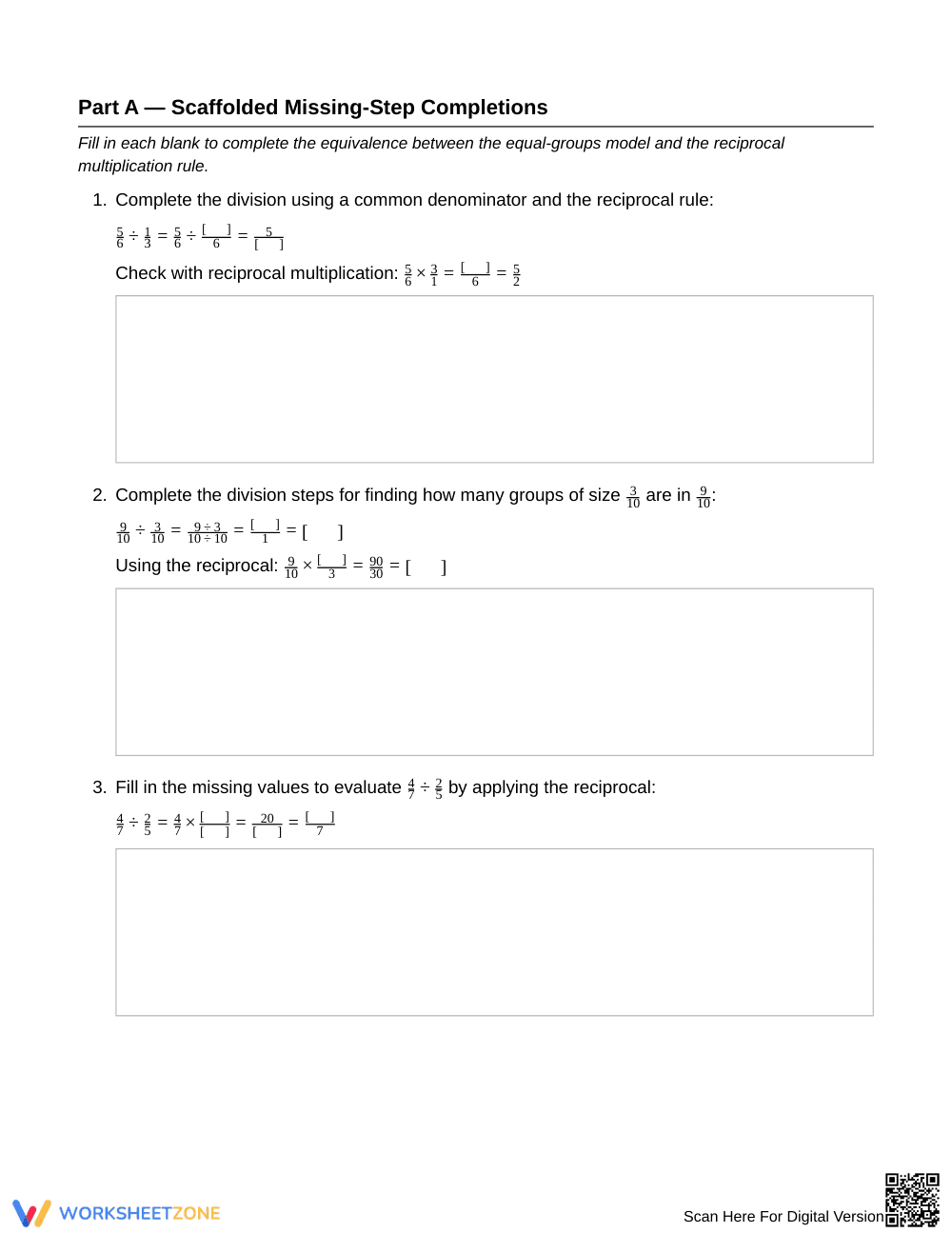
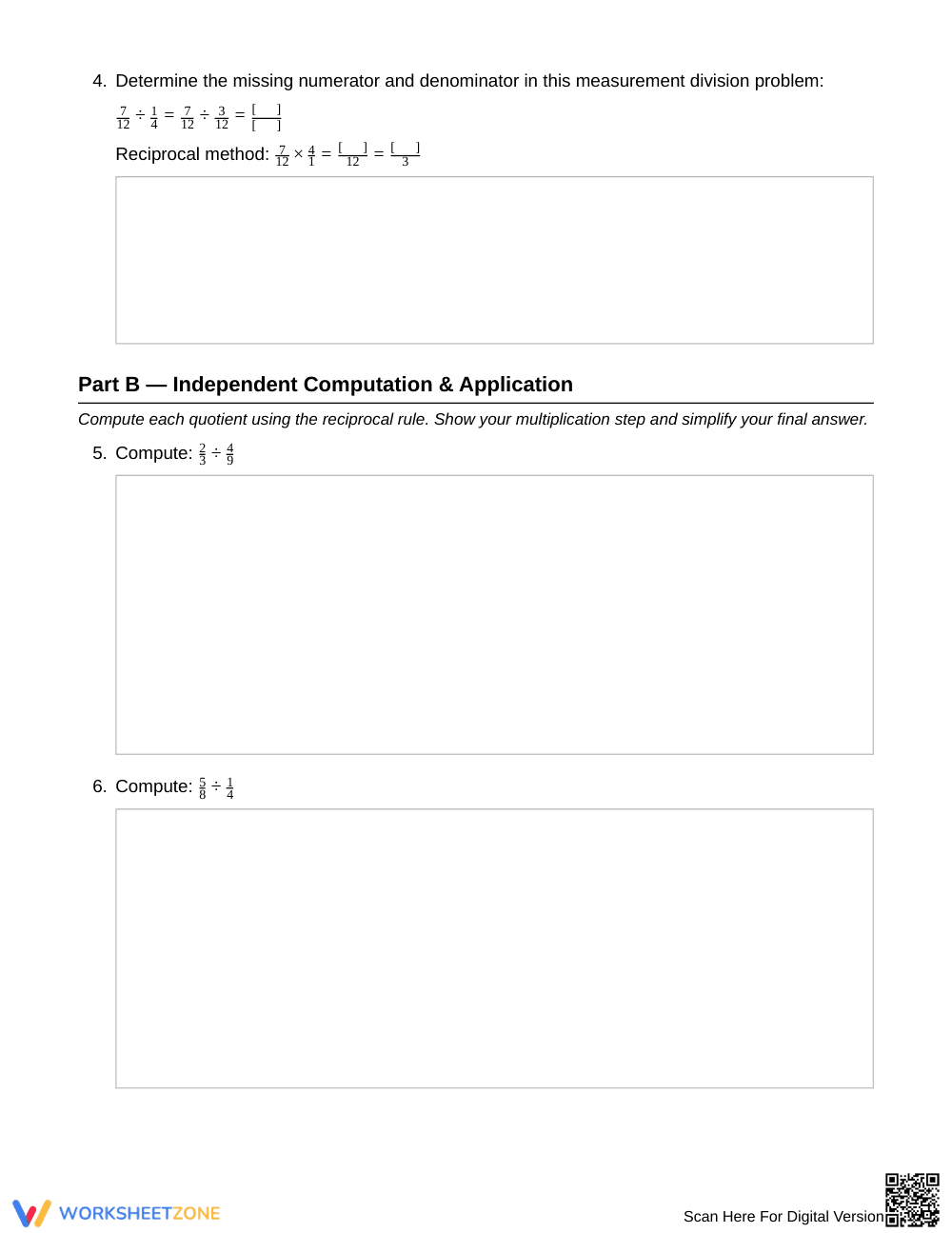
This Grade 6 math worksheet guides students to understand why fraction division algorithms work by connecting measurement division to the reciprocal multiplication rule. Students bridge concrete equal-group models with the standard invert-and-multiply algorithm across 12 structured tasks, establishing deep conceptual mastery and reliable computational fluency.
At a Glance
- Grade: 6 · Subject: Math
- Standard:
6.NS.A.1— Interpret and compute quotients of fractions using models and equations- Skill Focus: Connect Equal Groups to the Reciprocal Rule
- Format: 5 pages · 12 problems · Answer key included · PDF
- Best For: Conceptual fraction division practice
- Time: 35–45 minutes
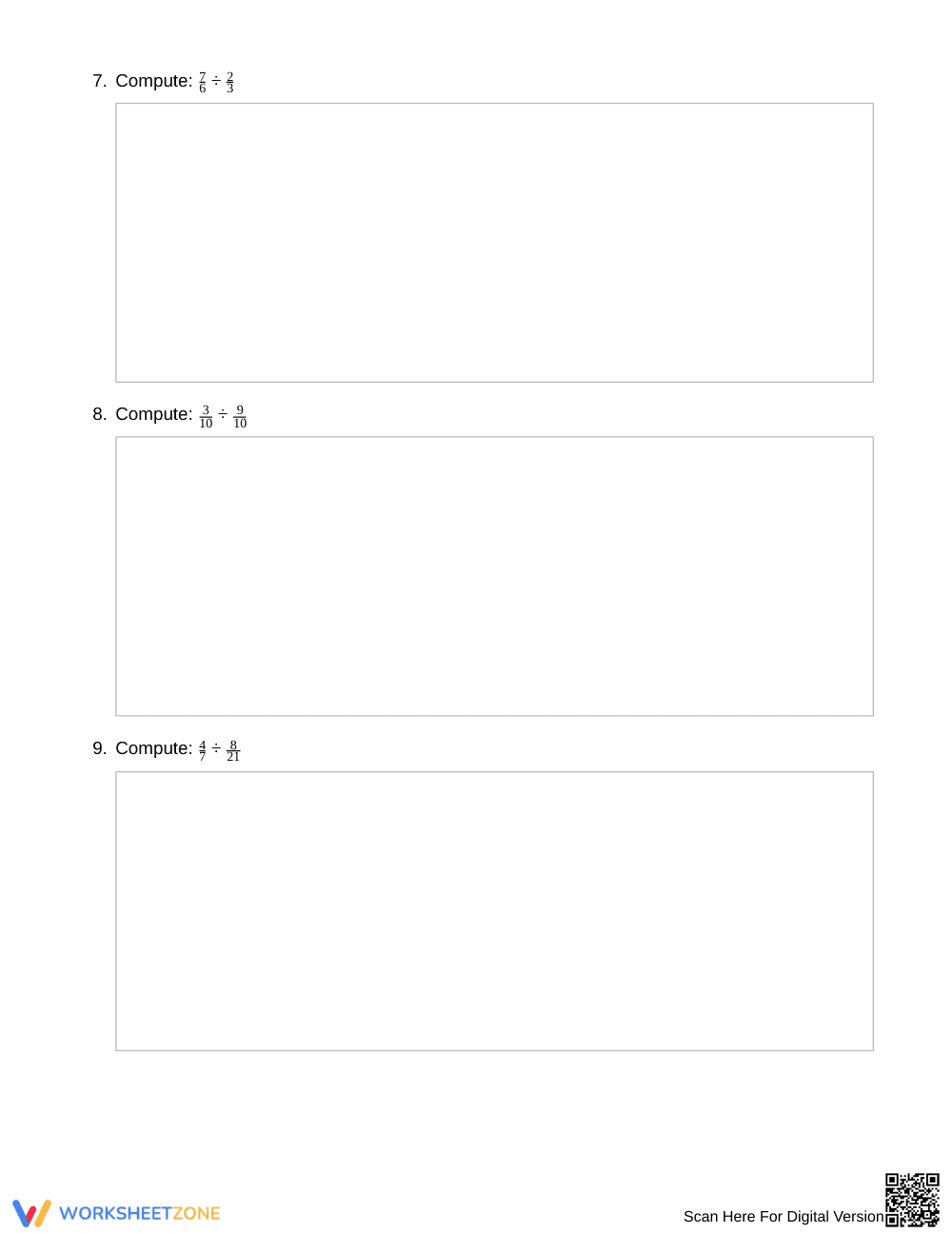
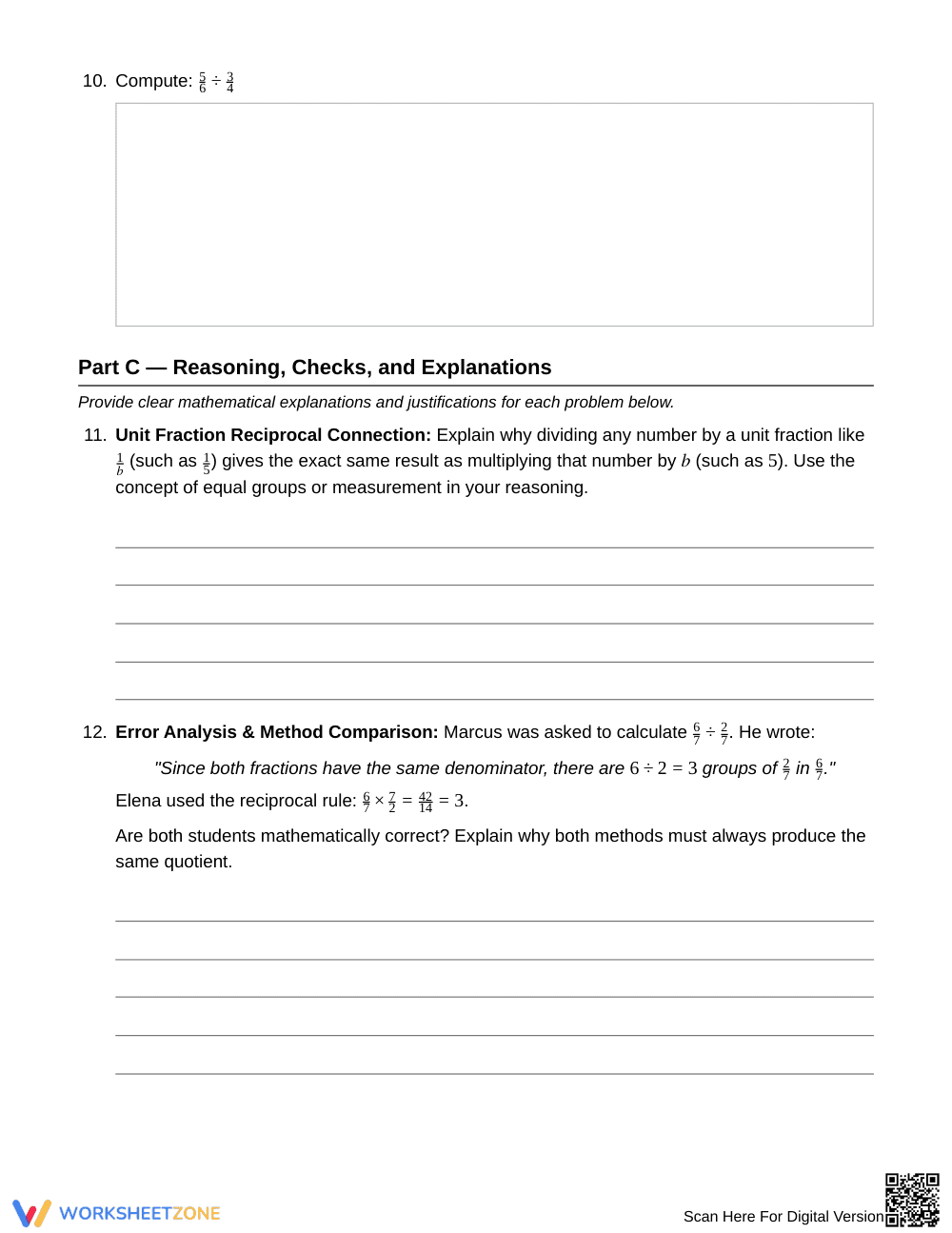
The 5-page printable resource includes worked model solutions, scaffolded step-by-step completions, independent algorithmic computations, and deep conceptual explanation prompts. Students analyze common-denominator visual logic before executing standard reciprocal operations. A comprehensive 3-page answer key provides step-by-step solutions and model written responses for every problem.
Skill Progression
- Guided practice (2 worked models): Explicit step-by-step examples contrast common unit models with standard reciprocal procedures.
- Supported practice (Part A, 4 problems): Scaffolded missing-step tasks prompt students to complete equivalent division steps using both common denominators and reciprocals.
- Independent practice (Parts B & C, 8 problems): Students compute fractional quotients independently and formulate written mathematical arguments comparing visual measurement models to algorithmic rules.
This structured progression follows an intentional gradual-release framework, moving learners from conceptual understanding to algorithmic confidence.
Standards Alignment
This resource aligns directly with 6.NS.A.1: Interpret and compute quotients of fractions, and solve word problems involving division of fractions by fractions, e.g., by using visual fraction models and equations to represent the problem. Both standard codes can be copied directly into lesson plans, IEP goals, or district curriculum mapping tools.
How to Use It
Deploy this worksheet directly after introducing division of fractions through visual bar models or number lines. Use Part A for collaborative partner practice to reinforce the transition from equal grouping to reciprocal multiplication. Formatively assess student understanding by checking whether learners can explain why multiplying by a denominator counts total unit groups during Part C. Expected completion time is 35 to 45 minutes.
Who It's For
Designed for Grade 6 general education math classes, tier-2 intervention groups, and resource math settings requiring explicit conceptual bridging. Provide fraction strip manipulatives for students needing tactile support. Pair this resource with a visual fraction division anchor chart to support independent reasoning and vocabulary retention.
According to Fisher & Frey (2014), structured gradual-release frameworks significantly enhance procedural fluency and conceptual transfer when students transition between concrete visual representations and abstract mathematical algorithms. This 5-page curriculum resource directly targets standard 6.NS.A.1 by helping Grade 6 learners interpret and compute quotients of fractions through equal-group measurement models and reciprocal multiplication. By systematically scaffolding the progression from like-denominator group counts to invert-and-multiply calculations across 12 targeted exercises, the worksheet prevents rote algorithmic memorization devoid of conceptual foundation. Research indicates that students who explicitly connect measurement models to standard operations demonstrate greater long-term retention and higher problem-solving accuracy on complex non-routine tasks. Educators can reliably utilize these structured problem sets to verify that learners comprehend the mathematical justification behind fraction reciprocals while achieving fluent procedural mastery.


