




























Views
Downloads




Complete Figurative vs Literal Worksheet | Grade 6 ELA

Paste this activity's link or code into your existing LMS (Google Classroom, Canvas, Teams, Schoology, Moodle, etc.).
Students can open and work on the activity right away, with no student login required.
You'll still be able to track student progress and results from your teacher account.
This Grade 6 ELA worksheet helps students analyze figurative language by contrasting parallel literal and figurative texts of the same event. Learners identify literal facts behind figures of speech, evaluate metaphors and personification, and assess how creative phrasing shapes tone and descriptive precision.
At a Glance
- Grade: 6 · Subject: English Language Arts
- Standard:
L.6.5.a— Interpret figures of speech in context and analyze their overall role in text.- Skill Focus: Comparing Figurative and Literal Versions of Text
- Format: 5 pages · 10 problems · Answer key included · PDF
- Best For: Close reading practice and figurative language analysis
- Time: 35–45 minutes
What's Inside
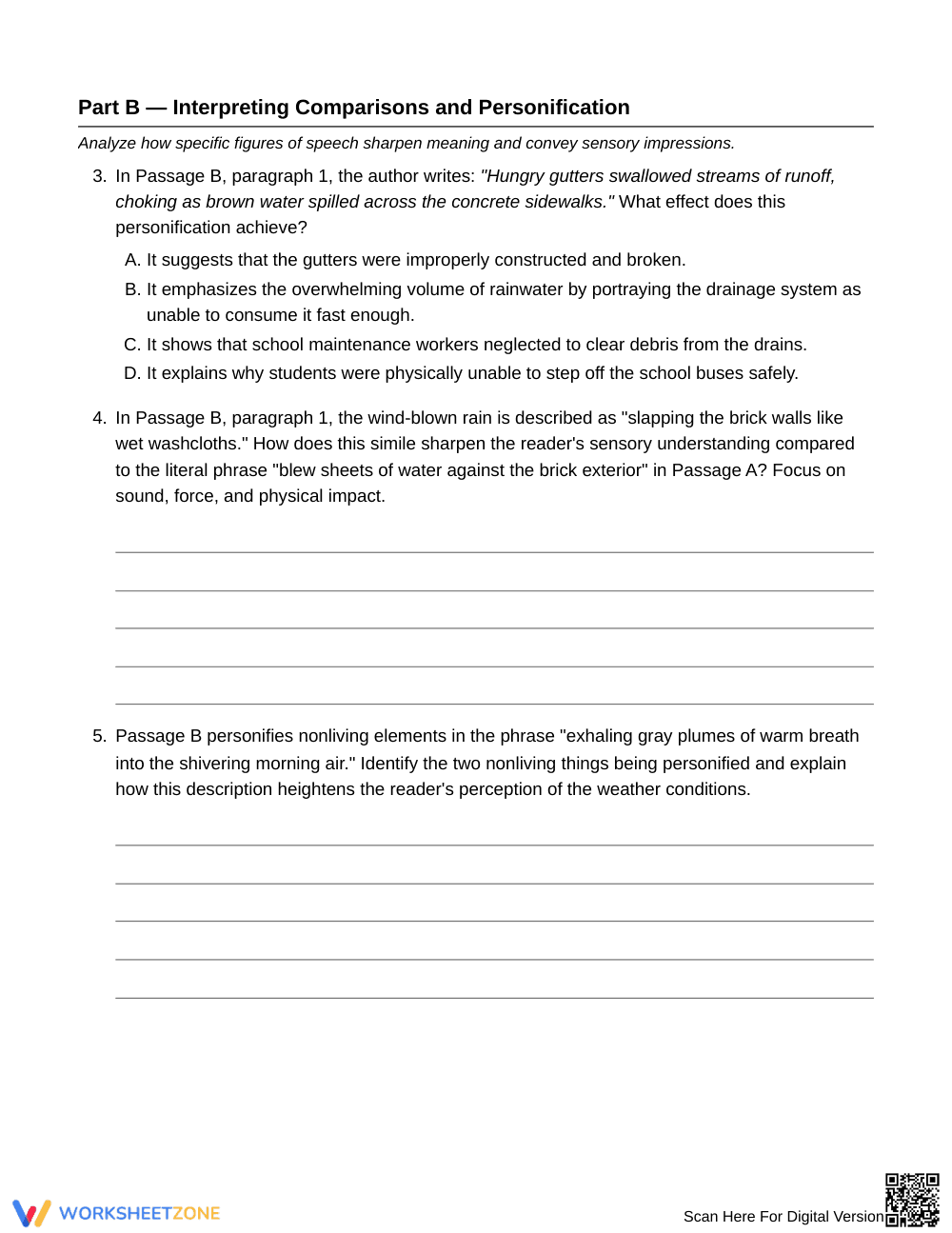
This 5-page printable PDF features paired literal and figurative passages about a rainy school morning, accompanied by a foundational concept reminder box. Students complete 10 text-dependent items spanning evidence matching, multiple-choice analysis, and short written evaluations. A detailed 3-page answer key provides complete model responses and textual rationales for straightforward evaluation.
Skill Progression
- Guided practice (Part A — 2 tasks): Students locate literal facts corresponding to personified phrases, using the concept box as a reference.
- Supported practice (Part B — 6 tasks): Learners interpret similes, metaphors, and personification using multiple-choice items and short-answer prompts to examine sensory impact.
- Independent practice (Part C — 2 tasks): Students write analytical responses evaluating how figurative transformations establish distinct atmospheric tones.
This sequence implements the gradual-release framework, scaffolding students from basic detail matching to independent stylistic evaluation.
Standards Alignment
This worksheet aligns directly with L.6.5.a: "Interpret figures of speech (e.g., personification) in context." It also supports RL.6.4 by requiring learners to analyze how word choice shapes tone. Both standard codes can be copied directly into lesson plans, IEP goals, or district curriculum mapping tools.
How to Use It
Use this resource after direct instruction on figurative devices. Model Part A during whole-class instruction, then assign Part B for collaborative pairs. Alternatively, assign the entire activity as independent practice. Formatively assess whether students explain the real-world facts underlying figurative phrases rather than simply restating figurative verbs. Expected completion time is 35 to 45 minutes.
Who It's For
This activity serves Grade 6 ELA classrooms, reading intervention groups, and English learners mastering figurative nuances. The side-by-side passage format provides concrete scaffolding for struggling readers. Pair this worksheet with an anchor chart on figurative language devices to reinforce key analytical terms during close reading.
According to Fisher & Frey (2014), close reading instruction yields the greatest comprehension gains when students systematically analyze authorial craft through text-dependent comparisons rather than examining isolated vocabulary lists. This Grade 6 instructional resource targets CCSS standard L.6.5.a by requiring middle school learners to interpret figures of speech in context and examine how authorial phrasing shifts meaning between literal and figurative modes. By confronting identical narrative scenes depicted through contrasting literal statements and rich figurative devices, including personification, metaphors, and similes, students build actionable linguistic awareness regarding tone, descriptive precision, and sensory mood. The structured progression moves from locating direct textual evidence to evaluating nuanced emotional atmospheres, establishing a strong foundation for literary analysis. Grounded in intentional text-dependent inquiry, this resource equips educators with a reliable tool for developing rigorous figurative language comprehension across diverse reading environments.


