


























Views
Downloads


Complete Coupled Membrane Transport Worksheet | Grade 10
Paste this activity's link or code into your existing LMS (Google Classroom, Canvas, Teams, Schoology, Moodle, etc.).
Students can open and work on the activity right away, with no student login required.
You'll still be able to track student progress and results from your teacher account.
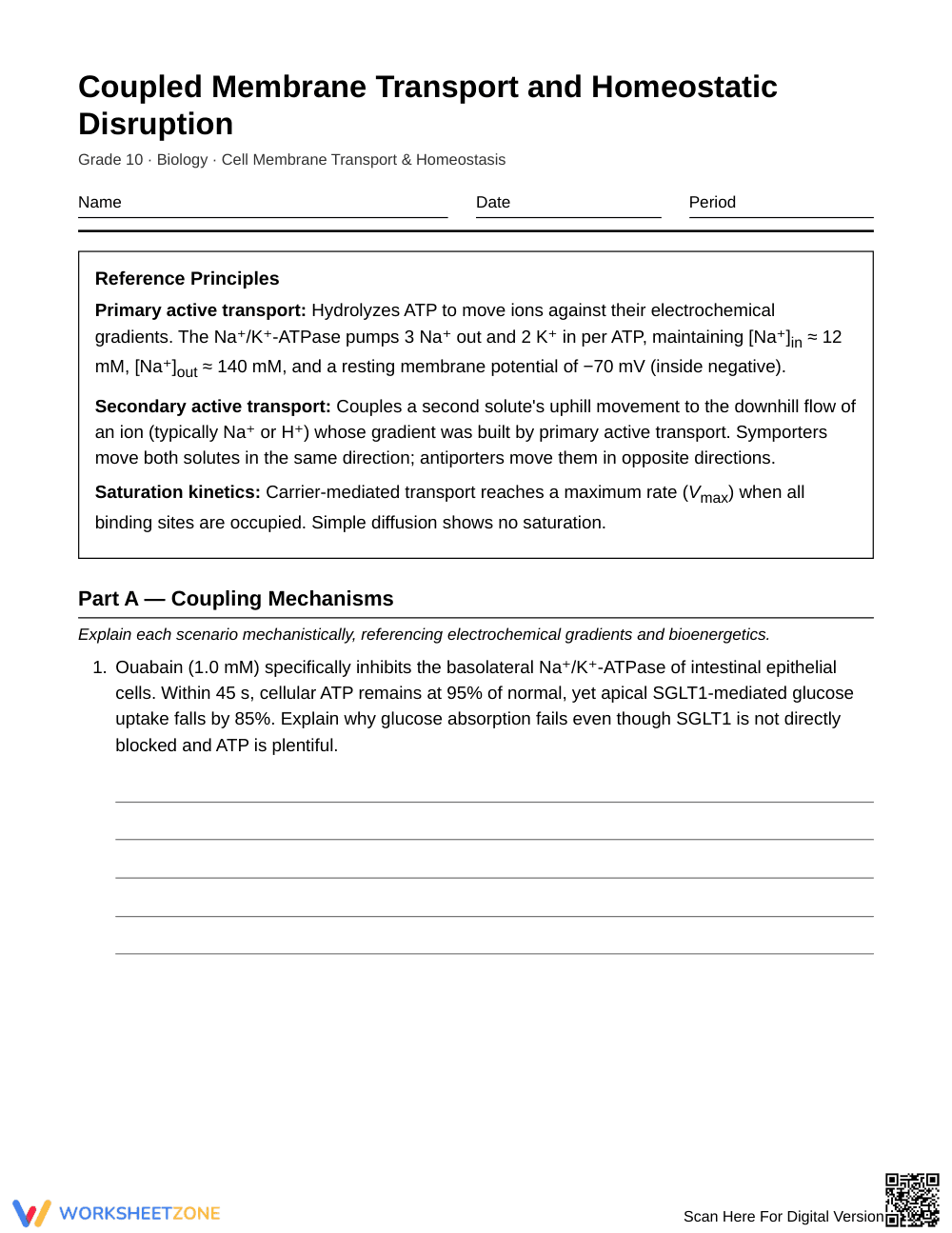
This Grade 10 Biology worksheet builds students' ability to explain how inhibiting one membrane transport process triggers cascading homeostatic disruptions across coupled systems. Across 14 mechanistic problems and 6 pages, students trace electrochemical gradients, transport stoichiometry, and cellular feedback to construct an enduring model of membrane physiology.
At a Glance
- Grade: 10 · Subject: Biology
- Standard: Cell Membrane Transport & Homeostasis — Explain coupled changes when a transport process is inhibited
- Skill Focus: Mechanistic reasoning about coupled membrane transport inhibition
- Format: 6 pages · 14 problems · Answer key included · PDF
- Best For: Advanced practice after direct instruction on transport
- Time: 45–65 minutes
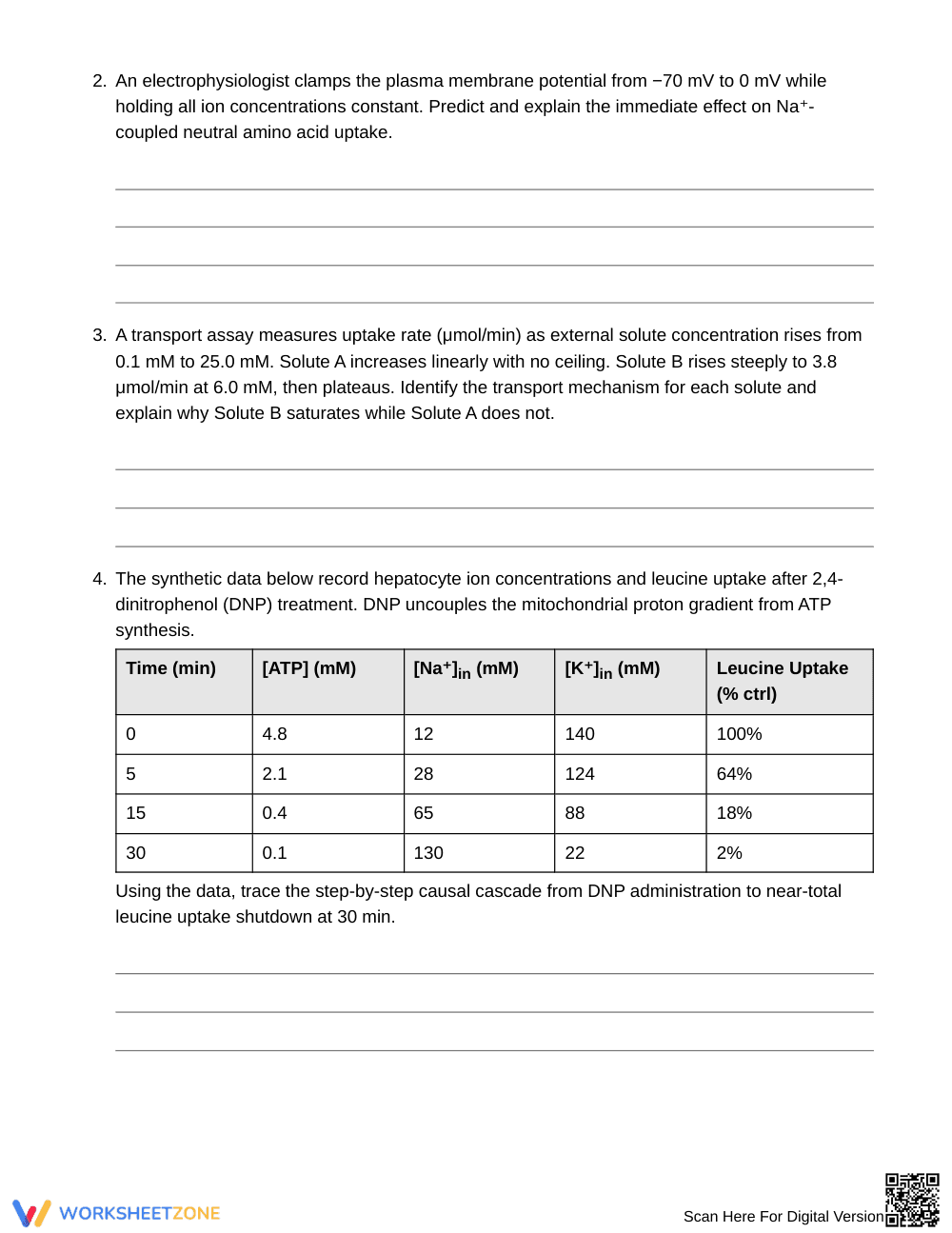
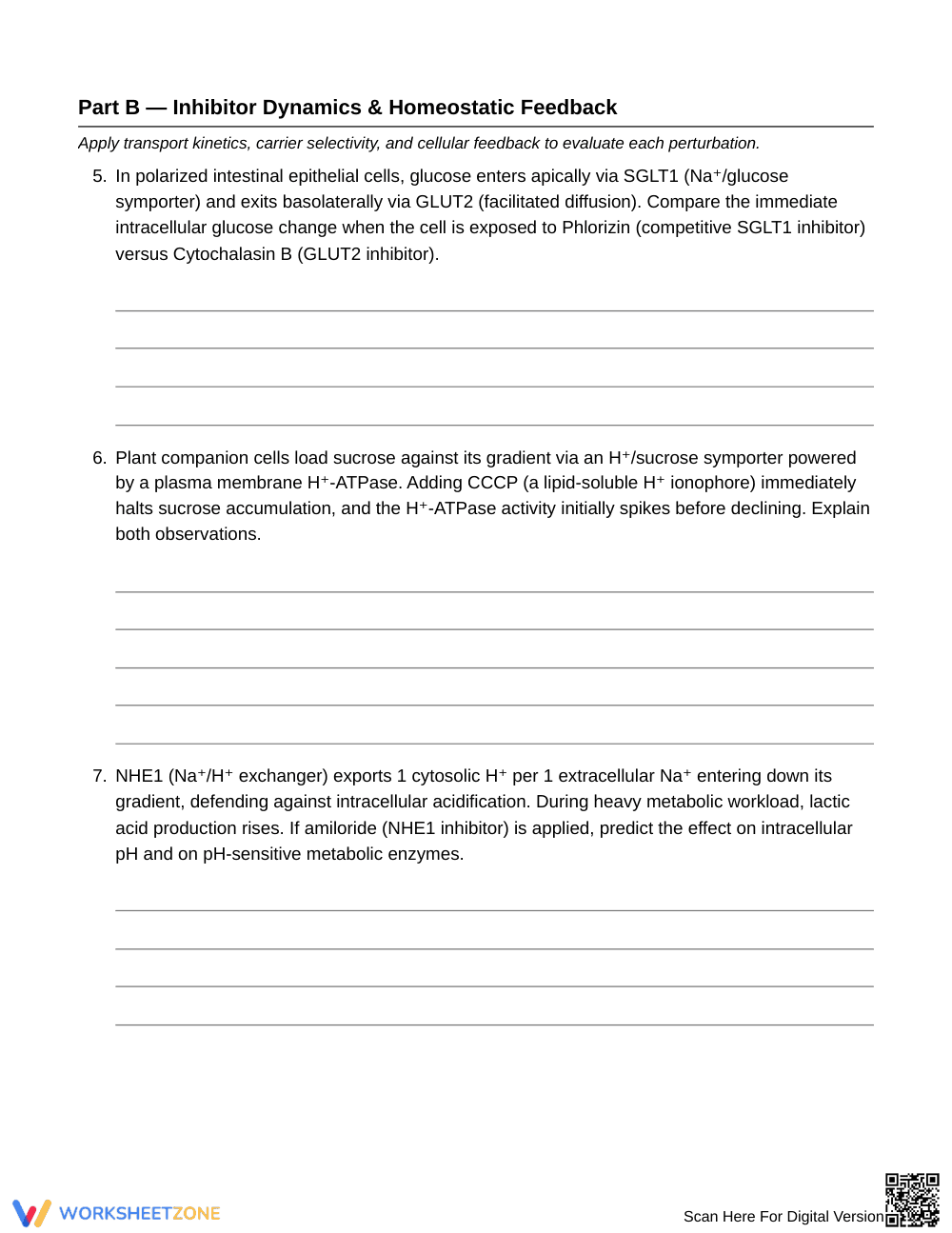
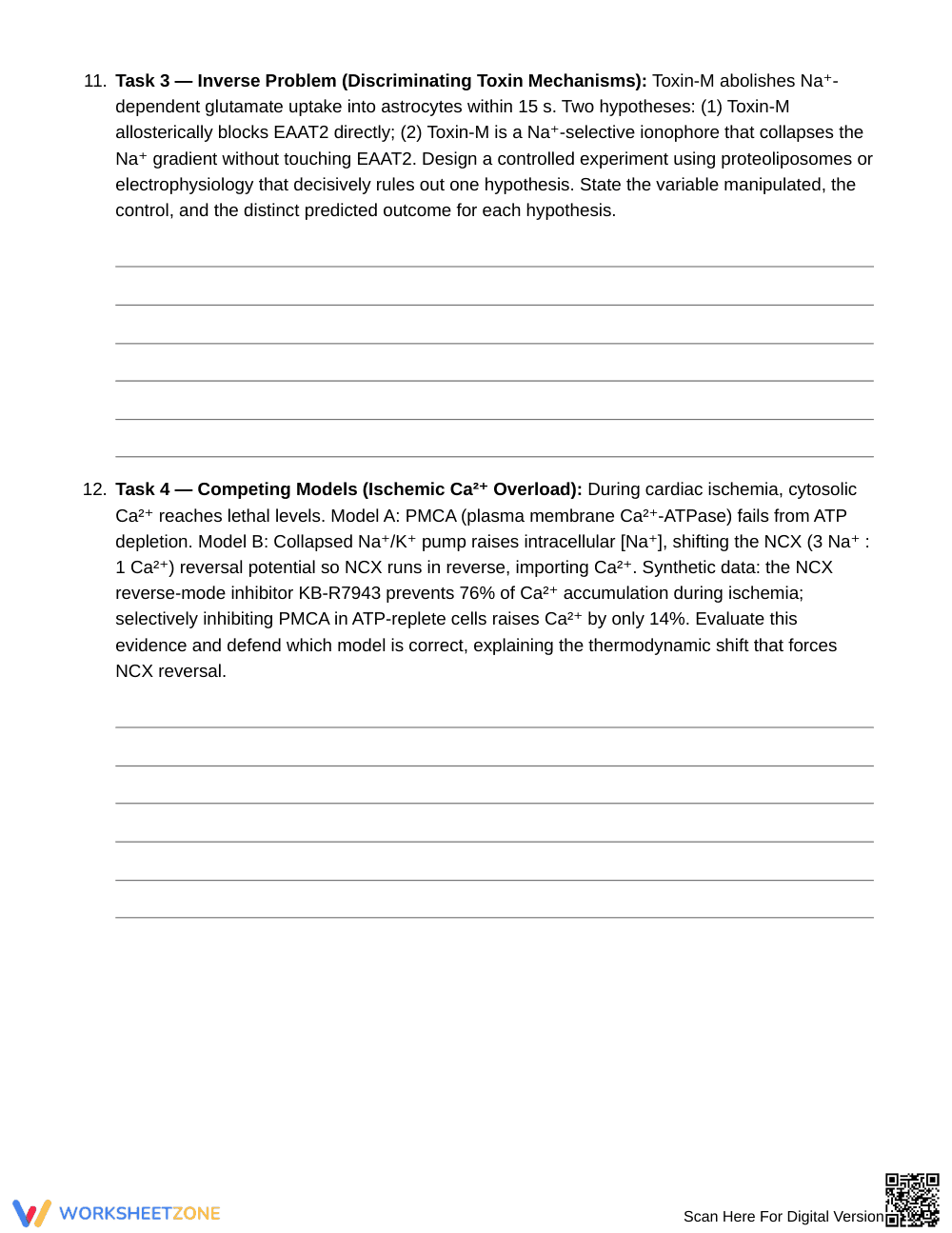
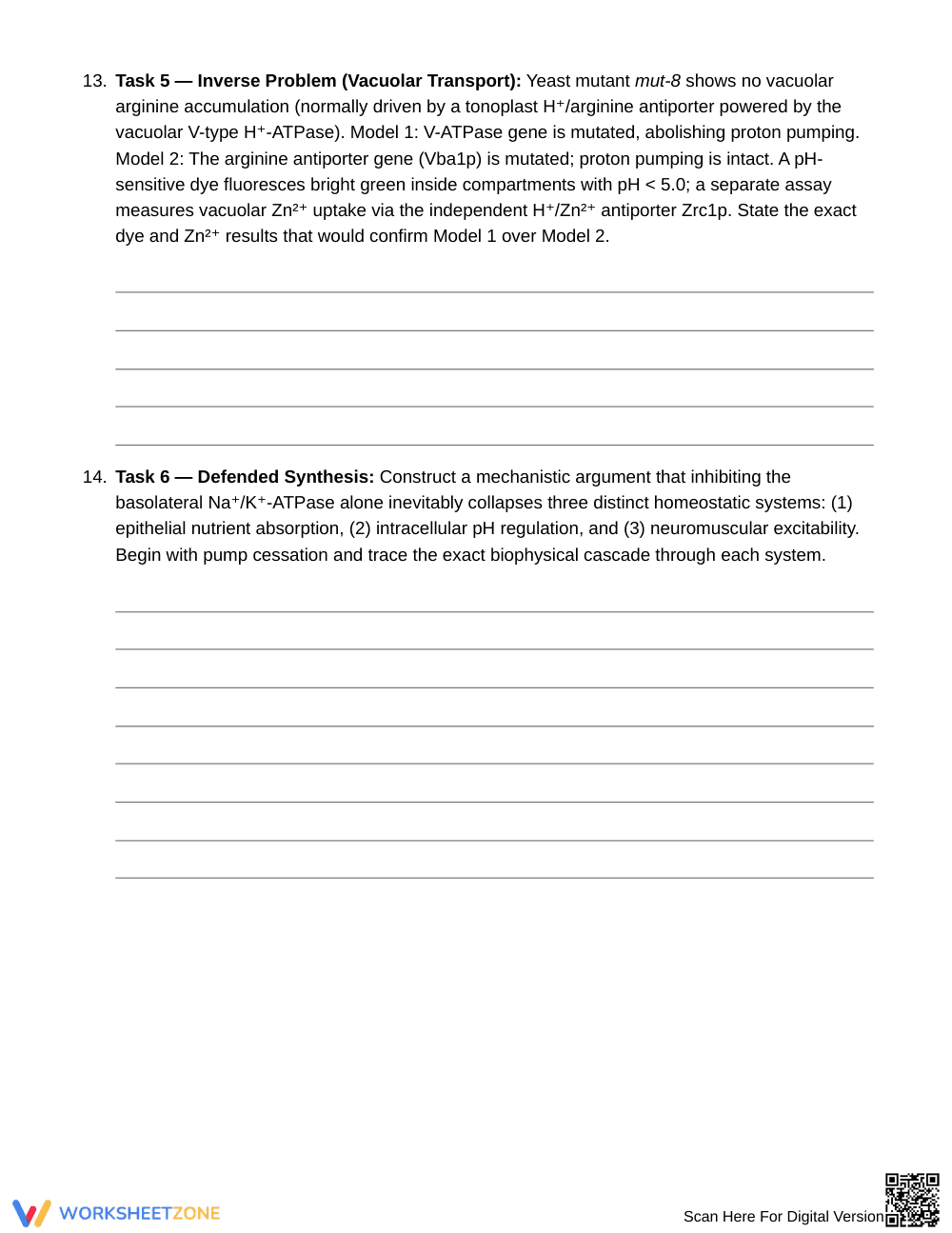
The worksheet opens with a Reference Principles box reviewing primary active transport, secondary active transport, and saturation kinetics. Part A presents 4 problems targeting coupling mechanisms, including ouabain impacts on SGLT1 uptake and dinitrophenol cascades. Part B contains 4 problems applying carrier selectivity and homeostatic feedback to epithelial and plant cells. Part C delivers 6 synthesis tasks featuring renal applications, experimental design, and ischemic calcium overload. A 5-page answer key provides complete explanations.
Skill Progression
- Guided practice (Part A): Four problems use reference boxes and mechanistic prompts to scaffold electrochemical gradient reasoning.
- Supported practice (Part B): Four inhibitor scenarios remove scaffolds, requiring students to analyze carrier kinetics and feedback across novel systems.
- Independent practice (Part C): Six multi-step tasks demand independent experimental design, model evaluation, and defended synthesis.
Standards Alignment
This worksheet aligns with core curriculum standards for cell membrane transport and homeostasis. Every task requires students to explain coupled changes when transport pathways are inhibited, integrating electrochemical gradients, carrier stoichiometry, and osmotic balance. Supporting concepts include ATP hydrolysis bioenergetics and enzyme kinetics for easy inclusion in lesson plans.
How to Use It
Assign Parts A and B for 35 minutes of guided practice following direct instruction on transport. Reserve Part C (25 minutes) as an extension or summative check. During Part A, monitor whether students connect rising sodium levels to falling nutrient uptake before letting them advance.
Who It's For
Designed for Grade 10 Biology classes in general or honors tracks. The initial reference box supports on-level learners, while the open-ended synthesis challenges students preparing for advanced coursework.
Research consistently links structured, multi-step mechanistic practice to durable conceptual gains in biology. Fisher and Frey (2014) demonstrate that gradual-release instructional frameworks produce significantly stronger conceptual transfer than unstructured problem sets. This resource applies that systematic progression across 14 focused tasks, guiding students from reference-supported gradient reasoning in Part A through independent experimental design and model evaluation in Part C. The targeted skill focus, explaining coupled homeostatic disruptions when a transport process is inhibited, connects molecular transport mechanisms directly with broader physiological systems thinking. National assessment data consistently identify this cross-scale interface as a persistent stumbling block for secondary science students. Grounding every scenario in quantitative data, physiological feedback, and structured written justification ensures that learners develop the rigorous analytical reasoning and evidence-based argumentation skills that support enduring scientific literacy across advanced high school coursework.


