




























Views
Downloads




Complete Connotation & Tone Worksheet | Grade 10 English II

Paste this activity's link or code into your existing LMS (Google Classroom, Canvas, Teams, Schoology, Moodle, etc.).
Students can open and work on the activity right away, with no student login required.
You'll still be able to track student progress and results from your teacher account.
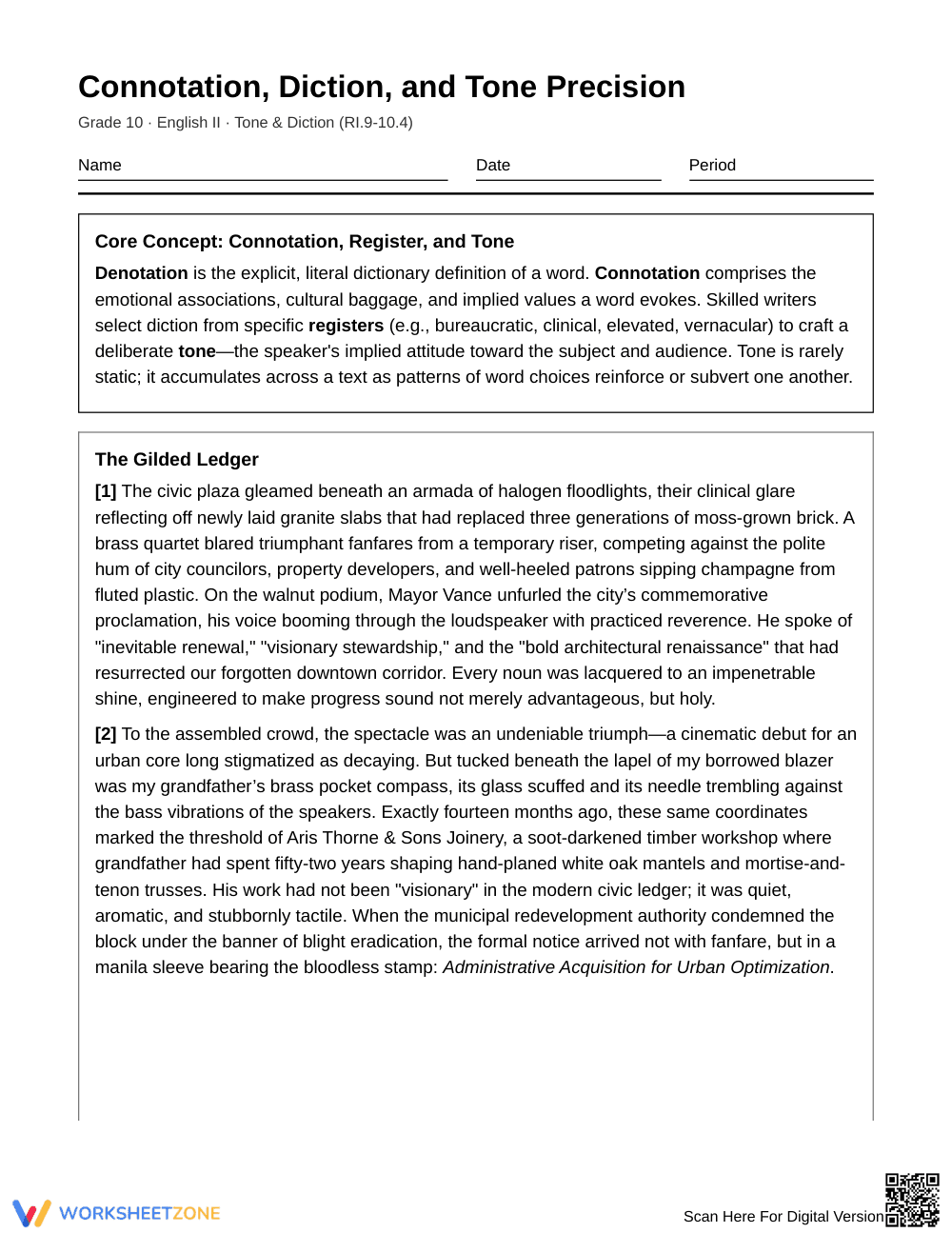
This rigorous Grade 10 English II worksheet equips high school students to analyze authorial diction, register, and cumulative tone across complex informational text. Working through an original narrative essay, learners examine how nuanced word choices shape rhetorical purpose and thematic tension, preparing them for advanced literary and rhetorical analysis.
At a Glance
- Grade: 10 · Subject: English II
- Standard:
RI.9-10.4— Determine figurative and connotative meanings while analyzing authorial diction and cumulative tone- Skill Focus: Connotation and Tone Precision
- Format: 6 pages · 10 problems · Full 4-page answer key included · PDF printable
- Best For: Close reading instruction and analytical writing practice
- Time: 45–60 minutes of focused instruction
What's Inside
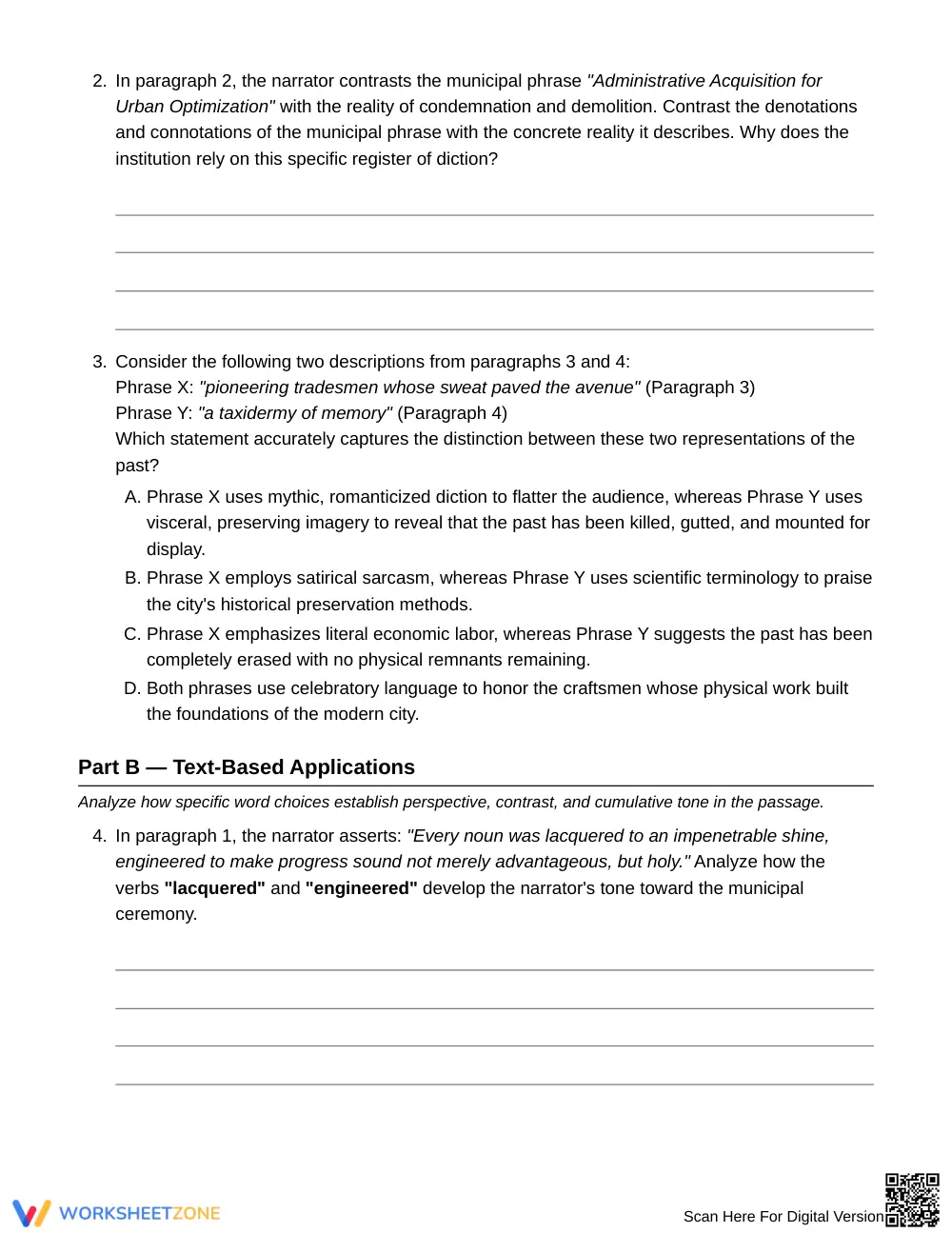
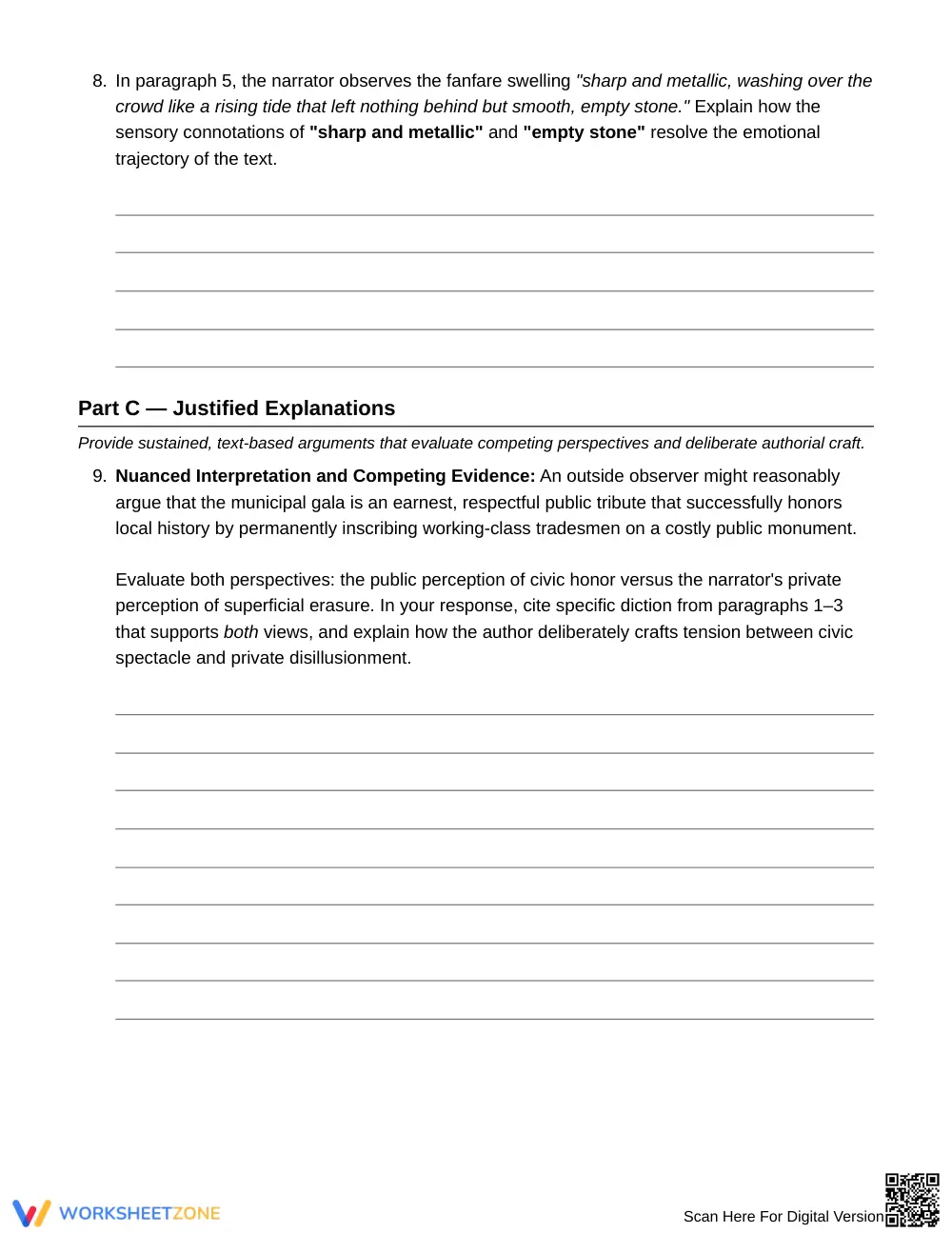
This 6-page instructional resource features an anchor concept box defining denotation, register, and tone, followed by an original text titled "The Gilded Ledger." The 10 rigorous tasks combine multiple-choice diction comparisons, short-response analyses of sensory language, and extended justification prompts evaluating tone trajectory. A comprehensive 4-page answer key provides exemplar evidence and analytic rationales for every item.
Skill Progression
- Guided practice (Part A, Problems 1–3): Students evaluate diction contrasts and institutional registers through scaffolded comparative questions with excerpted text.
- Supported practice (Part B, Problems 4–8): Learners construct text-based responses analyzing sensory details and cumulative tone shifts across individual paragraphs.
- Independent practice (Part C, Problems 9–10): Students write sustained arguments analyzing competing perspectives and tracing the author's tonal trajectory.
This sequence follows a gradual-release model, moving from teacher-supported diction identification to independent rhetorical evaluation.
Standards Alignment
The primary standard is `RI.9-10.4`: Determine the meaning of words and phrases, including figurative and connotative meanings; analyze the cumulative impact of specific word choices on meaning and tone. Supporting standard `L.9-10.5` addresses understanding figurative language and nuances in word meanings. Both standard codes can be copied directly into lesson plans, IEP goals, or district curriculum mapping tools.
How to Use It
Deploy this activity after direct instruction on connotative meaning and authorial register. Have students complete Part A in collaborative pairs before completing Parts B and C independently. During independent practice, observe whether students can articulate the emotional impact of bureaucratic terminology in paragraph 2; learners often conflate formal register with neutral objectivity. Expected completion time is 45 to 60 minutes.
Who It's For
This worksheet serves general education Grade 10 English students, honors classes, and Advanced Placement literature preparation tracks. Teachers can differentiate by providing paragraph-level sentence starters for Part B or offering small-group guided annotation for striving readers. Pair this exercise with an anchor chart detailing shades of meaning across formal and informal registers.
Analyzing authorial diction and tone under standard RI.9-10.4 requires students to move beyond literal comprehension toward evaluating how subtle lexical nuances shape rhetorical intent. According to Fisher & Frey (2014), explicit scaffolded instruction that bridges word-level analysis to text-level meaning significantly deepens analytical reading comprehension in secondary literacy classrooms. When high school learners deconstruct deliberate word choices, institutional registers, and emotional undertones, they develop the critical literacy necessary to recognize authorial perspective and unstated ideological subtext. This rigorous instructional worksheet directly targets connotation and tone precision across ten structured tasks, guiding tenth-grade students from close textual examination into evaluative analytical writing. By systematically dissecting contrasting word choices and cumulative tone shifts in informational prose, students cultivate enduring competencies in evidence-based argument and sophisticated close reading, establishing a vital foundation for college-level reading and analytical writing.


