


























Views
Downloads




Complete Claim & Commentary Worksheet | Grade 10 English II
Paste this activity's link or code into your existing LMS (Google Classroom, Canvas, Teams, Schoology, Moodle, etc.).
Students can open and work on the activity right away, with no student login required.
You'll still be able to track student progress and results from your teacher account.
This 6-page English II worksheet teaches Grade 10 students to connect interpretive claims, embedded textual evidence, and analytical commentary. Working with an original literary text, students analyze thematic tensions, formulate complex thesis statements, blend quotations grammatically, and compose a cohesive analytical paragraph that moves beyond basic plot summary to achieve critical mastery.
At a Glance
- Grade: 10 · Subject: English II
- Standard:
W.9-10.1— Write arguments to support claims analyzing substantive texts- Skill Focus: Connect Claim, Quotation, and Commentary
- Format: 6 pages · 8 problems · Answer key included · PDF
- Best For: High school analytical paragraph drafting
- Time: 45–60 minutes
What's Inside
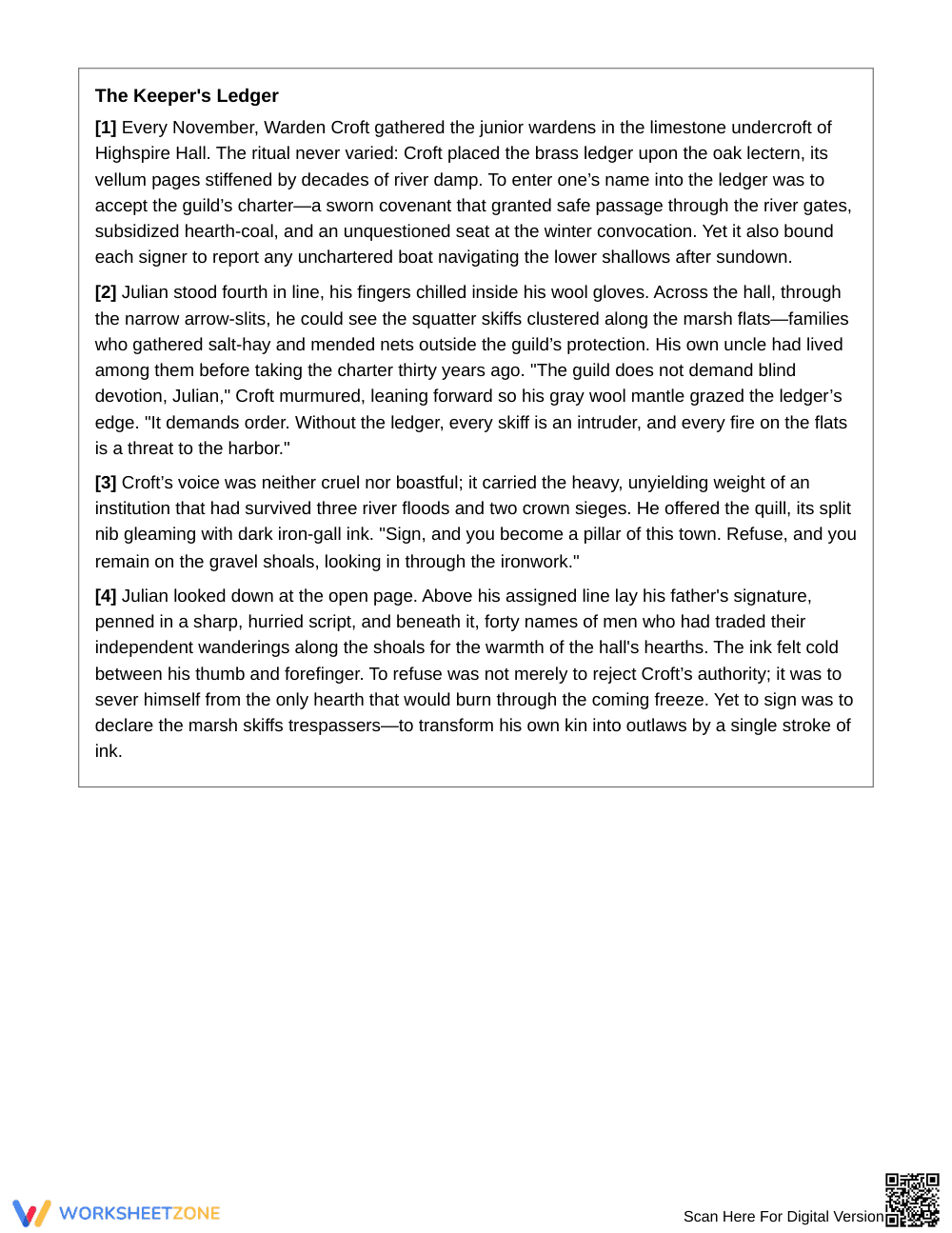
This resource features the original text "The Keeper's Ledger" and a paragraph architecture table defining claim, quotation, and commentary requirements. Across 6 pages, students complete 8 sequential tasks supported by a 4-point revision checklist, active signal phrase examples, and a comprehensive 4-page answer key.
Skill Progression
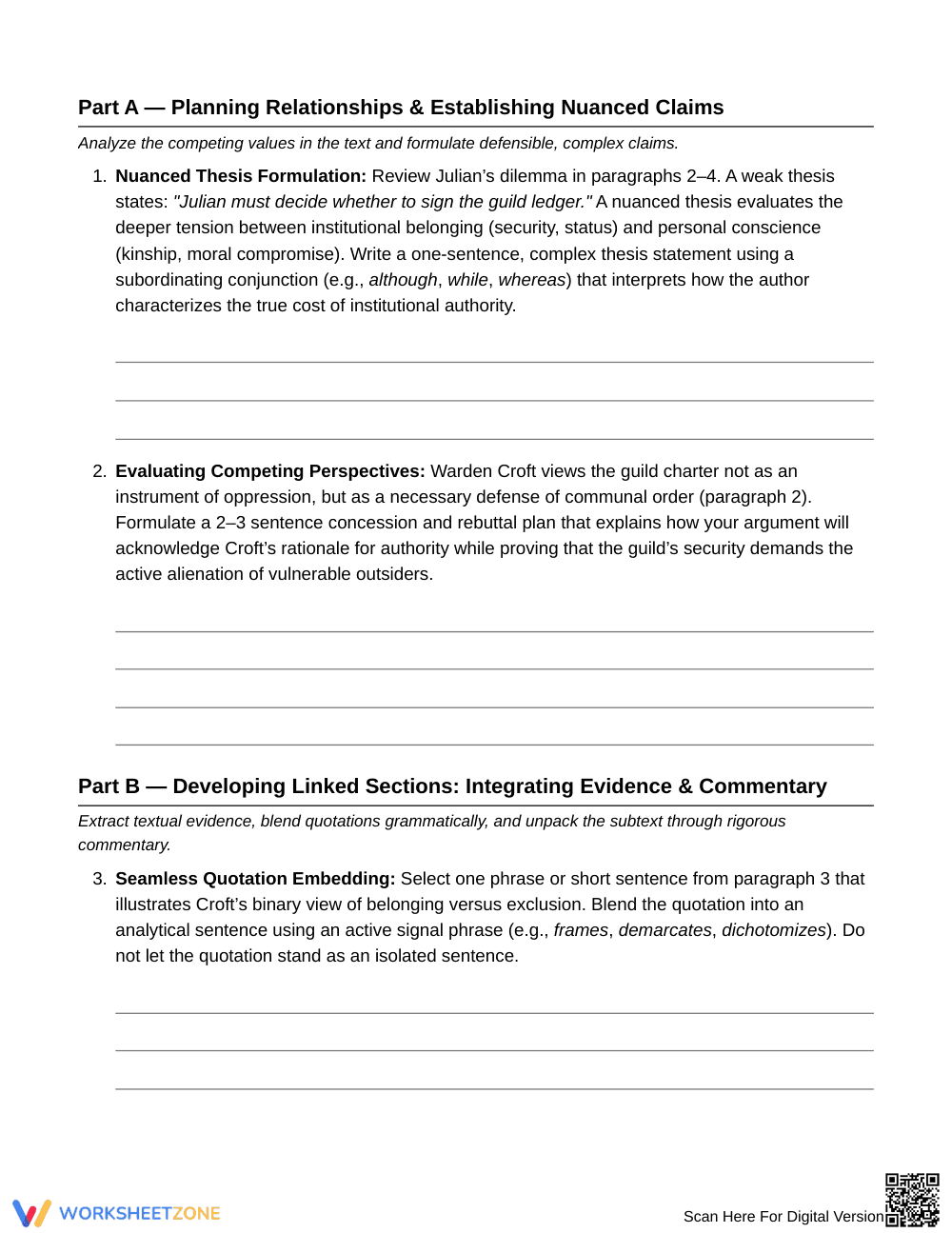
- Guided Practice (Part A, Items 1–2): Students analyze thematic tensions and draft complex thesis statements with subordinating conjunctions and concession-rebuttal plans.
- Supported Practice (Part B, Items 3–6): Students integrate quotations using active verbs, evaluate word connotations, bridge evidence to reasoning, and draft claim-driven topic sentences.
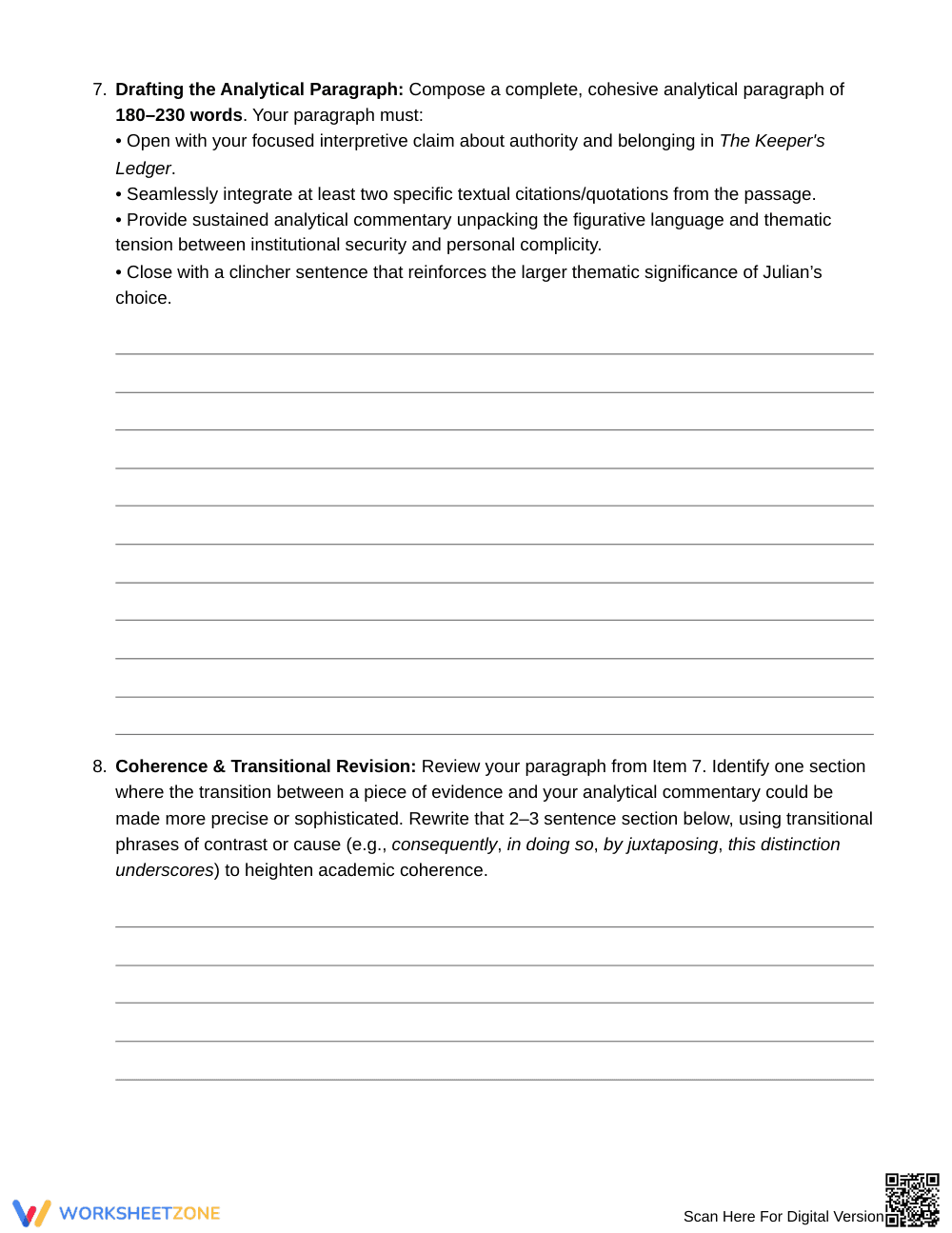
- Independent Practice (Part C, Items 7–8): Students draft an independent 180–230 word analytical paragraph and revise transitions for cohesion.
This gradual release sequence builds writers from isolated components to cohesive analytical paragraphs.
Standards Alignment
This worksheet aligns directly with W.9-10.1: Write arguments to support claims in an analysis of substantive texts, using valid reasoning and sufficient evidence. It also supports RL.9-10.1 by requiring textual evidence to support analytical claims. Both standard codes can be copied directly into lesson plans, IEP goals, or district curriculum mapping tools.
How to Use It
Use this activity during the guided practice phase of an analytical writing unit or as targeted intervention for students relying on plot summary. Circulate during Part B to verify that students analyze word connotations rather than paraphrasing. Typical completion requires 45 to 60 minutes.
Who It's For
Designed for Grade 10 English II classes, this resource supports diverse learners through explicit sentence frames while challenging advanced writers with nuanced textual interpretation. Pair it with a direct instruction lesson on embedding quotations or an anchor chart of formal transitions.
According to research by Fisher & Frey (2014) on the gradual release of responsibility, structured writing interventions that break complex analytical tasks into deliberate sub-skills yield marked gains in student composition quality. This Grade 10 English II worksheet embodies those findings by guiding students through 8 sequential tasks aligned to W.9-10.1. Rather than asking writers to generate comprehensive literary essays immediately, the resource focuses on connecting interpretive claims, integrated quotations, and sustained commentary. Students examine literary excerpts, analyze connotation, and maintain a rigorous ratio of two lines of analysis for every line of cited text before producing an independent paragraph. By scaffolding the transition from claim formulation to evidence synthesis and transitional revision, this resource ensures secondary students master the core mechanics of text-based argumentation with measurable academic rigor and sustained writing independence.


