




























Views
Downloads



Complete Causes & Examples Linking Worksheet | Grade 7 ELA

Paste this activity's link or code into your existing LMS (Google Classroom, Canvas, Teams, Schoology, Moodle, etc.).
Students can open and work on the activity right away, with no student login required.
You'll still be able to track student progress and results from your teacher account.
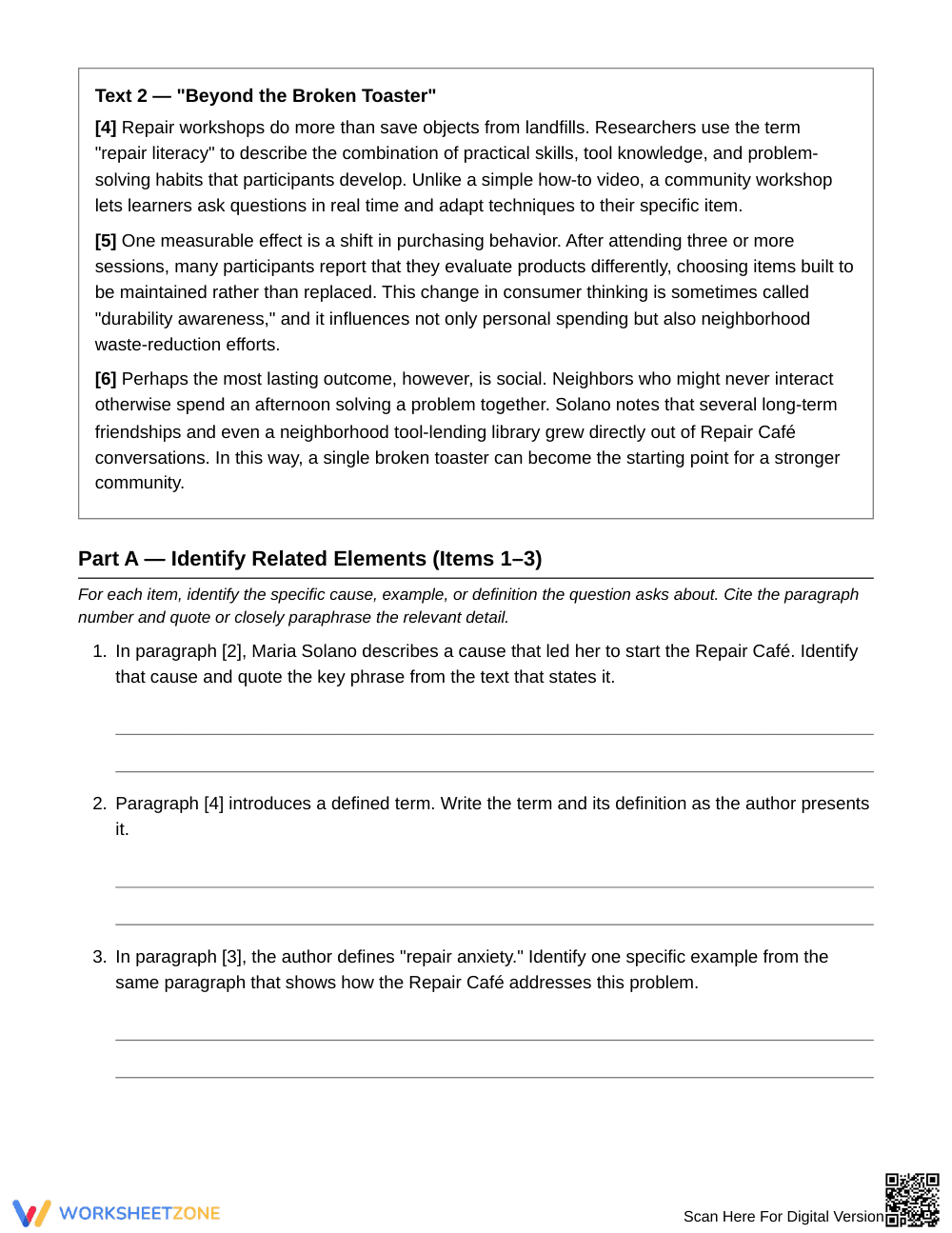
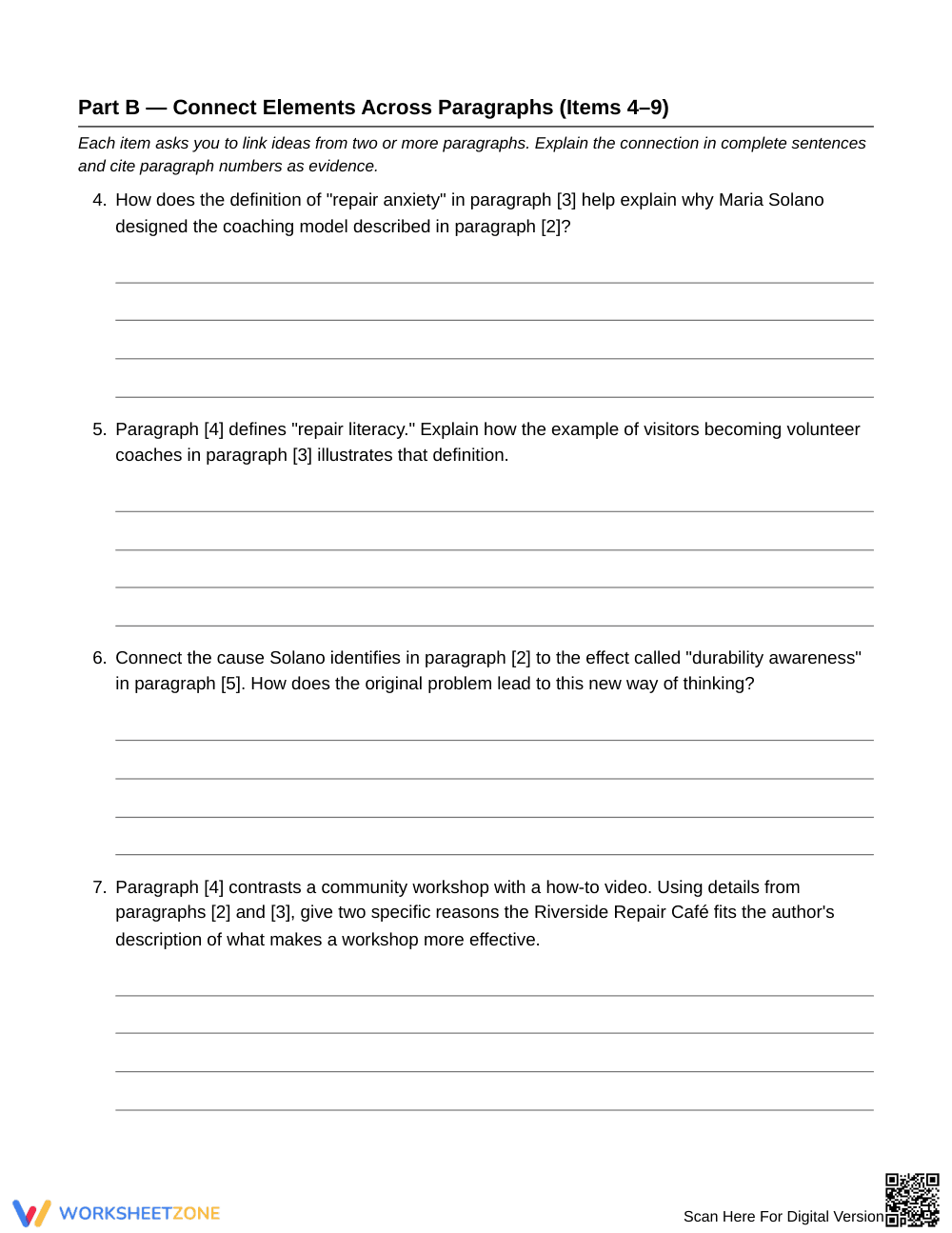
This Grade 7 informational text worksheet equips students to analyze how authors connect ideas across non-fiction passages. By examining paired texts about community Repair Cafés, learners trace how causes, examples, and definitions interact across paragraphs. Students construct clear, evidence-based explanations demonstrating deep comprehension of informational text structure.
At a Glance
- Grade: 7 · Subject: ELA
- Standard:
RI.7.3— Analyze how authors link key ideas, events, and individuals in informational text.- Skill Focus: Link Causes, Examples, and Definitions
- Format: 5 pages · 12 problems · Answer key included · PDF
- Best For: Close reading analysis and constructed responses
- Time: 40–55 minutes
What's Inside
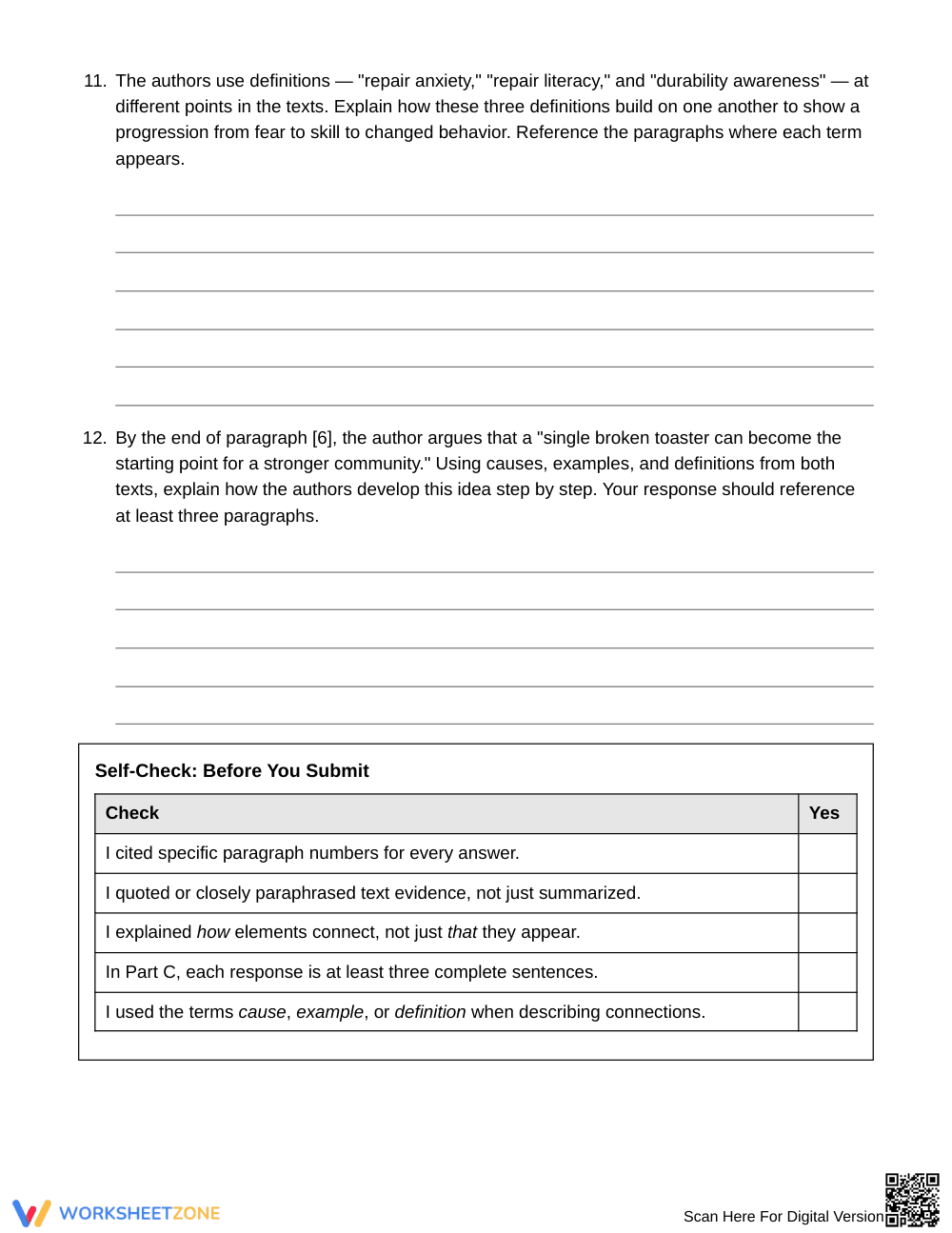
The 5-page worksheet includes paired informational passages, a conceptual guide defining key terms, and 12 text-dependent constructed-response items. Students cite paragraph numbers and quote direct textual evidence to trace authorial techniques. A 4-page answer key provides complete model responses, while an integrated self-check table reinforces writing criteria before submission.
Skill Progression
- Guided practice (Items 1–3): Students identify isolated causes, examples, and definitions within single paragraphs, citing direct quotes.
- Supported practice (Items 4–9): Learners link elements across paragraphs, analyzing how definitions frame examples and how problems spark community solutions.
- Independent practice (Items 10–12): Students synthesize evidence across both passages in multi-sentence explanatory justifications.
This sequence follows the gradual release of responsibility model, moving students from basic element identification to multi-paragraph synthesis.
Standards Alignment
This resource directly targets RI.7.3: Analyze the interactions between individuals, events, and ideas in a text. It also reinforces RI.7.1 by requiring students to cite specific textual evidence for all analytical claims. Both standard codes can be copied directly into lesson plans, IEP goals, or district curriculum mapping tools.
How to Use It
Use this worksheet following direct instruction on informational text analysis. During guided practice, complete Part A together before assigning Part B for partner analysis. For formative assessment, evaluate Item 5 to determine whether students accurately link earlier causes to subsequent behavioral effects. Expect completion within 40 to 55 minutes.
Who It's For
This printable resource is designed for seventh-grade ELA classrooms, advanced grade 6 readers, and intervention groups requiring structured practice with non-fiction text structures. Paragraph numbers and explicit definitions support English learners and students with accommodations. Pair this worksheet with an anchor chart on informational text signal words.
According to research on reading comprehension by Fisher & Frey (2014), adolescent literacy development accelerates significantly when instructional tasks systematically progress from explicit element identification to multi-text synthesis. This Grade 7 informational text worksheet operationalizes that instructional framework under Common Core standard RI.7.3, guiding middle school students to analyze how authors connect causes, examples, and definitions across paired non-fiction passages. By working through 12 structured constructed-response items across two texts, learners locate textual evidence, examine conceptual links between six numbered paragraphs, and construct rigorous multi-sentence arguments explaining whole-text development. A built-in student self-assessment checklist reinforces metacognitive reflection, paragraph citations, and response completeness before submission. Educators can deploy this comprehensive 5-page resource during close-reading units, targeted small-group intervention, or assessment preparation to systematically monitor and document measurable student growth in standard-aligned textual analysis.


