


























Views
Downloads



Complete Author's Structural Choice Worksheet | Grade 7 ELA
Paste this activity's link or code into your existing LMS (Google Classroom, Canvas, Teams, Schoology, Moodle, etc.).
Students can open and work on the activity right away, with no student login required.
You'll still be able to track student progress and results from your teacher account.
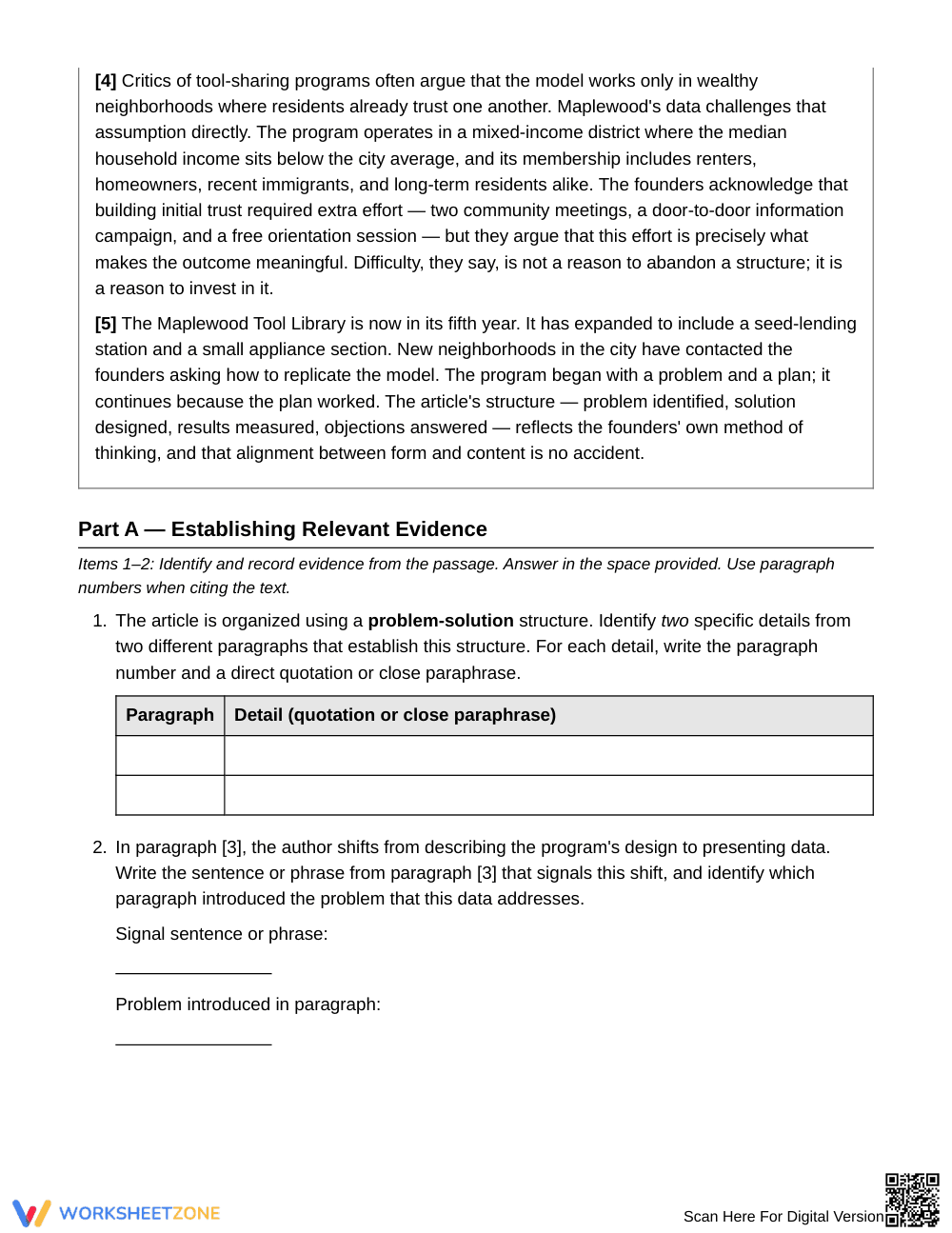
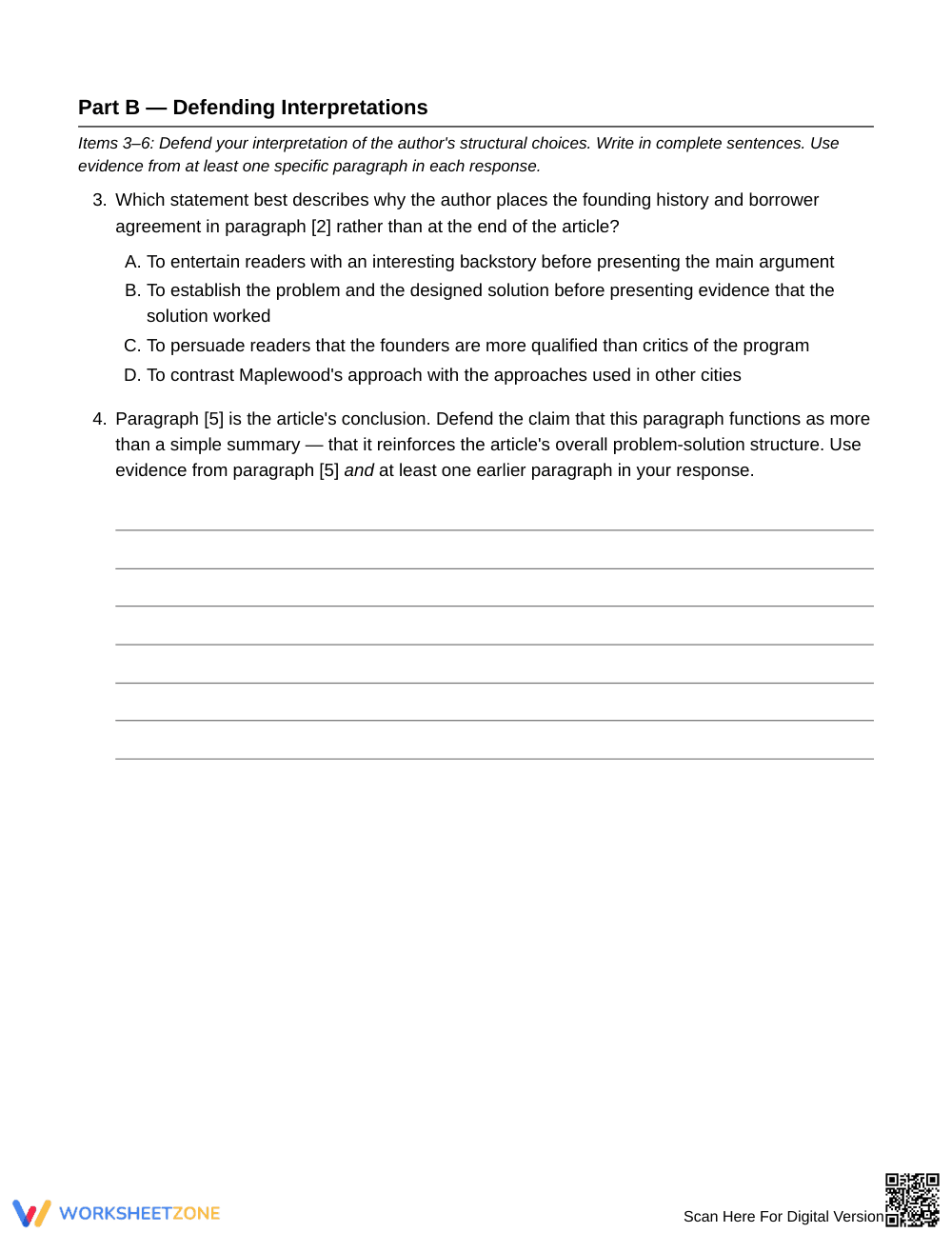
This Grade 7 reading worksheet equips students to analyze and defend an author's organizational decisions using evidence-based reasoning. Working with the informational passage "Sharing Tools, Building Neighbors," learners evaluate how a problem-and-solution framework develops central ideas and refute alternative structural counterarguments with textual support.
At a Glance
- Grade: 7 · Subject: ELA
- Standard:
RI.7.5— Analyze how a text's structure organizes and develops key ideas- Skill Focus: Defend an Author's Structural Choice
- Format: 5 pages · 8 problems · Answer key included · PDF
- Best For: Close reading analysis and text structure mastery
- Time: 40–50 minutes
What's Inside
This 5-page resource includes the 5-paragraph passage "Sharing Tools, Building Neighbors," an introductory Claim-Evidence-Reasoning reminder box, and 8 scaffolded analytical items across three distinct parts. It features quotation collection tables, structural multiple-choice questions, extended written defenses, and a 4-page answer key with annotated exemplar responses.
Skill Progression
- Guided Practice (Items 1–2): Students locate and cite text evidence in two-column tables to establish how the author introduces problems and solutions.
- Supported Practice (Items 3–6): Learners analyze section sequencing and defend the problem-solution structure over chronological alternatives using paragraph citations.
- Independent Practice (Items 7–8): Students address reader counterarguments, acknowledging opposing viewpoints before writing multi-sentence defenses of the author's organizational choices.
This gradual release progression moves learners from identifying structural evidence to independently constructing written defenses.
Standards Alignment
This worksheet aligns with primary standard `RI.7.5`: Analyze the structure an author uses to organize a text, including how major sections contribute to the whole and develop ideas. It also supports `RI.7.1` through textual citation. Both standard codes can be copied directly into lesson plans, IEP goals, or district curriculum mapping tools.
How to Use It
Assign this resource during independent practice following direct instruction on organizational patterns. Formatively assess Item 5 to verify whether students evaluate structural effectiveness rather than merely summarizing events. Expect completion in 40 to 50 minutes.
Who It's For
Designed for Grade 7 ELA classes, this worksheet supports general education learners and striving readers needing structured analytical scaffolds. Pair it with an informational text structures anchor chart or a modeling lesson on paragraph function.
According to research by Fisher & Frey (2014), explicit instruction in organizational text structures significantly enhances informational reading comprehension, particularly when students actively justify why an author chose a specific organizational framework over competing alternatives. This worksheet addresses standard RI.7.5 by prompting Grade 7 learners to analyze how an author's problem-solution structure organizes and develops central ideas across an informational article. By evaluating how specific paragraphs introduce challenges, present concrete evidence, and anticipate counterarguments, students practice defending structural intent through the Claim-Evidence-Reasoning model. The structured shift across all 8 items—from locating textual evidence to refuting critical counterclaims—provides scaffolded practice in synthesizing multi-paragraph connections. As secondary reading curricula demand increasingly rigorous text analysis, giving students structured opportunities to evaluate rhetorical craft ensures they move beyond passive comprehension into critical analytical discourse grounded directly in textual evidence.


