




























Views
Downloads




Complete Audience Analysis Worksheet | Grade 6 ELA

Paste this activity's link or code into your existing LMS (Google Classroom, Canvas, Teams, Schoology, Moodle, etc.).
Students can open and work on the activity right away, with no student login required.
You'll still be able to track student progress and results from your teacher account.
This Grade 6 ELA worksheet teaches students how to determine author purpose and intended audience using text evidence. Learners analyze two contrasting robotics club notices, identifying how vocabulary, assumed knowledge, and tone shift to address either student peers or adult guardians.
At a Glance
- Grade: 6 · Subject: English Language Arts
- Standard:
RI.6.6— Determine an author's purpose and explain how point of view is conveyed.- Skill Focus: Analyzing Audience Clues in Informational Texts
- Format: 5 pages · 10 problems · Full answer key included · PDF
- Best For: Author purpose and audience analysis instruction
- Time: 35–45 minutes
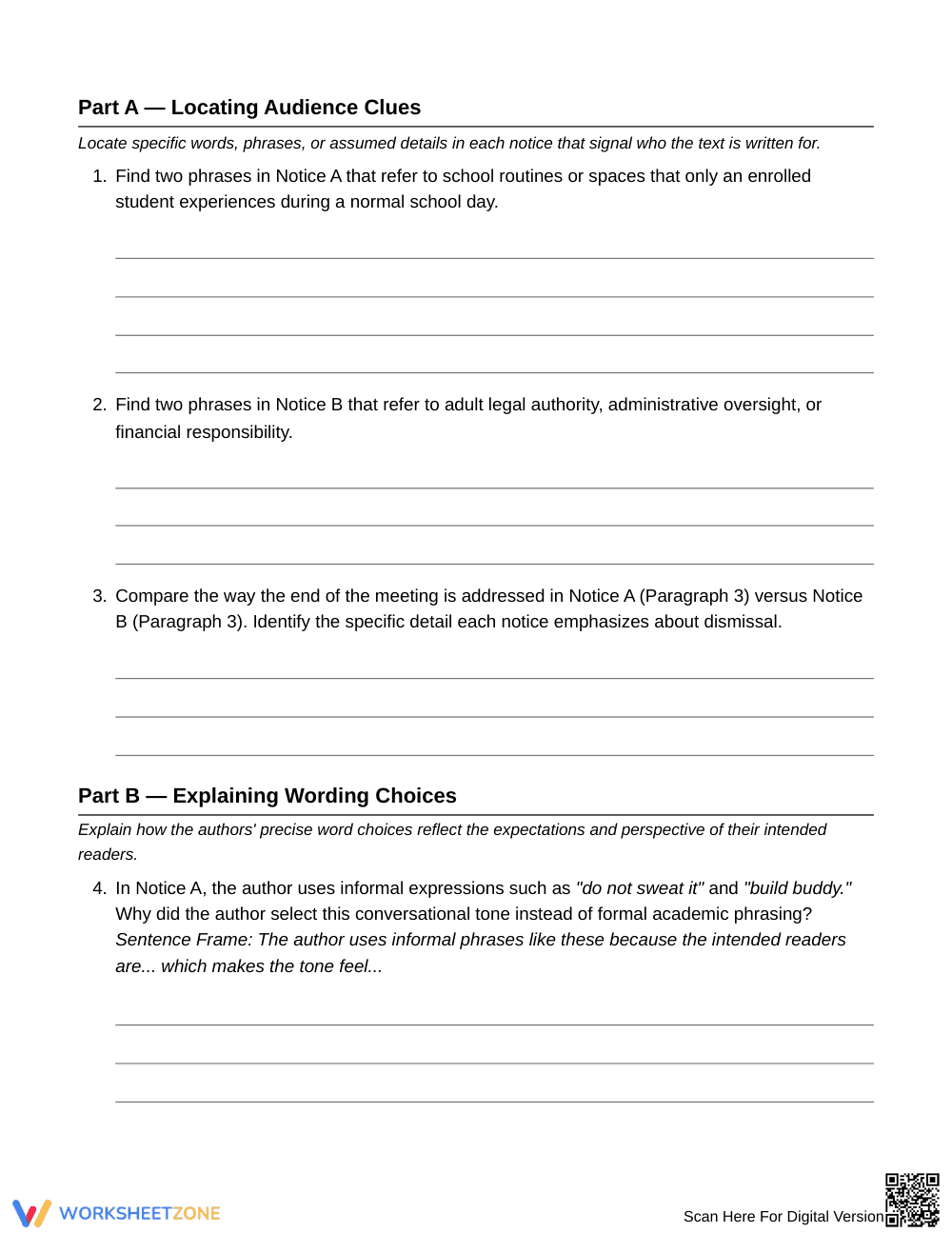
This 5-page packet provides a reference box on word choice, assumed knowledge, and reader responsibilities with an annotated model. Students examine two contrasting notices about a robotics club: an informal student announcement and a formal guardian memorandum. Ten structured tasks guide learners through locating clues, analyzing vocabulary with sentence frames, and writing comparative justifications alongside a 3-page answer key.
Skill Progression
- Guided practice (Part A, Problems 1–3): Students locate school routines and administrative terms across both notices.
- Supported practice (Part B, Problems 4–8): Learners evaluate tone and diction using sentence frames connecting vocabulary to reader expectations.
- Independent practice (Part C, Problems 9–10): Students synthesize evidence to draft multi-sentence audience justifications.
This sequence implements a gradual release model, guiding learners from basic identification to independent rhetorical analysis.
Standards Alignment
This resource aligns to RI.6.6: Determine an author's point of view or purpose in a text and explain how it is conveyed. Students analyze how word choice and assumed knowledge signal distinct audiences. The tasks also support RI.6.1 through rigorous text-based citations. Both standard codes can be copied directly into lesson plans, IEP goals, or district curriculum mapping tools.
How to Use It
Use this worksheet after direct instruction on author craft or as targeted small-group intervention. As a formative assessment tip, check Part B to confirm students distinguish peer-focused idioms from formal administrative jargon. Expect the 10 problems to take 35 to 45 minutes of class time.
Who It's For
This worksheet serves Grade 6 ELA students mastering informational text analysis. English language learners benefit from the sentence frames in Part B, while advanced readers tackle nuanced register shifts. Pair this activity with an anchor chart detailing formal versus informal registers.
According to Fisher & Frey (2014), structured close reading routines that transition students from explicit textual observations to comparative analysis significantly enhance reading comprehension and analytical writing. This Grade 6 instructional resource operationalizes standard RI.6.6 by training middle school students to identify an author's purpose and intended audience through methodical textual analysis. By examining paired passages on the same school event, learners track how diction, assumed background knowledge, and explicit reader responsibilities signal distinct target demographics. The three-part progression scaffolds student thinking through sentence frames before demanding independent evidentiary justifications, reinforcing the cognitive shift from surface comprehension to rhetorical evaluation. When students articulate why an author alters register across parallel contexts, they build durable critical thinking skills that transfer directly to standardized informational reading assessments, academic essays, and complex real-world media literacy tasks.


