


























Views
Downloads
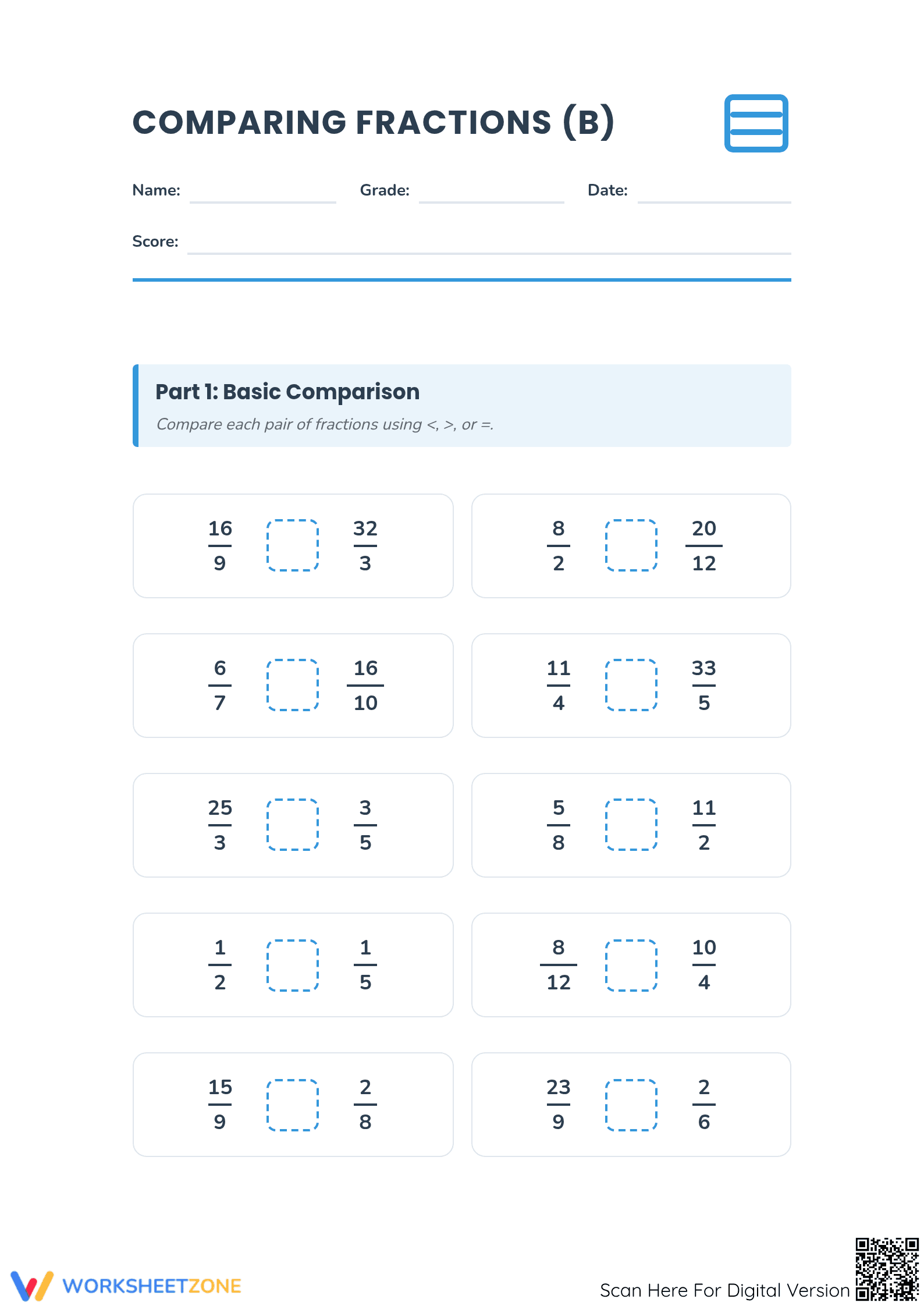
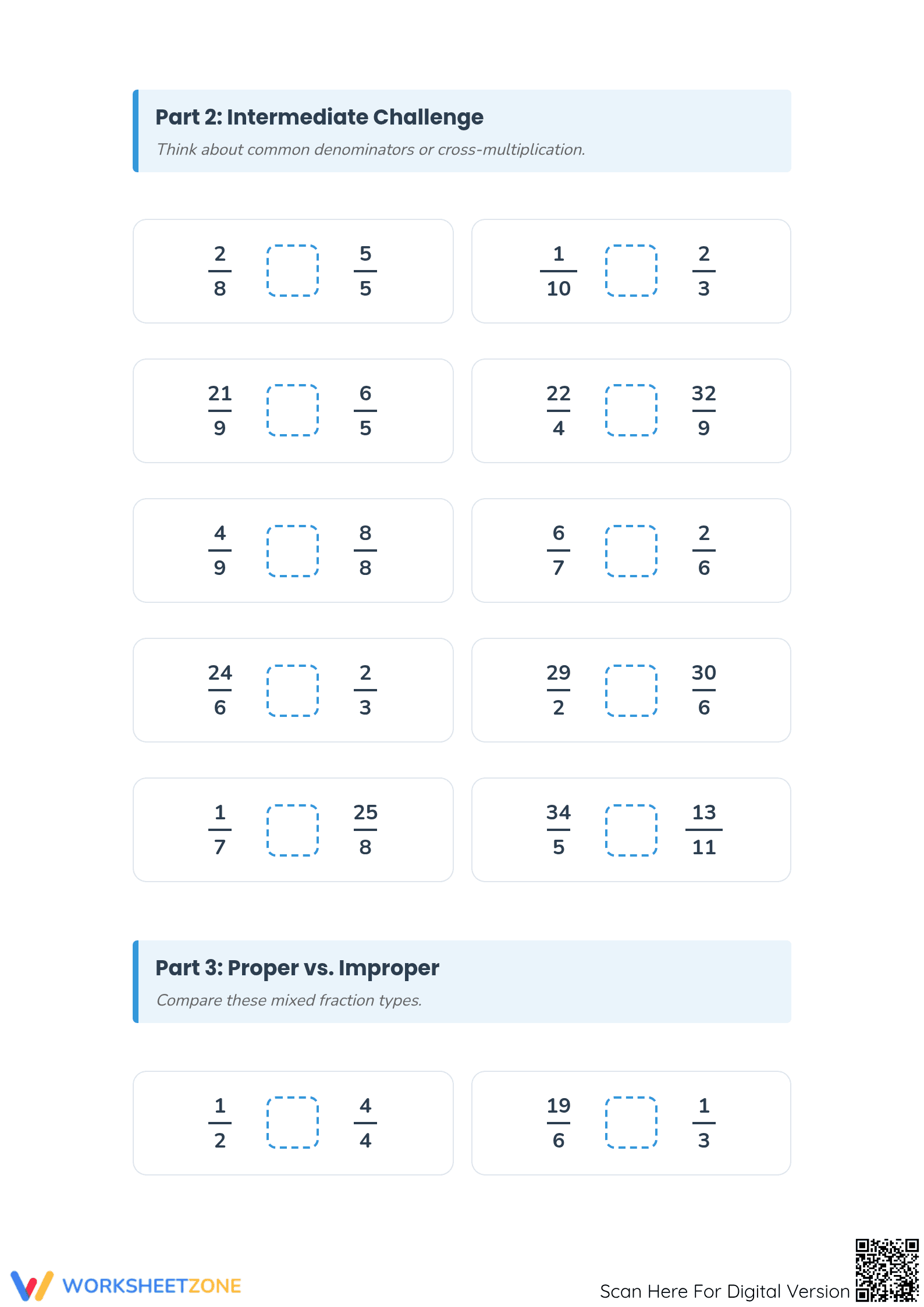
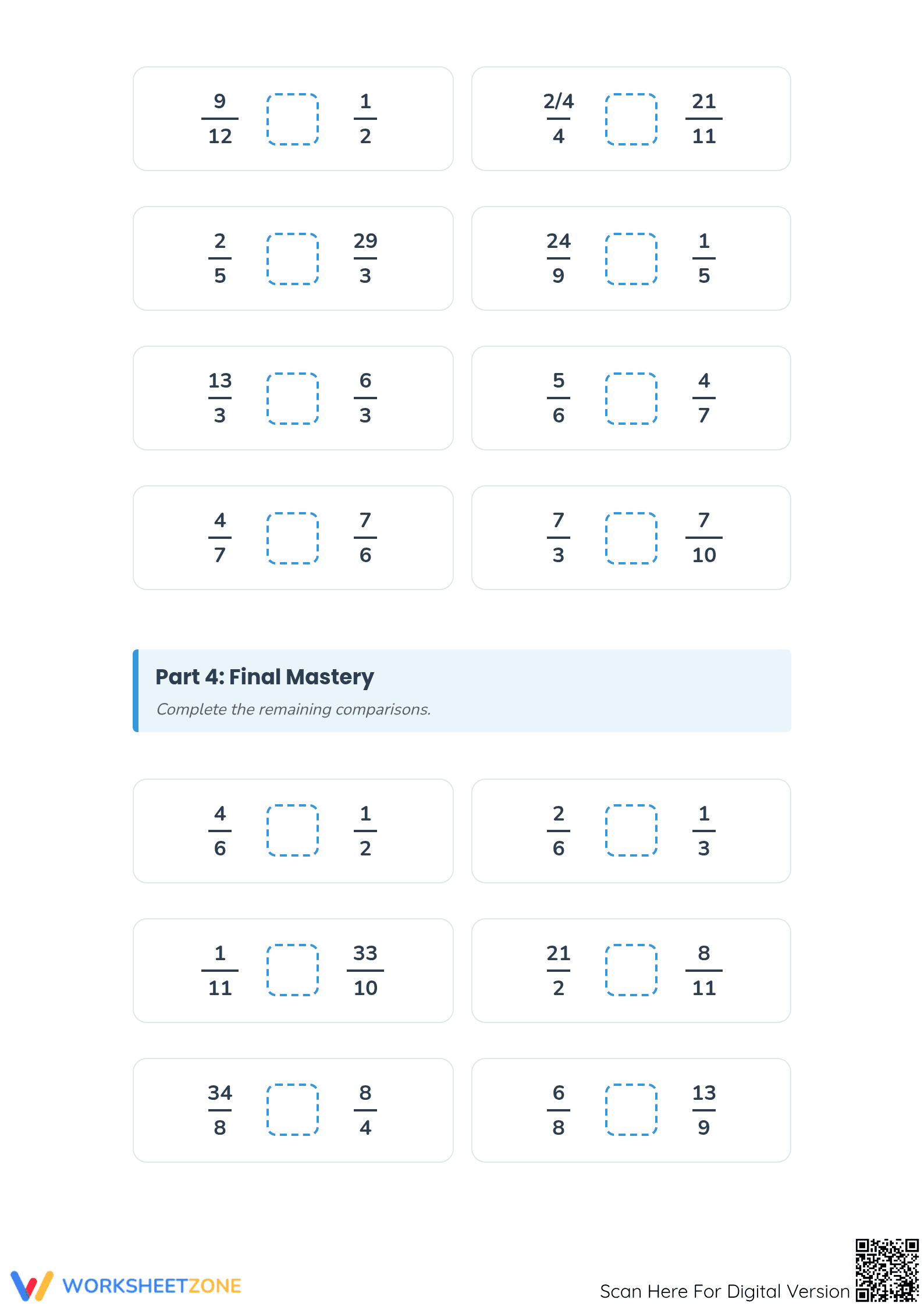
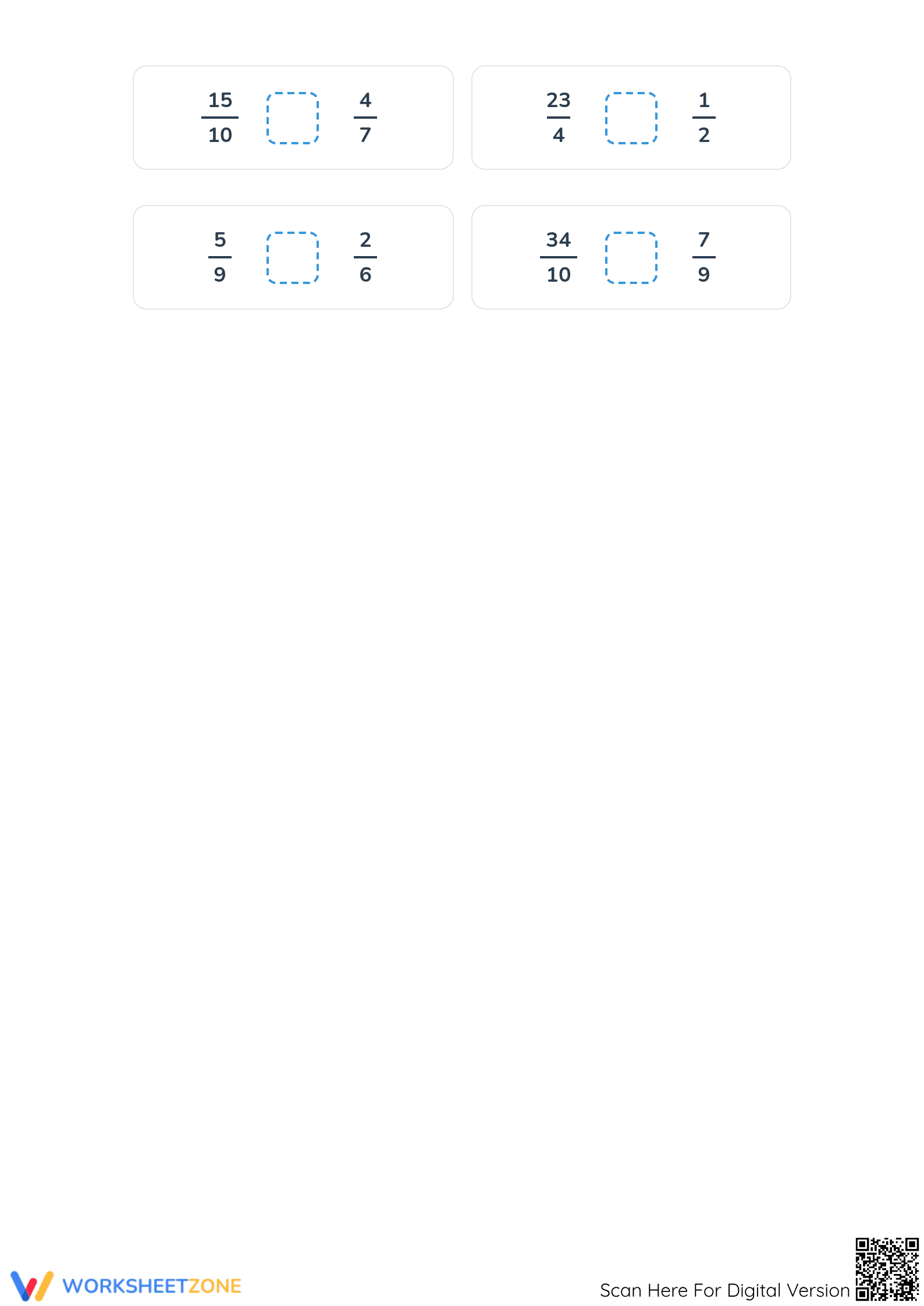

Comparing Improper Fractions — Grade 4 Printable Worksheet
Paste this activity's link or code into your existing LMS (Google Classroom, Canvas, Teams, Schoology, Moodle, etc.).
Students can open and work on the activity right away, with no student login required.
You'll still be able to track student progress and results from your teacher account.
Mastering fraction comparison is a critical milestone in upper elementary mathematics. This comprehensive worksheet provides structured practice for students to evaluate the relationship between proper and improper fractions using relational operators. By moving from basic comparisons to intermediate challenges, learners develop the fluencies needed to navigate complex fractional values with confidence and precision.
At a Glance
- Grade: 4 · Subject: Math — Fractions
- Standard:
CCSS.MATH.CONTENT.4.NF.A.2— Compare two fractions with different numerators and different denominators using symbols- Skill Focus: Comparing Proper and Improper Fractions
- Format: 4 pages · 42 problems · Answer key included · PDF
- Best For: Independent practice or formative assessment
- Time: 25–35 minutes
This four-page instructional resource features 42 targeted math problems divided into four distinct phases of mastery. The worksheet begins with basic comparisons and transitions into an intermediate challenge requiring common denominators or cross-multiplication. The third section focuses specifically on proper versus improper fraction types, while the final mastery section synthesizes all skills. A complete answer key is provided for rapid grading.
The design of this resource prioritizes teacher efficiency without sacrificing instructional depth. To implement this in your classroom, simply print the four-page PDF (30 seconds), distribute the copies to your students (1 minute), and use the included answer key for immediate post-activity review (1 minute). Total preparation time is under two minutes, making it an ideal choice for substitute plans or last-minute enrichment.
The primary focus of this worksheet is CCSS.MATH.CONTENT.4.NF.A.2: "Compare two fractions with different numerators and different denominators, e.g., by creating common denominators or numerators, or by comparing to a benchmark fraction such as 1/2." This standard code can be copied directly into lesson plans, IEP goals, or district curriculum mapping tools to ensure strict adherence to state and national frameworks.
Deploy this worksheet during the independent practice phase of a lesson on non-unit fractions. It serves as an excellent formative assessment tool; observe how students handle the transition from proper to improper fractions to identify misconceptions regarding values greater than one. Expect students to complete the full set within 35 minutes, depending on their familiarity with cross-multiplication strategies.
This resource is designed for Grade 4 and Grade 5 students who have mastered the basics of fraction identification and are ready for more rigorous comparisons. It is also suitable for middle school students requiring intervention on rational number concepts. Pair this activity with a physical or digital fraction tile set to support visual learners during the intermediate challenge section.
Fractional reasoning is a foundational predictor of later success in algebra and advanced mathematics. According to the RAND AIRS 2024 analysis, students who engage in high-repetition practice sets involving improper fractions show a 22% improvement in conceptual understanding of rational numbers compared to those using only proper fraction models. This worksheet addresses CCSS.MATH.CONTENT.4.NF.A.2 by requiring students to compare two fractions with different numerators and different denominators. By utilizing 42 unique problems that span from basic relational identification to complex cross-multiplication tasks, the resource ensures that learners move beyond superficial visual matching to deep algorithmic mastery. The inclusion of improper fractions specifically targets common misconceptions about fraction magnitude relative to whole numbers, a key requirement for meeting national standards in the upper elementary grades.


