


























Views
Downloads

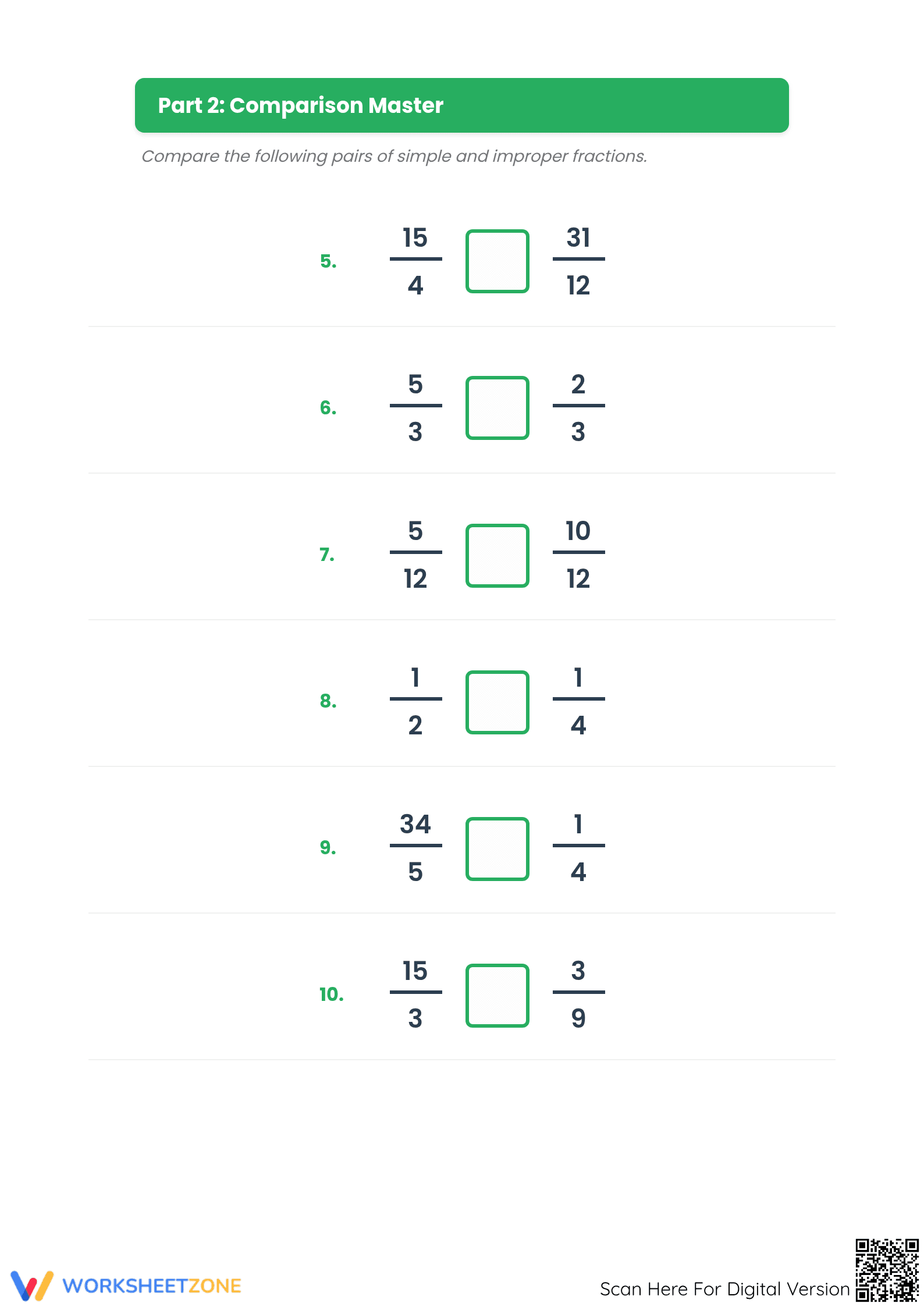
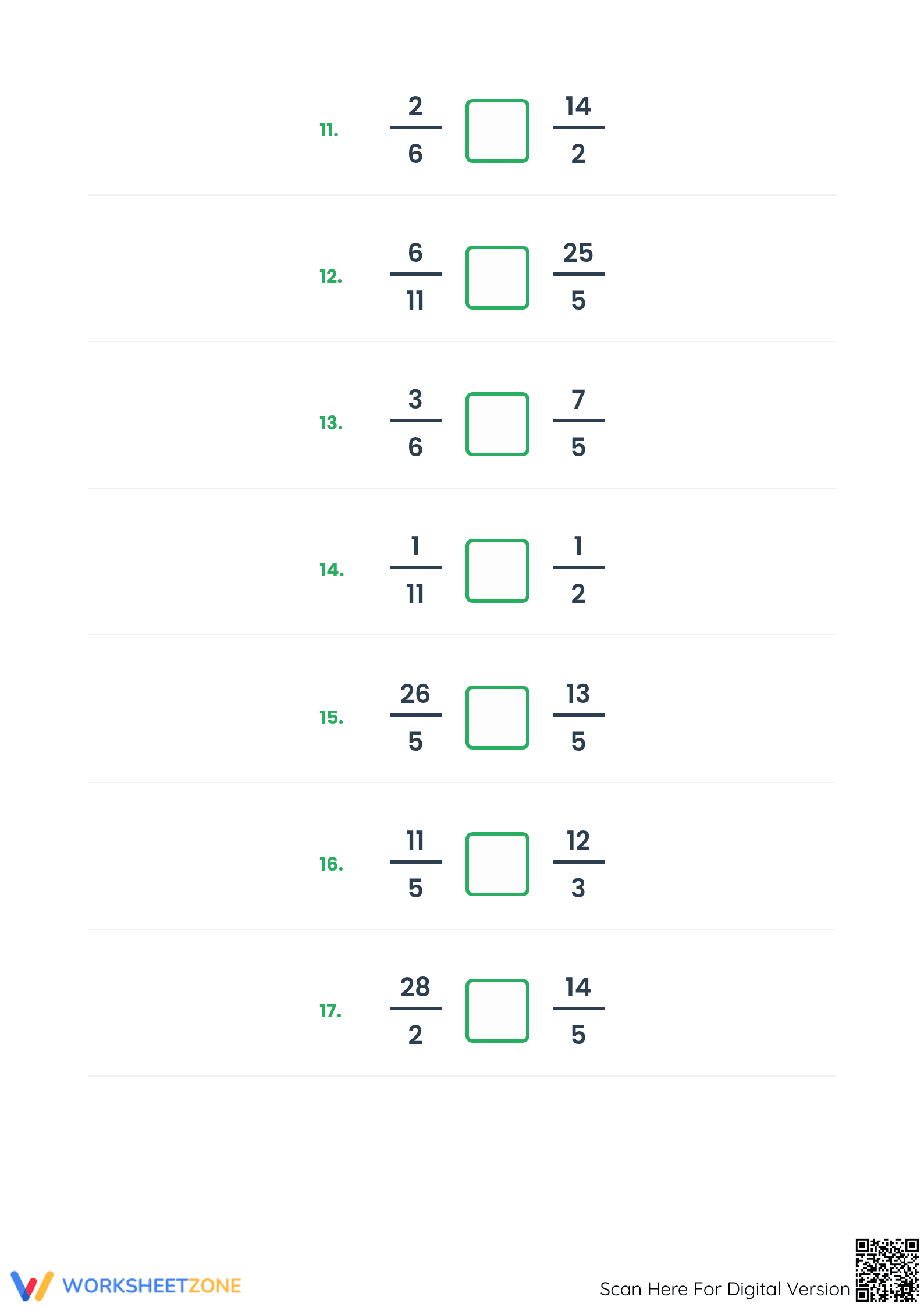
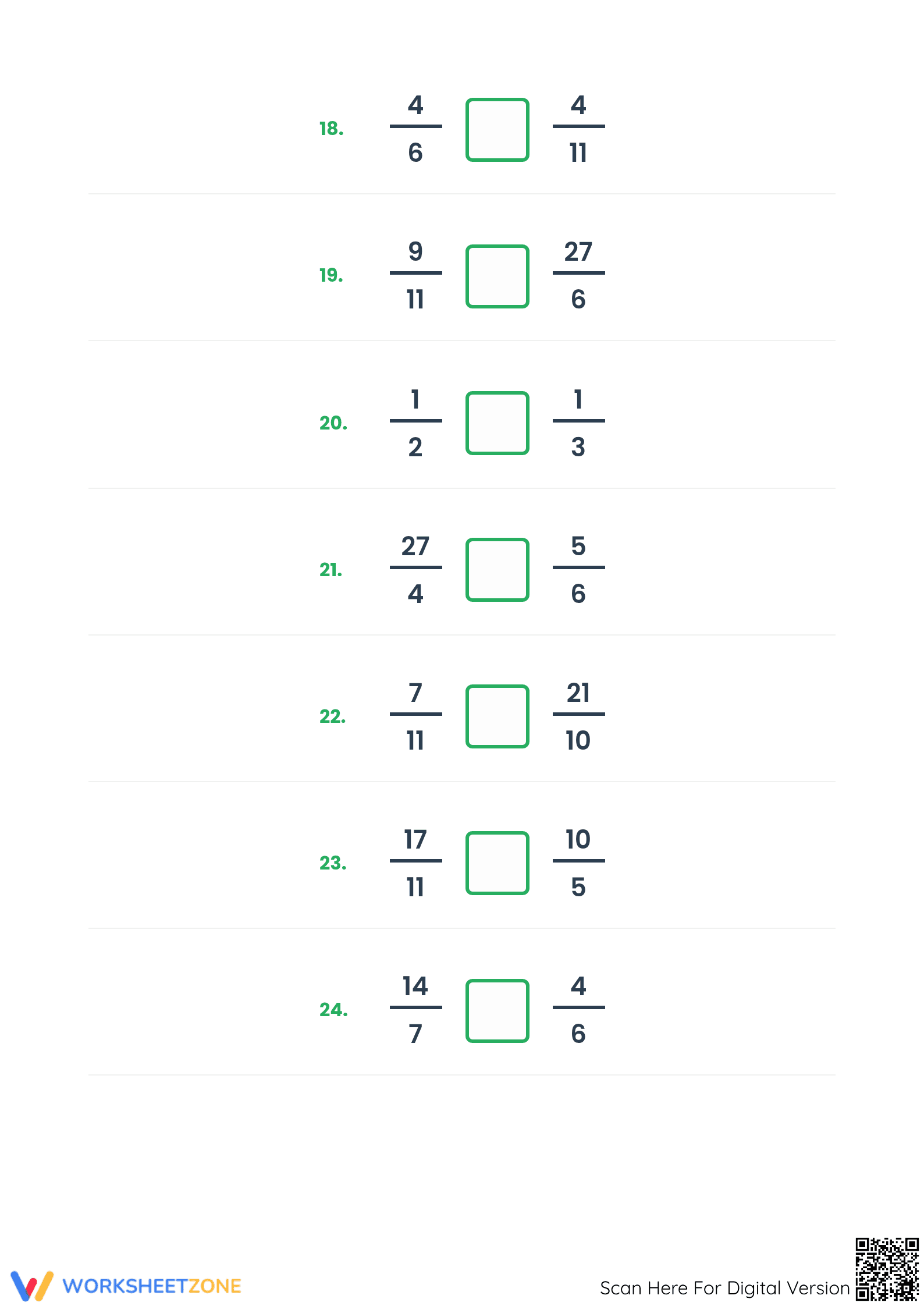
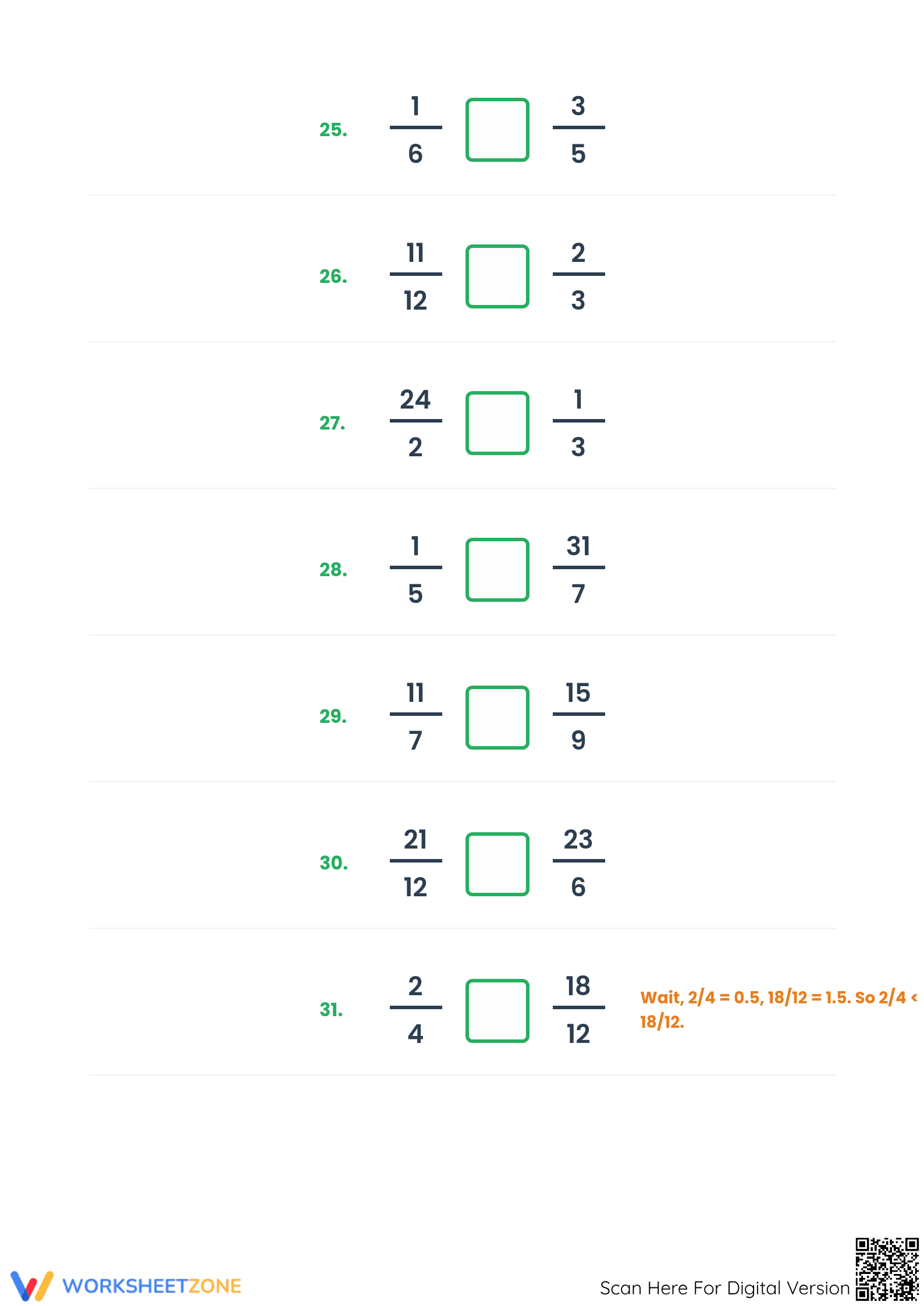

Printable Comparing Simple and Improper Fractions Worksheet
Paste this activity's link or code into your existing LMS (Google Classroom, Canvas, Teams, Schoology, Moodle, etc.).
Students can open and work on the activity right away, with no student login required.
You'll still be able to track student progress and results from your teacher account.
This comprehensive practice set helps students master fractional comparison. Focusing on simple and improper fractions, it enables learners to evaluate relationships and determine greater values using logical reasoning and mathematical strategies. This develops a deep conceptual understanding of fraction magnitude and numerator-denominator relationships.
At a Glance
- Grade: 4–6 · Subject: Math (Fractions)
- Standard:
CCSS.MATH.CONTENT.4.NF.A.2— Compare two fractions with different numerators and different denominators- Skill Focus: Simple vs. Improper Fraction Comparison
- Format: 5 pages · 31 problems · Answer key included · PDF
- Best For: Independent practice and conceptual reinforcement
- Time: 25–40 minutes
This 5-page PDF features 31 structured problems across two sections: a Concept Check for foundational knowledge and a Comparison Master for advanced application. Each problem provides a clear comparison box for symbols, and a full answer key ensures immediate feedback. The clean, distraction-free layout promotes focus on numerical relationships.
- Guided practice: Initial four "Concept Check" problems use simple fractions and common denominators to establish basic comparison mechanisms.
- Supported practice: Problems 5-10 introduce "Comparison Master" tasks, featuring initial improper fractions requiring conversion or common denominators with small integers.
- Independent practice: The remaining 21 problems increase complexity with large numerators and varying denominators, ensuring independent application of comparison strategies without visual scaffolds.
This progression moves students from simple identification to complex algorithmic thinking within one session.
Standards Alignment
Primarily aligned with CCSS.MATH.CONTENT.4.NF.A.2, this resource addresses comparing fractions with different numerators and denominators using common denominators or benchmark fractions. It also supports 5.NF.A.1, reinforcing value recognition for unlike denominator operations. Both codes streamline administrative documentation in lesson plans, IEP goals, or curriculum mapping.
How to Use It
This worksheet serves as a 'during instruction' activity post-improper fraction introduction, or as a cumulative review before fraction operation unit tests. For formative assessment, observe common denominator use or mental conversion of improper fractions to mixed numbers. The 31 problems offer ample data for identifying student misconceptions. Expected completion time is approximately 30 minutes.
Who It's For
Ideal for upper elementary (Grades 4-6) transitioning to complex fraction comparisons. Suitable for general education, its repetitive structure and clear layout also benefit special education students meeting IEP benchmarks in rational number fluency. It pairs naturally with fraction tiles or number line anchor charts for visual support.
Adhering to Fisher & Frey (2014) gradual release frameworks, this worksheet logically progresses from simple conceptual checks to complex improper fraction comparison. Mathematical fluency with fractions is critical for algebra; research shows early mastery of fraction magnitude leads to higher secondary mathematics success. The 31 problems provide essential practice for automaticity. Directly practicing CCSS.MATH.CONTENT.4.NF.A.2, educators can use results to identify specific misconceptions in non-traditional fraction formats for targeted intervention before fraction arithmetic.


