


























Views
Downloads
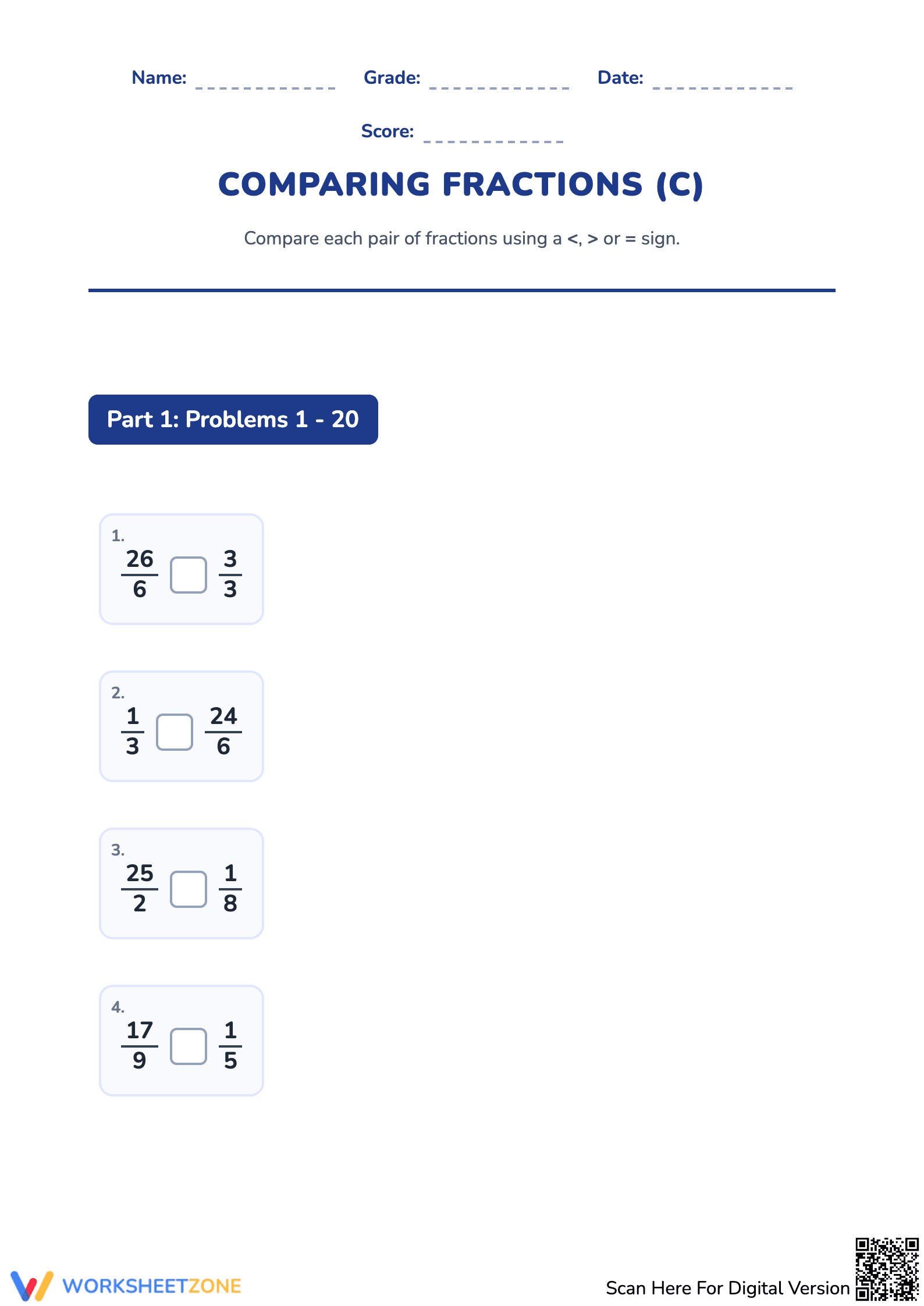
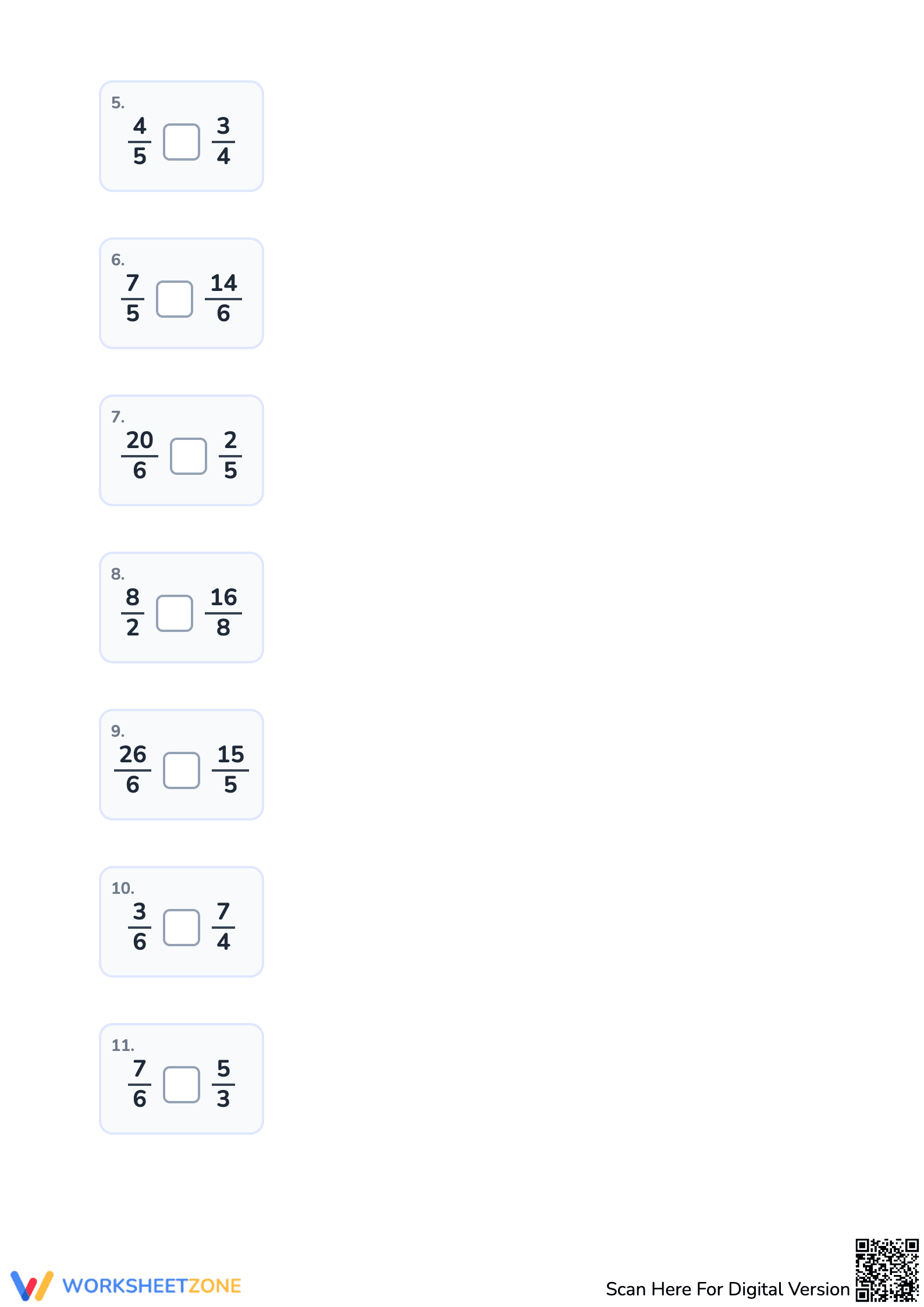
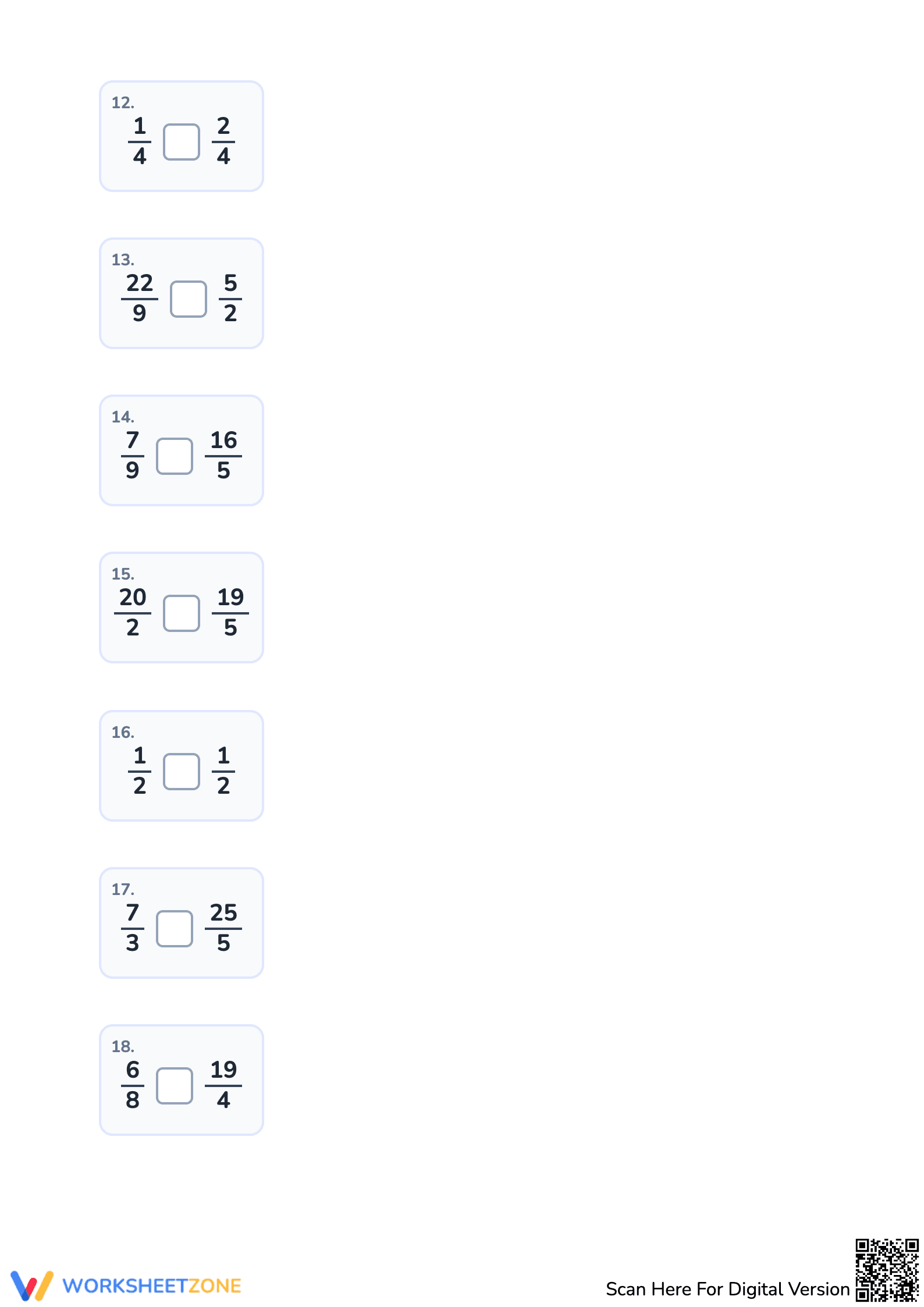
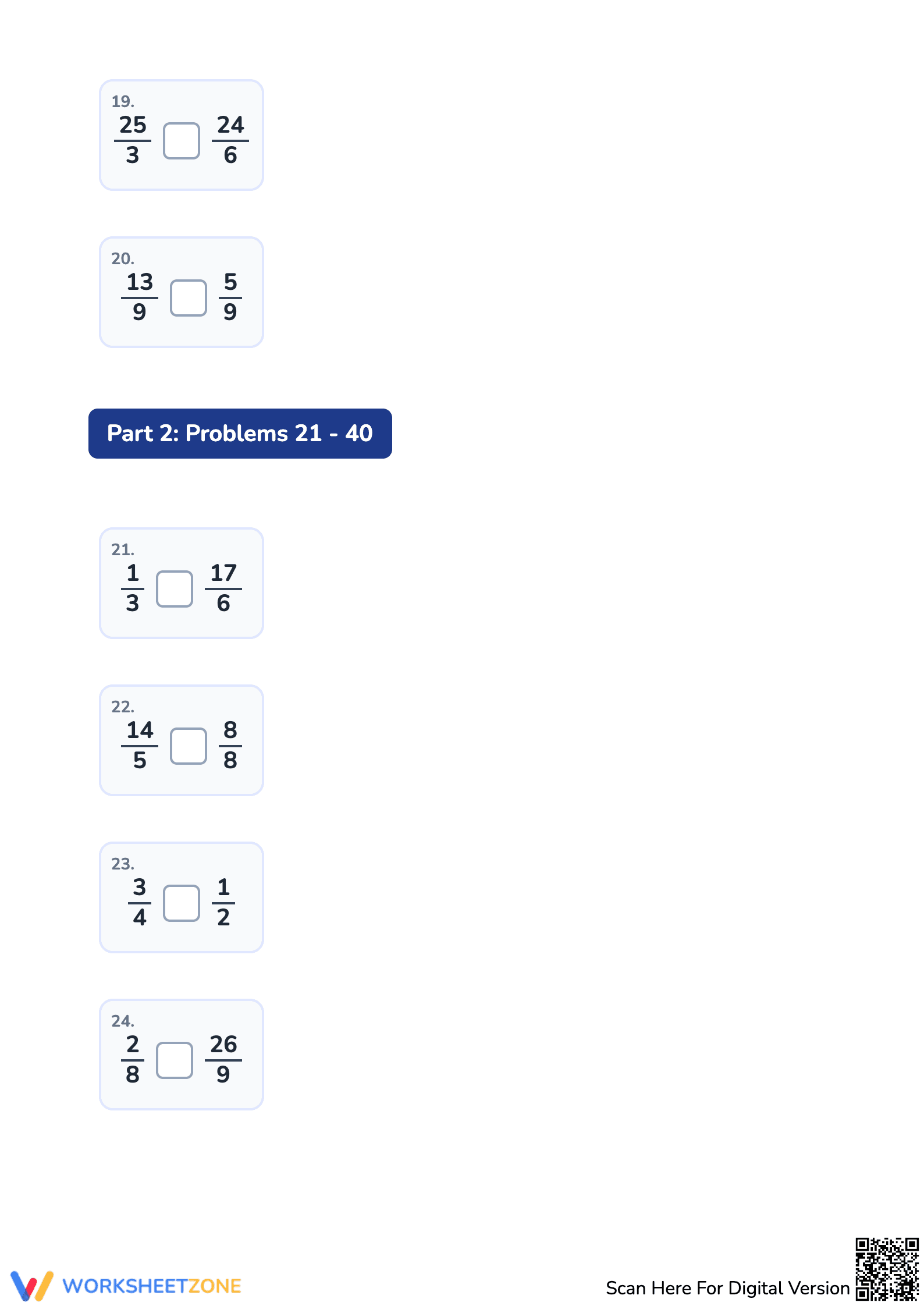

Comparing Simple and Improper Fractions | Printable Math
Paste this activity's link or code into your existing LMS (Google Classroom, Canvas, Teams, Schoology, Moodle, etc.).
Students can open and work on the activity right away, with no student login required.
You'll still be able to track student progress and results from your teacher account.
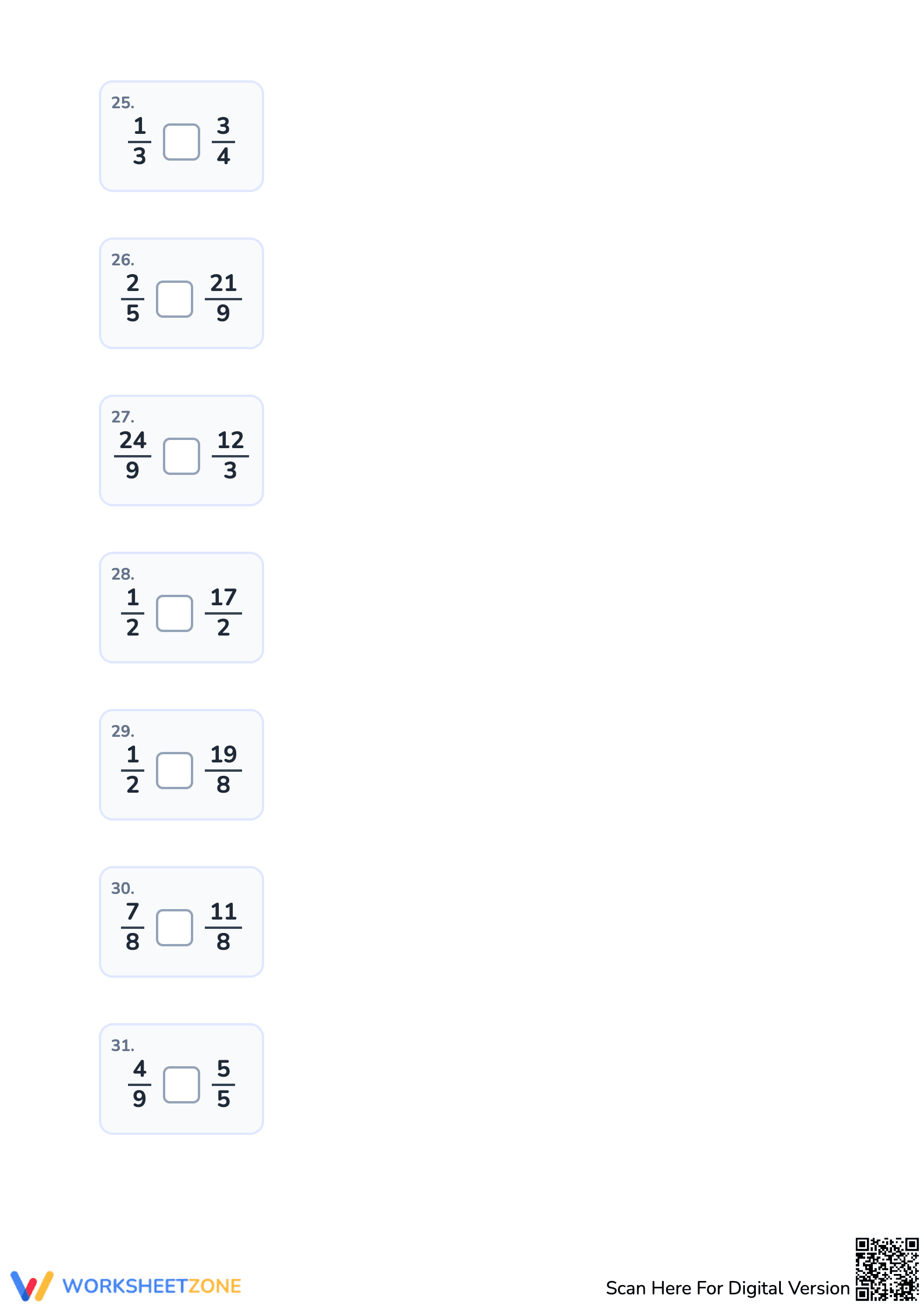
This comprehensive math worksheet helps students master the vital skill of comparing simple and improper fractions through repeated, structured practice. By evaluating numerators and denominators across forty diverse problem sets, learners develop the fluencies required to determine relative values using mathematical symbols. Students will successfully identify greater than, less than, or equal relationships in varied formats.
At a Glance
At a Glance
- Grade: 4–5 · Subject: Math (Fractions)
- Standard:
4.NF.A.2— Compare two fractions with different numerators and denominators using symbols.- Skill Focus: Comparing simple and improper fractions
- Format: 5 pages · 40 problems · Answer key included · PDF
- Best For: Independent practice and fraction fluency drills
- Time: 25–40 minutes
What's Inside
This multi-page PDF collection features forty distinct comparison tasks divided into logical sections for easy classroom distribution. The layout provides spacious boxes for students to write comparison operators between simple proper fractions and larger improper fractions. A complete, mirrored answer key is included to allow for rapid grading or student self-correction, ensuring immediate feedback on mathematical reasoning and fractional values.
Skill Progression
- Guided Practice: The first twenty problems introduce comparisons between familiar simple fractions and basic improper fractions to build student confidence.
- Supported Practice: Problems twenty-one through thirty-five increase complexity by using larger denominators, requiring students to find common ground or convert to mixed numbers.
- Independent Practice: The final section challenges students with high-value improper fractions to ensure total mastery of the comparison concept.
This structured approach follows a gradual-release model, moving from intuitive pairings to more rigorous mathematical evaluations of improper values.
Standards Alignment
The primary focus of this resource is 4.NF.A.2: "Compare two fractions with different numerators and different denominators, e.g., by creating common denominators or numerators, or by comparing to a benchmark fraction such as 1/2." This worksheet targets the comparison of improper fractions to simple ones, a key extension of foundational knowledge. The standard code can be copied directly into lesson plans, IEP goals, or district curriculum mapping tools.
How to Use It
Deploy this worksheet during the independent practice phase of a lesson after students have learned methods for finding common denominators or converting improper fractions. It serves as an excellent formative assessment; observe if students are consistently struggling with fractions where denominators are not multiples of each other. Completion typically takes between twenty-five and forty minutes depending on individual student fluency levels.
Who It's For
Designed for Grade 4 and 5 students, this resource is ideal for general education classrooms, math intervention groups, or special education settings focusing on fourth-grade standards. It pairs naturally with visual fraction models or number lines to provide a concrete bridge to abstract symbolic comparison. Teachers can use it as a standalone drill or a comprehensive review before a unit assessment.
Citation Capsule
Aligned with 4.NF.A.2, this worksheet targets the cognitive shift required to compare values greater than one with proper fractions. Proficiency in this skill is essential for algebraic success and proportional reasoning. According to the NAEP framework, early mastery of fraction magnitudes is a strong predictor of success in middle school mathematics. This resource provides the high-repetition practice necessary to solidify mental number line placement for non-traditional fraction formats. By requiring students to navigate both proper and improper structures, it prevents the common misconception that a larger denominator always indicates a smaller value. This rigorous set ensures that students can flexibly apply comparison strategies across the entire rational number spectrum. Teachers can confidently assign this set knowing it addresses the core fluencies required for Grade 4 and Grade 5 mathematical standards.


