


























Views
Downloads
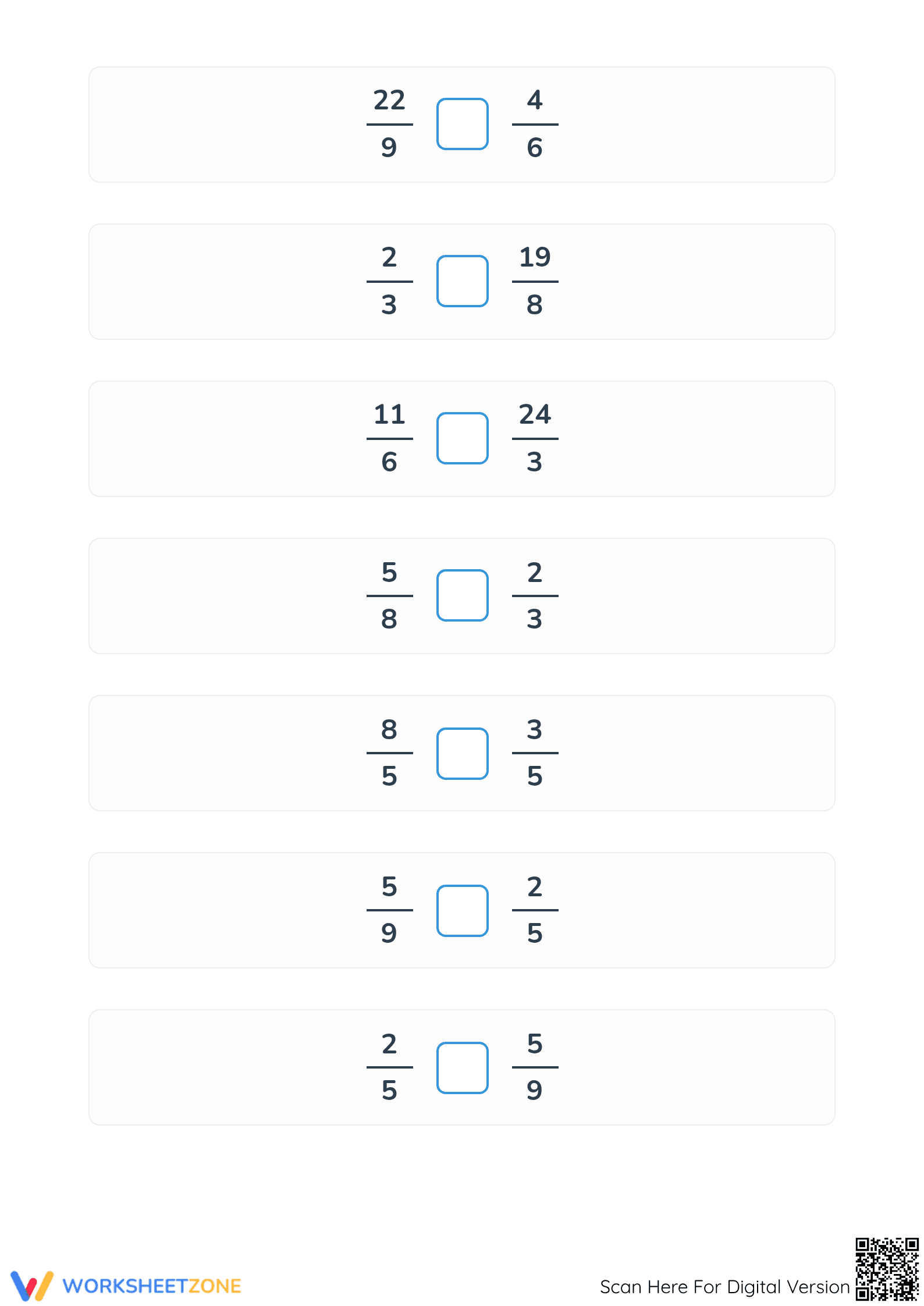

Comparing Simple and Improper Fractions | Essential Math
Paste this activity's link or code into your existing LMS (Google Classroom, Canvas, Teams, Schoology, Moodle, etc.).
Students can open and work on the activity right away, with no student login required.
You'll still be able to track student progress and results from your teacher account.
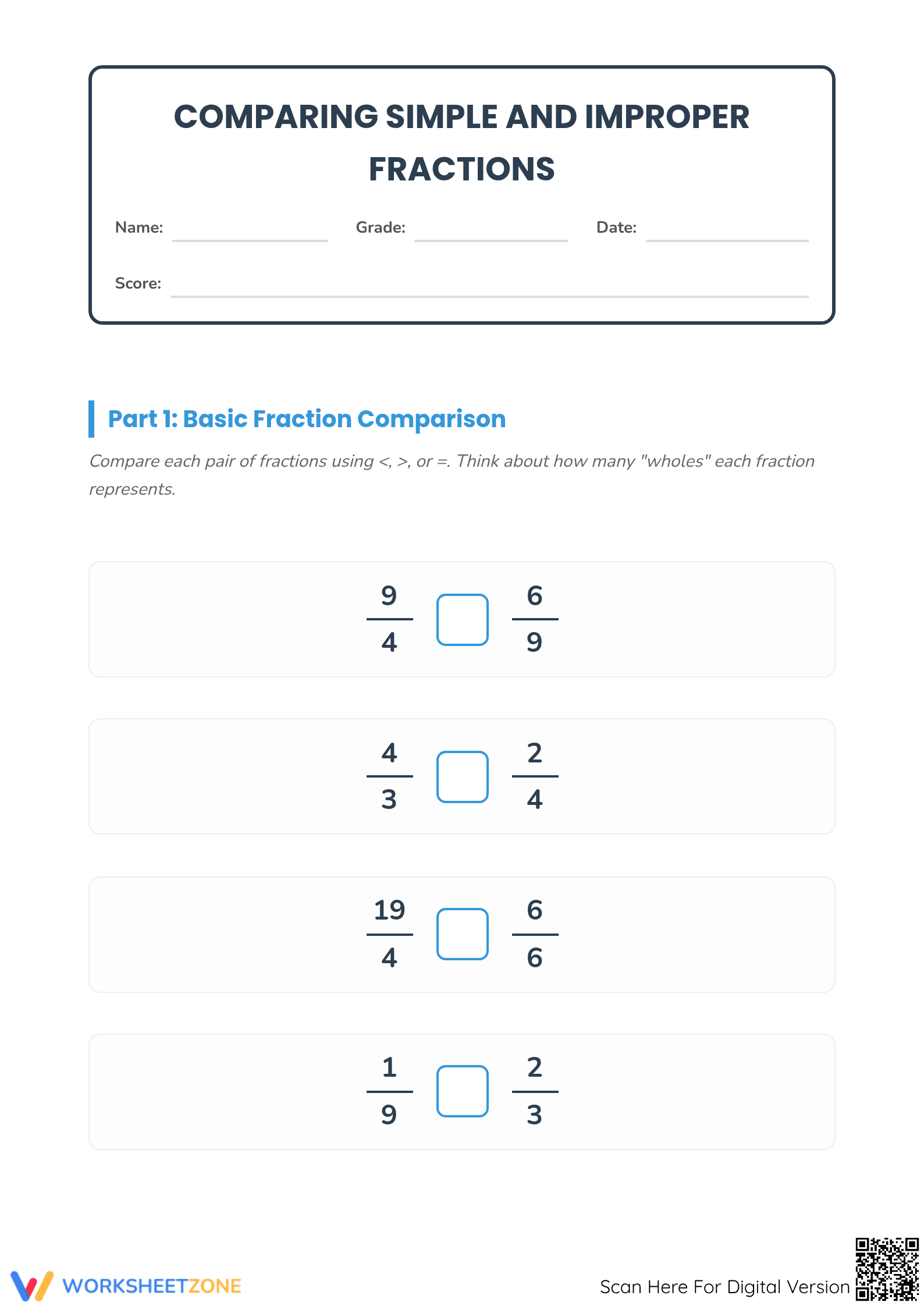
Mastering fraction magnitude is a critical milestone in elementary mathematics. This practice set empowers students to compare simple and improper fractions, moving from basic recognition to cross-multiplication strategies. By solving 28 targeted problems, learners develop a robust understanding of fraction relationships and the concept of wholes in mathematical contexts.
At a Glance
- Grade: 4 · Subject: Math
- Standard:
4.NF.A.2— Compare two fractions with different numerators and denominators using symbols- Skill Focus: Comparing proper and improper fractions
- Format: 5 pages · 28 problems · Answer key included · PDF
- Best For: Independent practice and skill reinforcement
- Time: 25–35 minutes
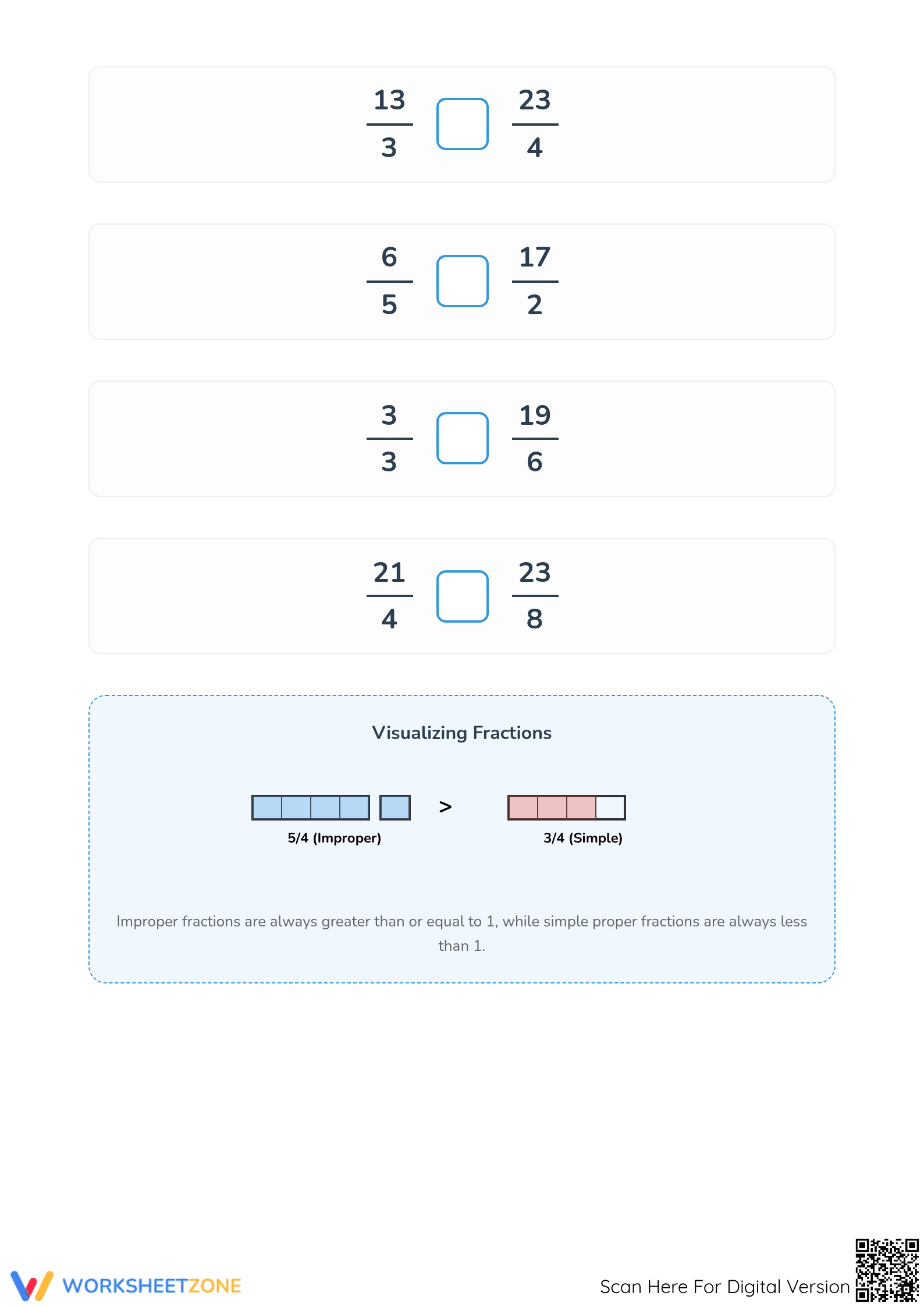
This five-page PDF resource is a scaffolded learning journey. It begins with clear visual aids explaining why improper fractions often exceed the value of simple proper ones. Students tackle 28 comparison tasks across three levels of difficulty. The layout features generous white space, a visual reference section, and a full answer key for efficient grading.
The worksheet follows a proven gradual-release model to ensure student success:
- Guided Practice: Part 1 features 8 basic comparison pairs where students are prompted to think about wholes to determine magnitude and relative value.
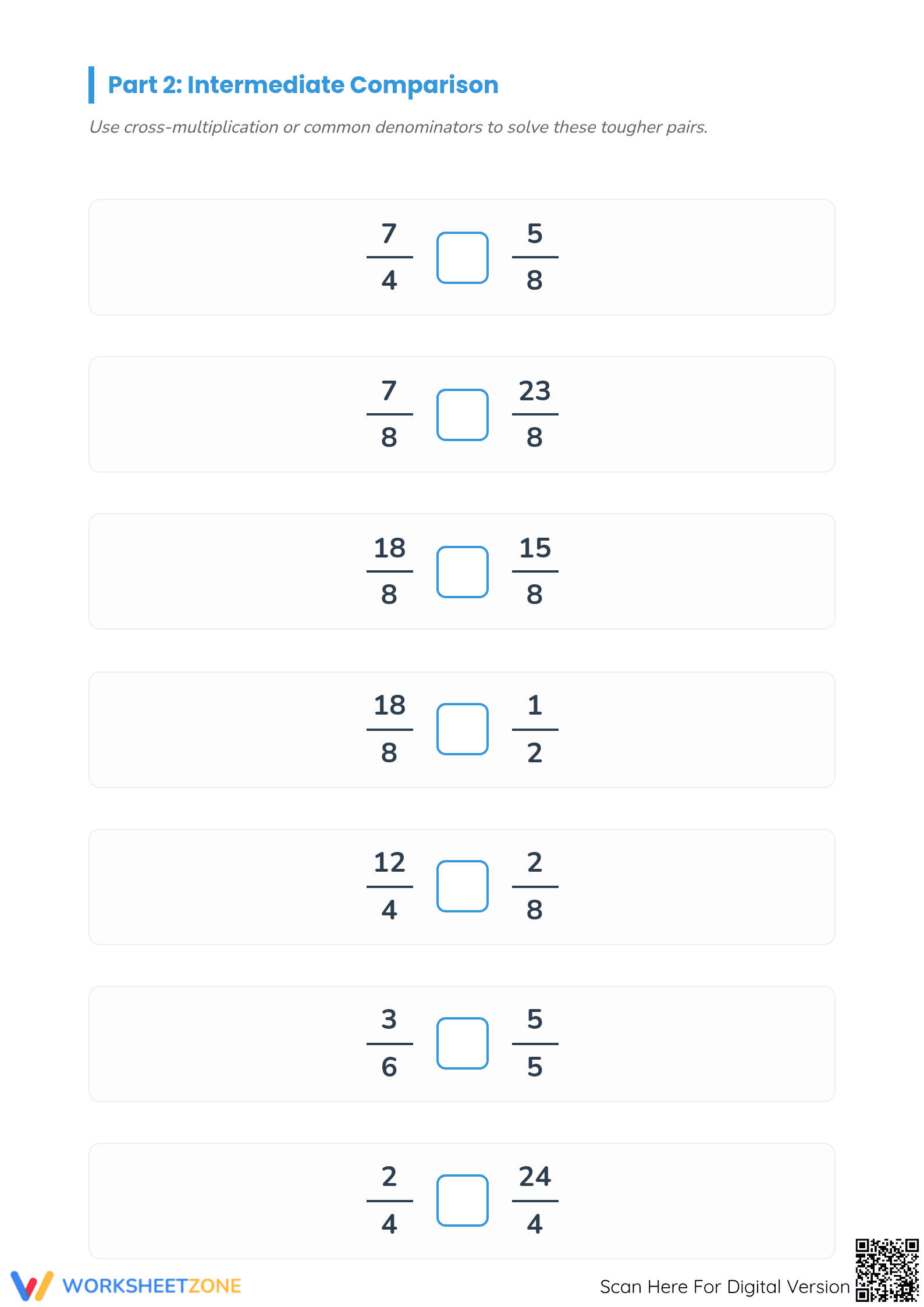
- Supported Practice: Part 2 contains 8 intermediate problems requiring students to apply cross-multiplication or common denominator strategies to solve tougher fraction pairs.
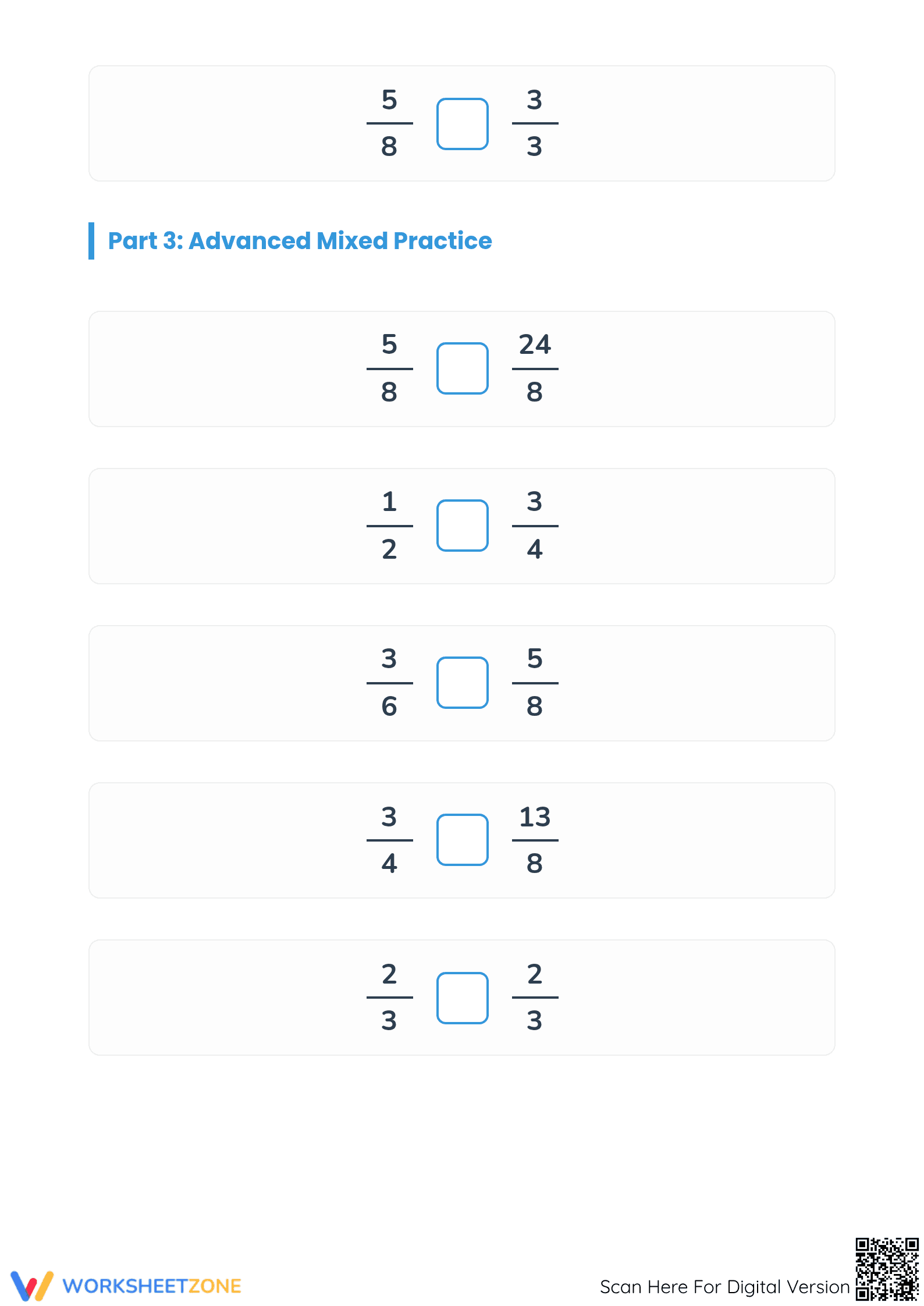
- Independent Practice: Part 3 offers 12 advanced mixed problems where students must independently choose and apply the most efficient comparison method.
Aligned strictly to CCSS.MATH.CONTENT.4.NF.A.2, students compare fractions with unlike denominators using benchmark values or common denominators. The worksheet requires students to record results using symbols (>, =, or <) to justify their conclusions. This standard code can be copied directly into lesson plans, IEP goals, or curriculum mapping tools.
Assign this resource after a direct instruction lesson on improper fractions. During independent work, observe if students rely on visual benchmarks or algebraic cross-multiplication for Part 2. This serves as a vital formative assessment tip for teachers. Most Grade 4 students will complete the full 5-page set within 30 minutes.
This resource is ideal for Grade 4 and Grade 5 students who are refining their fraction sense. It works effectively for small group intervention or as a targeted homework assignment. Pair this worksheet with fraction tiles or a visual anchor chart to support kinesthetic learners and diverse learning styles.
Effective fraction instruction requires shifting from procedural memorization to conceptual understanding of magnitude. According to Fisher & Frey (2014), the gradual release of responsibility—moving from teacher-led modeling to independent application—is essential for mastering abstract mathematical concepts like 4.NF.A.2. This worksheet mirrors that research-backed progression by scaffolding the comparison of simple and improper fractions across three tiers of difficulty. By starting with benchmark-based reasoning and progressing to formal algorithmic comparison, students avoid common pitfalls, such as viewing numerators and denominators as independent whole numbers. This 28-problem set provides the high-repetition practice necessary for students to internalize fraction comparison strategies. It serves as a reliable evidentiary tool for assessing whether a student has met the grade-level standard for comparing fractions with unlike denominators. Educators can utilize these findings to inform subsequent instructional groupings or to provide specific feedback during student progress monitoring or MTSS intervention cycles.


