


























Views
Downloads
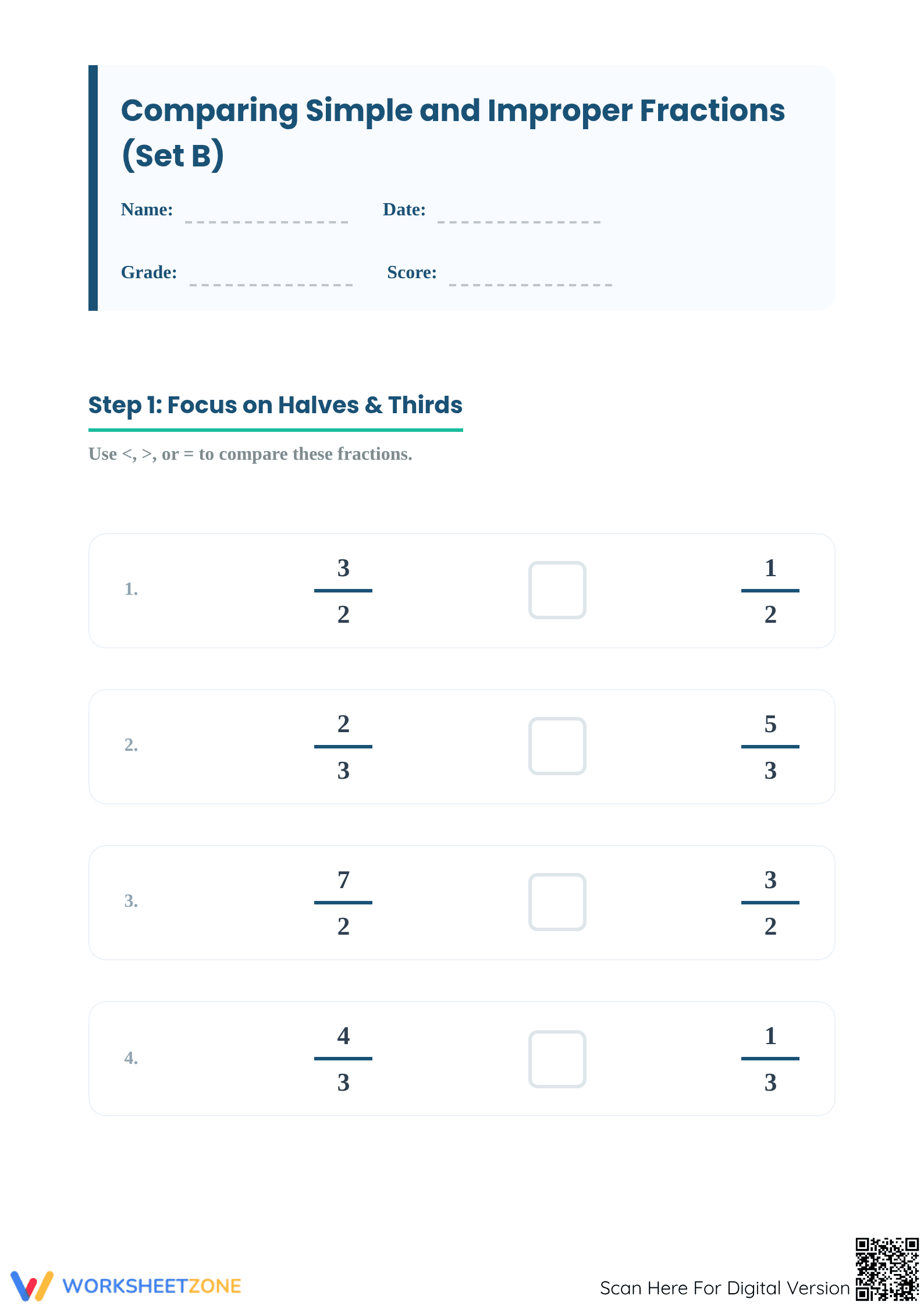
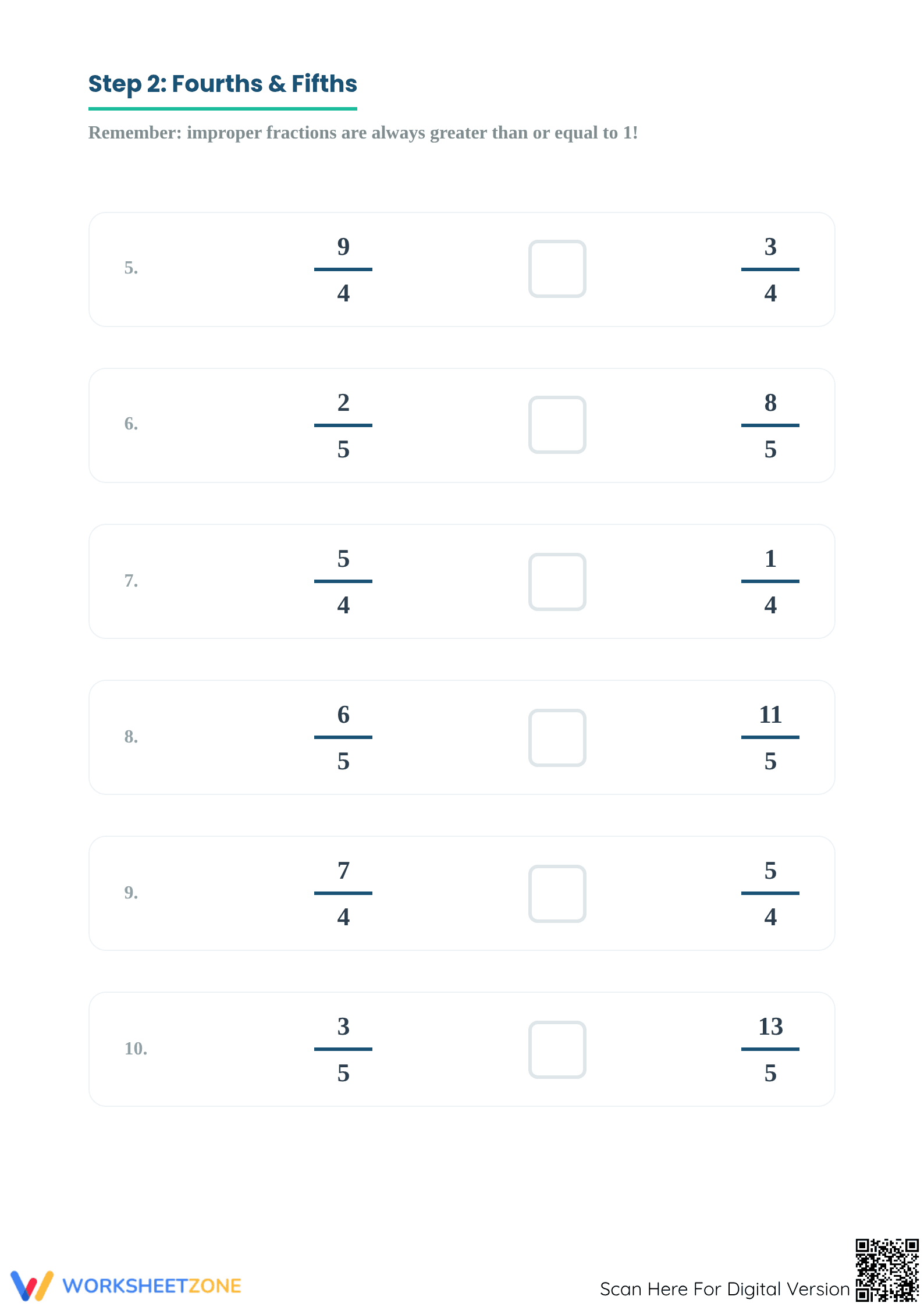
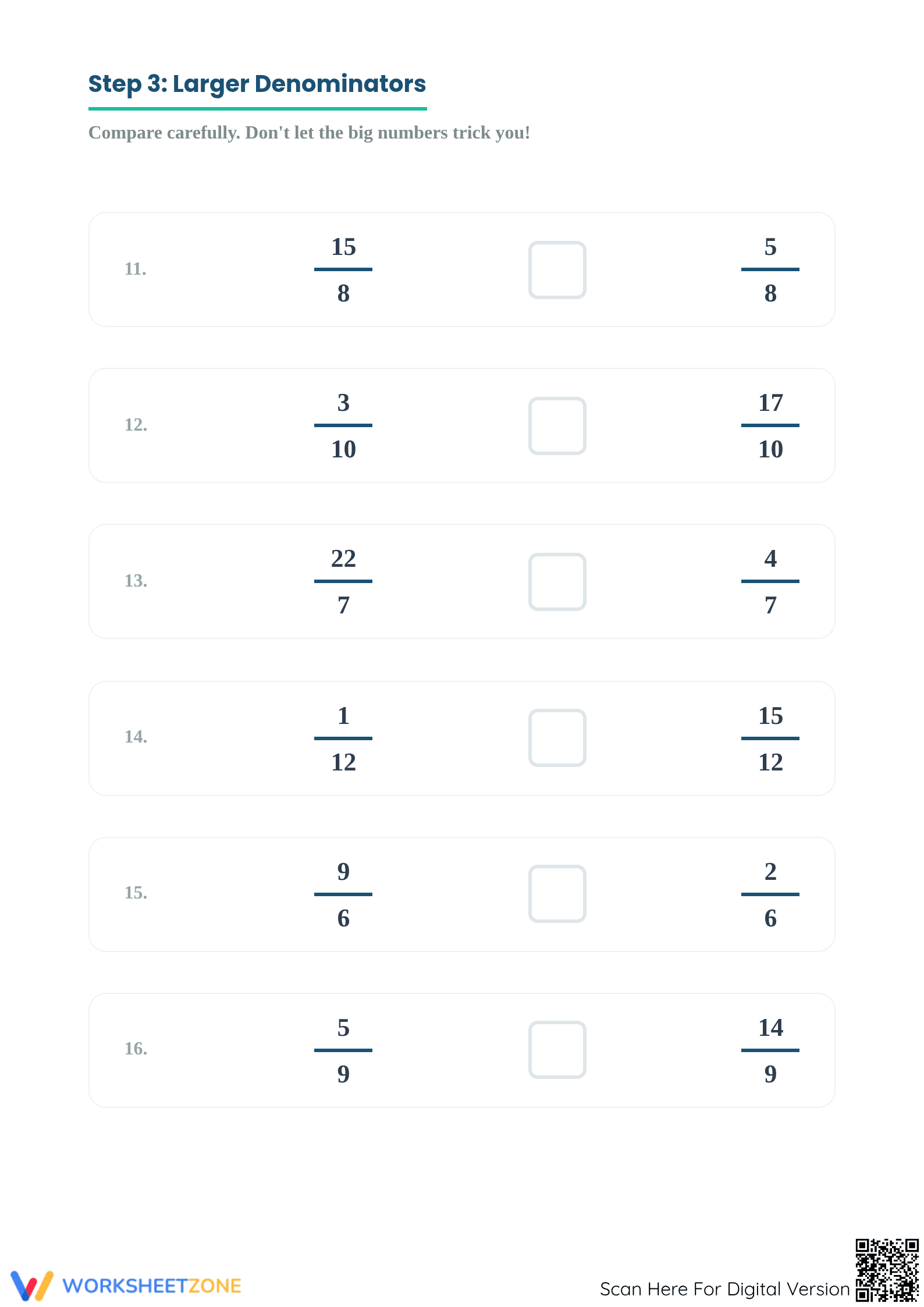
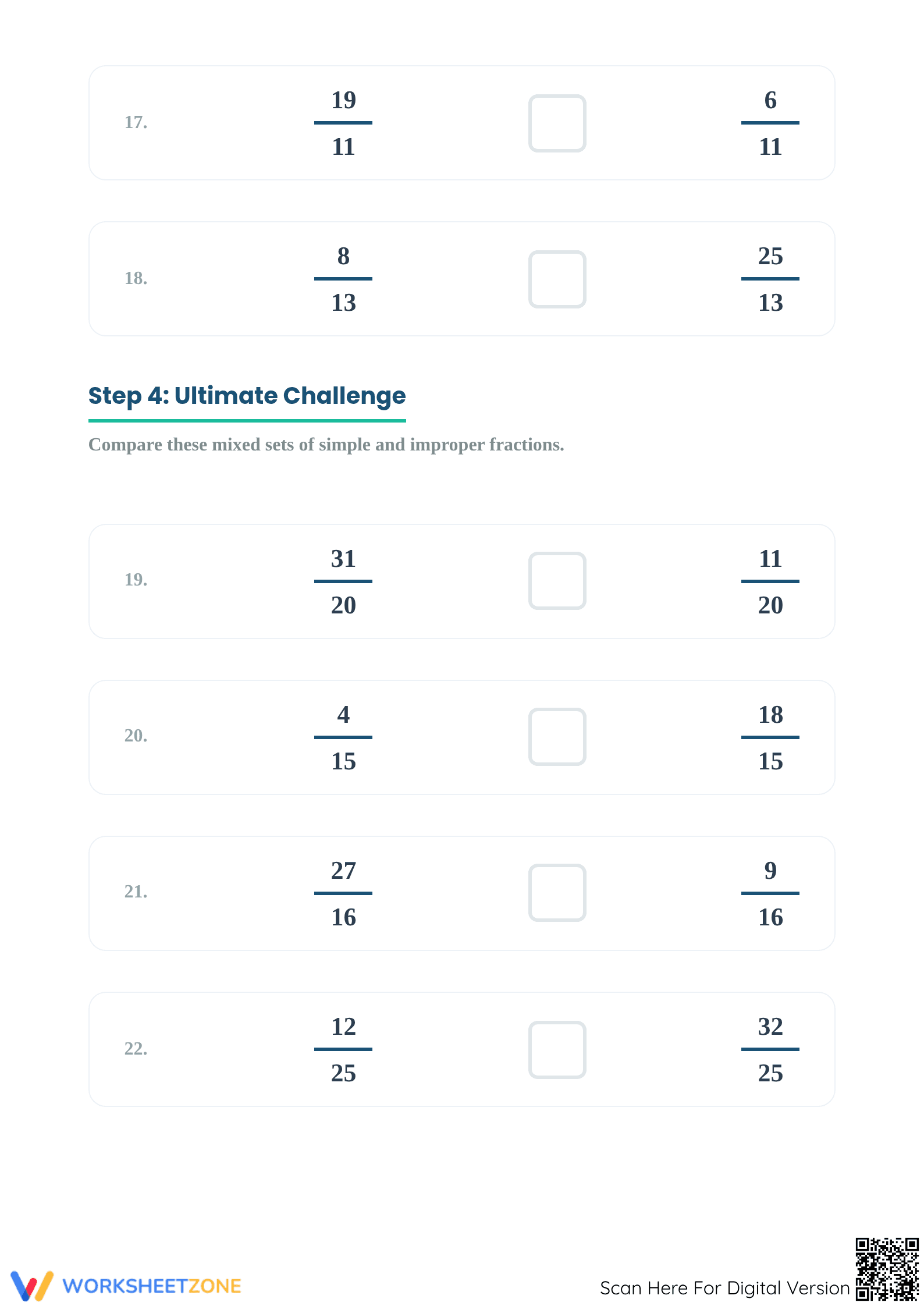
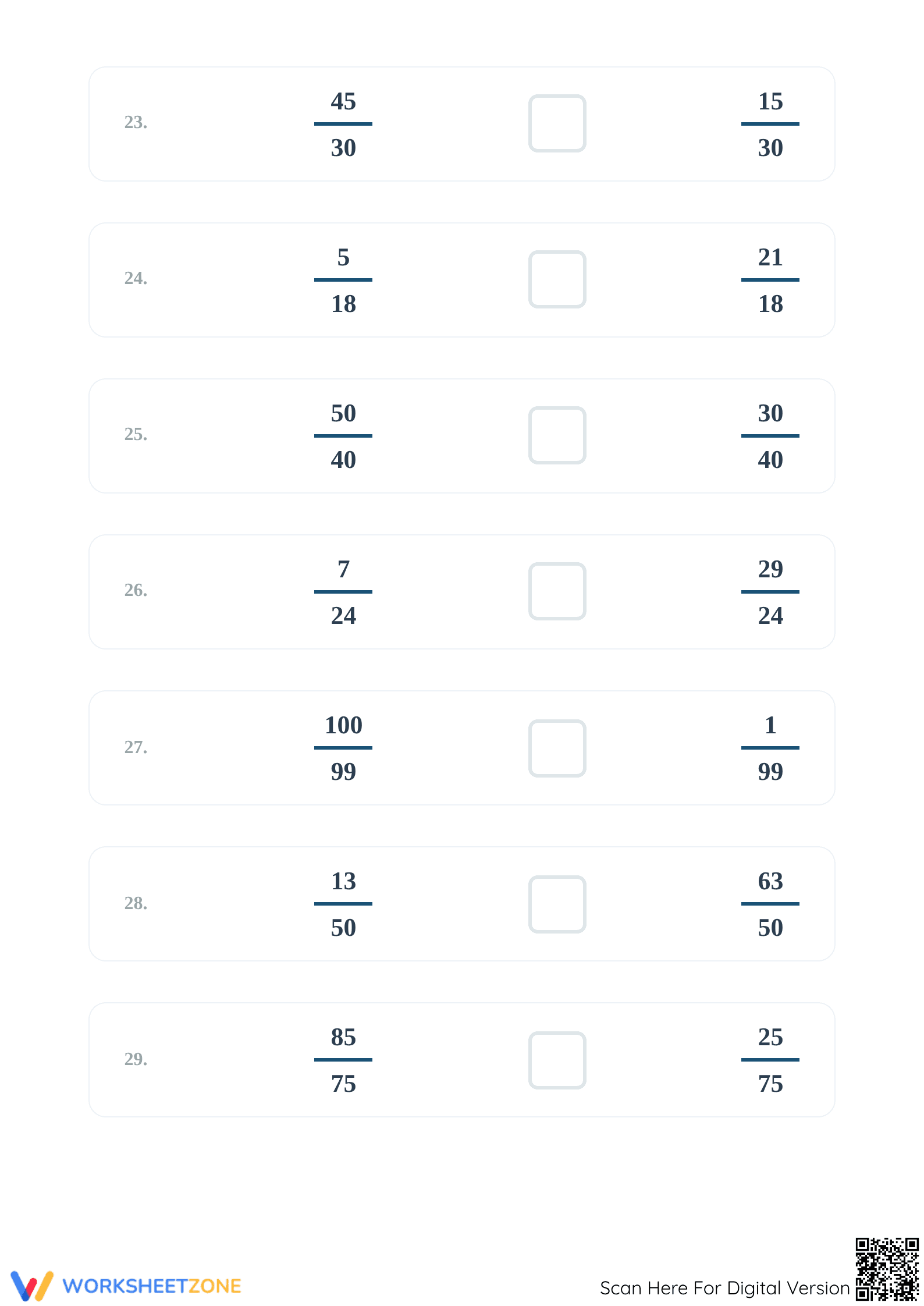

Comparing Improper Fractions | Essential Grade 4 Worksheet
Paste this activity's link or code into your existing LMS (Google Classroom, Canvas, Teams, Schoology, Moodle, etc.).
Students can open and work on the activity right away, with no student login required.
You'll still be able to track student progress and results from your teacher account.
Mastering Fraction Comparisons
Comparing fractions with varying denominators and improper values is a foundational skill for middle-grade mathematics success. This comprehensive worksheet provides students with 29 structured problems designed to build confidence in identifying the relationship between simple and improper fractions. By progressing through logical steps, students learn to visualize and calculate fraction values with precision and speed.
At a Glance
- Grade: 4 · Subject: Math
- Standard:
4.NF.A.2— Compare two fractions with different numerators and different denominators- Skill Focus: Improper Fraction Comparison
- Format: 5 pages · 29 problems · Answer key included · PDF
- Best For: Independent practice or small group review
- Time: 30–45 minutes
What's Inside
This 5-page PDF contains a rigorous sequence of 29 comparison tasks. The resource is organized into four distinct sections: focusing on halves and thirds, progressing to fourths and fifths, tackling larger denominators, and ending with an ultimate challenge. A complete answer key is provided for every page, allowing for immediate feedback and grading efficiency. The clear, uncluttered layout ensures that students remain focused on the numerical relationships without visual distraction.
Zero-Prep Workflow
Teachers can implement this resource in three simple steps. First, print the 5-page set (1 minute). Next, distribute the packets to students for independent or partner work (1 minute). Finally, use the included answer key for rapid review or peer-grading (5 minutes). The total teacher preparation time is under 2 minutes, making this an ideal choice for emergency sub plans or last-minute lesson extensions that maintain high academic standards.
Standards Alignment
This resource is specifically aligned to `CCSS.MATH.CONTENT.4.NF.A.2`. Students will compare two fractions with different numerators and different denominators by creating common denominators or numerators, or by comparing to a benchmark fraction such as 1/2. They must recognize that comparisons are valid only when the two fractions refer to the same whole. This standard code can be copied directly into lesson plans, IEP goals, or district curriculum mapping tools.
How to Use It
This packet is best used as a formative assessment after initial direct instruction on improper fractions and common denominators. Assign the first two pages during class to observe student strategies, then provide the remaining pages as homework to reinforce the skill. A key formative tip: watch for students who ignore the denominators and only compare numerators; use the Step 2 reminder that improper fractions are always greater than or equal to one to guide them back to conceptual accuracy.
Who It's For
While designed for Grade 4 learners, this worksheet is highly effective for Grade 5 and 6 students requiring remedial support or intervention. It serves as an excellent companion resource to visual fraction models or number line activities. The structured difficulty progression supports students who struggle with abstract math concepts by providing a clear path from simple halves to complex multi-digit denominators.
The transition from comparing proper fractions to improper fractions represents a significant shift in numerical reasoning. Research from the ScienceDirect TpT Analysis (2023) indicates that student mastery of fraction comparison in the 4th grade is a strong predictor of later success in algebraic thinking and proportional reasoning. By explicitly labeling steps and providing a scaffolded sequence of 29 problems, this resource addresses the common cognitive hurdle of improper fraction visualization. The inclusion of the standard 4.NF.A.2 ensures that educators are meeting specific state and federal requirements for mathematical fluency. This self-contained module allows for targeted skill reinforcement without requiring extensive supplemental materials or teacher-led lectures, allowing for flexible implementation in diverse classroom settings.


