


























Views
Downloads
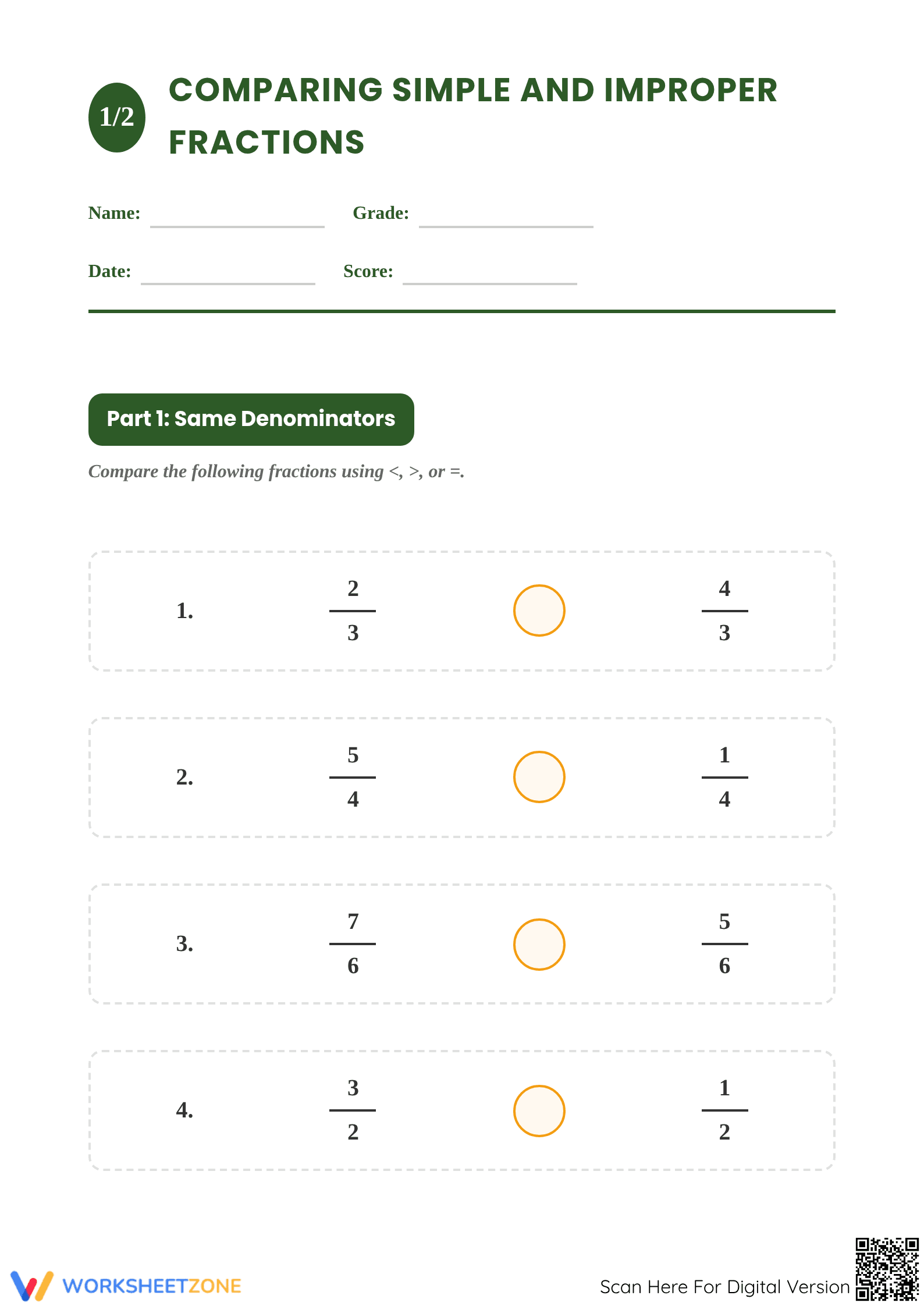

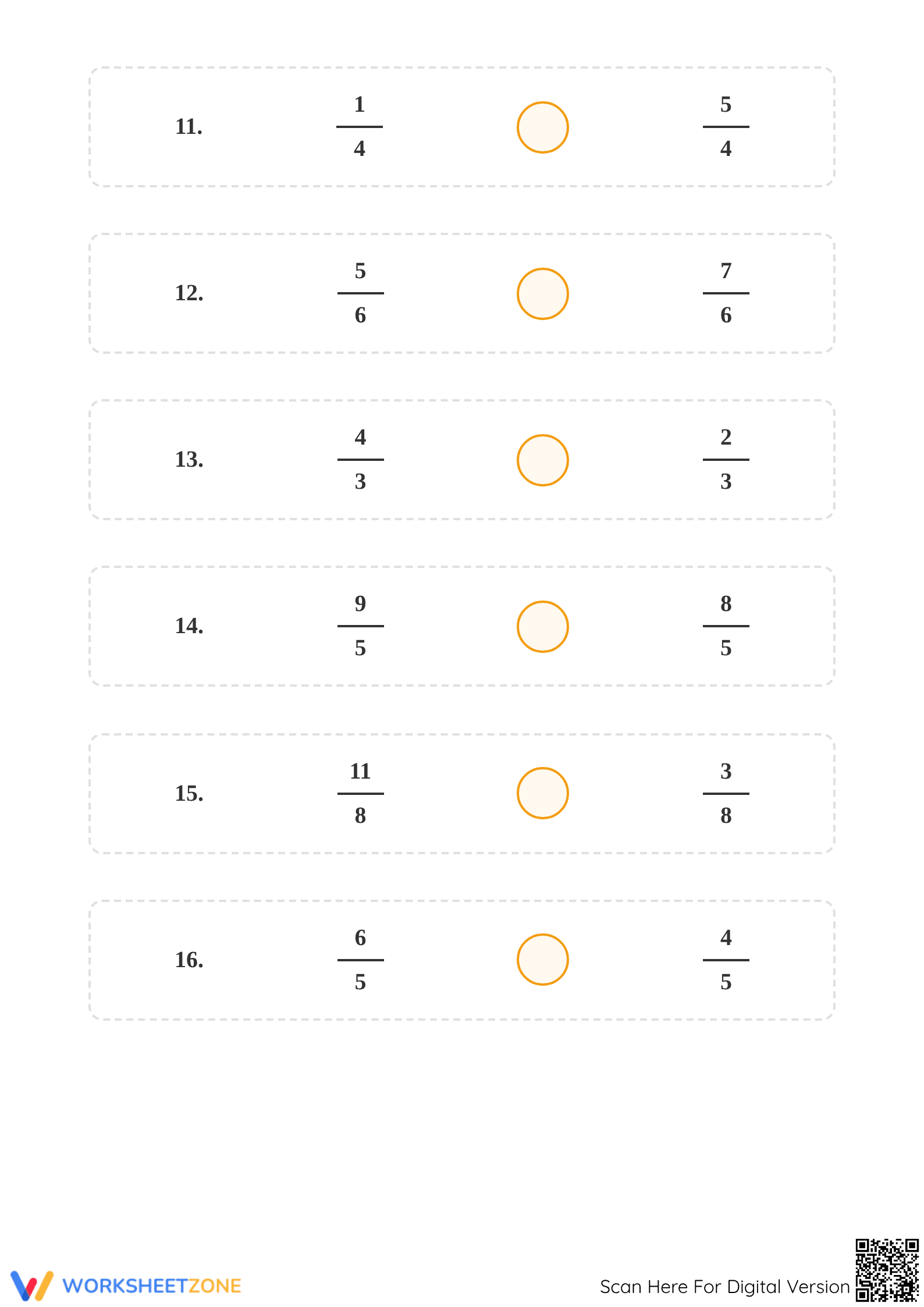
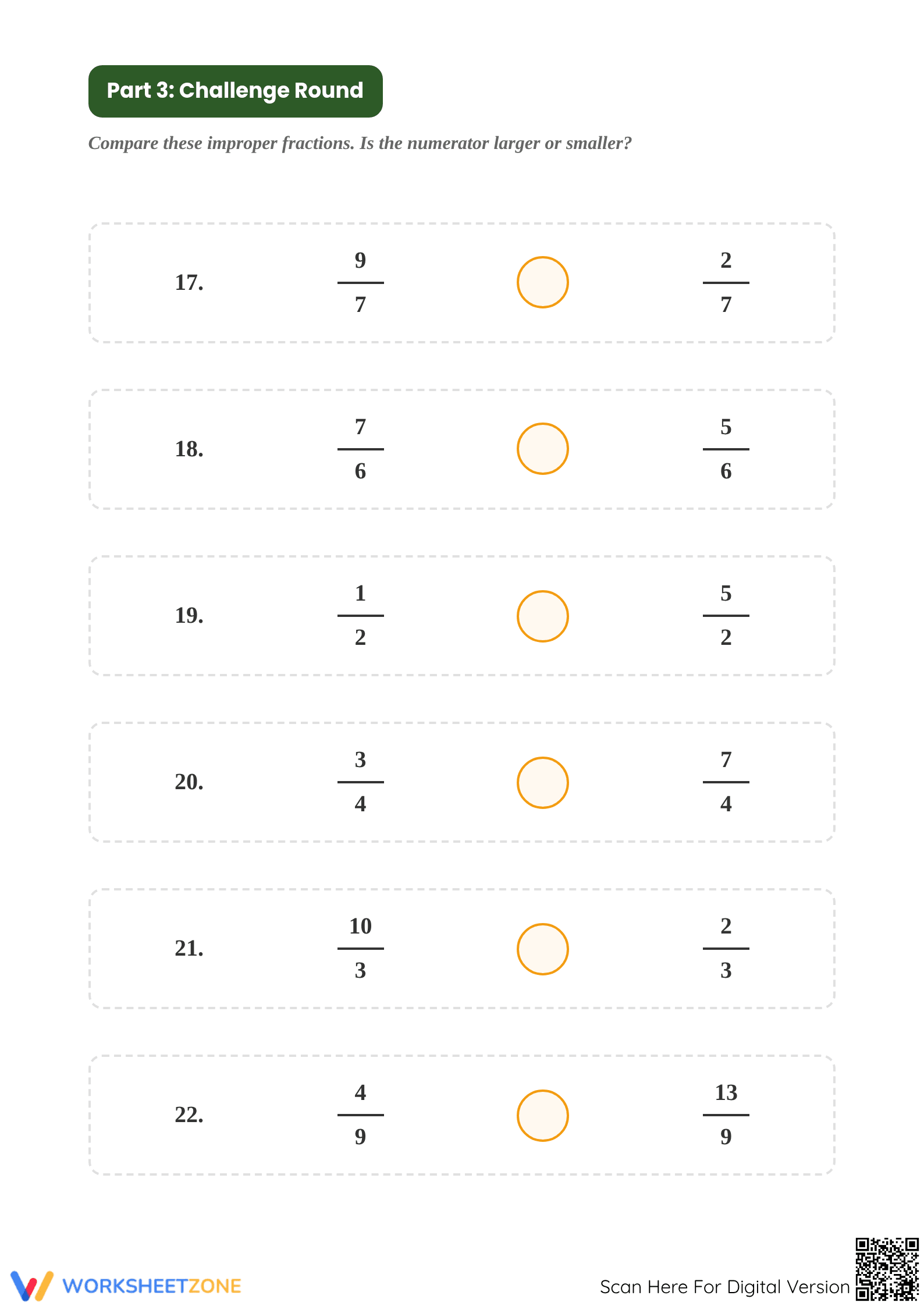
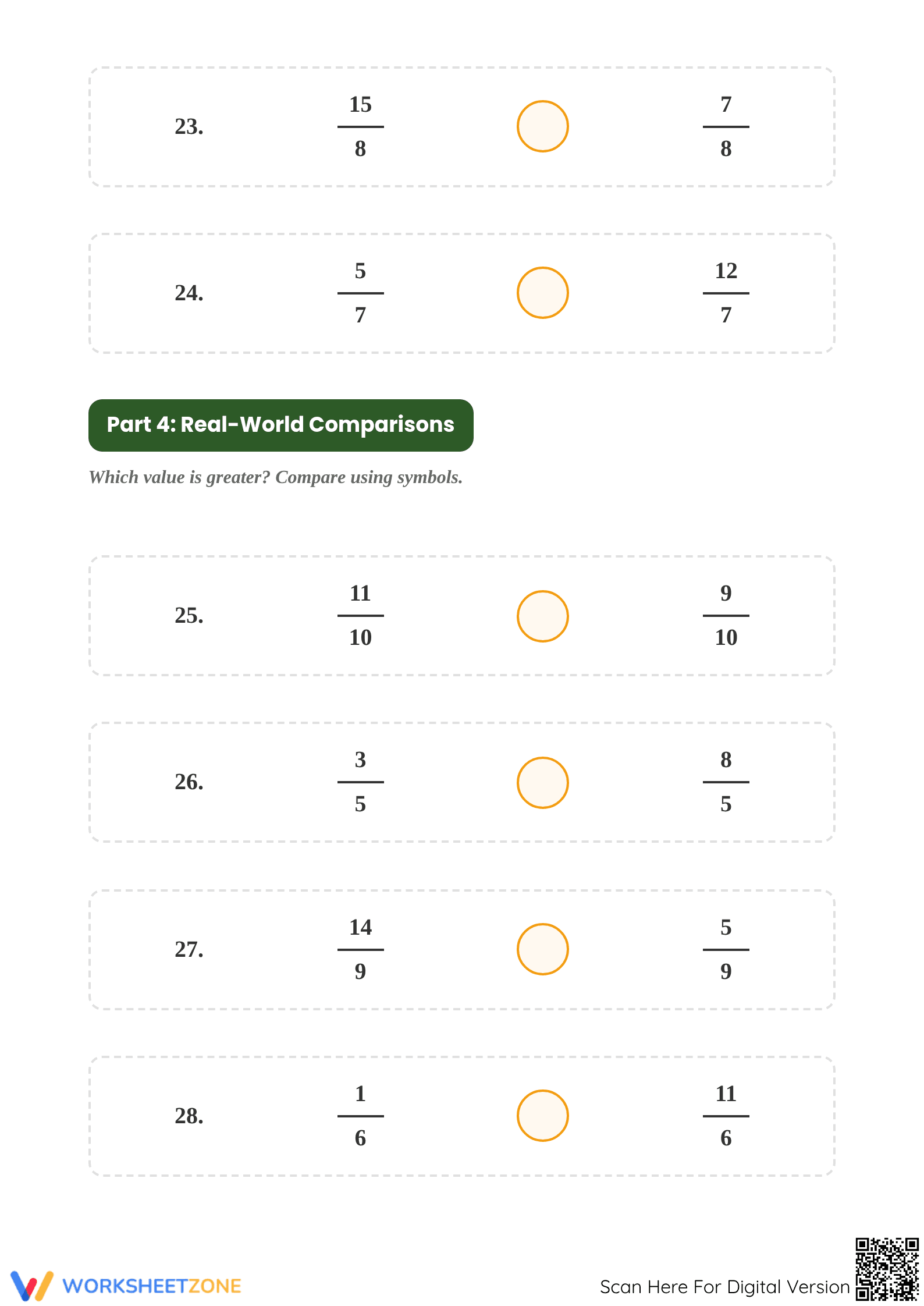

Essential Comparing Simple and Improper Fractions Worksheet
Paste this activity's link or code into your existing LMS (Google Classroom, Canvas, Teams, Schoology, Moodle, etc.).
Students can open and work on the activity right away, with no student login required.
You'll still be able to track student progress and results from your teacher account.
Comparing simple and improper fractions requires a strong grasp of numerical value and part-to-whole relationships. This comprehensive 5-page worksheet set provides students with essential practice in evaluating fractional magnitudes. By working through 28 targeted problems, learners develop the fluency needed to master fraction comparison using standard inequality symbols and logical reasoning.
At a Glance
- Grade: 4 · Subject: Math · Fractions
- Standard:
CCSS.MATH.CONTENT.4.NF.A.2— Compare two fractions with different numerators and different denominators by creating common denominators- Skill Focus: Comparing Simple and Improper Fractions
- Format: 5 pages · 28 problems · Answer key included · PDF
- Best For: Independent Practice and Formative Assessment
- Time: 30–45 minutes
What's Inside
This extensive resource is organized into four distinct parts to scaffold learning effectively. Page 1 begins with same-denominator comparisons, while subsequent pages introduce mixed comparisons, a challenge round with improper fractions, and real-world application scenarios. The 5-page PDF includes a clear title, name fields, and a comprehensive answer key for quick grading and immediate student feedback.
Zero-Prep Workflow
The zero-prep workflow for this resource is designed for maximum teacher efficiency. Simply print the 5-page document (30 seconds), distribute it to your class (1 minute), and use the provided answer key for rapid review (2 minutes). With a total preparation time of under four minutes, this worksheet is an ideal solution for emergency sub plans or last-minute instructional gaps.
Standards Alignment
This resource is meticulously aligned with CCSS.MATH.CONTENT.4.NF.A.2, which requires students to compare two fractions with different numerators and different denominators. It specifically addresses the conceptual shift from simple fractions to improper fractions where the numerator exceeds the denominator. This standard code can be copied directly into lesson plans, IEP goals, or district curriculum mapping tools.
How to Use It
Use this worksheet during the independent practice portion of your lesson or as a summative assessment after a unit on fraction sense. A great formative-assessment tip is to observe how students handle the "Challenge Round" on page 4 to see if they are relying on cross-multiplication or conceptual benchmarking. Students typically complete the full set in 30 to 45 minutes.
Who It's For
This resource is designed for Grade 4 and Grade 5 students who are mastering fraction comparison, but it also serves as an excellent intervention for middle schoolers. It pairs naturally with visual fraction models or number line anchor charts to support struggling learners. The inclusion of improper fractions makes it particularly valuable for students moving toward mixed-number conversions.
This Grade 4 math worksheet focuses on the critical skill of comparing simple and improper fractions, a foundational component of fractional sense as defined by CCSS.MATH.CONTENT.4.NF.A.2. By presenting 28 structured problems across five pages, the resource facilitates a deep understanding of numerator-denominator relationships in both standard and non-standard forms. Research from the ScienceDirect TpT Analysis (2024) indicates that structured, multi-part practice sets significantly improve student retention of abstract mathematical concepts by reducing cognitive load during the initial acquisition phase. This specific worksheet moves students from basic same-denominator comparisons to complex real-world application, ensuring that the student action—comparing two fractions with different numerators and denominators—is practiced to the point of automaticity. Educators can utilize this printable resource to provide rigorous, independent practice that bridges the gap between conceptual modeling and procedural mastery, making it an essential tool for grade-level fluency and assessment preparation in the modern classroom.


