


























Views
Downloads
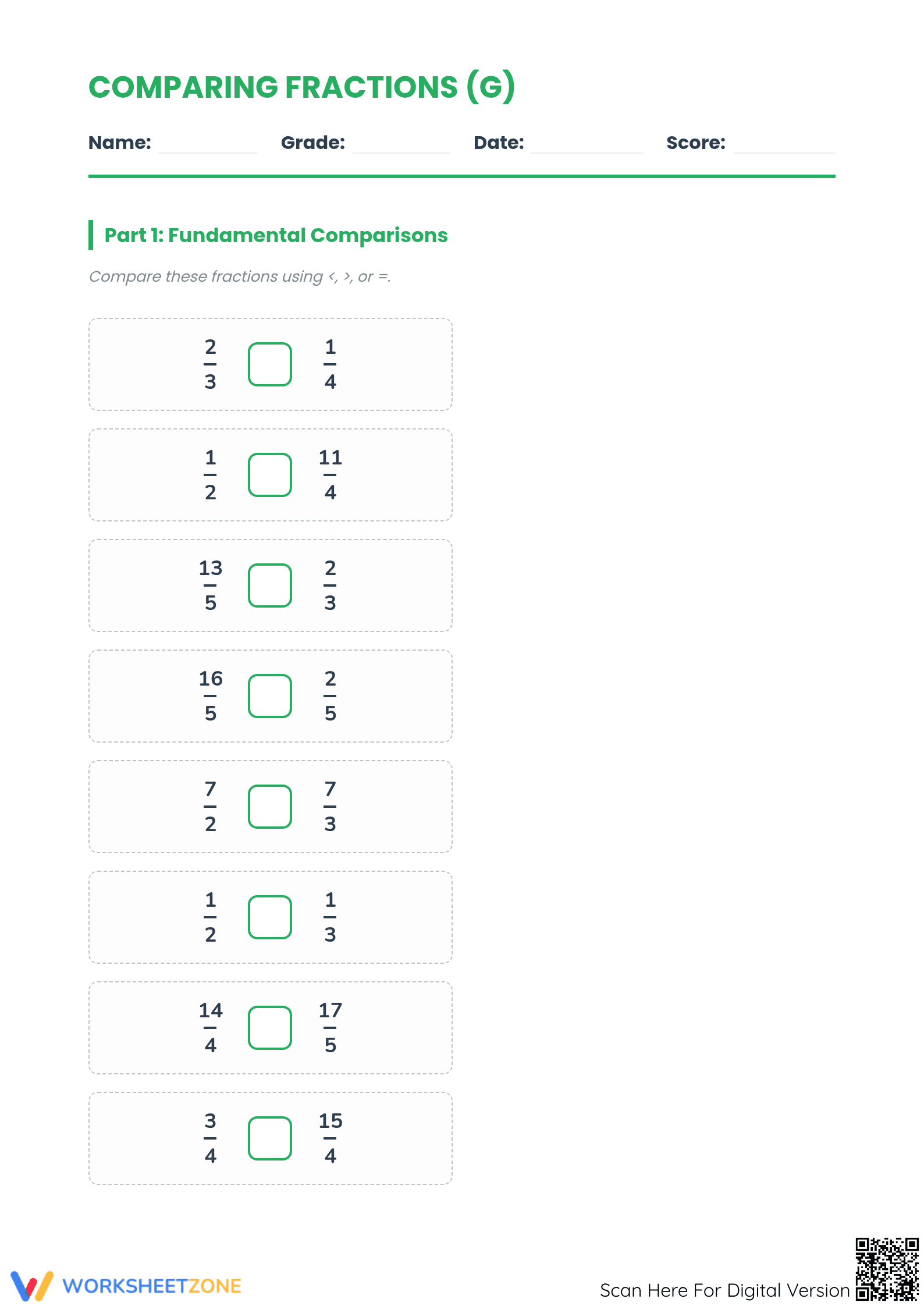
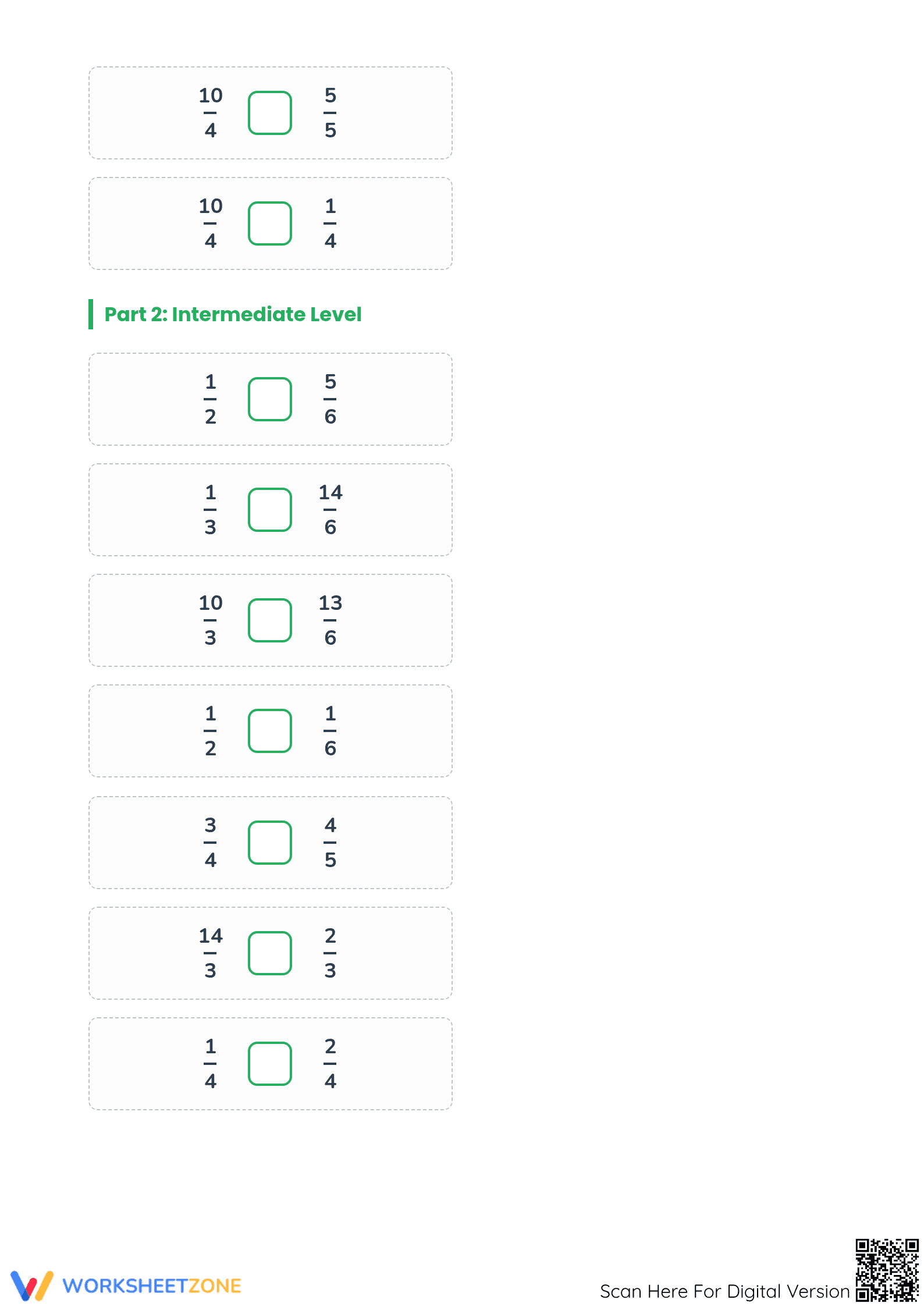

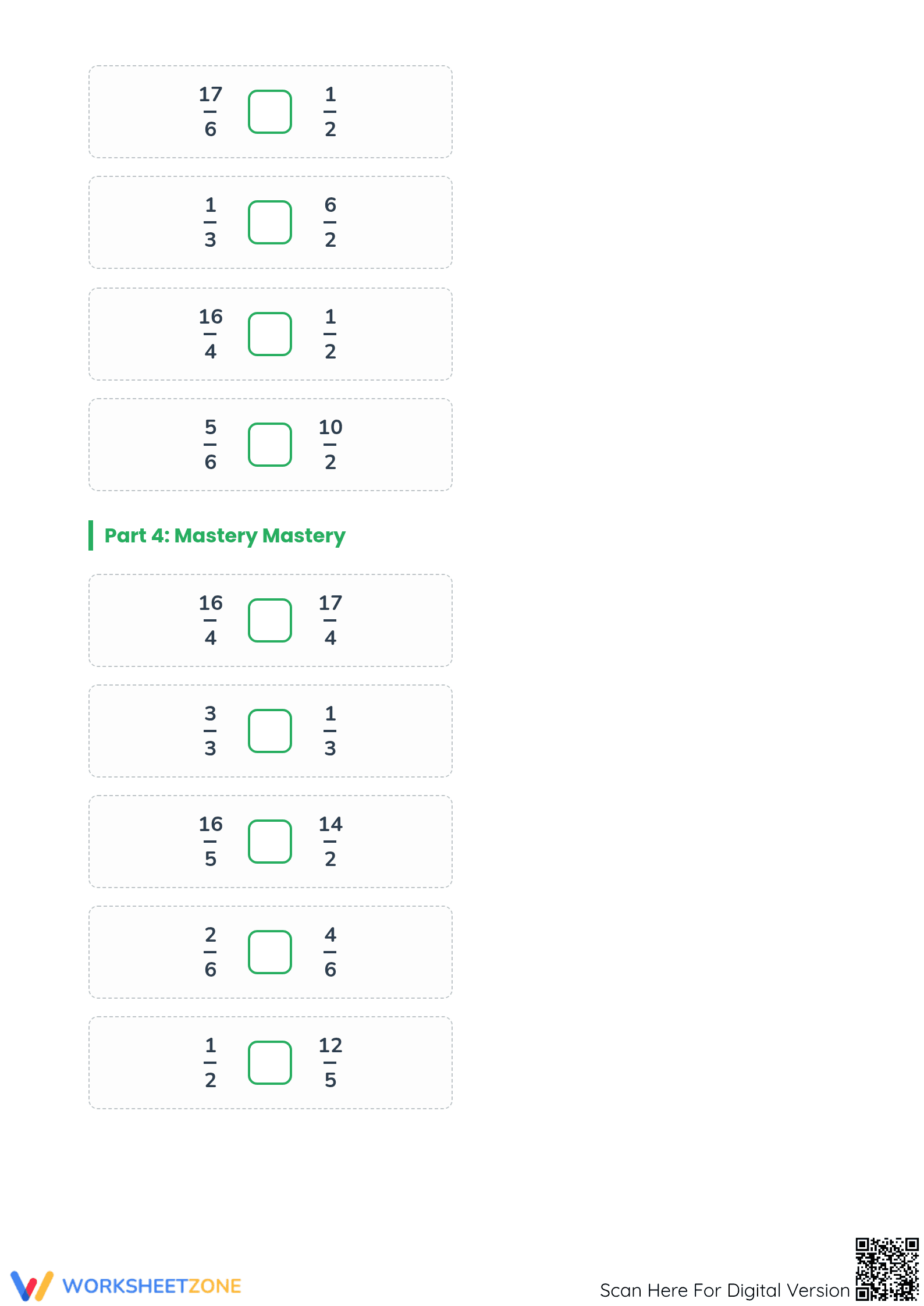
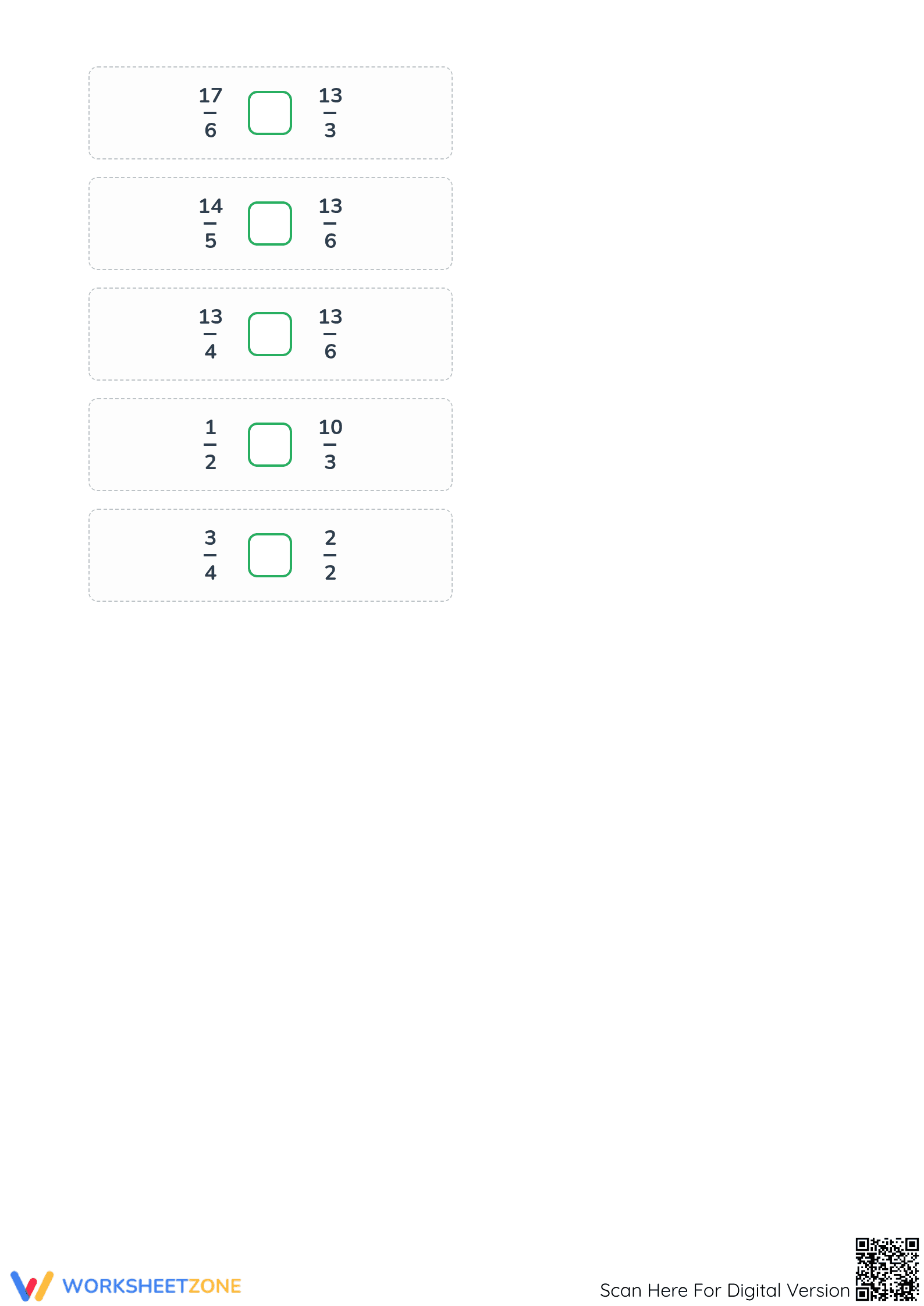

Printable Comparing Simple and Improper Fractions Worksheet
Paste this activity's link or code into your existing LMS (Google Classroom, Canvas, Teams, Schoology, Moodle, etc.).
Students can open and work on the activity right away, with no student login required.
You'll still be able to track student progress and results from your teacher account.
Master the nuances of fraction relationships with this comprehensive practice set. Students will compare simple and improper fractions, determining greater than, less than, or equal to values across 40 unique problems. This resource ensures learners move beyond basic visual models to abstract numerical reasoning, building a robust foundation for more advanced operations with rational numbers.
At a Glance
- Grade: 4 · Subject: Math
- Standard:
CCSS.MATH.CONTENT.4.NF.A.2— Compare two fractions with different numerators and denominators using symbols.- Skill Focus: Comparing Simple and Improper Fractions
- Format: 5 pages · 40 problems · Answer key included · PDF
- Best For: Fraction mastery and intervention groups
- Time: 25–35 minutes
This five-page PDF includes four distinct sections designed to scaffold student understanding. Each page features clean, distraction-free layouts with ample space for student work. The set covers a mix of proper and improper fractions with unlike denominators, requiring students to find common multiples or use benchmark fractions. A full answer key is provided for quick grading or student self-check.
- Guided Practice: The first set of 10 problems introduces fundamental comparisons using simple denominators to build initial confidence.
- Supported Practice: Students then tackle 15 intermediate problems that introduce improper fractions and slightly more complex common denominators.
- Independent Practice: The final 15 challenge and mastery problems require students to compare larger improper fractions independently, ensuring complete skill fluency.
This progression follows a gradual-release model, transitioning students from teacher-supported examples to fully independent mastery.
This resource is explicitly aligned with CCSS.MATH.CONTENT.4.NF.A.2, which requires students to compare two fractions with different numerators and different denominators by creating common denominators or comparing to a benchmark fraction. It also supports CCSS.MATH.CONTENT.5.NF.A.1 as a prerequisite for adding and subtracting fractions. Both standard codes can be copied directly into lesson plans, IEP goals, or district curriculum mapping tools.
Use this worksheet as a summative assessment following a unit on fraction equivalents. Alternatively, assign individual pages as daily warm-ups or exit tickets to gauge student progress. During instruction, observe how students determine common denominators; look for those who struggle with large numerators in improper fractions. Most students will complete the full set in 30 minutes.
This set is ideal for Grade 4 and 5 students who have mastered basic fraction concepts but need targeted practice with improper forms. It works well for small-group intervention or as a supplementary resource for high-flyers in Grade 3. Pair this worksheet with a visual fraction wall or circular fraction manipulatives to support learners who still require concrete representations.
According to Fisher & Frey (2014), the gradual release of responsibility is essential for student success in mathematics, particularly when moving from concrete visual representations of fractions to abstract numerical comparisons. This worksheet embodies this research-backed approach by structuring 40 tasks into four distinct phases of increasing complexity. By explicitly requiring students to use the CCSS.MATH.CONTENT.4.NF.A.2 standard to compare proper and improper fractions, the resource facilitates a deeper cognitive shift from simple identification to complex evaluation. Students who engage with this systematic progression are more likely to internalize benchmark strategies and common denominator methods, leading to higher retention rates in subsequent operations like addition or multiplication. This structured methodology ensures that every student, regardless of their starting point, has a clear path toward mastering fraction magnitude and numerical fluency within the broader context of the rational number system.


