


























Views
Downloads

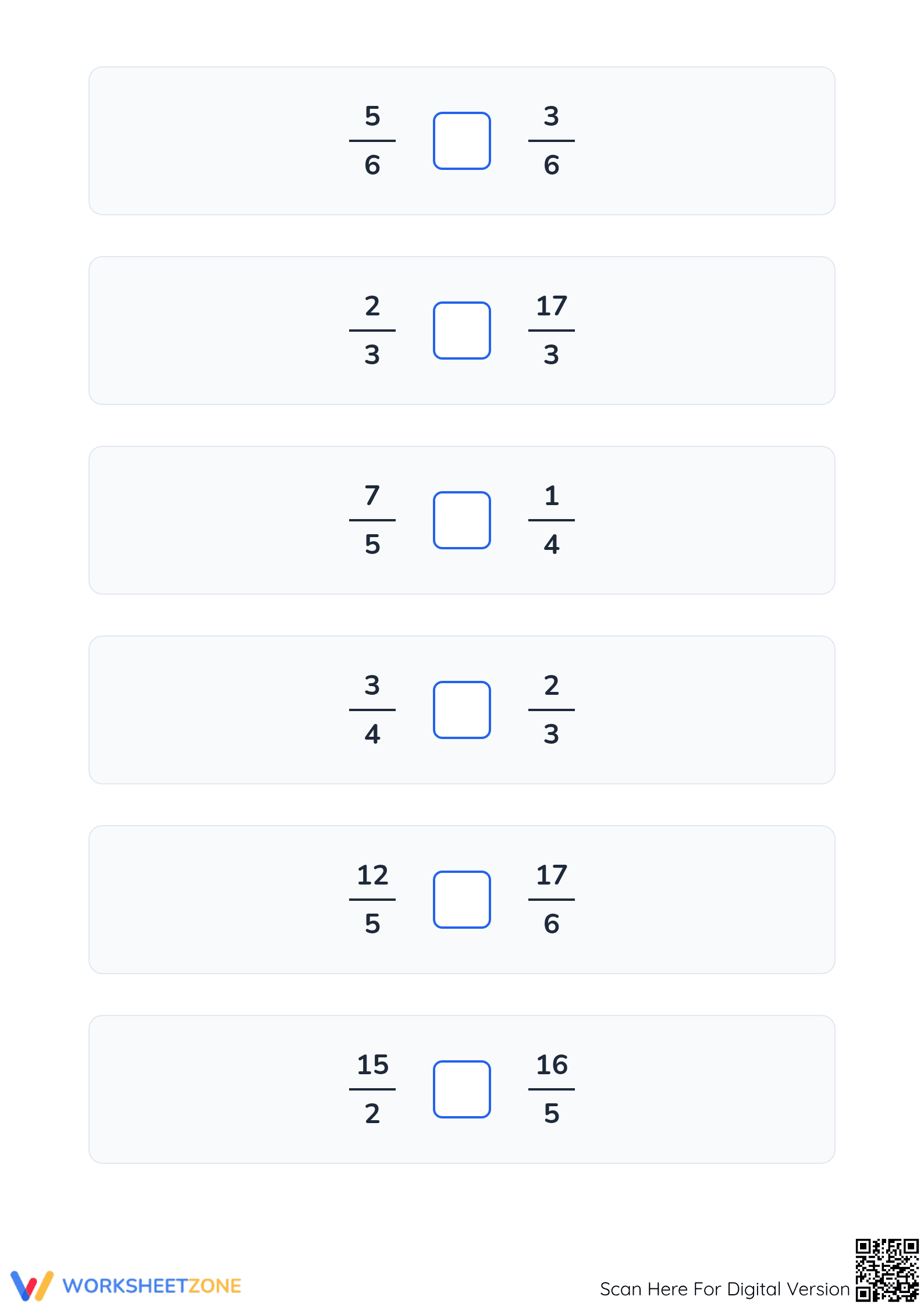
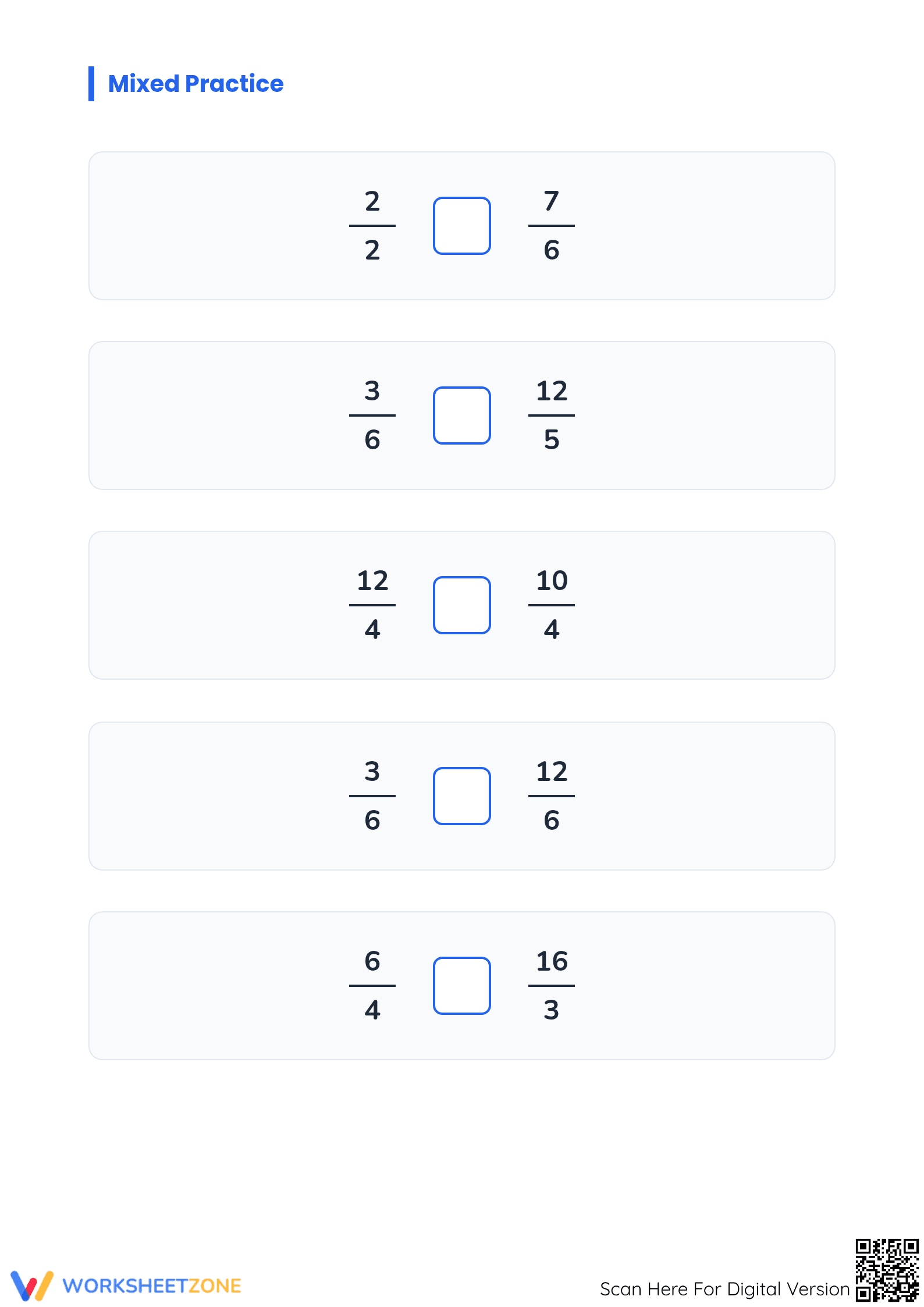
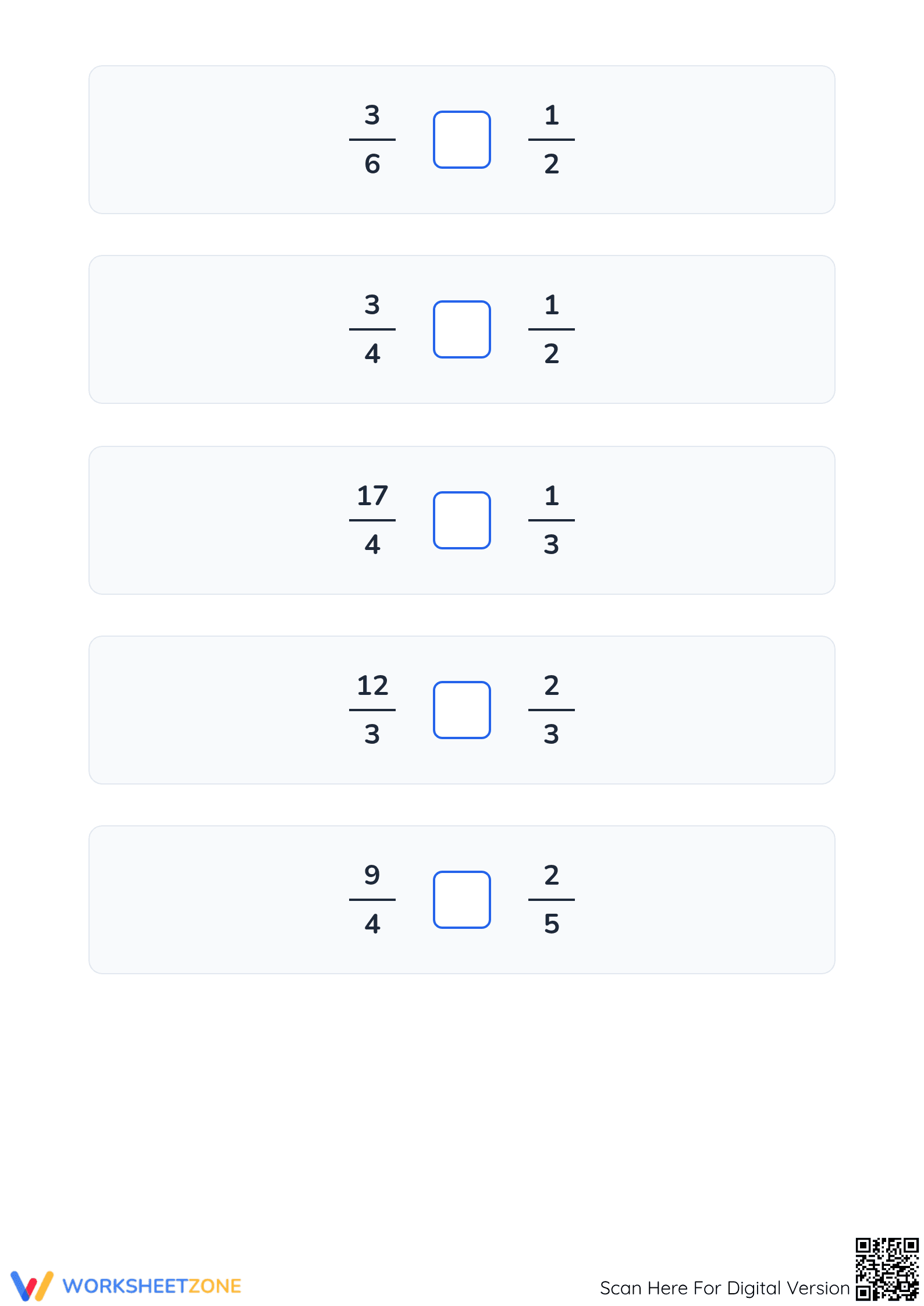
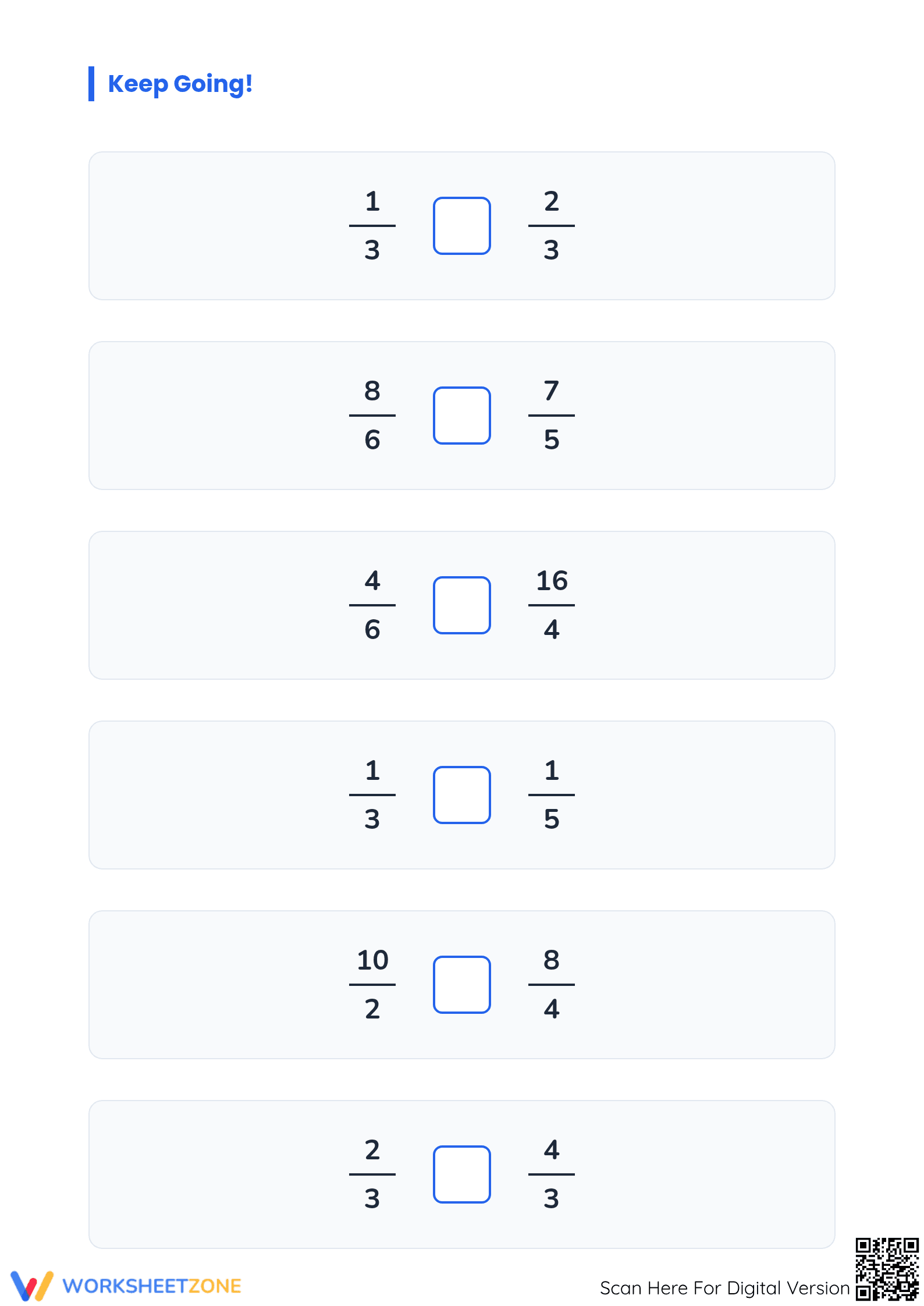

Essential Comparing Simple and Improper Fractions Worksheet
Paste this activity's link or code into your existing LMS (Google Classroom, Canvas, Teams, Schoology, Moodle, etc.).
Students can open and work on the activity right away, with no student login required.
You'll still be able to track student progress and results from your teacher account.
Students often struggle when moving beyond basic proper fractions into the world of improper values. This worksheet provides the essential practice needed to master comparing fractions with unlike denominators and values greater than one. By completing these exercises, learners develop a robust conceptual understanding of fractional magnitude and equivalence.
At a Glance
- Grade: 4–8 · Subject: Math
- Standard:
4.NF.A.2— Compare fractions with different numerators and denominators using common denominators or benchmarks- Skill Focus: Comparing simple and improper fractions
- Format: 5 pages · 26 problems · Answer key included · PDF
- Best For: Independent student practice, small group instruction, and formative assessment
- Time: 30–45 minutes
What's Inside
This comprehensive 5-page practice set contains 26 unique comparison problems designed to challenge and support student growth. The layout features clear, high-contrast fraction notation with dedicated comparison boxes for inequality symbols. A complete answer key is included to facilitate quick grading or student self-correction, making it ideal for large classroom settings or individual tutoring.
Skill Progression
- Guided Practice (4 tasks): Initial problems use simple common factors to introduce the comparison workflow and sign placement.
- Supported Practice (6 tasks): Middle sections compare proper against improper fractions, requiring consideration of whole-number relationships.
- Independent Practice (16 tasks): Final "Keep Going!" challenges use diverse denominators, forcing application of common denominator strategies.
This gradual release model ensures students are not overwhelmed as mathematical complexity increases through the five pages.
Standards Alignment
This resource is directly aligned to `CCSS.MATH.CONTENT.4.NF.A.2`. This standard requires students to compare two fractions with different numerators and different denominators by creating common denominators or numerators, or by comparing to a benchmark fraction. This standard code can be copied directly into lesson plans, IEP goals, or district curriculum mapping tools.
How to Use It
Use this during the "You Do" phase after students explore visual models. It serves as an excellent formative assessment; observe if students rely on common denominators or have developed a "sense" for improper values being larger than one. The 5-page format allows teachers to break work into small daily warm-ups or a single comprehensive review session.
Who It's For
This resource is designed for Grade 4 and Grade 5 students who are mastering fraction operations, though it remains a valuable intervention tool for middle school learners. It is particularly effective for students who have a solid grasp of proper fractions but need targeted support with improper values. Pair this worksheet with a fraction tile set or an anchor chart for maximum impact.
The RAND AIRS 2024 report on mathematics instructional materials emphasizes that practice bridging procedural fluency and conceptual understanding is absolutely critical for long-term retention of core numerical concepts. Masterfully comparing simple and improper fractions underpins much of the essential work in middle school ratios, proportions, and early algebra. Research suggests that students who engage with diverse problem sets, such as the 26 structured tasks provided here, demonstrate significantly higher accuracy rates in standardized national assessments. This worksheet specifically addresses common cognitive hurdles by mixing proper and improper values, forcing students to move beyond surface-level patterns into much deeper numerical analysis and magnitude estimation. By centering the primary standard `4.NF.A.2` and providing a clear, scaffolded path to mastery, educators can ensure their students build the necessary foundations for secondary mathematics success. This systematic approach to understanding fraction magnitude is essential for narrowing persistent achievement gaps in upper elementary and middle school mathematics curricula effectively.


