


























Views
Downloads



Essential Grade 5 Reading: Compare and Contrast Characters
Paste this activity's link or code into your existing LMS (Google Classroom, Canvas, Teams, Schoology, Moodle, etc.).
Students can open and work on the activity right away, with no student login required.
You'll still be able to track student progress and results from your teacher account.
Character analysis requires students to look beyond surface-level actions to understand motivations and traits. This Grade 5 worksheet focuses on comparing and contrasting characters within a realistic fiction passage. By identifying similarities and differences between characters, students develop a deeper understanding of interpersonal dynamics and plot development.
At a Glance
- Grade: 5 · Subject: ELA
- Standard:
CCSS.ELA-LITERACY.RL.5.3— Compare and contrast two or more characters in a story using specific details- Skill Focus: Character Comparison and Analysis
- Format: 3 pages · 10 problems · Answer key included · PDF
- Best For: Reading comprehension practice and character analysis
- Time: 25–35 minutes
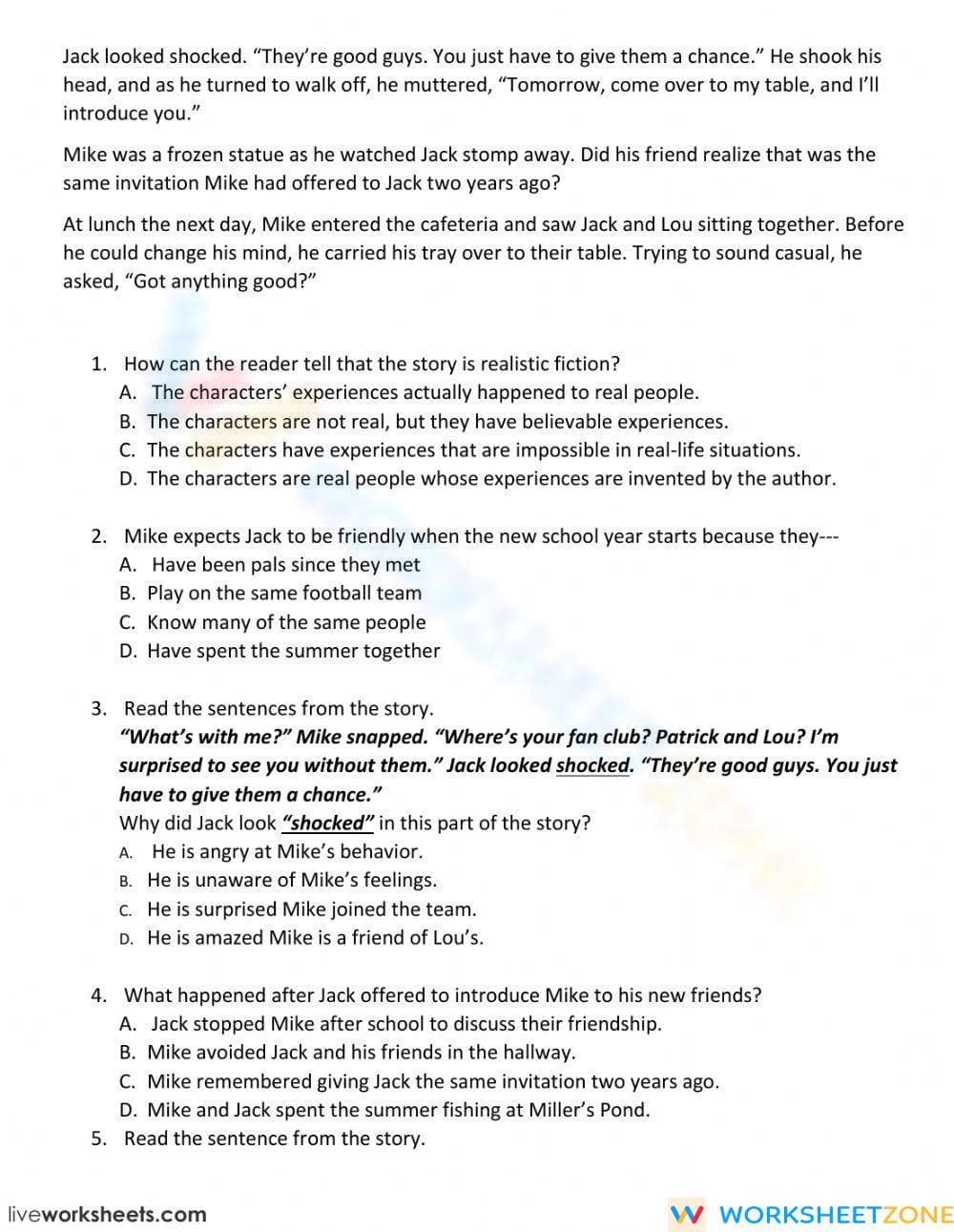
This comprehensive three-page resource includes a full-length realistic fiction passage titled "Past and Future Friends." The layout provides ample space for students to engage with the text before transitioning to 10 structured comprehension tasks. The inclusion of both multiple-choice and open-response formats ensures a thorough assessment of student understanding.
Skill Progression
- Guided Practice: The activity begins with a close reading of the passage where students identify key character interactions and emotional shifts within the narrative arc.
- Supported Practice: Eight multiple-choice questions provide scaffolded support, requiring students to use specific textual evidence to differentiate between the protagonist's internal feelings and external actions.
- Independent Practice: The final section concludes with two open-ended questions where students must synthesize character motivations and predict future outcomes based on established character traits.
Standards Alignment
This resource is directly aligned to the Common Core State Standard CCSS.ELA-LITERACY.RL.5.3. This standard requires students to compare and contrast two or more characters, settings, or events in a story or drama, drawing on specific details in the text. Both standard codes can be copied directly into lesson plans, IEP goals, or district curriculum mapping tools.
How to Use It
This worksheet is ideal for use during the independent practice portion of a character analysis unit. Teachers can distribute the passage for a first read-through, followed by a collaborative discussion on the character's internal conflict. Use the multiple-choice section as a formative assessment to identify students who may need additional support with inferential thinking. Expect completion within 30 minutes.
Who It's For
This resource is designed for students in Grades 4 through 6, with primary alignment to Grade 5 standards. It is particularly effective for students working on social-emotional comprehension and literary analysis. Pair this worksheet with a character trait anchor chart or a graphic organizer to further support struggling readers or English language learners.
According to Fisher & Frey (2014), the ability to compare and contrast characters is a foundational element of complex text analysis that bridges literal comprehension and high-level inferential thinking. This worksheet utilizes a three-page structure to scaffold this skill, moving from identifying character traits to evaluating how those traits influence the story's resolution. The inclusion of CCSS.ELA-LITERACY.RL.5.3 ensures that students are not merely summarizing the plot but are actively engaged in the structural analysis of character relationships. Research from the NAEP highlights that students who master character interaction analysis demonstrate higher proficiency in overall reading assessments. By providing 10 targeted tasks, this resource offers the repetitive practice necessary to cement these skills. This structured approach directly supports the gradual release of responsibility model, ensuring students have the evidence-based tools required for academic success in middle school English Language Arts.


