


























Views
Downloads


Compare and Contrast Fairy Tales Printable | Grade 5 ELA
Paste this activity's link or code into your existing LMS (Google Classroom, Canvas, Teams, Schoology, Moodle, etc.).
Students can open and work on the activity right away, with no student login required.
You'll still be able to track student progress and results from your teacher account.
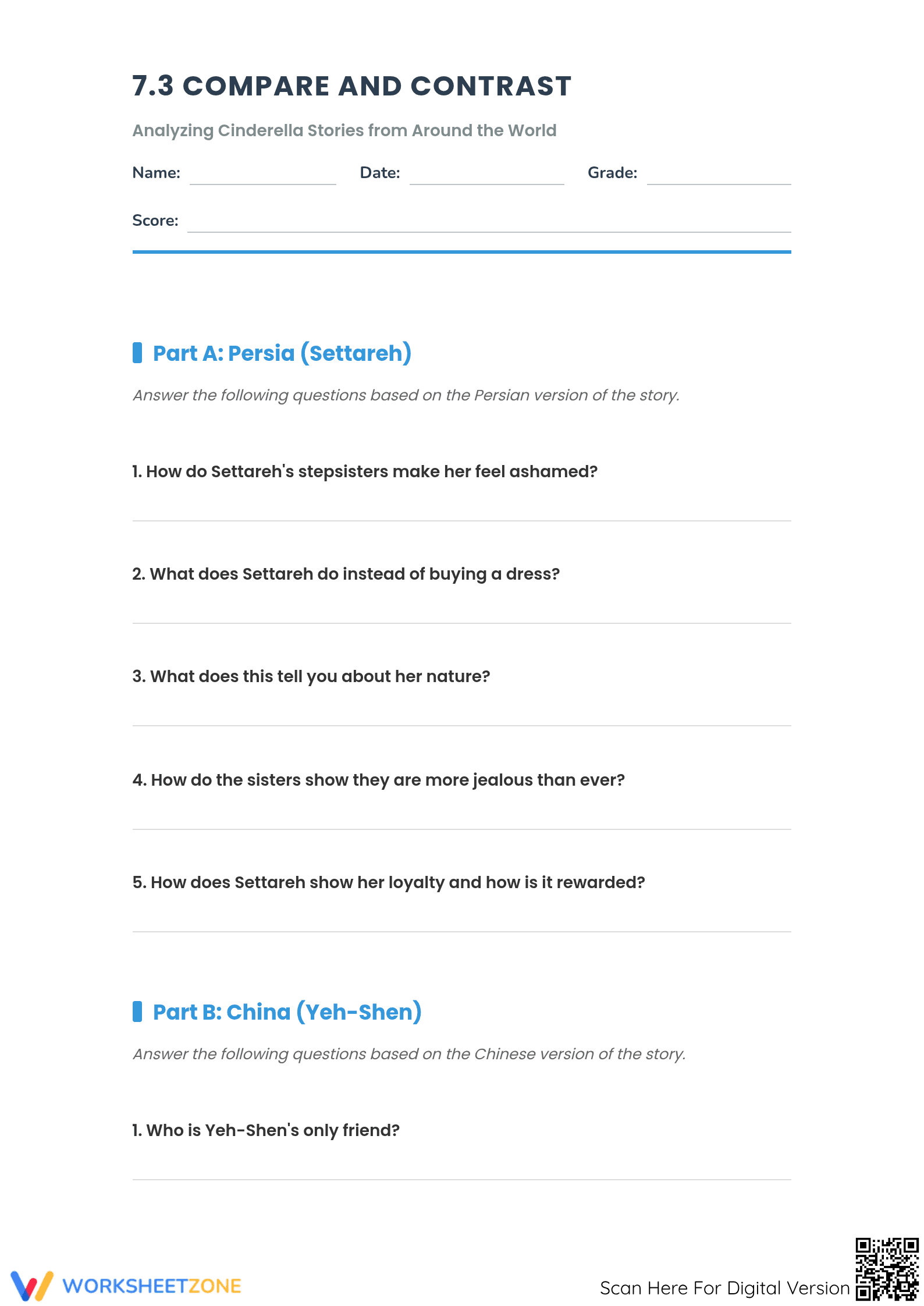
This reading comprehension worksheet helps fifth graders compare and contrast fairy tales from different cultures. By analyzing three distinct versions of the Cinderella story, students practice identifying similarities and differences in characters, magical elements, and plot resolutions to deepen their understanding of traditional literature.
At a Glance
- Grade: 5 · Subject: ELA
- Standard:
CCSS.ELA-LITERACY.RL.5.9— Compare and contrast stories in the same genre.- Skill Focus: Comparing and Contrasting
- Format: 3 pages · 14 problems · Answer key included · PDF
- Best For: Independent practice and reading centers
- Time: 30–45 minutes
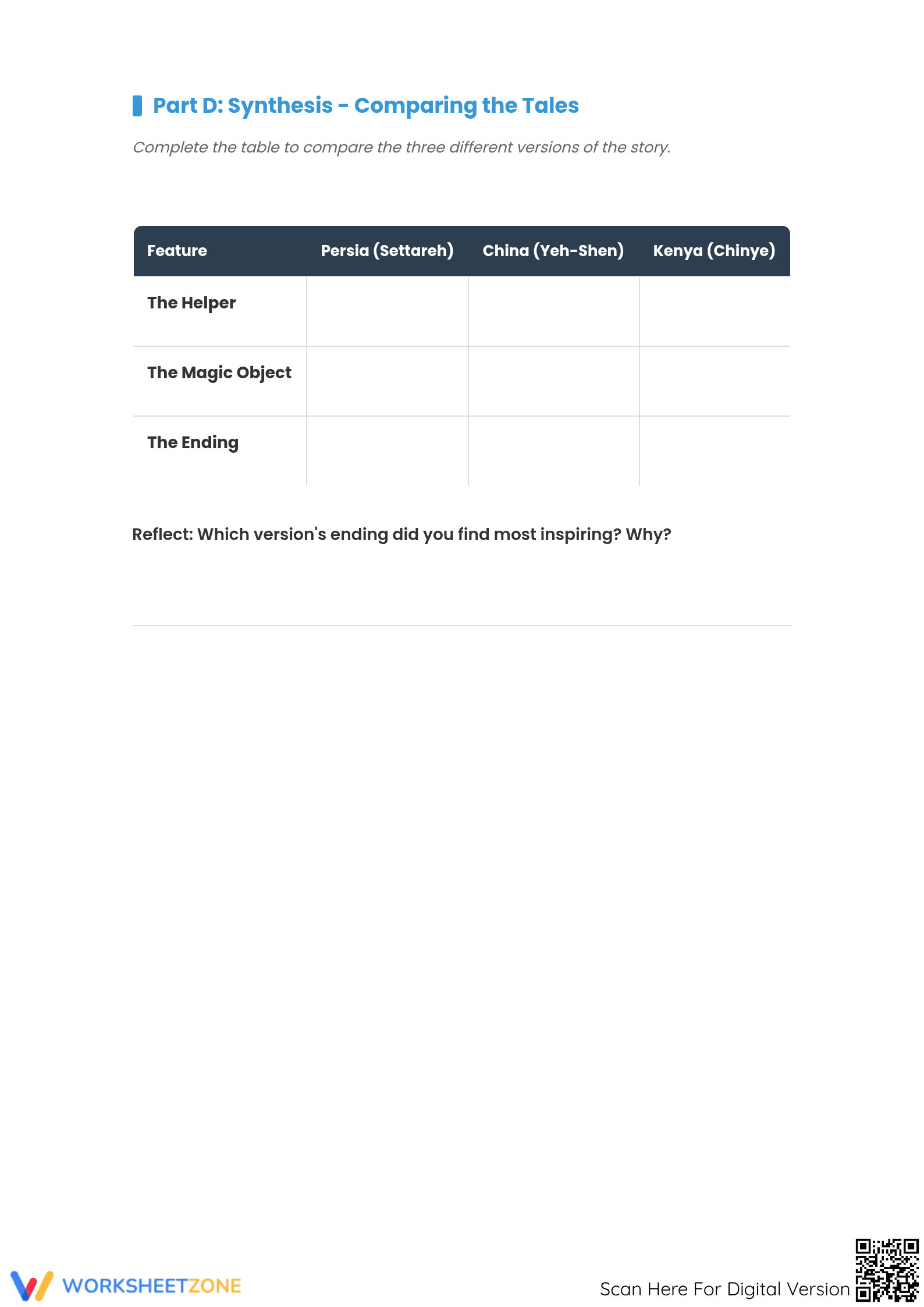
Inside this three-page packet, educators will find a structured analysis guide divided into four distinct parts. The first three sections feature targeted comprehension questions for Cinderella adaptations from Persia, China, and Kenya. The final section provides a synthesis table where students map out specific story elements side-by-side, followed by a reflective writing prompt. A complete answer key is provided for quick grading.
This resource follows a clear progression to build literary analysis skills:
- Guided practice: Students begin by answering specific, text-dependent questions about individual stories to ensure basic comprehension of each cultural adaptation.
- Supported practice: The synthesis table acts as a graphic organizer, helping learners visually map out the helper characters, magical objects, and endings across all three texts.
- Independent practice: A final reflection question requires students to evaluate the different endings and articulate their own perspective using evidence from their reading.
This gradual-release approach ensures students fully grasp each individual narrative before attempting complex cross-text comparisons.
This resource is directly aligned to CCSS.ELA-LITERACY.RL.5.9: Compare and contrast stories in the same genre (e.g., mysteries and adventure stories) on their approaches to similar themes and topics. It also supports foundational reading comprehension and evidence-gathering skills. Both standard codes can be copied directly into lesson plans, IEP goals, or district curriculum mapping tools.
Teachers can utilize this worksheet during a broader folklore or traditional literature unit. After reading the three specified Cinderella variations as a class or in small groups, assign this packet as an independent reading center activity. As a formative assessment tip, review the synthesis table before students write their final reflection to ensure they have accurately identified the core comparative elements. Expect students to complete this activity in 30 to 45 minutes.
This activity is designed for fifth-grade general education students, though it serves as excellent enrichment for advanced fourth graders. For learners needing additional support, teachers can allow students to work in pairs or provide the texts with pre-highlighted evidence. This worksheet pairs perfectly with a classroom library collection of multicultural fairy tales or a direct instruction lesson on story elements.
Aligning instruction to CCSS.ELA-LITERACY.RL.5.9 requires students to compare and contrast stories in the same genre, a critical step in developing advanced literary analysis skills. According to a recent EdReports 2024 review of high-quality instructional materials, students who regularly engage in cross-textual analysis demonstrate significantly higher reading comprehension scores and better critical thinking abilities. By examining how different cultures adapt a universal narrative like Cinderella, learners not only practice identifying structural similarities and differences but also build essential cultural awareness. This specific analytical practice moves students beyond basic recall, challenging them to synthesize information across multiple sources and evaluate authorial choices. Providing structured graphic organizers, such as the synthesis table included in this resource, is a proven strategy to reduce cognitive load while students process complex, multi-text comparisons.


