


























1 / 4
0
Views
0
Downloads



0.0
0
Save
0 Likes
Share
Understand Common Reactions to Trauma
0 Views
0 Downloads
Paste this activity's link or code into your existing LMS (Google Classroom, Canvas, Teams, Schoology, Moodle, etc.).
Students can open and work on the activity right away, with no student login required.
You'll still be able to track student progress and results from your teacher account.
Information
Description
What It Is:
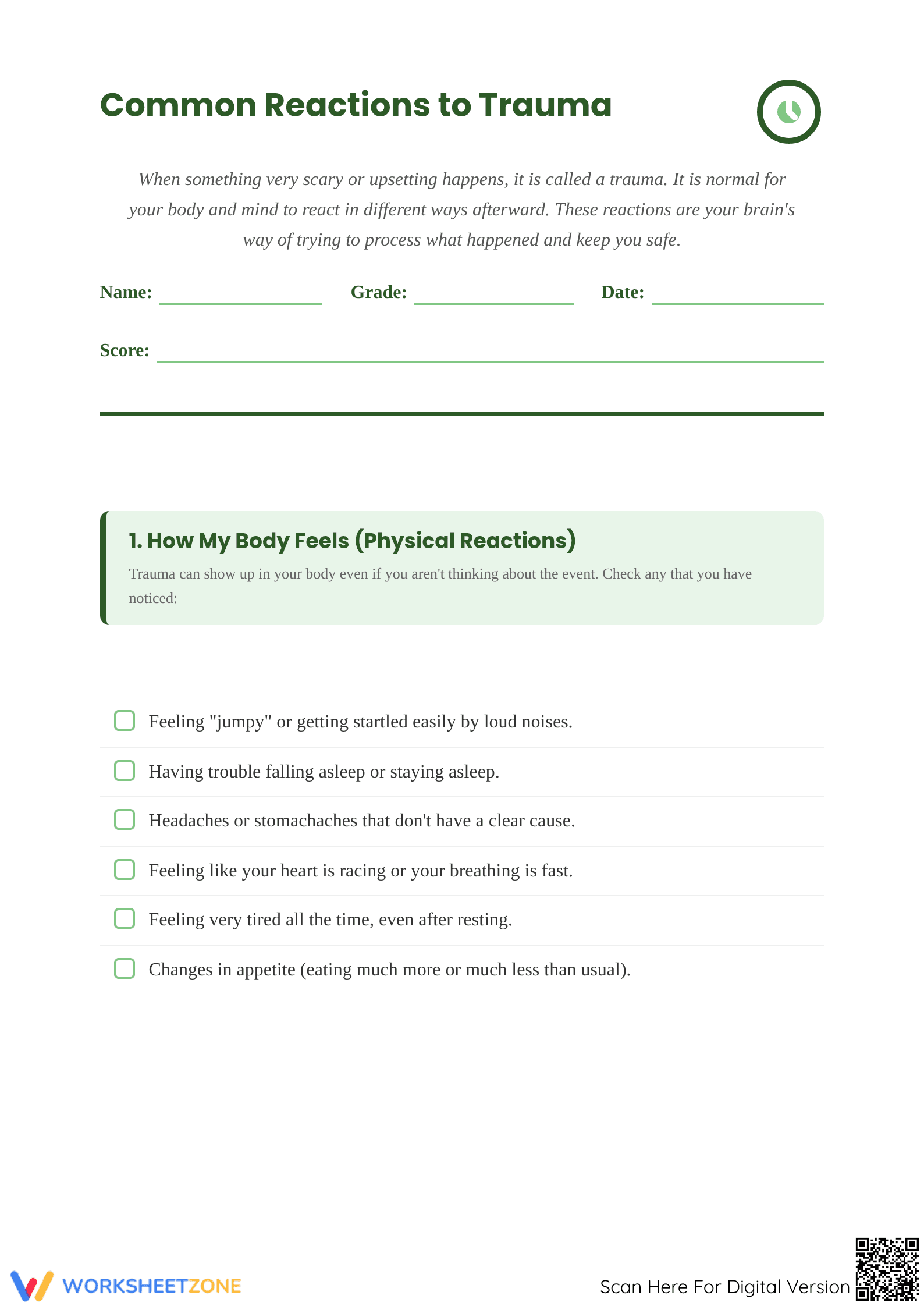
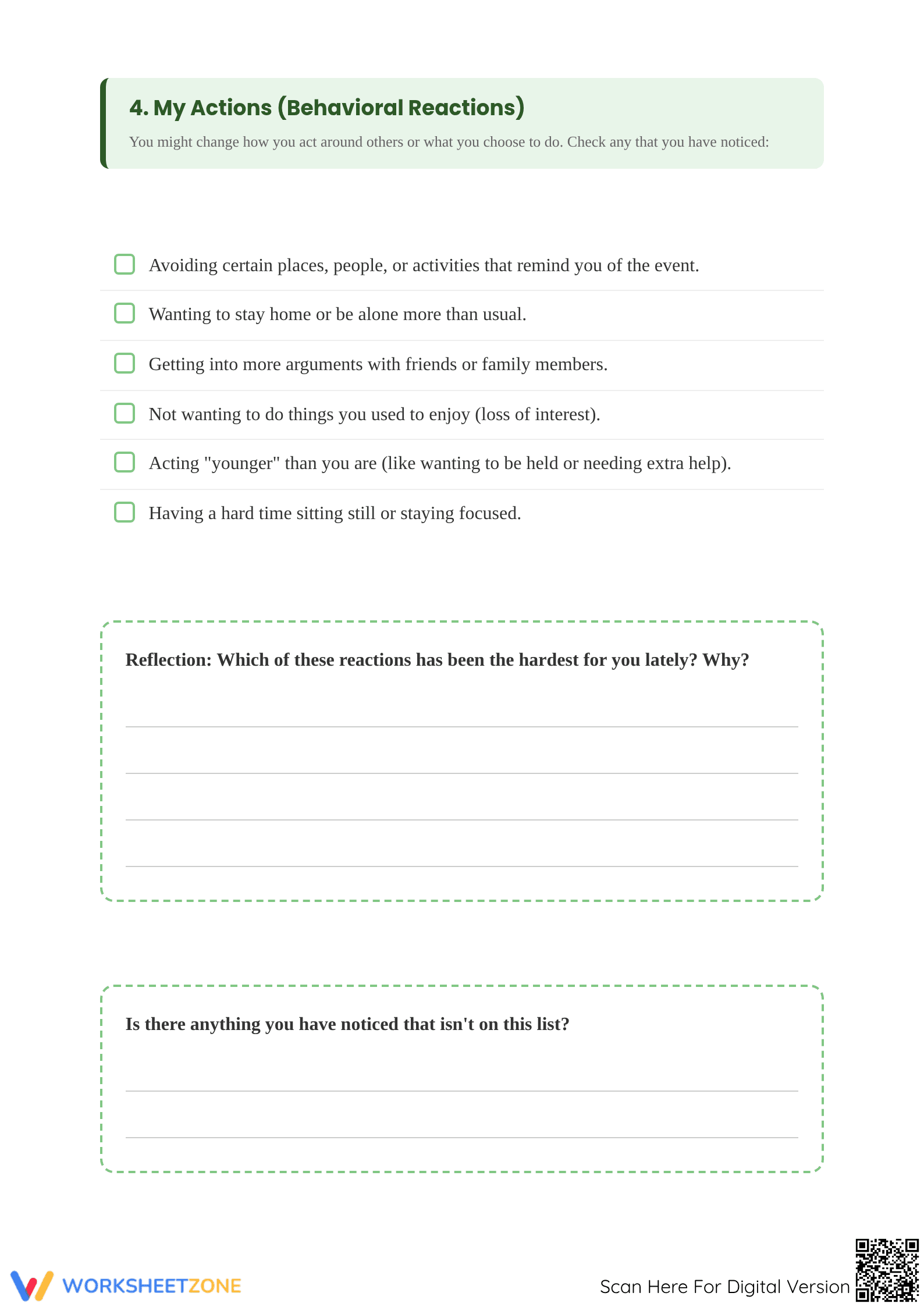
This is an educational worksheet titled 'Common Reactions to Trauma.' It lists and describes different categories of reactions, including Re-experiencing the Trauma (with examples like nightmares and flashbacks), Avoidance of Trauma Reminders (including using drugs/alcohol and avoiding certain people/places), Negative Thoughts or Feelings (such as excessive blame and loss of interest in activities), and Hyperarousal (including irritability and difficulty sleeping). The worksheet provides brief explanations for each category and specific examples of common reactions.
Grade Level Suitability:
This worksheet is suitable for high school students (grades 9-12) and adult learners. The content deals with complex emotional and psychological concepts related to trauma, requiring a level of maturity and cognitive ability typically found in older teenagers and adults. It is appropriate for psychology, health, or social studies classes.
Why Use It:
This worksheet provides a clear and organized overview of common reactions to trauma. It helps individuals understand the different ways trauma can manifest and normalize the experience of these reactions. It can be used to increase awareness, promote self-reflection, and facilitate discussions about mental health and trauma recovery.
How to Use It:
This worksheet can be used as a handout for students or clients to read and review. It can be used as a starting point for discussions about trauma and its effects. Individuals can use it to identify reactions they may be experiencing and gain a better understanding of their own responses to trauma. It can also be used as a reference tool for professionals working with trauma survivors.
Target Users:
The target users for this worksheet include high school students learning about psychology or mental health, college students studying related fields, therapists and counselors working with trauma survivors, and individuals who have experienced trauma and are seeking to understand their reactions.
This is an educational worksheet titled 'Common Reactions to Trauma.' It lists and describes different categories of reactions, including Re-experiencing the Trauma (with examples like nightmares and flashbacks), Avoidance of Trauma Reminders (including using drugs/alcohol and avoiding certain people/places), Negative Thoughts or Feelings (such as excessive blame and loss of interest in activities), and Hyperarousal (including irritability and difficulty sleeping). The worksheet provides brief explanations for each category and specific examples of common reactions.
Grade Level Suitability:
This worksheet is suitable for high school students (grades 9-12) and adult learners. The content deals with complex emotional and psychological concepts related to trauma, requiring a level of maturity and cognitive ability typically found in older teenagers and adults. It is appropriate for psychology, health, or social studies classes.
Why Use It:
This worksheet provides a clear and organized overview of common reactions to trauma. It helps individuals understand the different ways trauma can manifest and normalize the experience of these reactions. It can be used to increase awareness, promote self-reflection, and facilitate discussions about mental health and trauma recovery.
How to Use It:
This worksheet can be used as a handout for students or clients to read and review. It can be used as a starting point for discussions about trauma and its effects. Individuals can use it to identify reactions they may be experiencing and gain a better understanding of their own responses to trauma. It can also be used as a reference tool for professionals working with trauma survivors.
Target Users:
The target users for this worksheet include high school students learning about psychology or mental health, college students studying related fields, therapists and counselors working with trauma survivors, and individuals who have experienced trauma and are seeking to understand their reactions.


