


























Views
Downloads
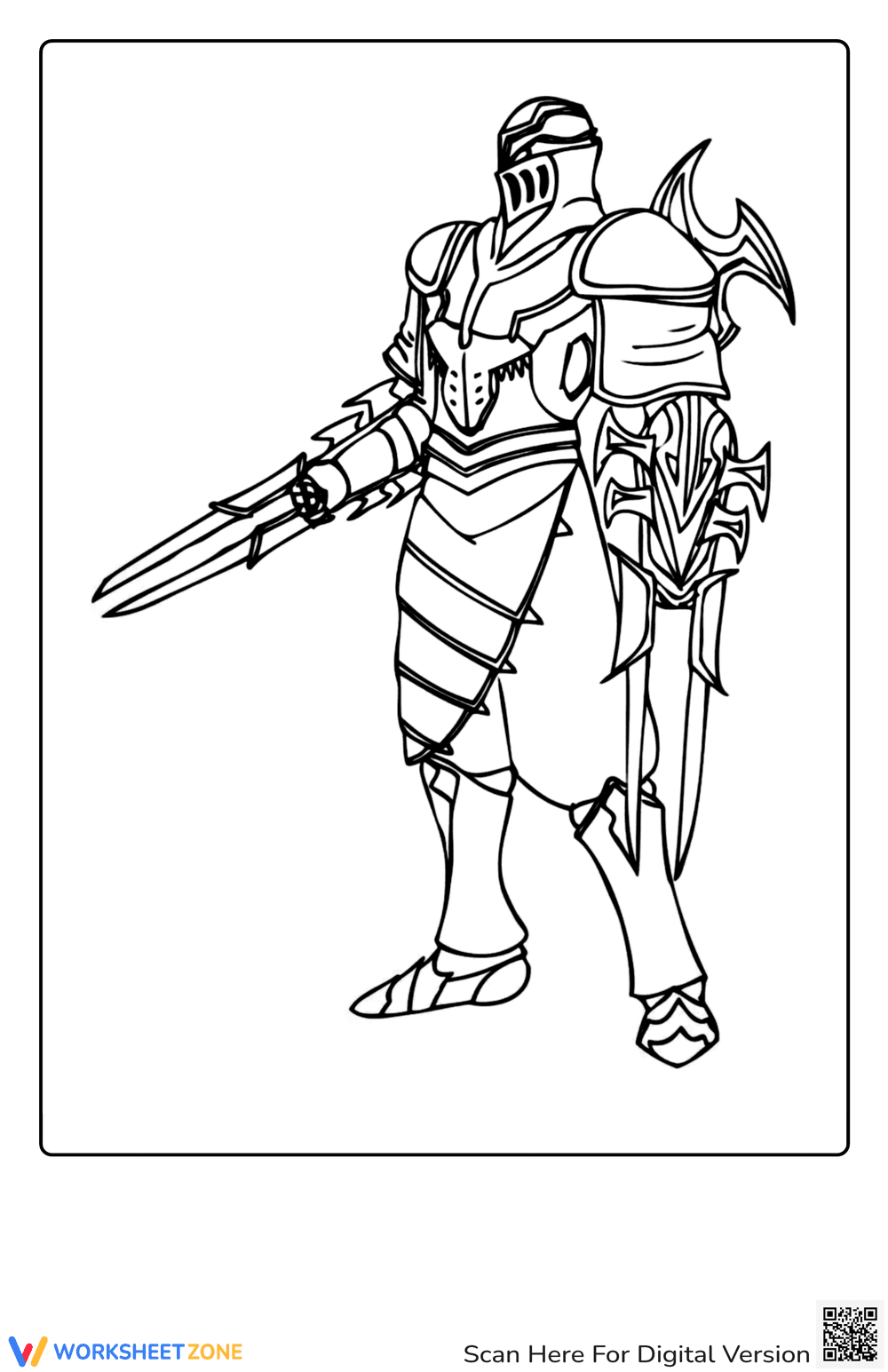

Printable Zed Coloring Page | Grades 1-5 Art
Paste this activity's link or code into your existing LMS (Google Classroom, Canvas, Teams, Schoology, Moodle, etc.).
Students can open and work on the activity right away, with no student login required.
You'll still be able to track student progress and results from your teacher account.
This coloring worksheet provides an engaging creative outlet while developing essential fine motor control. By focusing on precise color application within complex boundaries, young learners strengthen hand-eye coordination and focus. This single-page activity offers a relaxing, artistic task that supports visual expression and sustained attention.
At a Glance
- Grade: 1-5 · Subject: Art & Fine Motor
- Standard:
CCSS.ELA-LITERACY.SL.1.5— Add drawings or visual displays to clarify ideas- Skill Focus: Fine Motor Control
- Format: 1 page · 1 problem · No answer key · PDF
- Best For: Independent practice and brain breaks
- Time: 15–20 minutes
This resource features a single, highly detailed line-art illustration of a popular gaming character designed for student coloring. The page contains intricate armor and weapon details that require careful crayon or marker application, challenging students to practice spatial awareness and grip control. Because this is an open-ended creative exercise, no answer key is required, allowing for complete artistic freedom.
Zero-Prep Workflow
- Print (30 seconds): Generate the single-page PDF directly from your device. The high-contrast black lines ensure crisp copies on standard classroom printers without draining ink.
- Distribute (1 minute): Hand out the page alongside basic art supplies like colored pencils, crayons, or markers. No specialized materials or teacher modeling are necessary.
- Review (0 minutes): Students self-manage their creative process. Completed artwork can be immediately displayed or taken home.
Total teacher preparation requires under two minutes, making this ideal for sub plans or early finisher stations.
Standards Alignment
This activity aligns with CCSS.ELA-LITERACY.SL.1.5: "Add drawings or other visual displays to descriptions when appropriate to clarify ideas, thoughts, and feelings." While primarily a fine motor and artistic task, it supports the foundational physical skills necessary for written and visual communication. Both standard codes can be copied directly into lesson plans, IEP goals, or district curriculum mapping tools.
How to Use It
Deploy this coloring page as a calming transition activity after intensive direct instruction, allowing students to decompress while remaining on task. Alternatively, use it as an engaging early-finisher reward during independent reading or math blocks. As students work, observe their pencil grip and pressure—this serves as an excellent formative assessment of fine motor development and hand strength. Expect students to spend between 15 and 20 minutes completing the intricate details of the character.
Who It's For
This worksheet is designed for elementary students in grades 1 through 5 who benefit from structured creative tasks. To differentiate, provide thicker crayons for younger students developing basic grip, while offering fine-tipped markers or colored pencils to older students for detailed shading. Pair this activity with a creative writing prompt where students invent a short backstory for the character they just colored.
Structured coloring activities provide significant cognitive and physical benefits. When students practice adding drawings or visual displays to clarify ideas, aligned with CCSS.ELA-LITERACY.SL.1.5, they actively refine the fine motor control required for legible handwriting and precise tool manipulation. According to Fisher & Frey (2014), providing students with low-stakes, high-interest tasks fosters sustained attention and builds stamina for more rigorous academic challenges. This specific exercise requires learners to navigate complex visual boundaries, reinforcing spatial awareness and hand-eye coordination. Engaging with familiar subjects encourages reluctant learners to participate in fine motor practice. By utilizing this targeted creative task, educators can effectively support foundational physical development while offering a necessary cognitive reset during the instructional day, ensuring students remain regulated and ready to learn.


