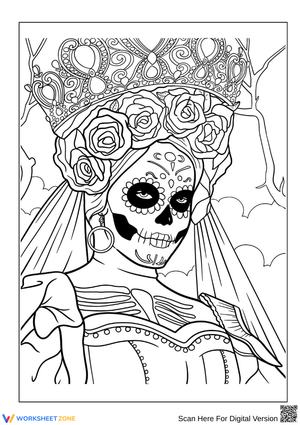
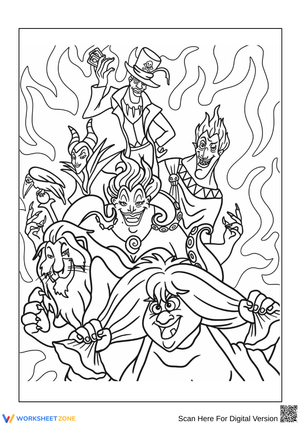
Hard coloring pages trade thick, forgiving outlines for fine, layered linework and dense inner sections instead of a few bold shapes. Where a beginner page might have ten open areas, one page here can pack in over a hundred: tiny wedges, interlocking loops, and stacked geometric patterns that leave little room for stray marks. Symmetry plays a big role too, since many designs radiate out from a center point in matching rings. That density sets these designs apart from simple, oversized shapes made for young kids.
What You Will Find in This Collection
This set covers mandalas, zentangle-style patterns, geometric tilework, and detailed animal and nature scenes, so there's variety beyond a single repeated style. Mandala designs radiate outward in rings of shapes, drawing on a centuries-old Sanskrit term for circle. Zentangle pages fill a shape with small repeating strokes-dots, waves, and crosshatching-built one section at a time. Nature and fantasy scenes add dragons, owls, forest canopies, and underwater coral reefs rendered in fine, layered detail. Each page keeps a similar line weight, so a themed set feels connected.
Best Supplies and Printing Setup for Fine Detail
Fine detail holds up best on 65-lb or heavier cardstock, which resists bleed-through from markers and keeps thin lines crisp instead of fuzzy. Set your printer to its highest quality or photo setting so hairline strokes don't break up. For coloring itself, fine-tip markers, gel pens, or sharpened colored pencils work better than thick markers, since they fit inside small enclosed spaces without crossing lines. Many colorers work section by section, moving outward from the center, and add light shading with pencil layering for extra depth.
Frequently Asked Questions
1. What age or skill level fits these best?
These pages suit teens, adults, and advanced kids who already color inside the lines confidently and want a longer project. Younger children under about eight often find the small sections frustrating since thin lines require careful control. If a child loves detail and doesn't mind spending thirty minutes or more on one page, mandala and zentangle designs from this set make a good next step up from simpler printables.
2. What supplies work best for the fine lines?
Fine-tip markers around 0.4 millimeters, gel pens, and well-sharpened colored pencils give the most control inside small spaces. Thick markers or crayons tend to bleed past the borders and flatten the detail. Print on cardstock of at least 65 pounds so ink doesn't soak through, and keep a sharpener nearby, since pencils dull quickly on dense linework. Extra printed copies help too, in case a section needs a redo.
3. What is a surprising fact about mandala designs?
The word mandala comes from Sanskrit and simply means circle, a term used for centuries in Tibetan Buddhist practice as a meditation and focus tool. Monks historically built intricate sand mandalas by hand and swept them away once finished, treating the process as the point rather than the image. That slow, repetitive idea carries into paper versions today, which is part of why these designs feel calming to color.












 Interactive Worksheet Maker
 Quiz Maker
 Word Search Maker
 Crossword Puzzle Maker
 Word Scramble Generator
 Sentence Scramble Generator
 Handwriting Worksheet Generator
 Name Tracing Generator
 Fill In The Blank Generator