The Bear Who Never Changes — and Why That Works
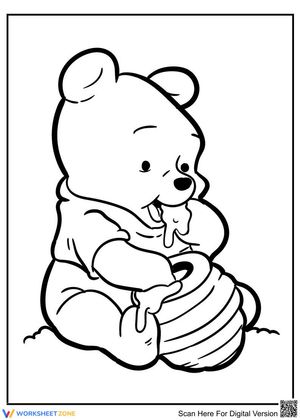
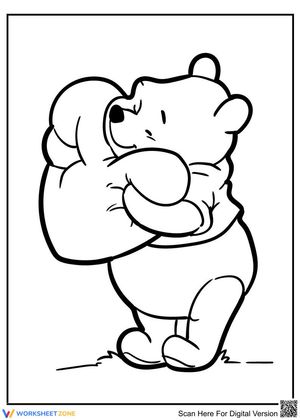
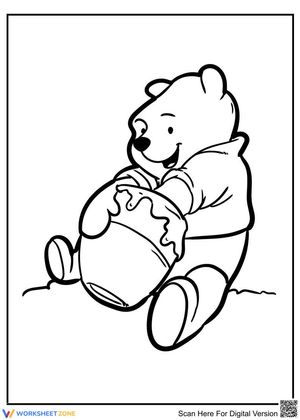
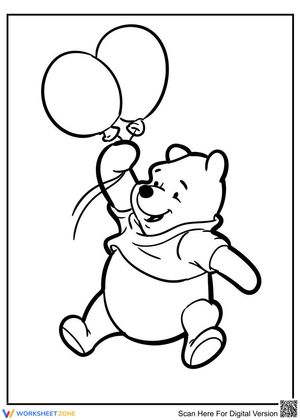
Pooh Bear's design has stayed remarkably consistent since Disney first animated him in 1966: golden-yellow fur, a red crop shirt, a round belly, and an expression that hovers somewhere between content and puzzled. That visual simplicity is a genuine advantage for coloring. There are no intricate costume details or sharp angles — just a friendly shape that's satisfying to fill in regardless of age or skill level. Pooh is almost always shown alongside something that tells a small story: a honey pot clutched to his chest, a beehive buzzing overhead, or a path winding through the autumn trees of the Hundred Acre Wood.
What the Pooh Bear Collection Covers
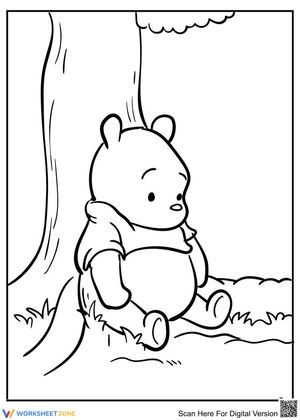
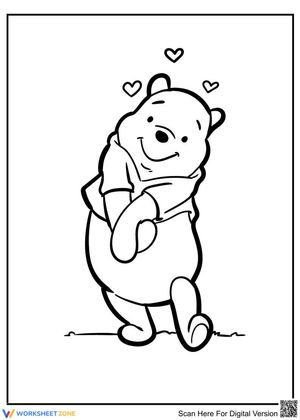
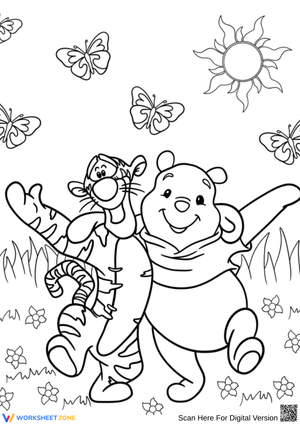
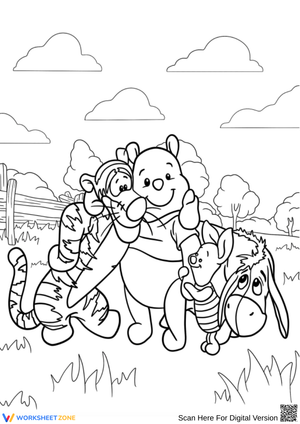
The Pooh Bear coloring pages on Worksheetzone span a solid range of styles and complexity. Some sheets focus on Pooh alone — sitting with a honey jar, reaching into a log, or napping under a tree — using thick outlines and open areas that work well for toddlers and early elementary kids. Other pages place him in group scenes with Piglet, Tigger, Eeyore, or Christopher Robin, with more background detail like fallen leaves, wooden signposts, and the exterior of his cozy tree-house home. The collection includes:
- Single-character close-ups with minimal background
- Two-character friendship scenes ideal for ages 4 to 7
- Full Hundred Acre Wood scenes with trees, sky, and environmental detail
- Holiday-themed sheets featuring Pooh in seasonal settings
This range means a three-year-old and a ten-year-old can each find a page that matches their patience and fine motor skills.
Colors and Tools That Bring Pooh to Life
Pooh's fur looks most accurate with warm golden yellow — think marigold or sunflower rather than pale lemon. His red shirt in the classic Disney style is a flat, bright red with no shading, though older kids can add fold shadows in burgundy or deep rose to give the fabric more dimension. Honey pots call for amber and caramel tones, and a small white highlight applied with a gel pen can make the honey look thick and glossy. For forest backgrounds, layering two or three shades of green — one for light areas, a darker tone for shadows under branches — adds depth without much effort.
Standard printer paper handles crayons and markers well enough for casual coloring. For colored pencils, a slightly heavier paper (at least 24 lb) prevents bleed-through and holds layering better, which matters most on the detailed scene pages.
Frequently Asked Questions
What age group are Pooh Bear coloring pages best suited for?
Most sheets work well for children ages 3 to 8, thanks to Pooh's simple rounded shape and limited costume detail. Worksheetzone also carries more elaborate scene pages with background elements that hold the interest of older kids and adults.
What are the best colors to use for Pooh Bear's fur?
A warm golden yellow — closer to marigold or amber than bright canary — matches the classic Disney look best. Use a slightly darker shade along the edges of his belly and ears to add subtle roundness without overcomplicating it.
What paper size do these sheets print on?
All Pooh Bear coloring pages on Worksheetzone are formatted for standard US letter size (8.5×11 inches). Print at 100% scale with no page scaling selected in your printer settings for the cleanest, full-size result.
Did you know Pooh Bear got his name from a real bear at the London Zoo?
Winnie-the-Pooh's first name comes from a real Canadian black bear named Winnie, brought to London by a Canadian soldier during World War I and eventually donated to the London Zoo — where A.A. Milne's son Christopher Robin visited her regularly and loved her so much that he renamed his stuffed bear after her, giving the fictional Pooh his unusual name.












 Interactive Worksheet Maker
 Quiz Maker
 Word Search Maker
 Crossword Puzzle Maker
 Word Scramble Generator
 Sentence Scramble Generator
 Handwriting Worksheet Generator
 Name Tracing Generator
 Fill In The Blank Generator