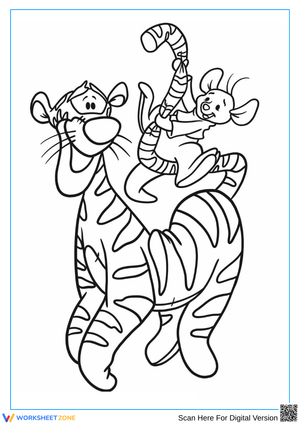
What Makes Tigger Such a Fun Character to Color
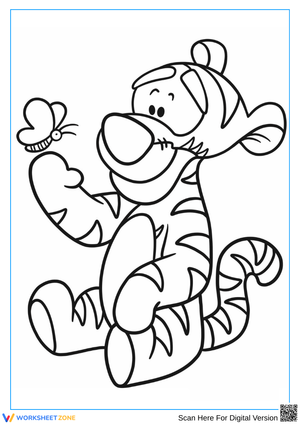
Tigger's design is built for action. Warm orange fur, bold black stripes, a cream-colored belly, and a famously spring-loaded tail are almost always shown mid-bounce — arms flung wide, tail coiled, expression fully confident. That kinetic energy carries through most of the Tigger coloring pages available on Worksheetzone, which means you're rarely dealing with a flat, static pose.
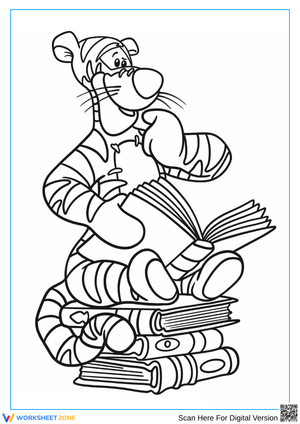
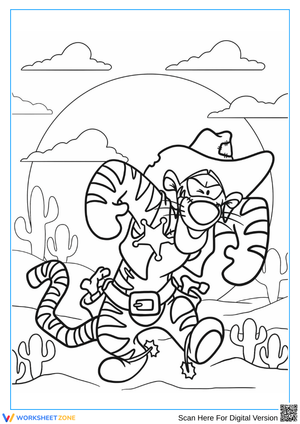
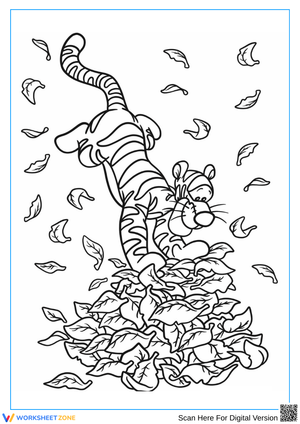
The sheets include close-up portraits that focus on his expressive face as well as full-body scenes where he's mid-leap or hugging Roo. Several designs incorporate simple Hundred Acre Wood backgrounds — autumn leaves or the base of Pooh's tree — that add context without overwhelming younger colorists.
Getting Tigger's Colors Right
His base coat works best in a warm tangerine or pumpkin orange rather than a flat primary orange — it reads much closer to Disney's animated version. Apply the orange layer first, then add black stripes once it's dry to keep edges clean. His chest and muzzle call for cream or pale beige; leaving the paper blank tends to look unfinished, especially on cardstock.
Round out the palette with candy-apple red for the nose and sky blue for the eyes. Colored pencils give the most control along stripe borders, while markers deliver the bold saturation that suits Tigger's larger-than-life personality.
Matching the Right Sheet to the Right Age
Worksheetzone's Tigger coloring pages span a genuine difficulty range. Ages 3–5 do best with large-outline, minimal-detail sheets — a single bouncing Tigger with thick lines and open fill areas suits early crayon practice well. Kids ages 6–10 can take on more complex poses that include Roo, Piglet, or light woodland backgrounds.
Teens and adults who use character illustration as a stress-relief activity will find the more intricate designs — fine stripe details, expressive shading opportunities, layered foliage — worth the extra time. For any age, printing at 8.5 × 11 with "fit to page" selected keeps line weights accurate to the original design.
Frequently Asked Questions
What colors do I need to color Tigger?
You'll need warm orange (tangerine or pumpkin tone), black, cream or pale beige, sky blue, and red. A tangerine-range orange reads closer to Disney's animated Tigger than a flat primary orange.
Are these sheets appropriate for toddlers and preschoolers?
Yes — the large-outline, minimal-detail designs work well for ages 3 and up. Single-character pages without background elements are the best starting point for the youngest colorists.
What paper works best for printing Tigger coloring pages?
Standard copy paper handles crayons and colored pencils fine. For markers, 65 lb cardstock prevents bleed-through and holds color more evenly across the large orange fill areas.
Did you know Tigger wasn't in A.A. Milne's original book?
Tigger first appeared in the 1928 sequel "The House at Pooh Corner," not the original 1926 "Winnie-the-Pooh" — he shows up at Pooh's door in the middle of the night, announcing himself as the only Tigger in existence. Disney later made his bouncing tail a visual signature, and the Sherman Brothers wrote "The Wonderful Thing About Tiggers" for the 1968 animated featurette.












 Interactive Worksheet Maker
 Quiz Maker
 Word Search Maker
 Crossword Puzzle Maker
 Word Scramble Generator
 Sentence Scramble Generator
 Handwriting Worksheet Generator
 Name Tracing Generator
 Fill In The Blank Generator