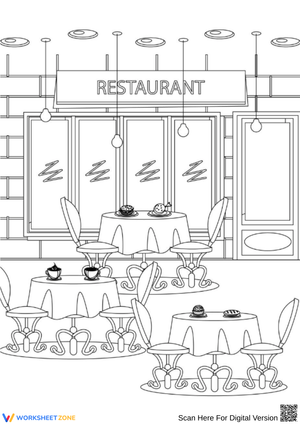
Restaurant Coloring Pages: Bring Café Scenes To Life
A restaurant scene gives children more than plates and tables to color; it invites them into a busy little world of food, people, menus, signs, and friendly service. Restaurant coloring pages are a fun choice for kids who enjoy pretend play, cooking themes, community places, and everyday scenes they can recognize. A page might show a cozy café, a family dinner table, a chef preparing food, a waiter carrying a tray, or a bright restaurant sign waiting for color.
These pages can include many details that make the activity feel lively and creative. Younger children may enjoy simple designs with tables, chairs, plates, cups, and smiling characters. Older kids may like pages with menus, kitchen counters, pizza ovens, dessert displays, food carts, restaurant windows, chalkboard signs, or outdoor café seating. Each design gives children a chance to imagine what kind of restaurant it is, what food is being served, and who might be visiting.
Restaurant coloring pages also give kids plenty of room to make creative choices. They can color a pizza place with red booths, a bakery with pastel cakes, a café with warm brown tables, or a fancy restaurant with gold lights and flower decorations. Food items can become bright and playful, from colorful cupcakes and fruit bowls to burgers, noodles, sandwiches, soups, and drinks. As children color small plates, utensils, food shapes, signs, and people, they practice fine motor control, focus, patience, and color recognition in a relaxed way.
Parents can use these pages for quiet time, rainy afternoons, pretend restaurant play, or screen-free creative breaks. Teachers can add them to community helper lessons, food themes, dramatic play centers, art stations, early-finisher folders, or creative writing prompts. To extend the activity, children can design a restaurant name, create a menu, draw their favorite meal, or write one sentence about what is happening in the scene.
The finished page can easily become part of a bigger pretend-play project. Kids can turn restaurant coloring pages into handmade menus, classroom displays, greeting cards, bookmarks, or story starters. They can also cut out tables, food, chefs, and signs to build a paper restaurant scene. Adding speech bubbles, prices, specials of the day, customer names, or extra decorations can make the artwork feel complete. With food, imagination, and familiar dining details, restaurant coloring pages help children enjoy creative art while building little stories around everyday places.
Frequently Asked Questions
Question 1: What scenes can children find in restaurant coloring pages?
Restaurant coloring pages can include café tables, dining rooms, chefs, waiters, menus, food counters, dessert displays, pizza shops, bakeries, outdoor seating, and family meal scenes. Some pages are simple with large shapes for younger kids, while others include more detailed restaurant settings for older children. This variety makes the theme useful for pretend play, food activities, community lessons, and creative art time.
Question 2: How can kids personalize a restaurant coloring page?
Children can personalize the page by naming the restaurant, designing a menu, adding a “special of the day,” drawing extra food, or creating signs for the walls and windows. They can also add people, pets, balloons, table flowers, price tags, or speech bubbles. These small additions help turn a basic restaurant picture into a unique scene with its own story and style.
Question 3: Can restaurant coloring pages support pretend play?
Yes, restaurant coloring pages work very well with pretend play. After coloring, children can use the page as a restaurant setting, make paper menus, pretend to take orders, or create a role-play game with chefs, servers, and customers. This helps connect coloring with imagination, communication, and social play while keeping the activity fun and simple.
Question 4: How can teachers use restaurant coloring pages in class?
Teachers can use restaurant coloring pages during community helper lessons, food vocabulary activities, dramatic play, art centers, or creative writing time. Students can color the scene, label objects like menu, table, chef, plate, and waiter, or write a short story about a restaurant visit. Finished pages can also be combined into a classroom “restaurant wall” with menus and student-created dining scenes.