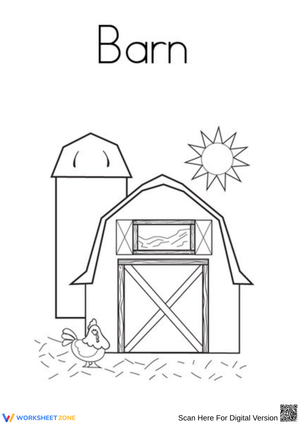
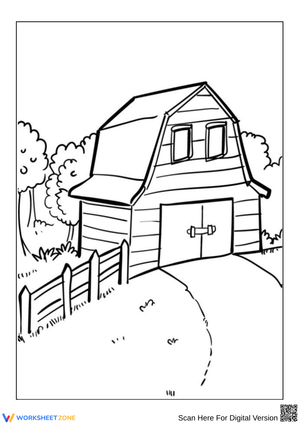
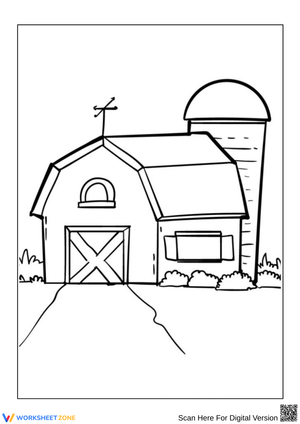
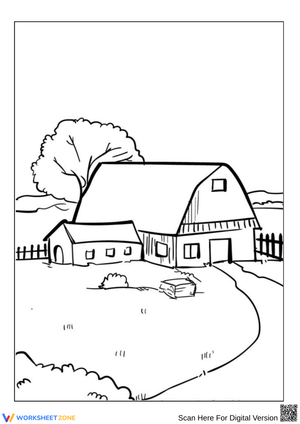
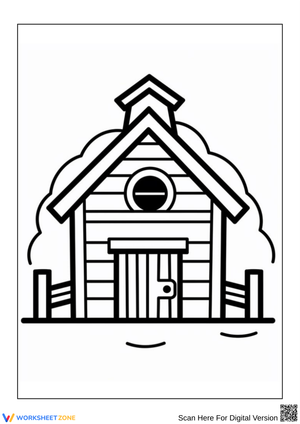
A barn can turn an ordinary coloring page into a full farmyard story. With its wide doors, wooden walls, hay-filled lofts, and open country setting, a barn gives children much more than a single object to color. Barn coloring pages are a wonderful choice for kids who enjoy farms, animals, tractors, fields, and simple outdoor scenes. The theme feels warm, familiar, and easy to imagine, whether a child is coloring a classic red barn, a tiny countryside shed, or a busy farm filled with animals and tools.
One of the best things about barn-themed pages is how many details can grow around the main picture. A simple page may show one large barn with a fence and a few clouds, which works well for younger children who need clear shapes and wider spaces. Other pages may include horses, cows, chickens, pigs, ducks, tractors, hay bales, windmills, wagons, and fields stretching into the distance. Some may even show a whole farmyard with paths, trees, vegetable gardens, and friendly animals peeking from the barn door. This variety makes barn coloring pages easy to enjoy at different ages and skill levels.
Coloring a barn also gives children plenty of room to be creative with familiar farm colors. They can use red, brown, white, gray, or tan for the barn itself, then add green grass, blue skies, golden hay, and colorful flowers or animal details around it. A child might choose a traditional red barn with a black roof, while another may invent a bright blue barn, a rainbow fence, or a barn decorated with flower boxes and painted signs. These choices help children practice color recognition, fine motor control, focus, and patience while still feeling playful and relaxed.
At home, barn coloring pages work well for quiet afternoons, weekend crafts, animal-themed play, or screen-free creative time. In the classroom, teachers can use them during farm units, community themes, seasonal art centers, early-finisher folders, or writing prompts. Children can be invited to name the farm, draw more animals nearby, label parts of the barn, or write a short sentence about what happens there each morning. That small extension can turn a simple coloring page into a storytelling activity or a gentle introduction to life on a farm.
After the coloring is done, the page can become part of a larger farm project. Children can turn finished barn coloring pages into bookmarks, classroom displays, handmade cards, posters, or story starters. They can also cut out the barn and place it in a paper farm scene with fences, animals, hay, and tractors. Some may want to add a farmer, a sign with the barn’s name, or a path leading toward the fields. With cozy country charm and lots of familiar details, barn coloring pages give children a creative way to explore farm life while making something cheerful and fun by hand.
Frequently Asked Questions
Question 1: What can children usually color on barn coloring pages besides the barn?
Barn coloring pages often include many extra details that make the scene more interesting. Children may color farm animals such as cows, chickens, horses, pigs, ducks, or goats, along with fences, hay bales, tractors, wagons, trees, clouds, and fields. Some pages also include scarecrows, windmills, vegetable gardens, or farmers. These added elements give children more to explore and help turn the page into a complete farmyard picture instead of a single building.
Question 2: Are barn coloring pages good for younger children?
Yes, barn coloring pages can be a very good fit for younger children, especially when the design uses large shapes and simple outlines. A basic barn with a roof, door, and a few farm details is easy for preschool and early elementary children to color. Older children may enjoy more detailed pages with animals, machinery, or larger farm scenes. Adults can choose the page style based on the child’s age, patience, and coloring confidence.
Question 3: How can teachers use barn coloring pages in the classroom?
Teachers can use barn coloring pages during farm units, animal lessons, community helper topics, seasonal displays, art centers, or early-finisher time. Students can color the scene, label items in the picture, talk about what animals live in a barn, or write a short sentence about farm life. The pages can also be combined into a classroom farm mural, which makes the activity feel collaborative and gives children a chance to display their work proudly.
Question 4: How can finished barn coloring pages be turned into crafts or displays?
Finished barn coloring pages can become farm posters, bookmarks, handmade cards, bulletin board pieces, or simple story prompts. Children can cut out the barn and glue it onto a larger sheet of paper to build a full farm scene with animals, grass, fences, and tractors. They can also add cotton for clouds, paper strips for hay, or labels for different parts of the picture. These creative extensions help the finished page feel more special and give children another chance to use their imagination.












 Interactive Worksheet Maker
 Quiz Maker
 Word Search Maker
 Crossword Puzzle Maker
 Word Scramble Generator
 Sentence Scramble Generator
 Handwriting Worksheet Generator
 Name Tracing Generator
 Fill In The Blank Generator