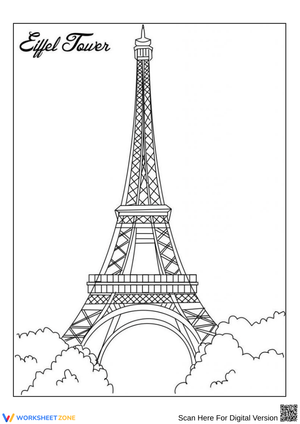
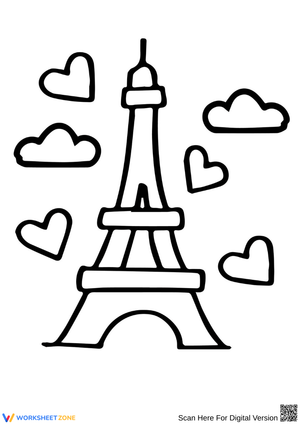
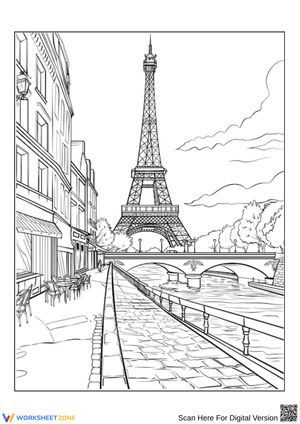
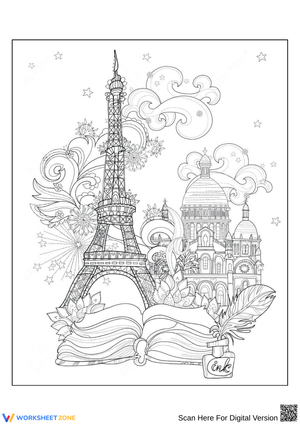
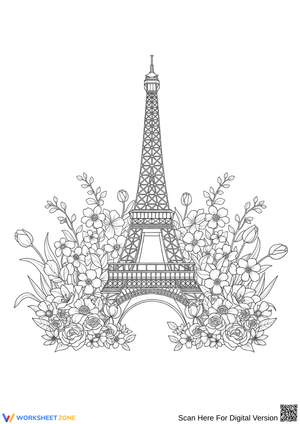
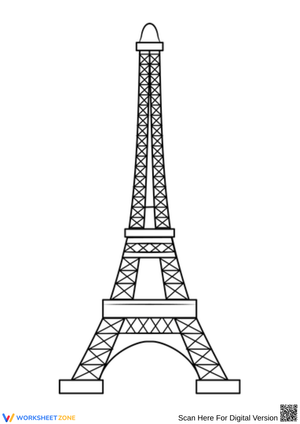
A tall tower, a Paris sky, and a few creative colors can turn a simple page into a little travel adventure. Eiffel Tower coloring pages give kids a fun way to explore one of the world’s most recognizable landmarks through art. The tower’s strong shape, crisscross lines, wide base, and city setting make it interesting to color, while still leaving plenty of room for imagination. Children can make the scene feel realistic, dreamy, romantic, festive, or completely playful.
Some Eiffel Tower designs may show the tower standing alone with clear outlines, which works well for younger children. Other pages may include clouds, stars, flowers, hearts, balloons, bridges, streets, cafés, fireworks, or Paris-inspired backgrounds. Older kids may enjoy more detailed pages with tower patterns, windows, railings, gardens, or nighttime city lights. This variety makes the theme useful for quick coloring breaks, travel-themed crafts, classroom displays, or longer creative projects.
Children can color the Eiffel Tower in classic gray, silver, brown, or black, but they can also make it more imaginative with pink, gold, blue, purple, or rainbow shades. A sunset background can use orange and lavender, while a night scene can include navy skies, yellow lights, and bright stars. Kids can also decorate the page with flowers, flags, hearts, clouds, or a short message about Paris. These creative choices help build focus, patience, fine motor control, and color recognition.
Parents can use Eiffel Tower coloring pages for quiet time, travel learning, rainy-day art, or screen-free creative fun. Teachers can add them to lessons about landmarks, world cities, architecture, France, or community buildings. To extend the activity, children can label the Eiffel Tower, draw a Paris street around it, design a postcard, or write one sentence about a pretend trip to Paris. This turns the coloring page into a simple mix of art, geography, and storytelling.
Finished pages can become travel posters, bookmarks, handmade cards, classroom displays, journal pages, or pretend postcards from France. Kids can also cut out the tower and place it in a paper city scene with clouds, trees, stars, cafés, and people. With its iconic shape and endless design possibilities, Eiffel Tower coloring pages help children enjoy creativity while imagining a colorful visit to Paris.
Frequently Asked Questions
Question 1: What designs are common in Eiffel Tower coloring pages?
Eiffel Tower coloring pages often include simple tower outlines, Paris city scenes, flowers, hearts, clouds, stars, fireworks, balloons, cafés, bridges, and travel-inspired details. Some pages are easy for younger children, while others include more detailed tower patterns and backgrounds for older kids. This variety makes them useful for travel themes, classroom art, landmark lessons, and creative storytelling.
Question 2: What colors can kids use for Eiffel Tower coloring pages?
Kids can use realistic colors like gray, silver, brown, black, and gold for the tower. They can also choose playful colors such as pink, blue, purple, or rainbow shades if they want a more imaginative design. Backgrounds can include blue skies, sunset colors, night stars, green gardens, or bright city lights. Both realistic and creative color choices work well for this theme.
Question 3: How can teachers use Eiffel Tower coloring pages in class?
Teachers can use Eiffel Tower coloring pages during geography lessons, landmark activities, art centers, France-themed units, early-finisher time, or travel writing prompts. Students can color the tower, label it, add a Paris background, or write a short postcard message. Finished pages can also be combined into a world landmarks bulletin board or a classroom travel display.
Question 4: How can kids make Eiffel Tower coloring pages more creative?
Children can make the page more creative by adding clouds, stars, flowers, balloons, flags, fireworks, hearts, cafés, trees, or people around the tower. They can also turn the page into a pretend travel postcard by writing “Greetings from Paris” or adding a short caption. These small details help make the artwork feel personal, complete, and more fun to display.












 Interactive Worksheet Maker
 Quiz Maker
 Word Search Maker
 Crossword Puzzle Maker
 Word Scramble Generator
 Sentence Scramble Generator
 Handwriting Worksheet Generator
 Name Tracing Generator
 Fill In The Blank Generator