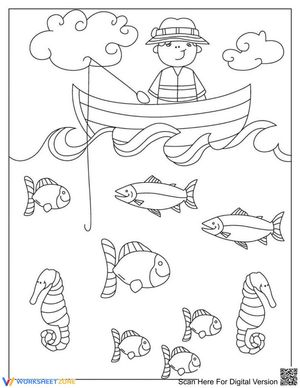
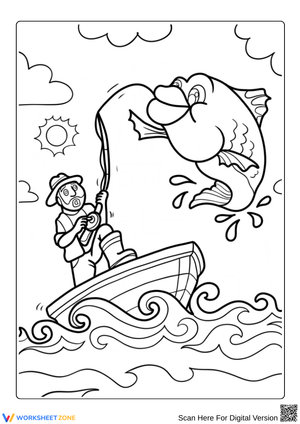
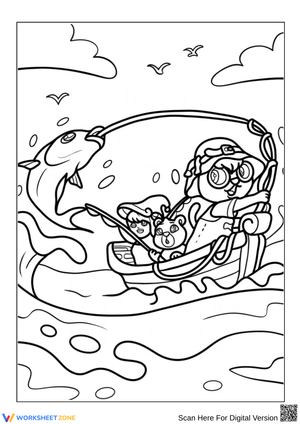
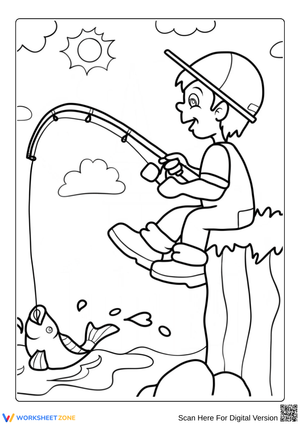
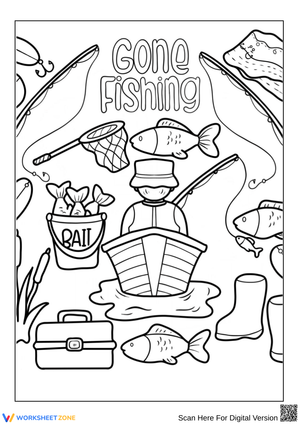
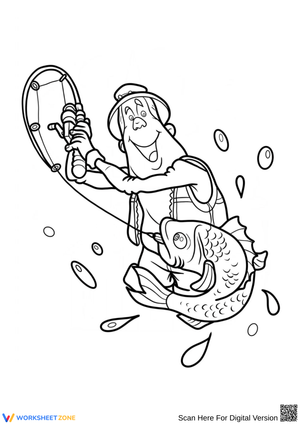
A quiet pond, a small boat, and a fish jumping out of the water can quickly turn into a scene full of color and imagination. Fishing coloring pages are a relaxing choice for children who enjoy outdoor themes, nature scenes, and simple adventure moments. Instead of focusing only on one object, these pages can show full fishing trips with lakes, rivers, docks, trees, fishing rods, buckets, boats, and cheerful catches.
There are many ways for children to enjoy this theme. Some may like coloring a peaceful lake at sunrise, while others may prefer a funny fish with big eyes or a child waiting patiently with a fishing pole. A page might show a family fishing together, a boat floating on calm water, a tackle box full of supplies, or an underwater world filled with bubbles and plants. Kids can choose natural colors for a realistic scene or use bright, playful colors to create a more imaginative fishing adventure.
Coloring fishing scenes also gives children time to notice small details. They may color fish scales, water ripples, tree leaves, clouds, rocks, reeds, or the pattern on a boat. These details help children practice focus, patience, fine motor control, and careful hand movement. The outdoor theme can also spark simple conversations about nature, water, animals, and peaceful activities. A parent or teacher might ask, “Where is this fishing spot?” or “What kind of fish do you think they caught?” to encourage storytelling.
At home, fishing coloring pages can be a fun activity after a real fishing trip, during summer break, on a rainy afternoon, or as a calm screen-free option before bedtime. In class, teachers can use them for nature-themed art time, indoor recess, early-finisher work, seasonal displays, or creative writing prompts. Children can add their own touches by drawing extra fish, naming the lake, adding a picnic basket, creating a sunset, or writing a short caption about the fishing day.
Finished pages can be used in many creative ways. A colored fishing scene can become a nature poster, a story starter, a greeting card, a scrapbook page, or part of an outdoor-themed bulletin board. Children can also cut out fish shapes, create a pretend fishing journal, or turn their artwork into a mini book about a day by the water. With a little imagination, fishing coloring pages can help kids relax, explore outdoor scenes, and create artwork that feels calm, playful, and personal.
Frequently Asked Questions
Question 1: What designs are usually included in fishing coloring pages?
Fishing coloring pages can include fish, fishing rods, lakes, rivers, boats, docks, tackle boxes, bait buckets, trees, water plants, and outdoor backgrounds. Some pages may show children fishing from a dock, families enjoying a fishing trip, fish swimming underwater, or a boat floating on a quiet lake. Others may focus on funny fish characters or detailed nature scenes. This variety gives children plenty of room to explore colors, patterns, and outdoor storytelling.
Question 2: What age groups can enjoy fishing coloring pages?
Fishing coloring pages can work for a wide range of ages because the designs can be simple or more detailed. Younger children may enjoy large fish, easy boat shapes, and simple pond scenes. Older children may prefer pages with detailed backgrounds, fishing gear, water ripples, fish scales, and full outdoor settings. Parents and teachers can choose pages based on each child’s interest, attention span, and coloring confidence.
Question 3: What skills can children practice with fishing coloring pages?
Children can practice fine motor control, hand-eye coordination, focus, patience, and color recognition while coloring fishing pages. Detailed scenes encourage them to slow down and pay attention to smaller parts of the picture, such as scales, waves, leaves, and fishing tools. These pages can also support imagination and vocabulary as children talk about fish, lakes, boats, weather, and what might happen during a fishing trip.
Question 4: How can kids make fishing coloring pages more creative?
Kids can make fishing coloring pages more creative by adding extra details around the main picture. They might draw more fish in the water, add birds in the sky, create a sunset, name the boat, design a fishing sign, or write a short story about the catch of the day. Finished pages can also become cards, posters, scrapbook art, classroom displays, or story prompts. These small additions help children turn a simple coloring page into a complete outdoor adventure scene.












 Interactive Worksheet Maker
 Quiz Maker
 Word Search Maker
 Crossword Puzzle Maker
 Word Scramble Generator
 Sentence Scramble Generator
 Handwriting Worksheet Generator
 Name Tracing Generator
 Fill In The Blank Generator