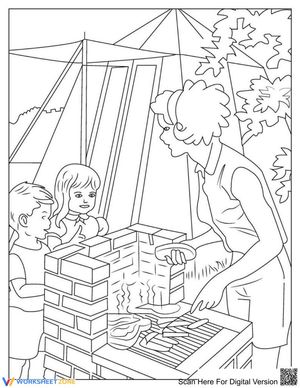
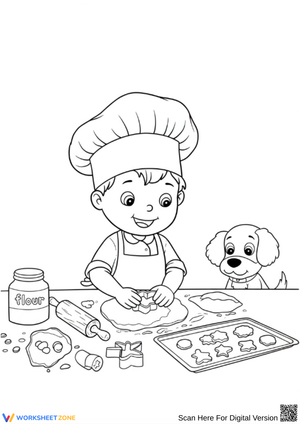
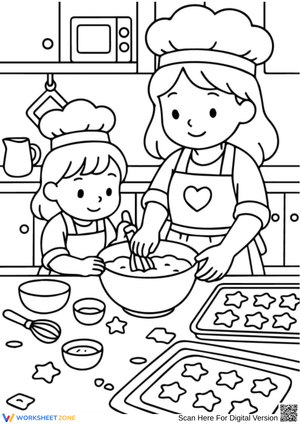
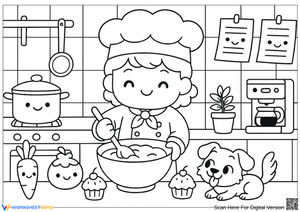
Cooking coloring pages can turn familiar kitchen moments into a fun and creative activity for children. Instead of only coloring simple objects, kids can explore chefs, mixing bowls, cupcakes, fruits, vegetables, recipe cards, aprons, and cozy cooking scenes. These pages work well for quiet art time, classroom centers, rainy-day activities, or screen-free breaks at home. They also invite children to imagine what is happening in each picture, whether someone is baking cookies, preparing soup, decorating a cake, or setting up a pretend restaurant.
Food-themed designs are especially engaging because children can easily connect them to everyday life. A child might color a chef’s hat, decorate a pizza with colorful toppings, add sprinkles to a cupcake, or choose bright shades for fresh fruits and vegetables. Some pages may show families cooking together, children helping in the kitchen, holiday treats, picnic foods, or restaurant-style scenes. These details make cooking coloring pages feel playful and open-ended, giving kids the freedom to use realistic colors or invent silly, magical food combinations.
While coloring, children practice focus, patience, fine motor control, and color recognition in a relaxed way. The cooking theme can also support simple vocabulary development as kids talk about ingredients, utensils, flavors, and meals. Parents or teachers can ask easy questions like, “What are they cooking?” or “What would you add to this recipe?” These prompts encourage conversation and storytelling without making the activity feel too formal. Children can also personalize each page by drawing steam, adding a kitchen background, writing a pretend menu, or creating their own recipe title.
Parents can use cooking coloring pages before dinner, during weekend baking, after a simple kitchen activity, or as a calm activity while meals are being prepared. Teachers can use them for food-themed art time, nutrition discussions, dramatic play centers, early-finisher work, indoor recess, or classroom displays. Finished pages can become pretend menus, recipe book covers, greeting cards, kitchen decorations, or colorful pieces for a food-themed bulletin board. With a few extra details, a simple page can become a creative project that celebrates food, imagination, and everyday moments in the kitchen.
Frequently Asked Questions
Question 1: What designs are usually included in cooking coloring pages?
Cooking coloring pages can include many kitchen and food-related designs, such as chefs, aprons, mixing bowls, cakes, cookies, fruits, vegetables, cooking utensils, ovens, recipe cards, and family cooking scenes. Some pages may focus on baking sweet treats, while others may show meals, snacks, picnic foods, or playful food characters. This variety gives children many ways to explore colors, details, and imaginative kitchen stories.
Question 2: What age groups can use cooking coloring pages?
Cooking coloring pages can be used by many age groups, depending on the design style. Younger children may enjoy large food shapes, simple kitchen tools, and easy dessert pictures. Older children may prefer more detailed baking scenes, decorated cakes, restaurant settings, or pages with space to add menus and recipe ideas. Parents and teachers can choose simpler or more detailed pages based on each child’s interest, patience, and coloring skill level.
Question 3: What skills do children practice while coloring cooking pages?
Children can practice fine motor skills, focus, patience, hand control, and color recognition while coloring cooking pages. The theme also helps build everyday vocabulary as children name foods, ingredients, kitchen tools, and actions like mixing, baking, slicing, or serving. When children describe the scene or explain what they would cook, they also practice imagination, storytelling, and creative thinking in a natural and enjoyable way.
Question 4: How can finished cooking coloring pages be used creatively?
Finished cooking coloring pages can become pretend menus, recipe book covers, classroom displays, greeting cards, kitchen-themed posters, or decorations for a food unit. Children can also add speech bubbles, write a recipe title, draw extra ingredients, or create a short story about the meal being prepared. These simple extensions make the activity more personal and help children see their coloring page as a finished creative project.












 Interactive Worksheet Maker
 Quiz Maker
 Word Search Maker
 Crossword Puzzle Maker
 Word Scramble Generator
 Sentence Scramble Generator
 Handwriting Worksheet Generator
 Name Tracing Generator
 Fill In The Blank Generator