


























Views
Downloads

Essential Kindergarten Letter Case Worksheet | RF.K.1.D
Paste this activity's link or code into your existing LMS (Google Classroom, Canvas, Teams, Schoology, Moodle, etc.).
Students can open and work on the activity right away, with no student login required.
You'll still be able to track student progress and results from your teacher account.
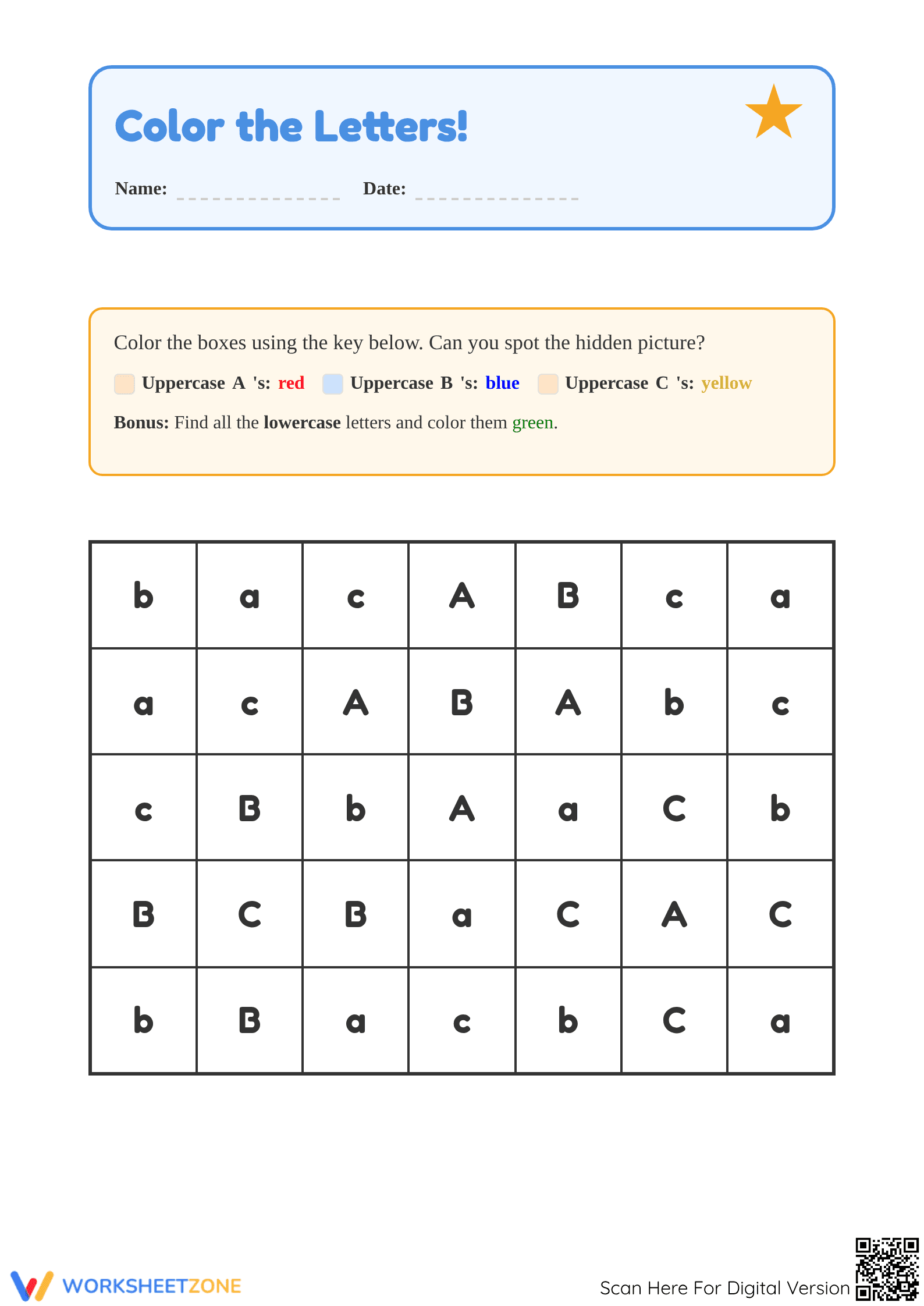
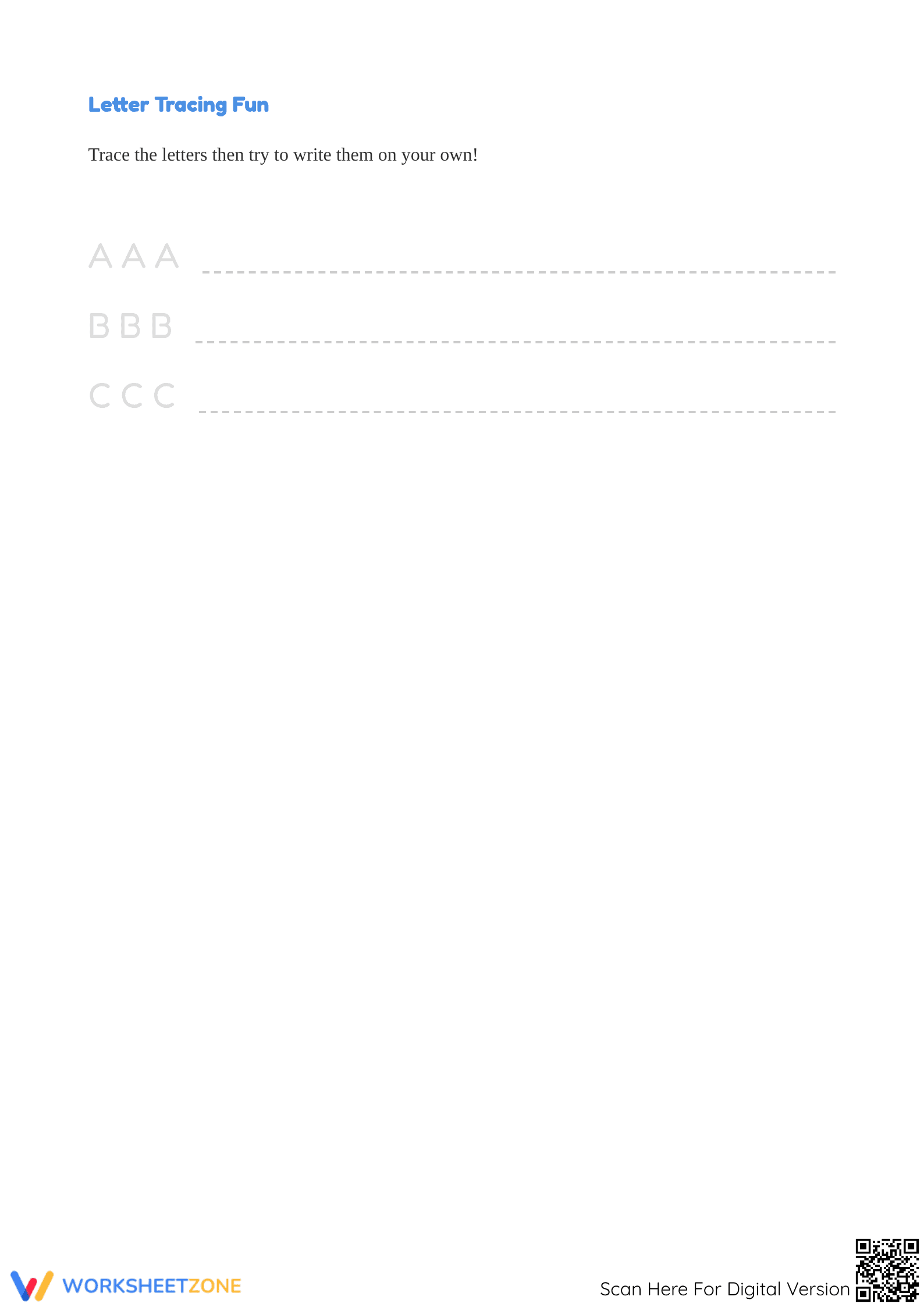
This printable Kindergarten ELA worksheet provides an engaging way for early learners to master letter recognition and formation. By combining a color-by-code activity with handwriting practice, students build the visual discrimination skills necessary to distinguish between uppercase and lowercase A, B, and C. It ensures students achieve foundational literacy milestones with zero teacher preparation.
At a Glance
- Grade: Kindergarten · Subject: English Language Arts
- Standard:
RF.K.1.D— Recognize and name all upper- and lowercase letters of the alphabet- Skill Focus: Letter Recognition and Tracing (A, B, C)
- Format: 2 pages · 47 tasks · Answer key included · PDF
- Best For: Early literacy centers and morning work
- Time: 15–20 minutes
This two-page resource features a 35-cell letter identification grid on the first page, where students use a color key to find uppercase A, B, and C. It includes a bonus task for locating lowercase letters. The second page provides structured handwriting support with nine tracing targets and three independent writing lines, ensuring a complete cycle of recognition and production. A full-color answer key is included for quick checking.
Zero-Prep Workflow
Teachers can implement this resource in three simple steps. First, print the two-page PDF (30 seconds). Second, distribute the pages along with red, blue, yellow, and green crayons to students (1 minute). Finally, review the completed hidden pictures and tracing work to assess student accuracy (1 minute). This streamlined workflow requires less than three minutes of total preparation time, making it an ideal choice for substitute plans.
Standards Alignment
The primary focus is RF.K.1.D, which requires students to recognize and name all upper- and lowercase letters of the alphabet. This worksheet specifically targets the first three letters of the alphabet, providing high-frequency exposure. Both standard codes can be copied directly into lesson plans, IEP goals, or district curriculum mapping tools.
How to Use It
Use this during small-group rotations to observe how students scan the grid for specific letter shapes. For a formative-assessment observation, watch for students who struggle to differentiate 'b' from 'B' or 'a' from 'A' in the coloring grid. Expect most students to complete the entire set within 15 to 20 minutes of quiet, focused work time.
Who It's For
This is designed for Kindergarten students beginning their phonics journey and Pre-K students ready for enrichment. It serves as a natural pairing for direct instruction lessons or alphabet anchor charts that introduce letter names and their corresponding visual symbols.
Foundational literacy depends heavily on a student's ability to rapidly identify letter forms across varying cases. This Grade K worksheet directly supports RF.K.1.D by providing 47 distinct opportunities for students to recognize and name upper- and lowercase letters through a combination of visual sorting and tactile handwriting. Research from the RAND AIRS 2024 report emphasizes that multisensory activities—such as coloring and tracing—strengthen neural pathways associated with orthographic mapping in early childhood. By engaging both the visual system for letter identification and the motor system for tracing, students develop more robust mental representations of the alphabet. This dual-page approach ensures that recognition leads directly into production, a critical transition in early literacy development. The structured nature of the color-by-code grid also fosters attention to detail, which is essential for preventing common letter reversals. Educators can reliably use this tool to verify mastery before moving to phoneme-grapheme correspondence.


