


























Views
Downloads

Cold and Warm Weather Sorting Worksheet | Essential Grade K
Paste this activity's link or code into your existing LMS (Google Classroom, Canvas, Teams, Schoology, Moodle, etc.).
Students can open and work on the activity right away, with no student login required.
You'll still be able to track student progress and results from your teacher account.
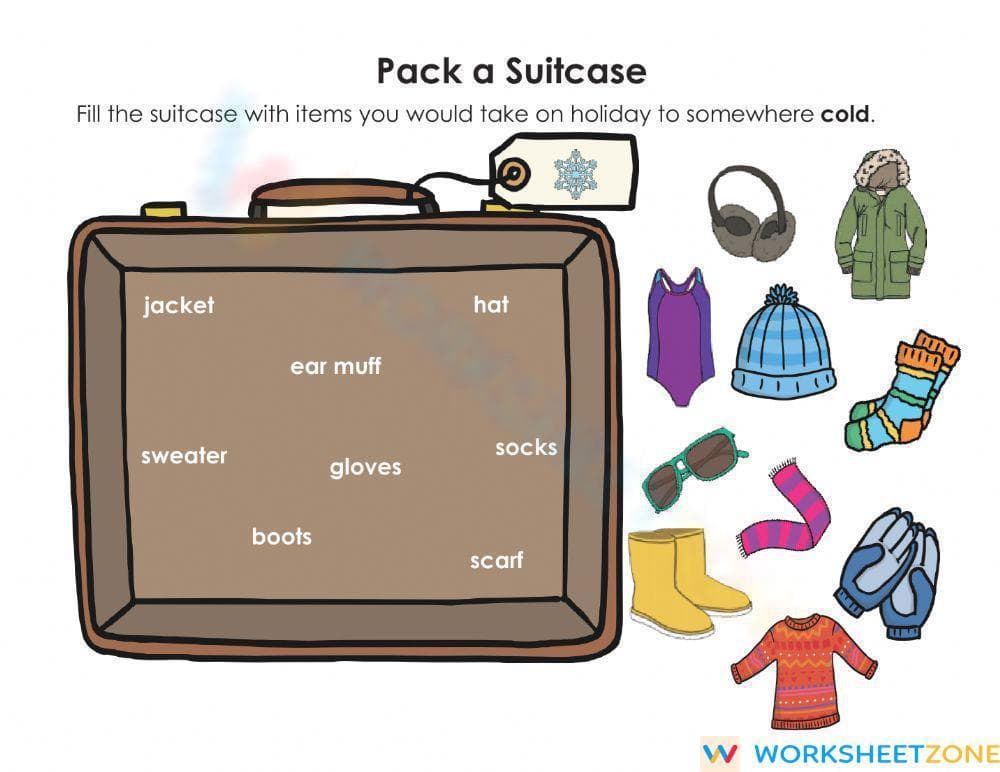
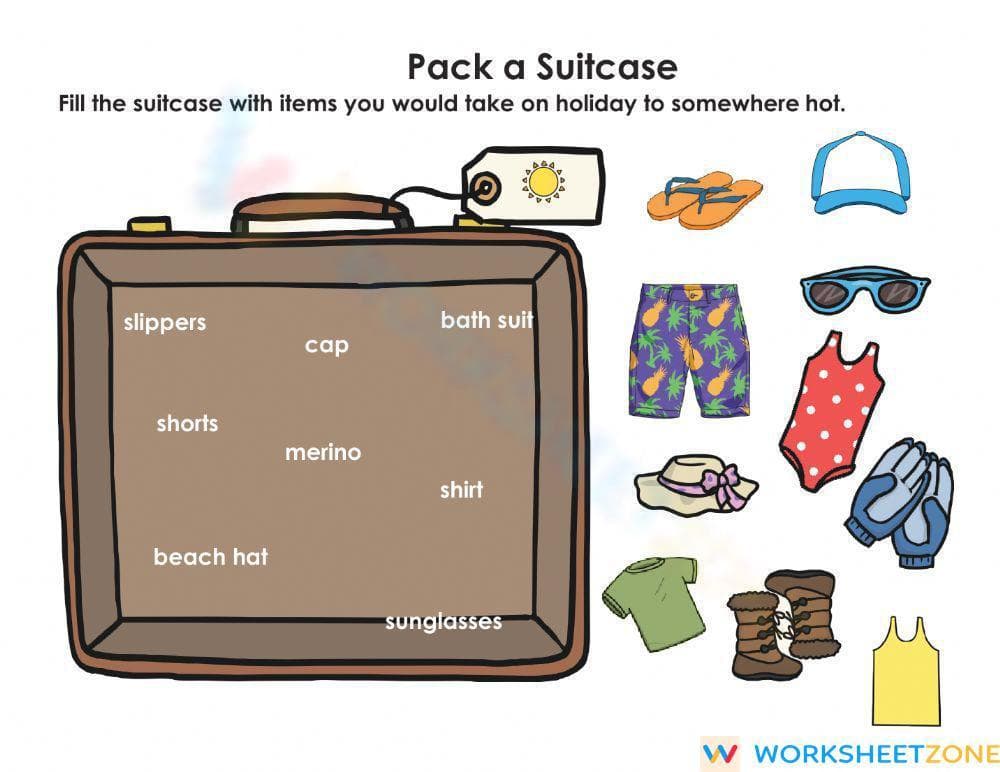
This Cold and Warm Weather sorting worksheet helps young learners identify and categorize seasonal clothing and accessories. By packing a suitcase for different climates, students strengthen their vocabulary and conceptual understanding of weather patterns. This engaging activity transforms abstract weather concepts into concrete sorting tasks that build foundational literacy and science skills.
At a Glance
- Grade: Kindergarten · Subject: ELA / Science
- Standard:
CCSS.ELA-LITERACY.L.K.5.A— Sort common objects into categories like hot and cold weather items- Skill Focus: Categorization and Vocabulary
- Format: 2 pages · 16 items · Answer key included · PDF
- Best For: Independent center or weather unit introduction
- Time: 10–15 minutes
This two-page PDF features two distinct "Pack a Suitcase" scenarios designed for early childhood learners. The first page focuses on holiday items for cold weather, including labels for jackets, hats, and scarves. The second page shifts to hot weather essentials like sunglasses and bath suits. The worksheet uses a mix of visual cues and text labels to support emerging readers as they match approximately 16 different items to the correct environment.
This resource is designed for immediate classroom application with a zero-prep workflow. First, print the two pages in either color or grayscale (1 minute). Second, distribute the sheets to students during your literacy block or science station (30 seconds). Finally, review the sorted suitcases together as a whole group to check for understanding and discuss why specific items belong in each category (5 minutes). This streamlined process is also ideal for emergency sub plans.
The primary alignment for this activity is `CCSS.ELA-LITERACY.L.K.5.A`, which requires students to sort common objects into categories to gain a sense of the concepts those categories represent. By distinguishing between warm-weather gear and cold-weather accessories, students apply categorical logic to real-world objects. Both standard codes can be copied directly into lesson plans, IEP goals, or district curriculum mapping tools to ensure compliance with state and national frameworks.
Use this worksheet as a formative assessment after a lesson on seasons or weather changes. Observe students as they work to see if they can identify the difference between protective winter gear and summer accessories. It also works well as a "hook" activity before reading a story about travel or changing seasons. The expected completion time for most students is roughly 12 minutes, making it a perfect fit for a small-group rotation.
This activity is perfect for Preschool, Kindergarten, and Grade 1 students. It provides excellent support for English Language Learners (ELL) who are building basic vocabulary related to clothing and weather. Pair this with a weather-themed anchor chart or a "Dress for the Weather" classroom weather station for a comprehensive learning experience that connects classroom concepts to the real-world environment outside.
The ability to categorize objects is a critical milestone in early cognitive development and linguistic precision. According to a ScienceDirect TpT Analysis, sorting activities bridge the gap between concrete observation and abstract conceptualization. By engaging with `CCSS.ELA-LITERACY.L.K.5.A`, students develop the schema necessary for complex reading comprehension. Research from Fisher & Frey (2014) emphasizes that categorical sorting promotes word consciousness and helps young learners organize their mental lexicons. This worksheet provides 16 specific opportunities for students to practice these essential skills in a structured environment. By mastering the distinction between warm and cold weather items, Kindergarten students build the foundation for Grade 1 standards involving nuanced classifications. This resource ensures that students move beyond simple naming to the higher-order task of grouping based on environmental attributes.


