


























Views
Downloads

Printable Name Practice Worksheet | Grade 1
Paste this activity's link or code into your existing LMS (Google Classroom, Canvas, Teams, Schoology, Moodle, etc.).
Students can open and work on the activity right away, with no student login required.
You'll still be able to track student progress and results from your teacher account.
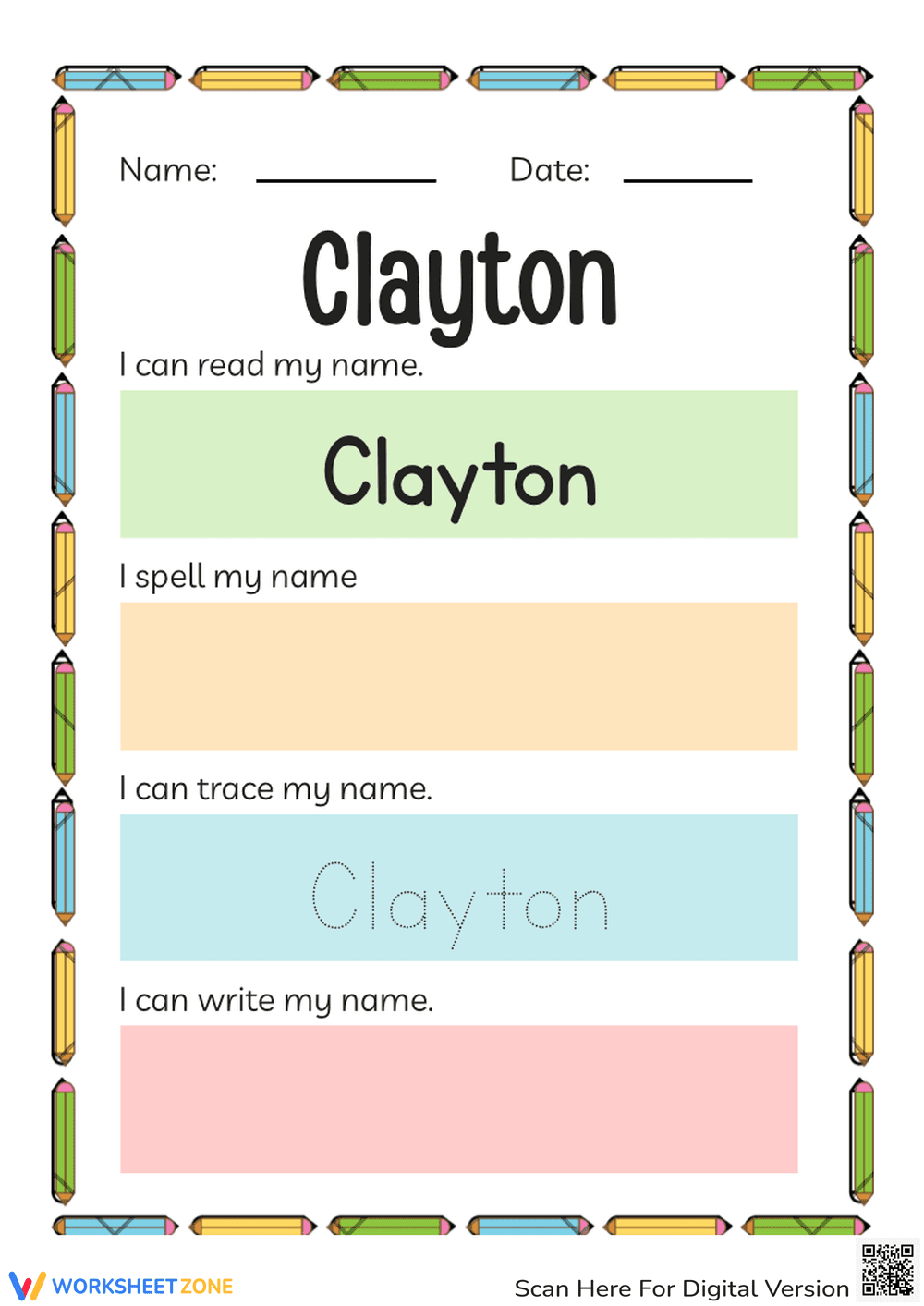
This Grade 1 name practice worksheet helps students master reading, spelling, and writing their own names. By moving through four distinct activities, early learners build essential handwriting and letter recognition skills. The structured format provides a clear path from guided tracing to independent writing.
At a Glance
- Grade: 1 · Subject: ELA
- Standard:
CCSS.ELA-LITERACY.L.1.1.A— Print all upper- and lowercase letters- Skill Focus: Name Recognition and Handwriting
- Format: 1 page · 4 tasks · No answer key required · PDF
- Best For: Morning work and back to school
- Time: 10–15 minutes
What's Inside
This single-page printable features four targeted sections designed to reinforce name familiarity. Students begin by reading their printed name, followed by a space to practice spelling it out. The third section provides a dotted, traceable version of the name to guide proper letter formation. Finally, a blank writing block allows students to independently write their name using the skills they just practiced. The clean layout features a fun pencil border to keep young learners engaged.
Zero-Prep Workflow
This resource is designed for immediate classroom implementation with a simple three-step workflow. First, print the customized worksheet (under 1 minute). Second, distribute to students during morning arrival or literacy centers (1 minute). Third, review their independent writing block to check for proper letter formation and spacing (2 minutes). Total teacher prep time is under two minutes, making this an excellent, self-explanatory activity for the first weeks of school or as a reliable addition to a substitute teacher plan.
Standards Alignment
This activity aligns directly with CCSS.ELA-LITERACY.L.1.1.A, requiring students to print all upper- and lowercase letters accurately. By practicing their specific name, students apply this standard to the most meaningful vocabulary word they know. Both standard codes can be copied directly into lesson plans, IEP goals, or district curriculum mapping tools.
How to Use It
Deploy this worksheet as a daily morning work routine during the first month of school to establish strong handwriting habits. It also functions perfectly as a targeted literacy center activity where students can use letter tiles in the spelling box before writing. While observing students complete the tracing section, teachers can quickly assess pencil grip and stroke direction for early intervention. Expect students to complete the four tasks in approximately 10 to 15 minutes.
Who It's For
This resource is primarily designed for Grade 1 students refining their foundational writing skills, though it serves as excellent practice for kindergarteners or older students requiring occupational therapy support. Teachers can differentiate by providing tactile materials like playdough or stickers for the spelling section for students needing sensory input. It pairs naturally with back-to-school anchor charts about classroom rules and personal identity.
Developing automaticity in name writing is a critical early literacy milestone that bridges letter recognition and independent composition. This worksheet targets CCSS.ELA-LITERACY.L.1.1.A, ensuring students can print all upper- and lowercase letters with confidence. According to Fisher & Frey (2014), providing structured, gradual release practice—moving from visual recognition to tracing, and finally to independent production—significantly improves student retention of motor patterns. By isolating the student's own name, the task maximizes engagement and personal relevance, which accelerates the acquisition of fine motor control. This targeted repetition reduces cognitive load, allowing young learners to focus entirely on proper stroke sequence and spatial awareness on the page. Consistent practice with this specific sequence builds the foundational stamina required for more complex writing tasks later in the academic year.


