




























Views
Downloads

Grade 3 Living Things & Math — Printable Ready Worksheet

Paste this activity's link or code into your existing LMS (Google Classroom, Canvas, Teams, Schoology, Moodle, etc.).
Students can open and work on the activity right away, with no student login required.
You'll still be able to track student progress and results from your teacher account.
This Grade 3 worksheet helps students identify characteristics of living things through song analysis and animal classification while reinforcing 4-digit number sense. Students observe patterns in nature and apply mathematical ordering skills. By the end, learners demonstrate mastery in biological traits and place value concepts.
At a Glance
- Grade: 3 · Subject: Science & Math
- Standard:
3-LS1-1— Develop models to describe that organisms have unique and diverse life cycles- Skill Focus: Biological traits and 4-digit number ordering
- Format: 3 pages · 16 problems · Answer key included · PDF
- Best For: Integrated science and math morning work
- Time: 25–35 minutes
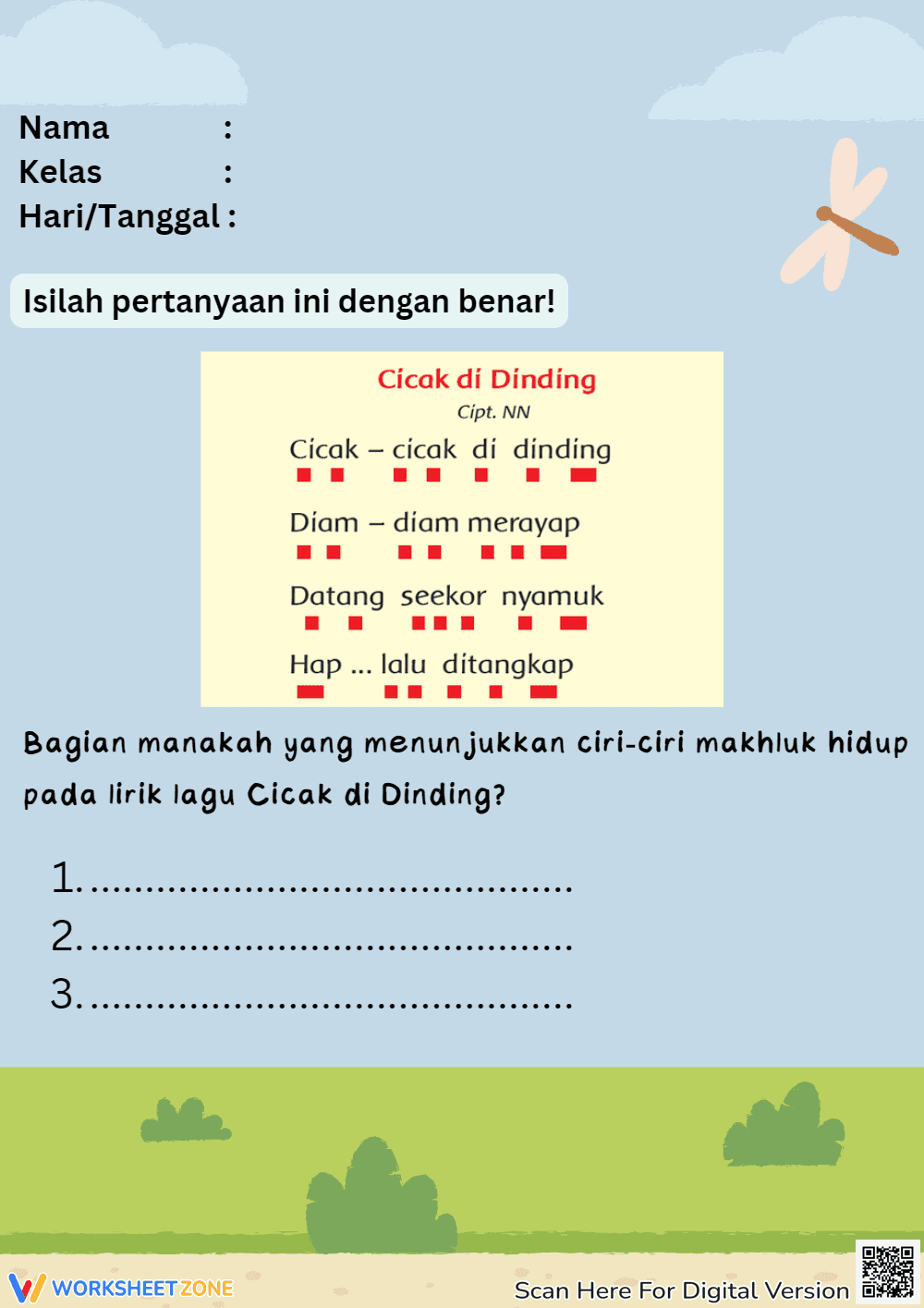
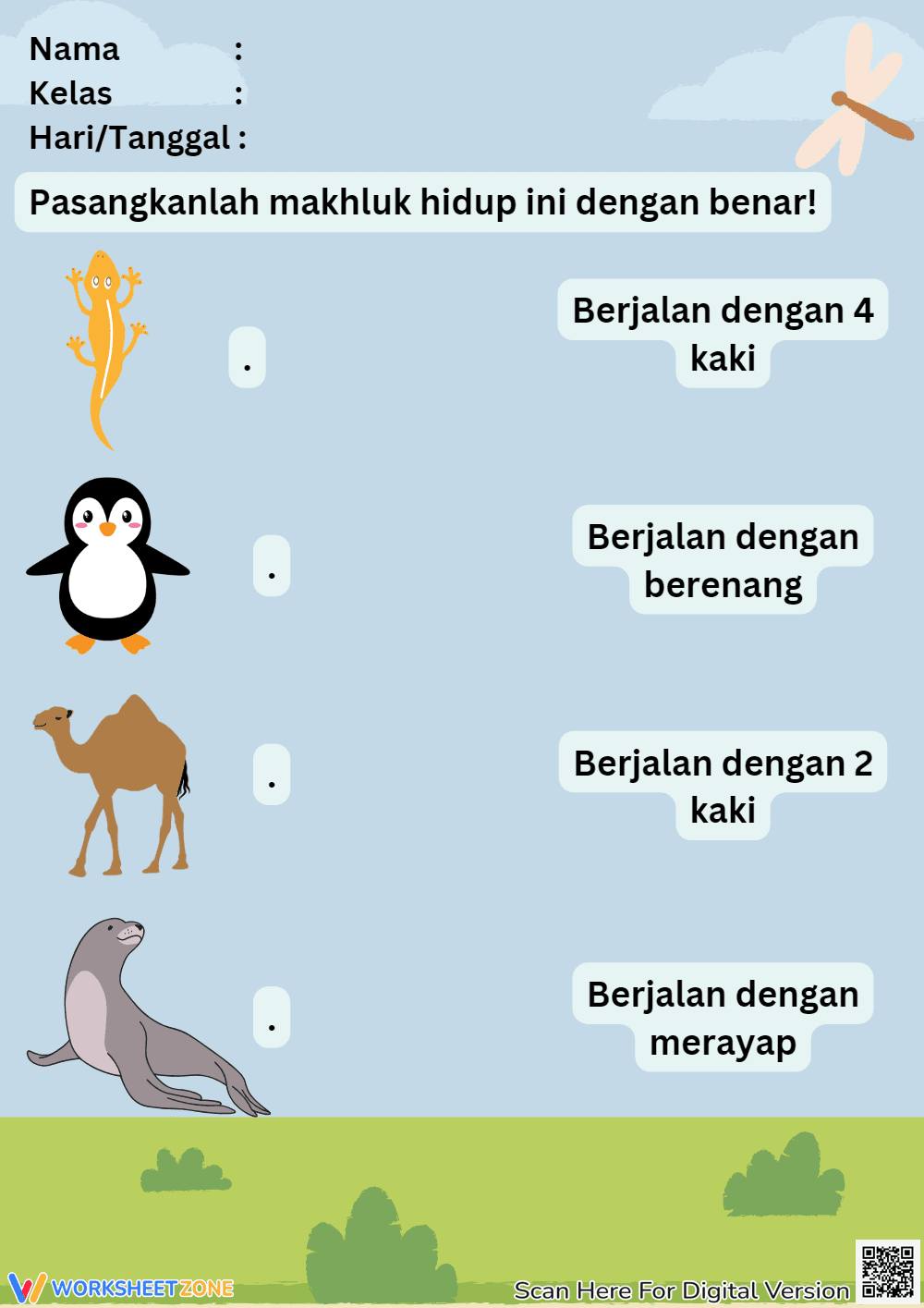
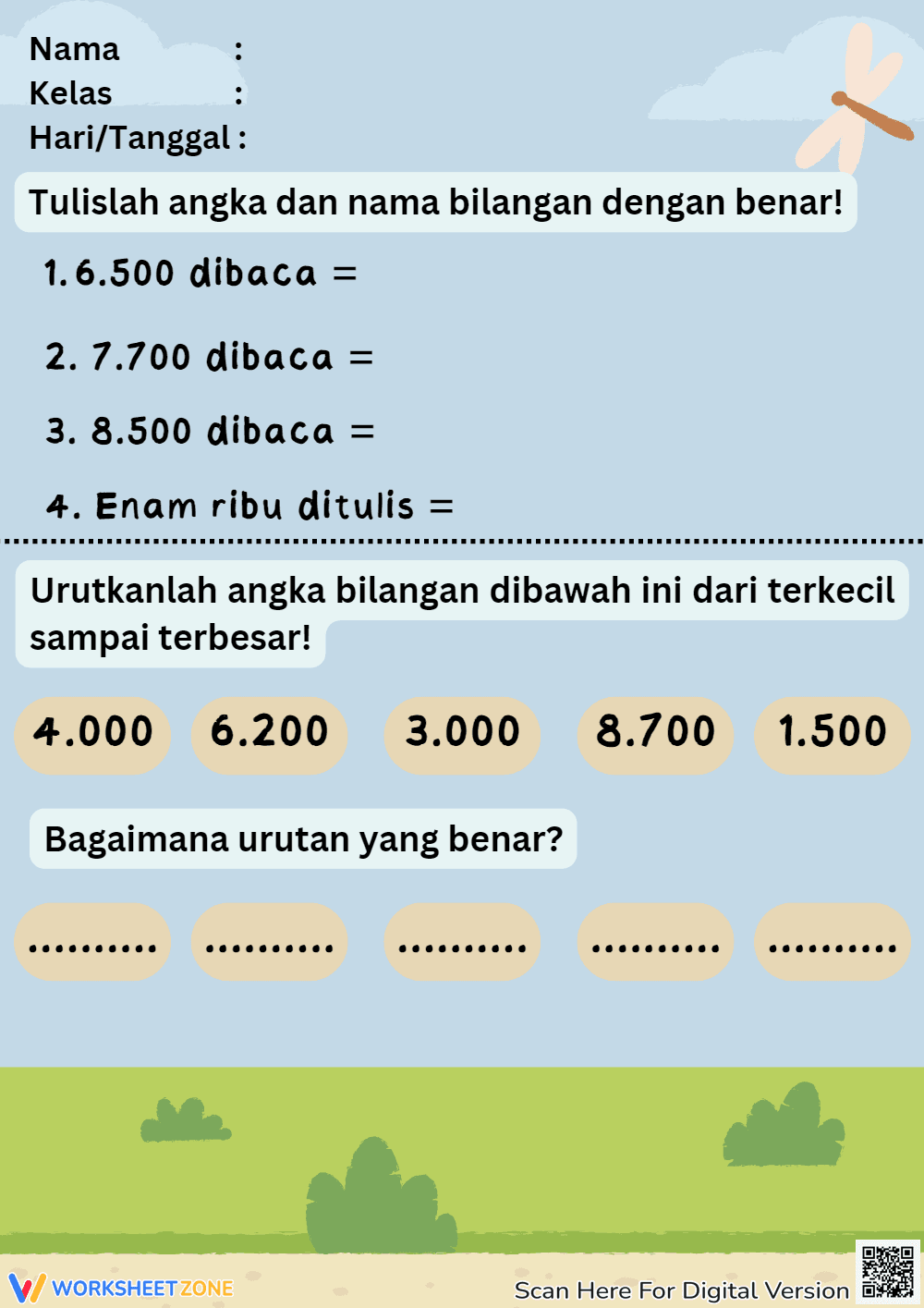
This 3-page packet features a multi-disciplinary approach. Page one uses song lyrics to identify traits of living organisms. Page two provides a visual matching task connecting animals to their locomotion. The final page requires students to write number names and sequence values from least to greatest.
The zero-prep design allows for immediate implementation. Print the PDF (30 seconds), distribute to students (1 minute), and use the answer key for review (5 minutes). This resource is suited for sub plans or stations because instructions are self-explanatory and require no teacher setup.
The primary focus is `3-LS1-1`, targeting the identification of traits that define living things. The math section aligns with `CCSS.MATH.CONTENT.3.NBT.A.2`, focusing on place value and number fluency. Both standard codes can be copied directly into lesson plans or curriculum mapping tools.
Assign this packet to reinforce the connection between scientific observation and math. For formative assessment, observe students during the matching task; struggling with locomotion terms indicates a need for review. The 30-minute completion time makes it ideal for independent work following direct instruction.
This resource is for third-grade students developing understanding of the natural world and multi-digit numbers. It is effective for visual learners and pairs naturally with an anchor chart about the five senses or a lesson on place value.
The integration of literacy, science, and mathematics within a single instructional tool aligns with the cross-curricular frameworks advocated by Fisher & Frey (2014). Their research emphasizes that students retain complex scientific concepts, such as the characteristics of living things defined in standard 3-LS1-1, more effectively when those concepts are reinforced through varied modalities like song analysis and numerical sequencing. By requiring students to translate between visual animal traits and abstract number names, this worksheet builds the cognitive flexibility necessary for higher-order thinking. Furthermore, the structured layout supports the gradual release of responsibility, moving from guided identification to independent mathematical ordering. According to the Fisher & Frey model, this type of scaffolded, multi-subject practice is essential for ensuring that Grade 3 learners meet rigorous state standards while developing a cohesive understanding of how different academic disciplines overlap in real-world applications.


