


























Views
Downloads

Christmas Multiplication Worksheet | Printable Grade 3-4
Paste this activity's link or code into your existing LMS (Google Classroom, Canvas, Teams, Schoology, Moodle, etc.).
Students can open and work on the activity right away, with no student login required.
You'll still be able to track student progress and results from your teacher account.
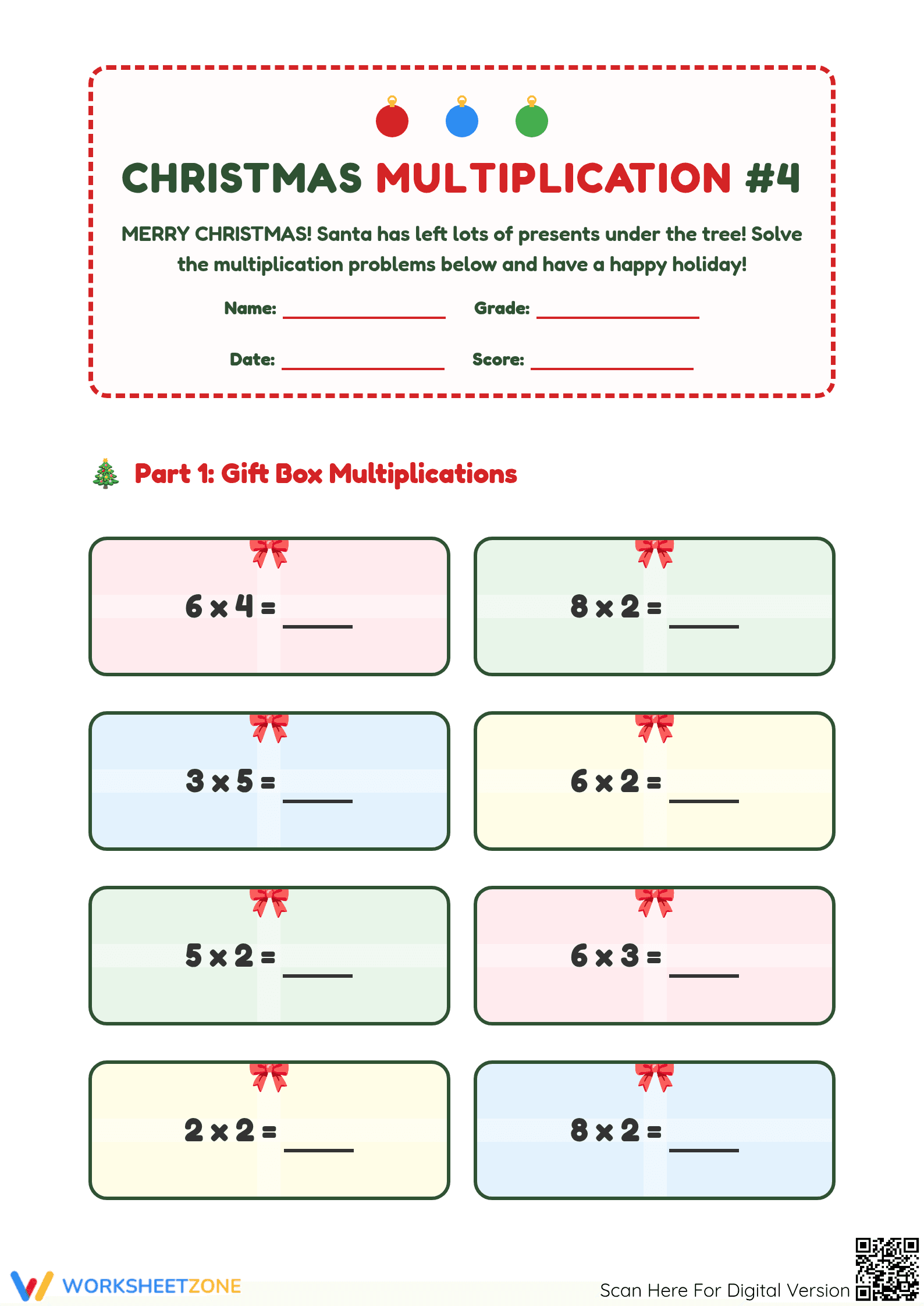
Build multiplication fluency while celebrating the holiday season. This three-page Christmas-themed worksheet provides students with a variety of single-digit multiplication exercises, including traditional equations, word problems, and matching activities. It transforms routine math practice into a festive experience that keeps learners engaged during the busy winter months.
At a Glance
- Grade: 3–4 · Subject: Multiplication
- Standard:
3.OA.C.7— Fluently multiply and divide within 100 using strategies like relationship between multiplication and division- Skill Focus: Single-digit multiplication fluency
- Format: 3 pages · 19 problems · Answer key included · PDF
- Best For: Holiday math centers and festive independent practice
- Time: 20–30 minutes
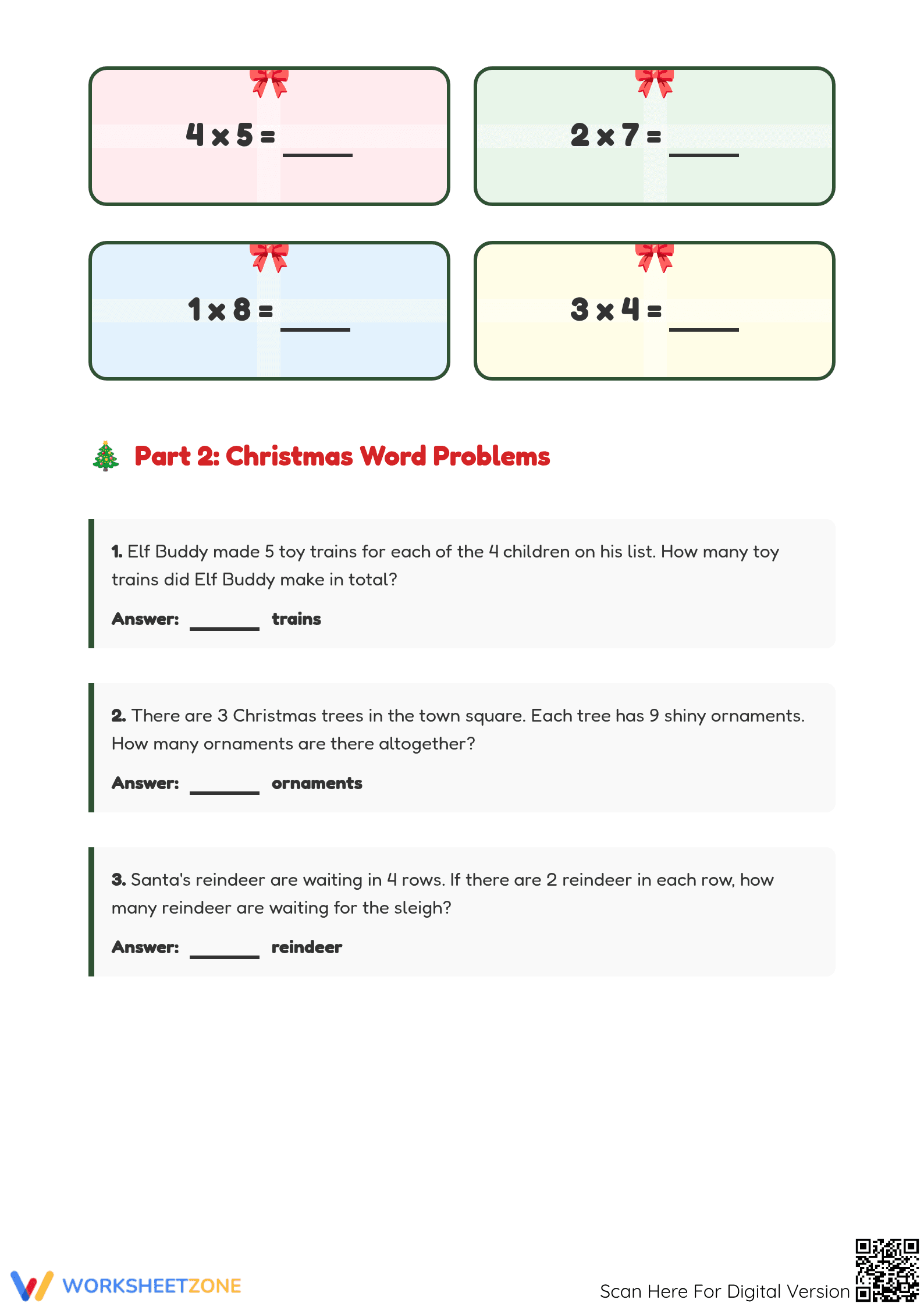
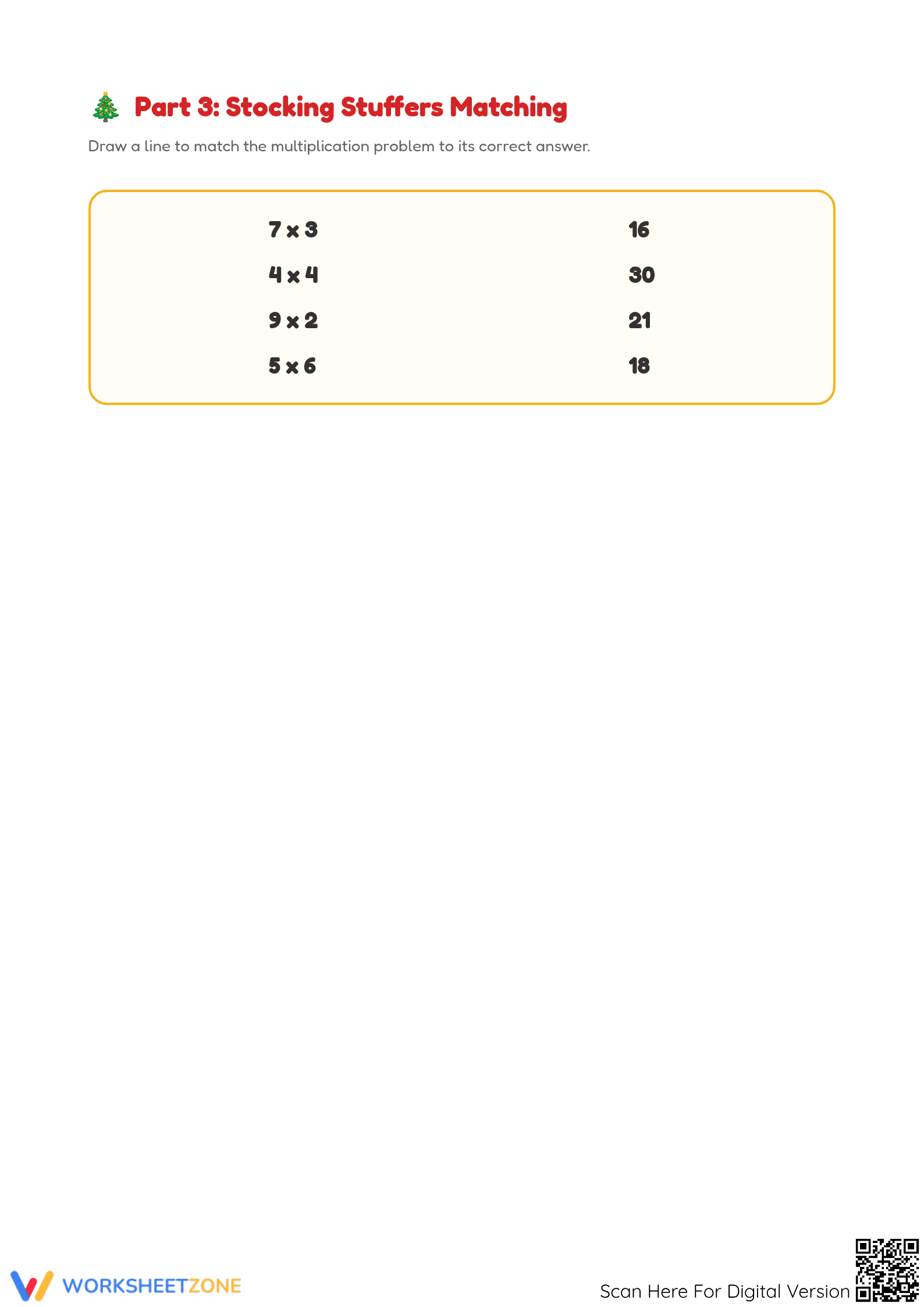
The resource contains three distinct parts across three pages. Part 1 features twelve gift-themed multiplication equations. Part 2 introduces three holiday word problems requiring students to apply math to festive scenarios involving elves, ornaments, and reindeer. Part 3 concludes with a matching activity for four additional problems. A complete answer key is provided for rapid grading.
Zero-Prep Workflow
This worksheet is designed for immediate classroom implementation with zero teacher preparation required. First, print the three pages (30 seconds). Next, distribute the packets to your students for independent or small-group work (1 minute). Finally, use the included answer key for quick student self-correction or teacher-led review (under 1 minute). Total preparation time is less than two minutes. It is an ideal resource for emergency sub plans during the holiday season.
Standards Alignment
Aligned primarily to 3.OA.C.7: "Fluently multiply and divide within 100, using strategies such as the relationship between multiplication and division or properties of operations." It also supports Grade 4 reinforcement for students mastering basic operations. Both standard codes can be copied directly into lesson plans, IEP goals, or district curriculum mapping tools.
How to Use It
Use this worksheet as a festive warm-up after direct instruction on multiplication properties to reinforce concept retention. Alternatively, assign it as a holiday-themed assessment to gauge fluency before the winter break. Observe how students translate verbal scenarios in the word problems into equations to identify those needing additional support with reading comprehension in math. The matching section provides a low-stakes check for automaticity.
Who It's For
This packet is ideal for third-grade students working on initial mastery and fourth-graders requiring fluency maintenance. It serves as an excellent resource for Title I interventions or as a standalone activity for early finishers. Pair it with a holiday-themed number line or multiplication chart for students who require additional visual scaffolding to ensure all learners can participate in the holiday math cheer.
The 3.OA.C.7 standard emphasizes that fluency is not just about speed, but the ability to apply strategies accurately and flexibly. Research from Fisher & Frey (2014) highlights that thematic engagement—such as using seasonal motifs—can lower the "affective filter," allowing students to approach complex operations with increased confidence and reduced anxiety. By combining abstract equations with contextualized word problems, this worksheet supports the transition from procedural knowledge to conceptual application. Providing 19 structured tasks ensures sufficient repetitions for neural encoding without overwhelming the learner. This balanced approach to single-digit multiplication is essential for building the mathematical foundation required for multi-digit operations and division. The inclusion of a matching component further encourages pattern recognition, a key indicator of developing math maturity. These elements combine to create a rigorous yet accessible review tool.


