


























Views
Downloads
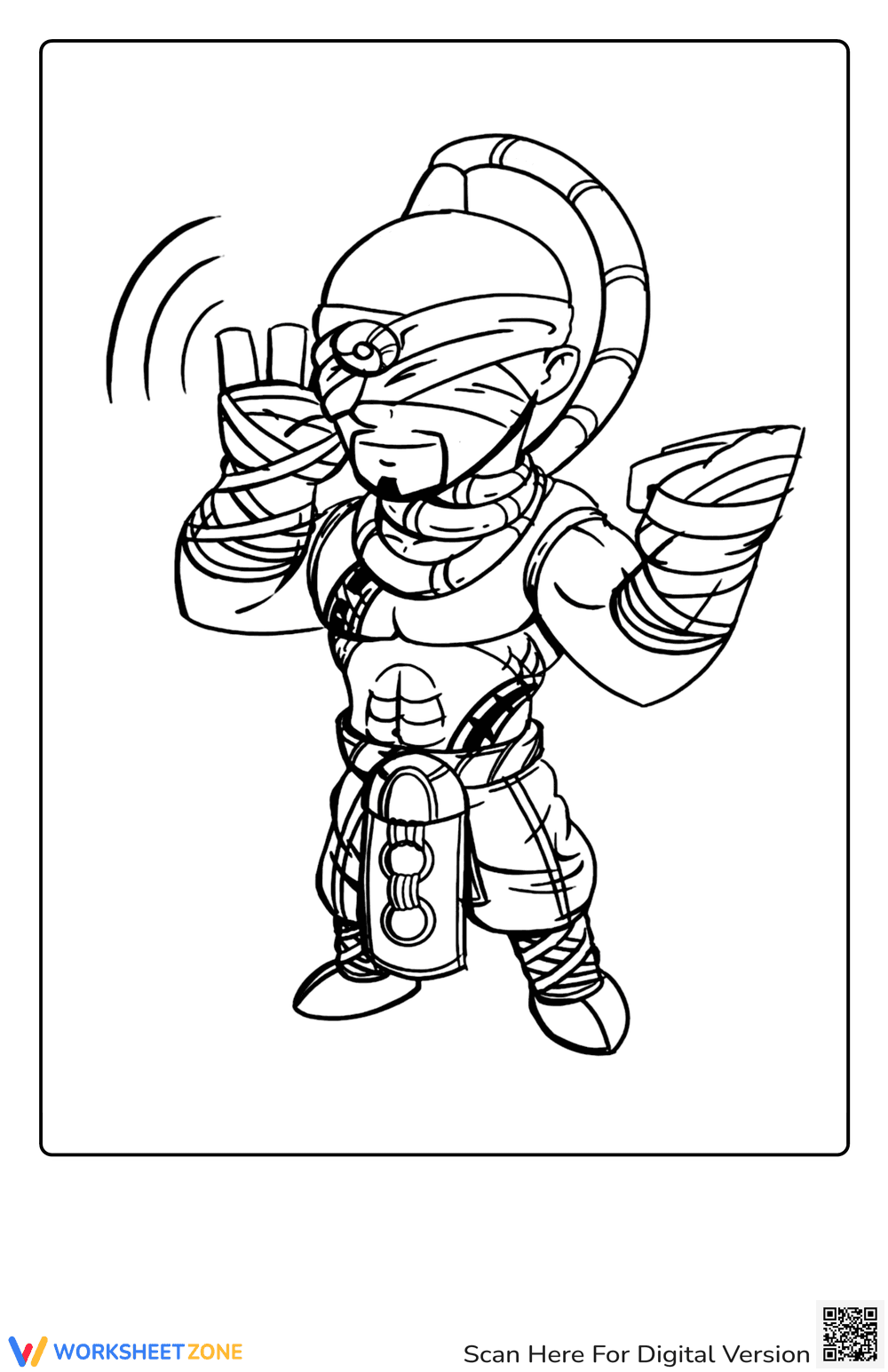

Chibi Lee Sin Coloring Page | Essential Grade 1-5 Art
Paste this activity's link or code into your existing LMS (Google Classroom, Canvas, Teams, Schoology, Moodle, etc.).
Students can open and work on the activity right away, with no student login required.
You'll still be able to track student progress and results from your teacher account.
This Chibi Lee Sin coloring worksheet provides elementary students with a high-interest creative outlet to develop fine motor control and artistic expression. By focusing on a popular character, the activity encourages engagement and attention to detail, allowing students to explore color theory and spatial awareness in a familiar context.
At a Glance
- Grade: 1-5 · Subject: English / Art
- Standard:
CCSS.ELA-LITERACY.SL.3.5— Add visual displays to emphasize or enhance facts or details- Skill Focus: Fine motor control
- Format: 1 page · 1 task · No answer key · PDF
- Best For: Early finishers and creative brain breaks
- Time: 15–20 minutes
Inside this resource, you will find a single-page, high-resolution line art illustration of the character Lee Sin in a "chibi" style. The bold outlines are specifically designed to support younger learners in practicing staying within the lines, while the intricate details of the character's wraps and armor provide a challenge for older students in grades 4 and 5.
The zero-prep workflow for this worksheet is designed for maximum efficiency. First, print the single PDF page in approximately 30 seconds. Second, distribute the sheets along with crayons, markers, or colored pencils in under 1 minute. Third, allow students to work independently while you transition between lessons or manage small groups. This makes it an ideal resource for emergency sub plans or unexpected schedule gaps.
This worksheet aligns with CCSS.ELA-LITERACY.SL.3.5, which encourages students to create visual displays to enhance their communication. While primarily an artistic task, it serves as a foundational exercise in visual literacy and the ability to represent character traits through color choice. This standard code can be copied directly into lesson plans, IEP goals, or district curriculum mapping tools.
Use this worksheet as a reward for completing a writing assignment or as a calming activity during morning work. It is particularly effective during a unit on character traits; ask students to choose colors that represent the character's personality. Expect students to spend 15 to 20 minutes on the task. Observe their grip and pressure for a quick formative assessment of motor development.
This resource is for elementary students in grades 1 through 5 who enjoy gaming and pop culture. It is naturally differentiated by the complexity of the student's coloring technique. Pair this with a short creative writing prompt where students describe Lee Sin's special abilities or origin story to integrate more literacy into the art session.
Research from Fisher & Frey (2014) emphasizes the importance of visual representation in the gradual release of responsibility model, noting that non-linguistic tasks can bridge the gap for students developing language proficiency. This worksheet, aligned to CCSS.ELA-LITERACY.SL.3.5, targets fine motor precision and visual-spatial reasoning. According to the RAND AIRS 2024 report, integrating high-interest media characters into classroom activities can increase student engagement by up to 40% in diverse learner populations. By providing a structured yet creative task, educators support the development of executive function through sustained attention. This 1-page printable is a practical tool for teachers seeking to balance academic rigor with necessary cognitive breaks. The inclusion of the standard code ensures that even creative activities remain grounded in measurable educational frameworks, facilitating easier documentation for progress monitoring and curriculum alignment across the primary grade levels.


