


























Views
Downloads

Essential Character Traits Worksheet Pack | Grades 3-6
Paste this activity's link or code into your existing LMS (Google Classroom, Canvas, Teams, Schoology, Moodle, etc.).
Students can open and work on the activity right away, with no student login required.
You'll still be able to track student progress and results from your teacher account.
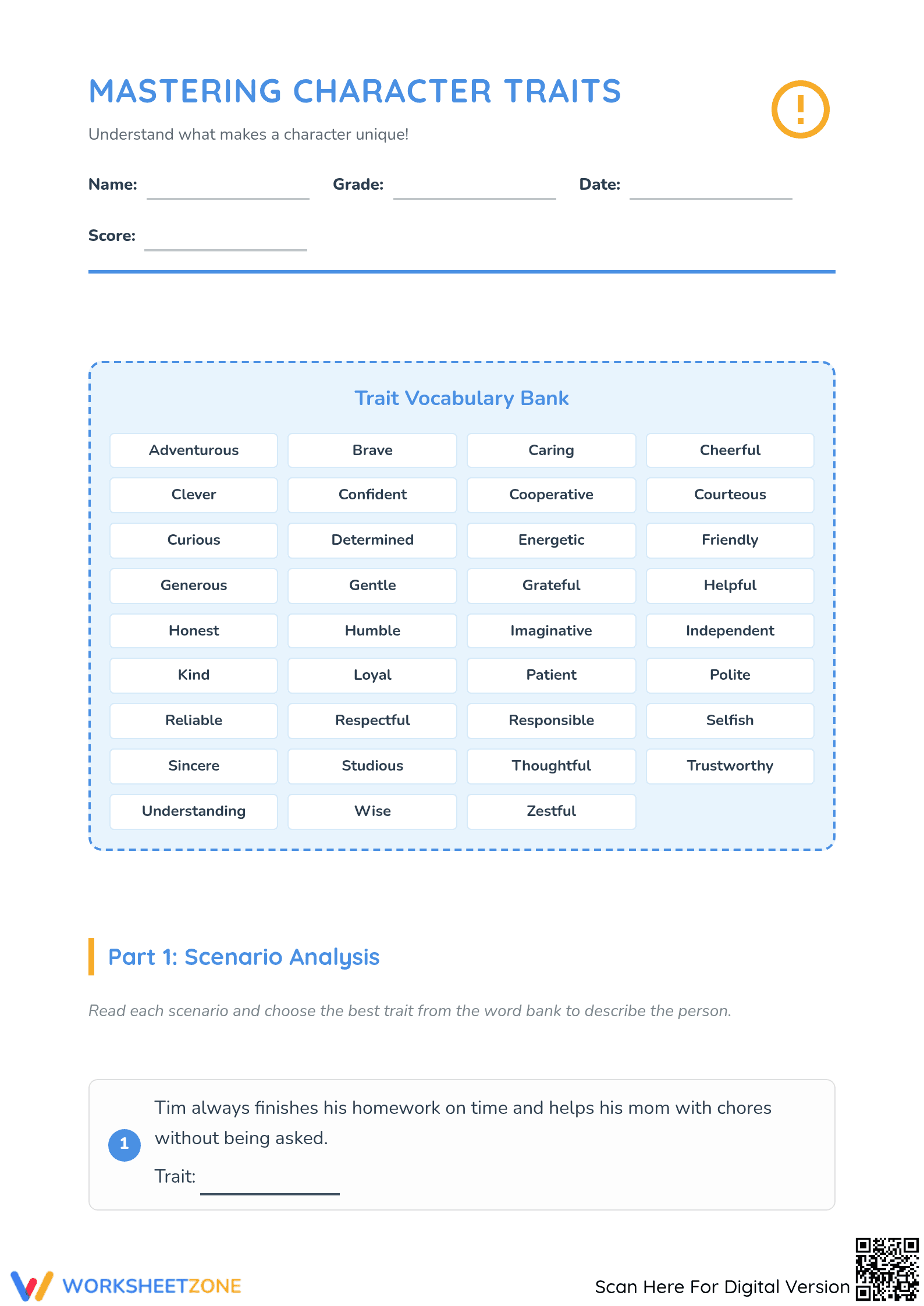
Students master the nuances of personality through this comprehensive "Mastering Character Traits" packet. By analyzing scenarios, predicting behaviors, and matching antonyms, learners move beyond basic adjectives to sophisticated literary analysis. This resource ensures students can cite specific textual evidence to support character descriptions, building a vital foundation for complex reading comprehension.
At a Glance
- Grade: 3-6 · Subject: ELA
- Standard:
CCSS.ELA-LITERACY.RL.4.3— Describe a character in depth drawing on specific details in the text- Skill Focus: Character Trait Vocabulary and Text-Based Inference
- Format: 4 pages · 19 problems · Answer key included · PDF
- Best For: Independent practice or literacy center rotations
- Time: 30–45 minutes
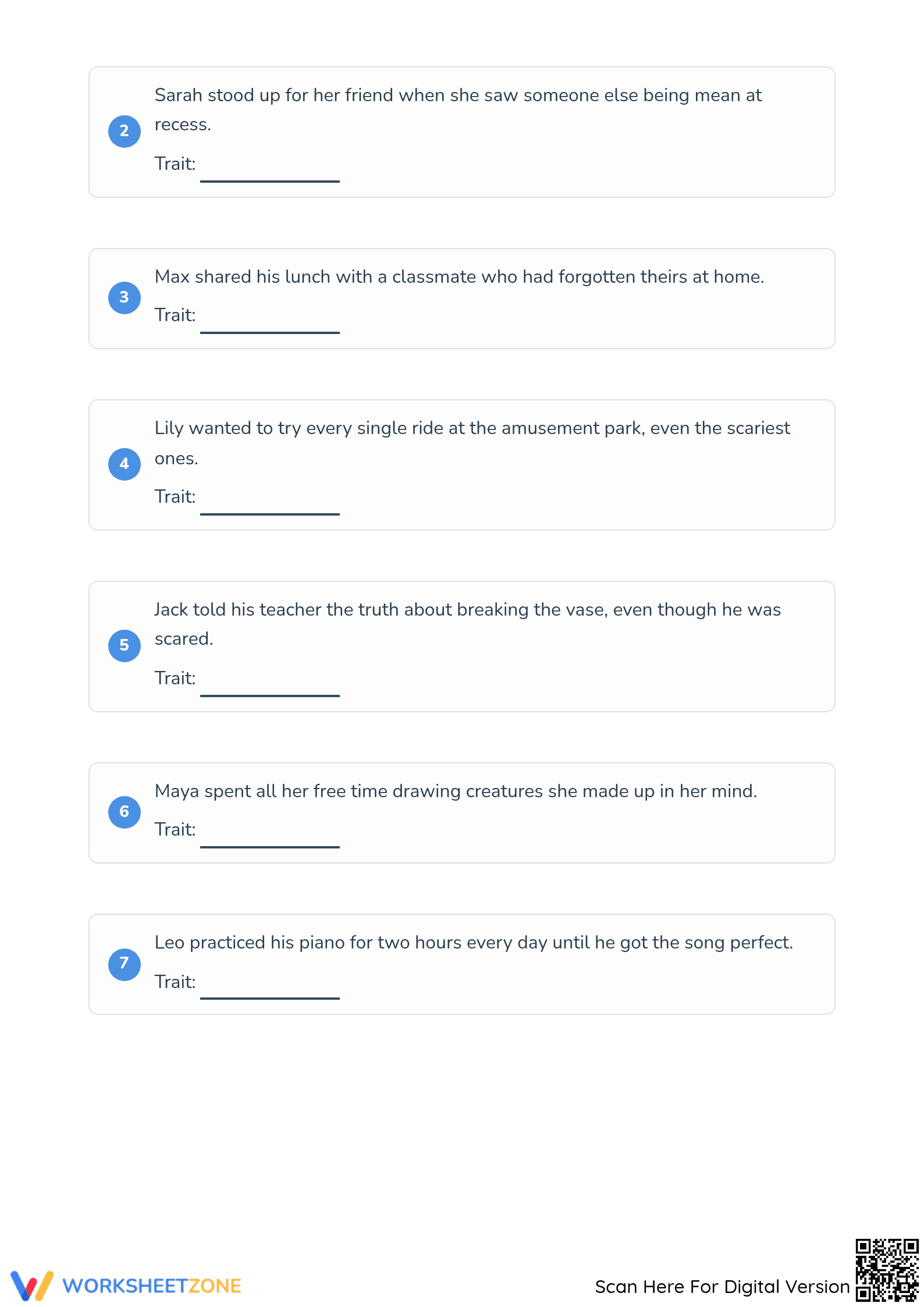
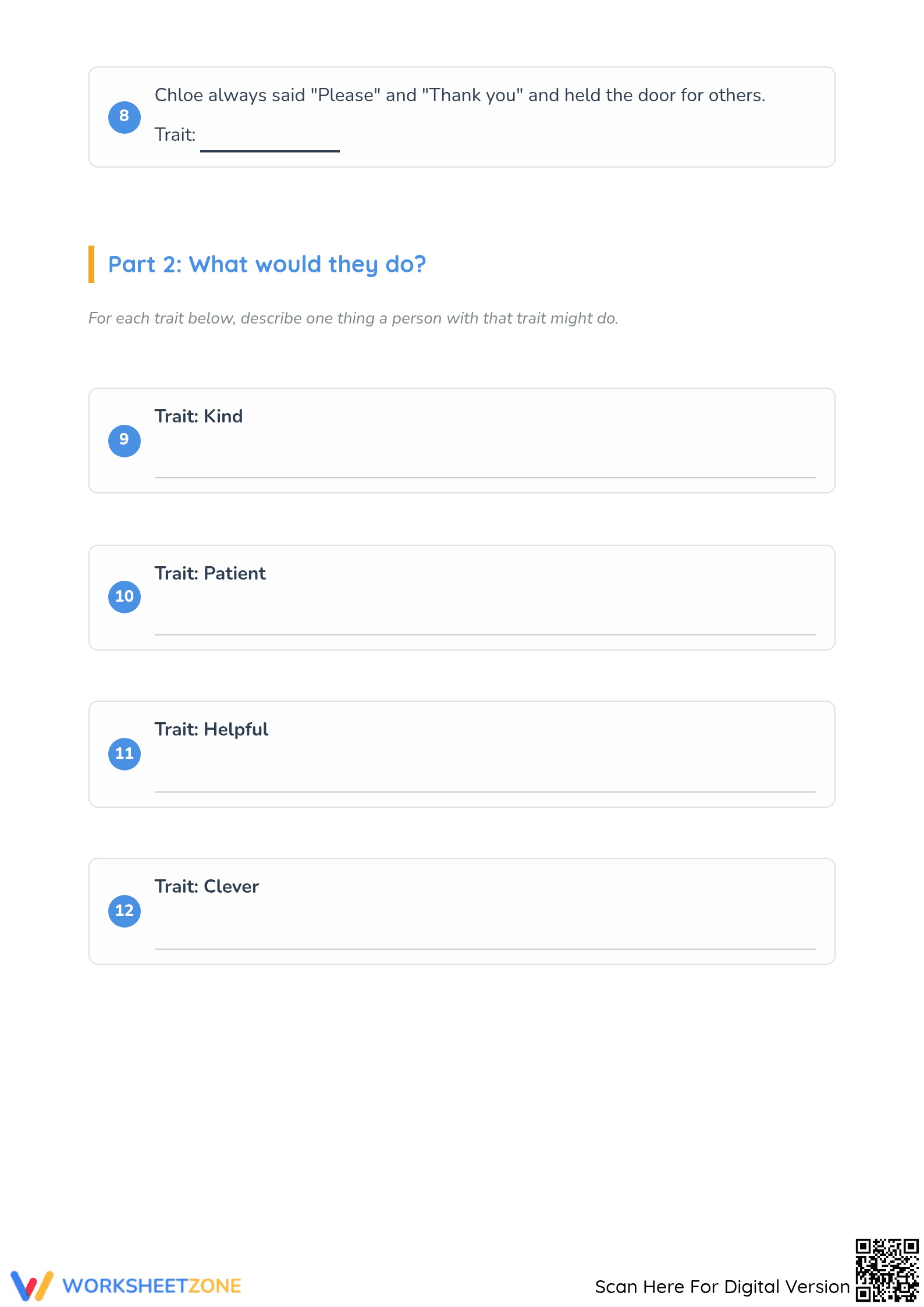
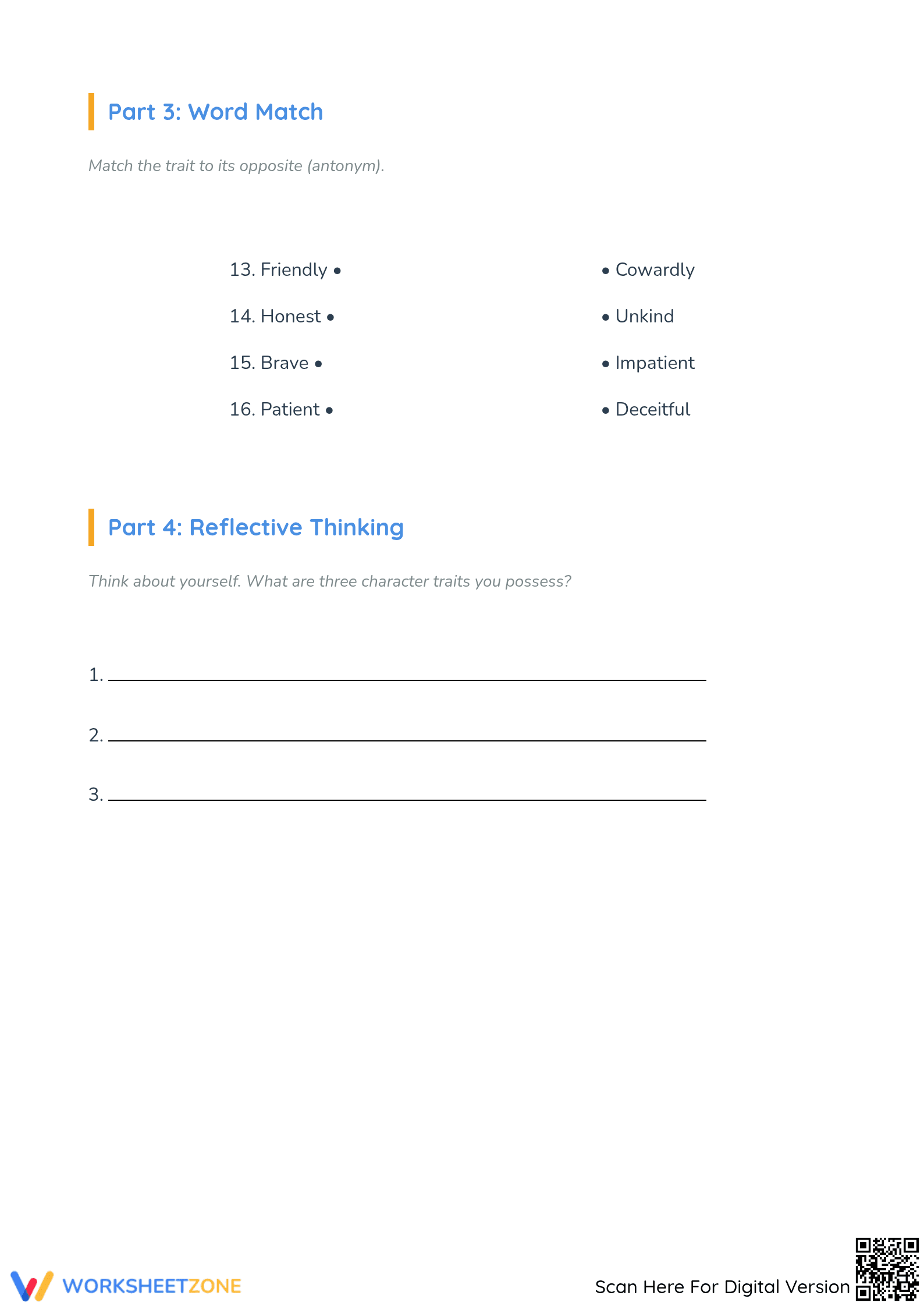
This 4-page printable pack features a robust "Trait Vocabulary Bank" containing 36 distinct character descriptors to scaffold student writing. The packet is organized into four logical parts: Scenario Analysis (8 problems), Behavioral Prediction (4 problems), Antonym Matching (4 problems), and Personal Reflection (3 prompts). This structure guides students from identifying traits in others to internalizing vocabulary through personal connection.
Teachers can implement this resource in three efficient steps. First, print the 4-page PDF for your class (60 seconds). Second, distribute packets; students use the vocabulary bank during independent work (30 minutes). Third, use the provided answer key to review responses in under 5 minutes. This ensures immediate feedback and minimal teacher preparation.
The primary alignment is CCSS.ELA-LITERACY.RL.4.3, which requires students to describe characters in depth using their thoughts, words, and actions. The resource also supports CCSS.ELA-LITERACY.L.4.5.C by focusing on antonyms to demonstrate understanding of words. Both standard codes can be copied directly into lesson plans, IEP goals, or district curriculum mapping tools.
Assign this packet as a mid-unit assessment after reading a short story to check for character analysis mastery. During the activity, circulate and observe if students can justify their choice of "Trait" from the word bank based on the scenario's specific verbs. Alternatively, use it as a robust sub-plan; the self-contained vocabulary bank ensures students remain productive without direct teacher intervention.
This packet is designed for Grade 3-6 students, with scaffolds like sentence frames and a word bank that support English Language Learners and students with IEPs. It pairs naturally with any narrative passage or as a follow-up to a direct instruction lesson on characterization using anchor charts.
Mastery of character traits is a pivotal shift from decoding to deep literary interpretation. Research by Fisher & Frey (2014) emphasizes the "gradual release of responsibility," which this worksheet mirrors through its progression from supported analysis to independent reflection. Providing a 36-word Trait Vocabulary Bank addresses the vocabulary gap identified in middle-grade literacy. The activities align with CCSS.ELA-LITERACY.RL.4.3, requiring students to infer internal qualities from external actions—a skill linked to higher scores on standardized reading assessments. With 19 total tasks spanning four pages, this packet provides the volume of practice necessary for students to internalize sophisticated descriptors. Using this standard-aligned tool ensures that character analysis becomes an evidence-based exercise rather than a series of guesses, fostering the critical thinking skills required for secondary education success.


