


























1 / 2
0
Views
0
Downloads

0.0
0
Save
0 Likes
Share
Causes and Effects of Climate Change – Visual Learning Worksheet
0 Views
0 Downloads
Paste this activity's link or code into your existing LMS (Google Classroom, Canvas, Teams, Schoology, Moodle, etc.).
Students can open and work on the activity right away, with no student login required.
You'll still be able to track student progress and results from your teacher account.
Information
Description
What It Is:
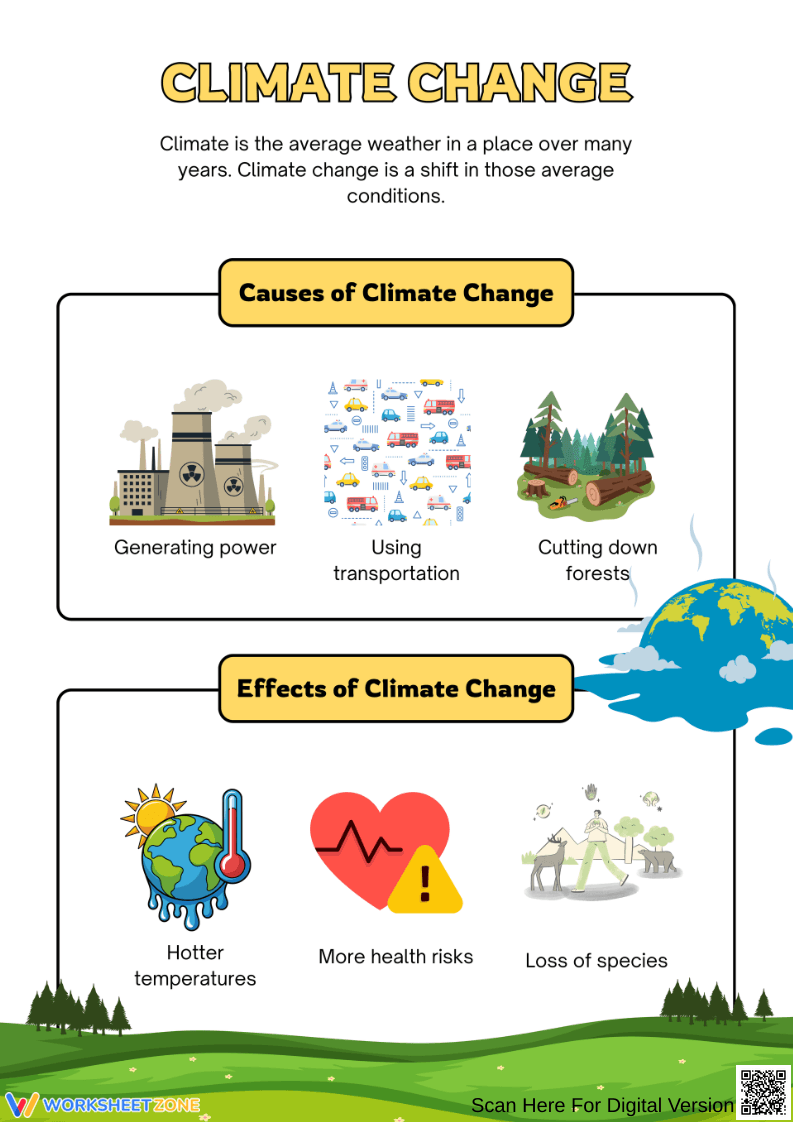
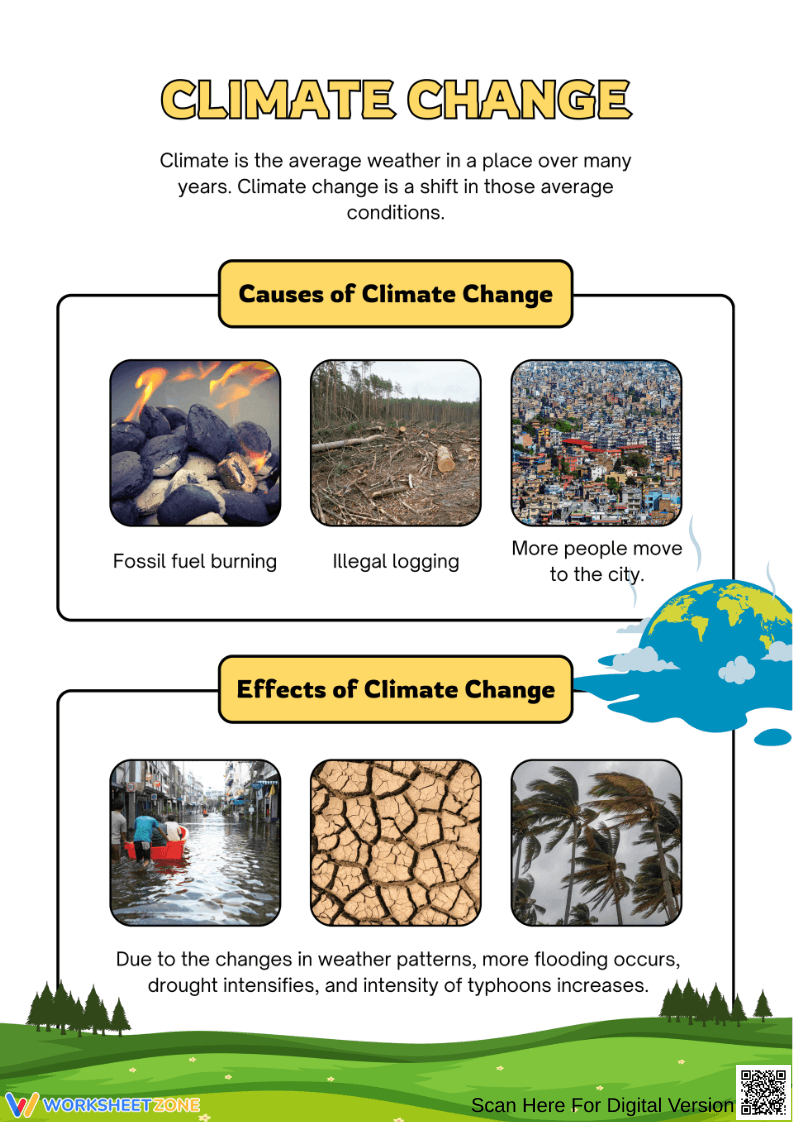
A visually engaging science worksheet that introduces students to the major causes and effects of climate change. Using clear icons and kid-friendly illustrations, the worksheet highlights key contributors such as generating power, transportation, and deforestation, along with major effects like rising temperatures, increased health risks, and species loss. This resource helps students build foundational environmental science knowledge through simple, visually supported concepts.
Why Use It:
This worksheet makes abstract climate science concepts easier to understand by breaking them into digestible visual categories. It supports comprehension for younger learners, visual learners, and ELL students. By clearly showing cause-and-effect relationships, it encourages critical thinking and helps students connect classroom learning to real-world environmental issues.
How to Use It:
• Begin by explaining the difference between “cause” and “effect.”
• Review each image and label as a class to introduce vocabulary and concepts.
• Have students discuss or write about examples from their own lives or local community.
• Use as a warm-up activity, science center task, poster companion, or assessment review tool.
• Pair with a reading passage, climate change report worksheet, or discussion questions for a complete lesson.
Grade Suitability:
Best for Grades 2–6.
• Ideal for elementary science lessons and early middle school introduction to climate change.
• Especially supportive for ELL students and visual learners.
Target Users:
Designed for elementary teachers, science educators, tutors, and homeschool parents teaching environmental science, climate change, and cause-and-effect relationships.
A visually engaging science worksheet that introduces students to the major causes and effects of climate change. Using clear icons and kid-friendly illustrations, the worksheet highlights key contributors such as generating power, transportation, and deforestation, along with major effects like rising temperatures, increased health risks, and species loss. This resource helps students build foundational environmental science knowledge through simple, visually supported concepts.
Why Use It:
This worksheet makes abstract climate science concepts easier to understand by breaking them into digestible visual categories. It supports comprehension for younger learners, visual learners, and ELL students. By clearly showing cause-and-effect relationships, it encourages critical thinking and helps students connect classroom learning to real-world environmental issues.
How to Use It:
• Begin by explaining the difference between “cause” and “effect.”
• Review each image and label as a class to introduce vocabulary and concepts.
• Have students discuss or write about examples from their own lives or local community.
• Use as a warm-up activity, science center task, poster companion, or assessment review tool.
• Pair with a reading passage, climate change report worksheet, or discussion questions for a complete lesson.
Grade Suitability:
Best for Grades 2–6.
• Ideal for elementary science lessons and early middle school introduction to climate change.
• Especially supportive for ELL students and visual learners.
Target Users:
Designed for elementary teachers, science educators, tutors, and homeschool parents teaching environmental science, climate change, and cause-and-effect relationships.


