


























Views
Downloads
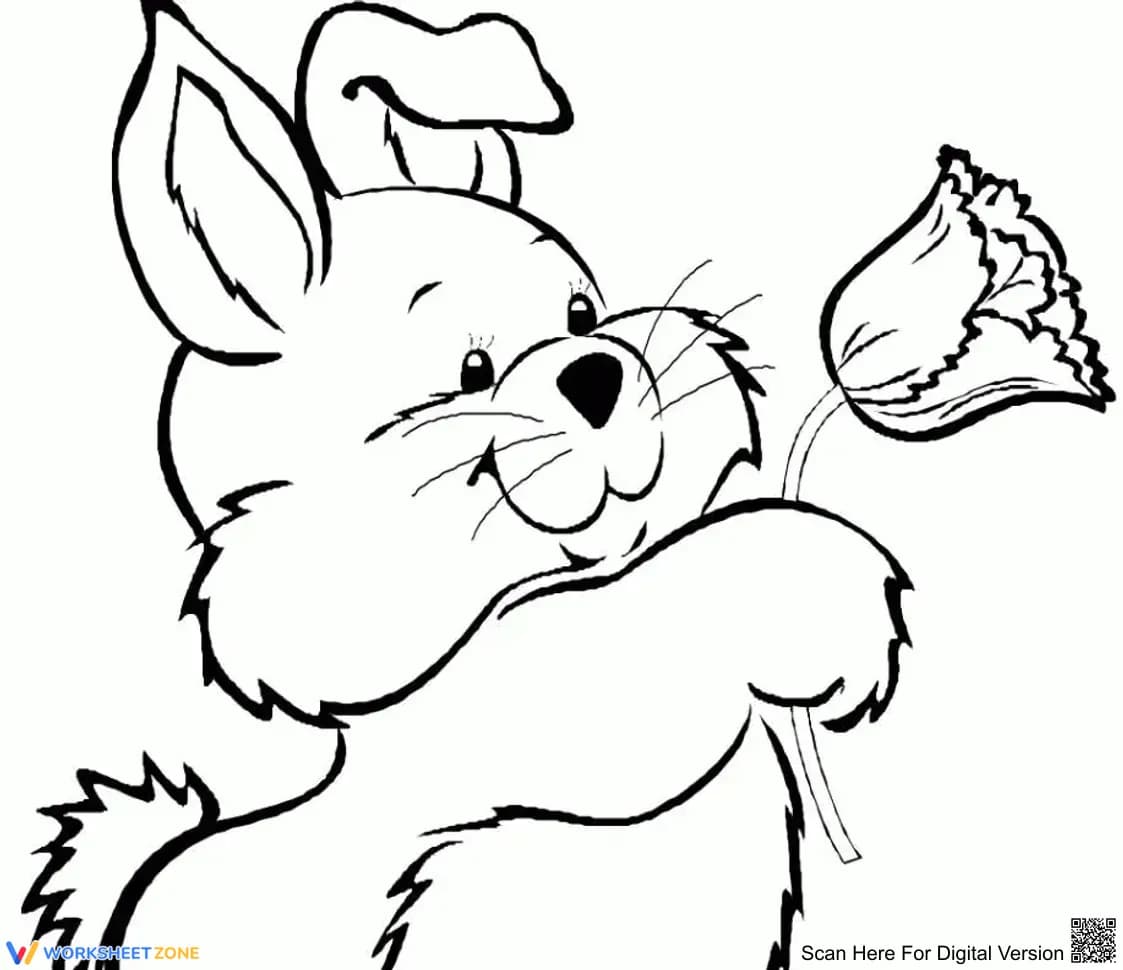

Bunny with a Flower Coloring Page | Essential Printable
Paste this activity's link or code into your existing LMS (Google Classroom, Canvas, Teams, Schoology, Moodle, etc.).
Students can open and work on the activity right away, with no student login required.
You'll still be able to track student progress and results from your teacher account.
This bunny with a flower coloring page provides a high-interest activity for young learners to develop essential fine motor control and artistic confidence. By engaging with the detailed line art, students practice grip stability and spatial awareness, which are foundational for writing and creative expression in early childhood education.
At a Glance
- Grade: K-5 · Subject: Arts & Crafts
- Standard:
CCSS.ELA-LITERACY.SL.K.5— Add drawings or visual displays to descriptions to provide additional detail- Skill Focus: Fine motor control and color recognition
- Format: 1 page · 1 task · No answer key needed · PDF
- Best For: Early finishers and morning work
- Time: 15–20 minutes
What's Inside: This resource features one high-resolution PDF page containing a charming illustration of a bunny holding a large flower. The bold, clean outlines are specifically designed to help younger students practice staying within lines, while the open spaces allow older students to experiment with advanced techniques like shading, blending, or adding background details.
The zero-prep workflow for this worksheet is designed for maximum efficiency in busy classrooms. First, print the single-page PDF (30 seconds). Second, distribute the sheets to students during transition periods or as part of a dedicated art center (1 minute). Finally, review the completed work to observe student progress in hand-eye coordination and color choice (30 seconds). Total teacher prep time is under 2 minutes, making it an ideal sub-plan addition.
This worksheet aligns with CCSS.ELA-LITERACY.SL.K.5, which encourages students to "add drawings or other visual displays to descriptions as desired to provide additional detail." While primarily an artistic task, it serves as a visual scaffold for descriptive writing or oral storytelling exercises. This standard code can be copied directly into lesson plans, IEP goals, or district curriculum mapping tools to document creative engagement.
How to Use It: This printable is most effective when used as a morning arrival activity to settle students or as a formative assessment of fine motor skills during a spring-themed unit. Educators can observe pencil grip and pressure during the activity to identify students who may need additional occupational therapy support. The expected completion time ranges from 15 to 20 minutes depending on the student's age and detail level.
Who It's For: This resource is designed for students in Kindergarten through 5th grade, with a primary focus on the K-2 range. It is an excellent tool for general education classrooms, special education settings, and art therapy sessions. Pair this worksheet with a descriptive writing prompt or a picture book about animals to create a comprehensive literacy and art lesson.
According to research by Fisher & Frey (2014) regarding the gradual release of responsibility, visual literacy activities like this CCSS.ELA-LITERACY.SL.K.5 aligned coloring page serve as vital scaffolds for early learners. Engaging with structured artistic tasks helps students develop the intrinsic motivation and fine motor precision required for more complex writing assignments later in their academic careers. This resource allows students to practice hand-eye coordination and color theory in a low-stakes environment, which reduces anxiety and promotes a positive classroom culture. By integrating these visual displays into broader literacy lessons, educators can bridge the gap between creative play and formal academic standards. The bunny and flower motif provides a relatable subject for descriptive language development, encouraging students to articulate their artistic choices. This printable worksheet is a practical tool for supporting diverse learner needs while maintaining alignment with core instructional goals in the primary grades.


