




























Views
Downloads

Boxing Day Reading Comprehension | Essential Grade 5 ELA

Paste this activity's link or code into your existing LMS (Google Classroom, Canvas, Teams, Schoology, Moodle, etc.).
Students can open and work on the activity right away, with no student login required.
You'll still be able to track student progress and results from your teacher account.
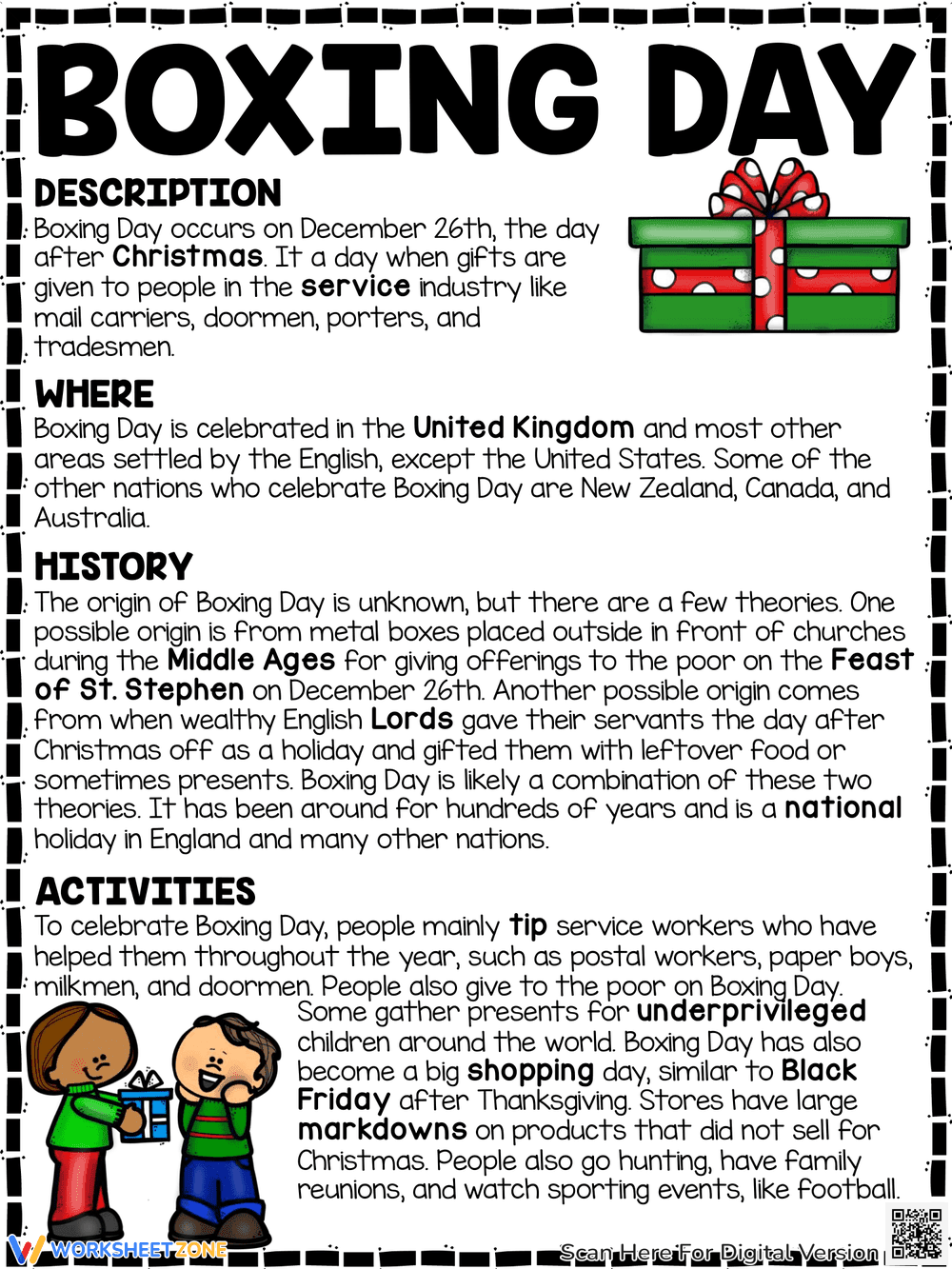
This informational reading passage provides students with a clear and concise overview of Boxing Day, focusing on its historical origins and modern traditions. By engaging with the text, learners develop the ability to extract specific details and synthesize information across different formats. This resource ensures students understand the cultural significance of the holiday while strengthening their core literacy skills.
At a Glance
- Grade: 5 · Subject: ELA
- Standard:
CCSS.ELA-LITERACY.RI.5.1— Quote accurately from a text when explaining what the text says explicitly- Skill Focus: Informational Text Analysis
- Format: 3 pages · 9 problems · Answer key included · PDF
- Best For: Holiday Social Studies or ELA Sub Plans
- Time: 20–30 minutes
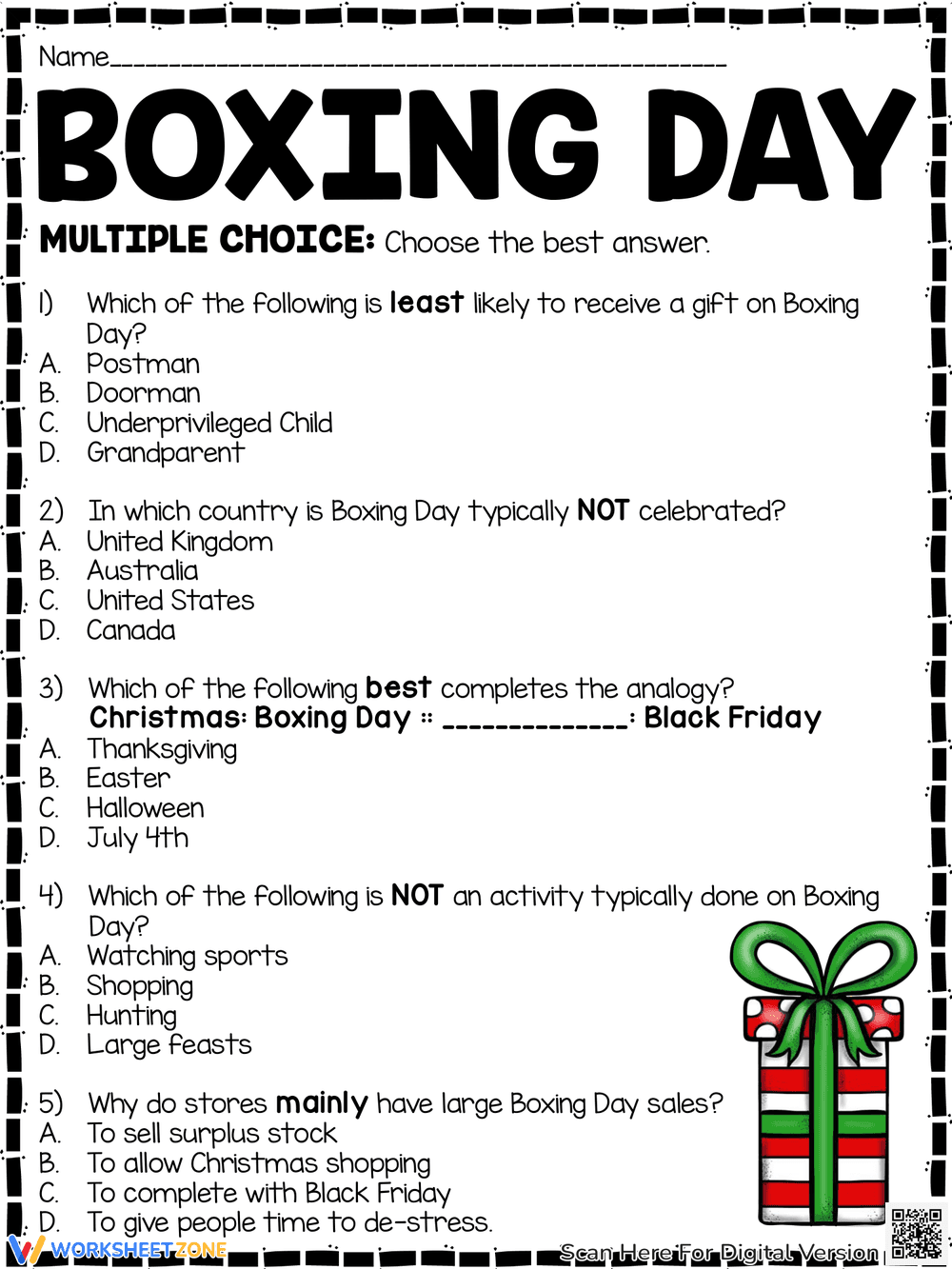
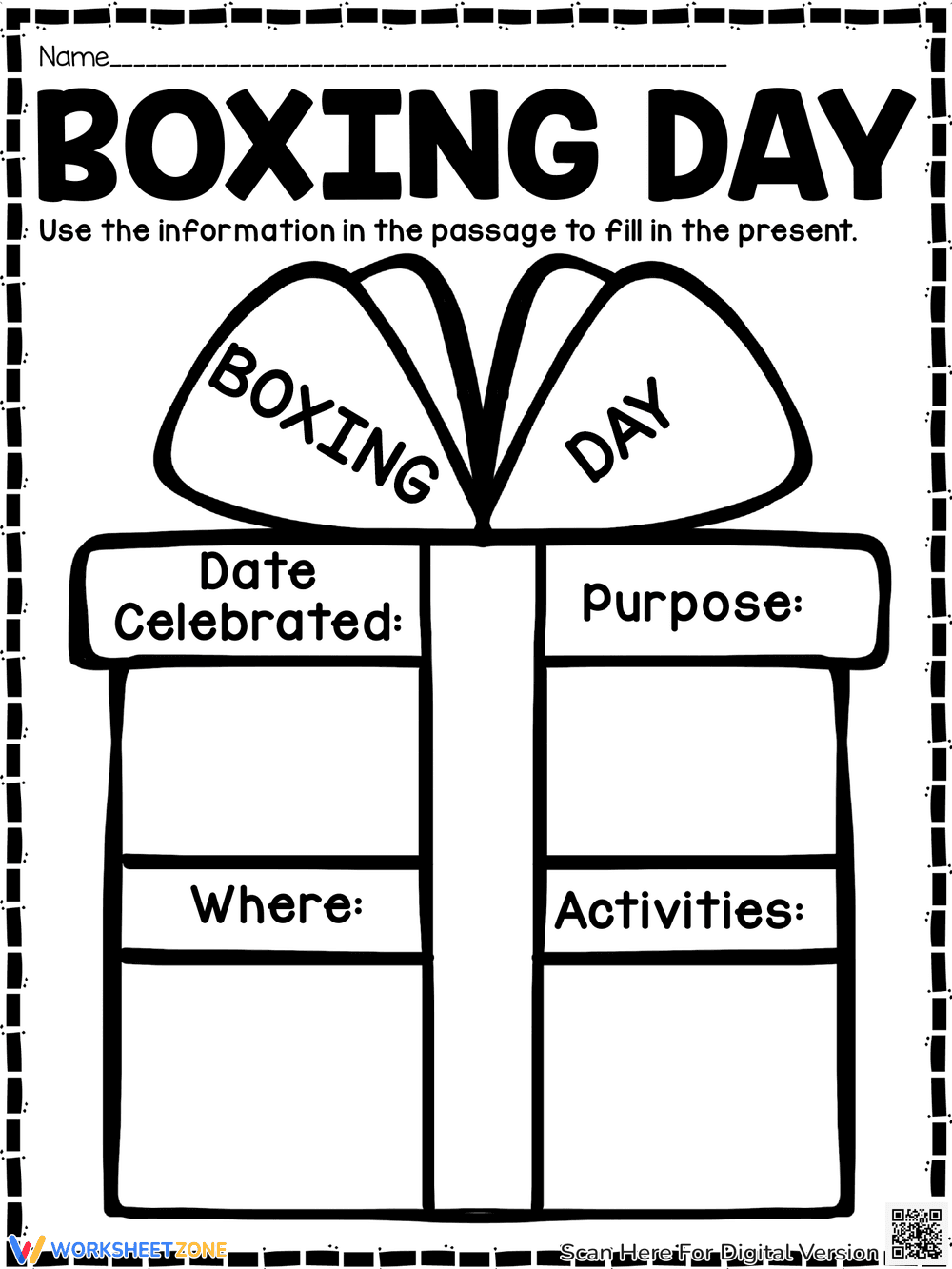
The resource includes a high-interest reading passage divided into logical sections: Description, Where, History, and Activities. Following the text, students encounter five multiple-choice questions designed to test literal comprehension and inferential thinking. The final page features a themed graphic organizer shaped like a gift box, requiring students to categorize information regarding the date, purpose, location, and activities associated with the holiday.
This worksheet follows a zero-prep workflow designed for maximum teacher efficiency. First, print the three-page PDF, which takes less than 30 seconds. Second, distribute the materials to students; the clear headings and bolded keywords allow for immediate independent work. Finally, review the answers using the included key, which facilitates a quick five-minute check for understanding. The entire preparation process requires less than two minutes of teacher time.
The primary alignment for this activity is `CCSS.ELA-LITERACY.RI.5.1`, which focuses on using evidence from the text to support claims. Students must refer back to the specific historical theories and geographic locations mentioned in the passage to answer the multiple-choice items correctly. This standard code can be copied directly into lesson plans, IEP goals, or district curriculum mapping tools to ensure compliance with state and national frameworks.
To use this in the classroom, assign it as a morning work activity during the final week of the winter term or as a focused literacy center. During the activity, circulate and observe if students are highlighting the bolded terms in the text to assist with the graphic organizer. This formative assessment tip helps identify students who may need additional support with scanning techniques. Most students will complete the full set of tasks within 25 minutes.
This resource is ideal for general education students in grades 4 through 6, as well as English Language Learners who benefit from the clear structure and bolded vocabulary. It pairs naturally with a world map or a holiday-themed anchor chart. The combination of multiple-choice and visual organizing tasks provides a balanced approach to assessing student mastery of informational text structures.
Research by Fisher & Frey (2014) emphasizes that complex informational texts are best mastered when students engage in repeated interactions with the content through varied task types. This Boxing Day worksheet applies this principle by moving students from passive reading to active retrieval in the multiple-choice section, and finally to synthesis in the graphic organizer. By requiring students to cite specific details like the Feast of St. Stephen or the geographic regions of the United Kingdom, the resource reinforces the `CCSS.ELA-LITERACY.RI.5.1` requirement for textual evidence. Such structured practice is essential for developing the stamina needed for high-stakes assessments. This 3-page printable serves as a reliable tool for measuring student progress in identifying key ideas and supporting details within a non-fiction context, ensuring that learners can accurately explain what a text says explicitly while building global cultural awareness.


